
Results
-
 £115.60
Ompa til du dr - Janove Ottesen
This song is taken from the first record album by Norwegian band Kaizers Orchestra. The song is one of the most well-known from this band. Kaizers Orchestra was famous in Norway for it's energic style, both on record and stage, a style that this arrangement tries to capture. The guitar and electric bass parts are optional.
Estimated dispatch 7-14 working days
-
 £115.60
Viss eg var ein julekonge (Fra Julekongen) - Stray
This is the theme song from the Advent-series "Julekongen" ("The Chiristmas King"), premiered at the Norwegian Broadcasting Coprporation (NRK) in 2012. The present arrangement tries to recreate a bit of the mood from the original recording and performance of the song. You may let other players perform as soloist(s). The arrangement is suitable to focus on sound quality at all grade levels. You may end the performance at bar 61.
Estimated dispatch 7-14 working days
-
 £115.60
Your Song - Elton John
Your Song written by the duo Elton John / Bernie Taupin, was first released in 1970 on Elton Johns second studio album. It has become one of his most popular songs, and was ranked as number 137 on Rolling Stones list of "The 500 greatest Songs of All Time". The song is also inducted into "The Grammy Hall of Fame".
Estimated dispatch 7-14 working days
-
 £149.40
Bekken (Fra Lyriske stykker opus 62) - Edvard Grieg
Brooklet is one of the movements from Grieg's Lyric Pieces for Solo Piano opus 62. Information for the conductor: Brooklet is an technically advanced work for solo piano. In this arrangement, technical passages are simplified by overlapping and doubling some of the parts. To master the technical challenges and make it sound effortless, it is important to pay close attention to balance and precision. Some of the parts also have alternative parts added which can lower the technical challenges a bit. The normal instrumentation are Clarinet 1-2-3, but there is also an "optional" part for Solo Clarinet. This is included on the same sheet as Clarinet 1. Both parts can stand alone or be played together. (i.e. The Solo Clarinet part can be played in addition to Clarinet 1, in whole or in part if desired, or it can replace Clarinet 1 entirely, using only Solo Clarinet and Clarinet 2 and 3.). From bar 5 to bar 13, there is a suggested solo for Solo Clarinet. If played by Solo Clarinet, please omit Clarinet 1, 2 & 3 for these bars.
Estimated dispatch 7-14 working days
-
 £144.99
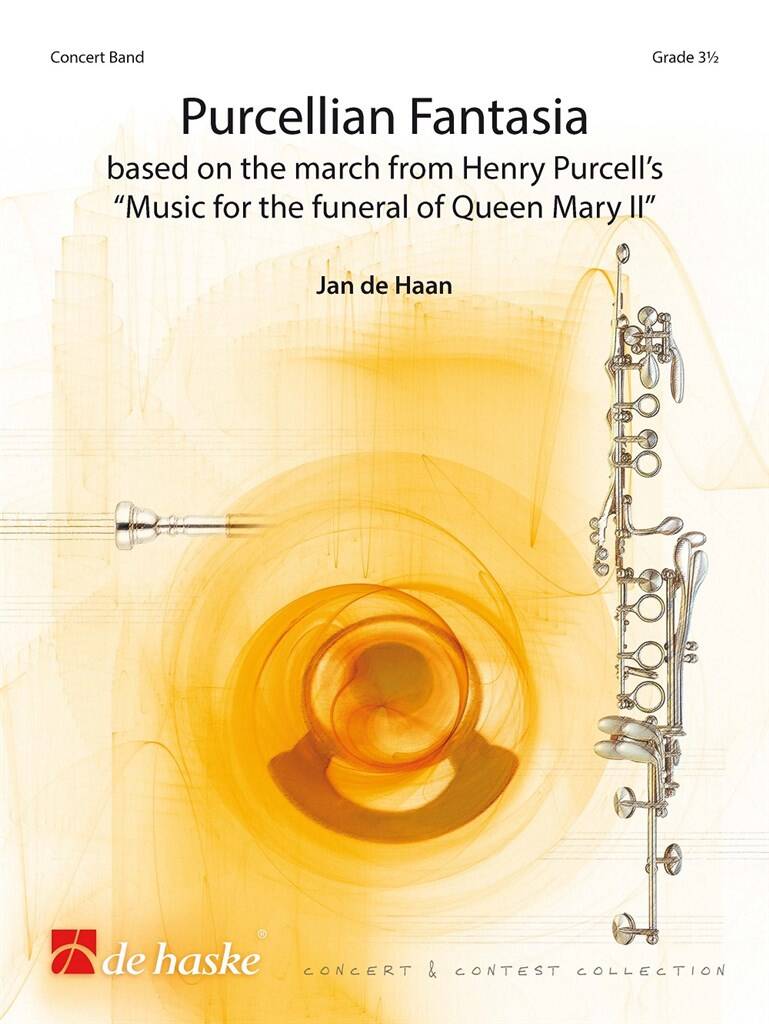
Purcellian Fantasia - Jan de Haan
This composition is based on the march from Henry Purcell's Music for the funeral of Queen Mary II, a work written in 1694. In this fantasia, various movements flow from one to the next following the main theme: these movements not only elaborate on the theme, but also contrast with it. At times, the thematic material diverges so much, that the work acquires a character of its own: however, the composer often refers back to fragments of the theme.
Estimated dispatch 7-14 working days
-
 £61.95
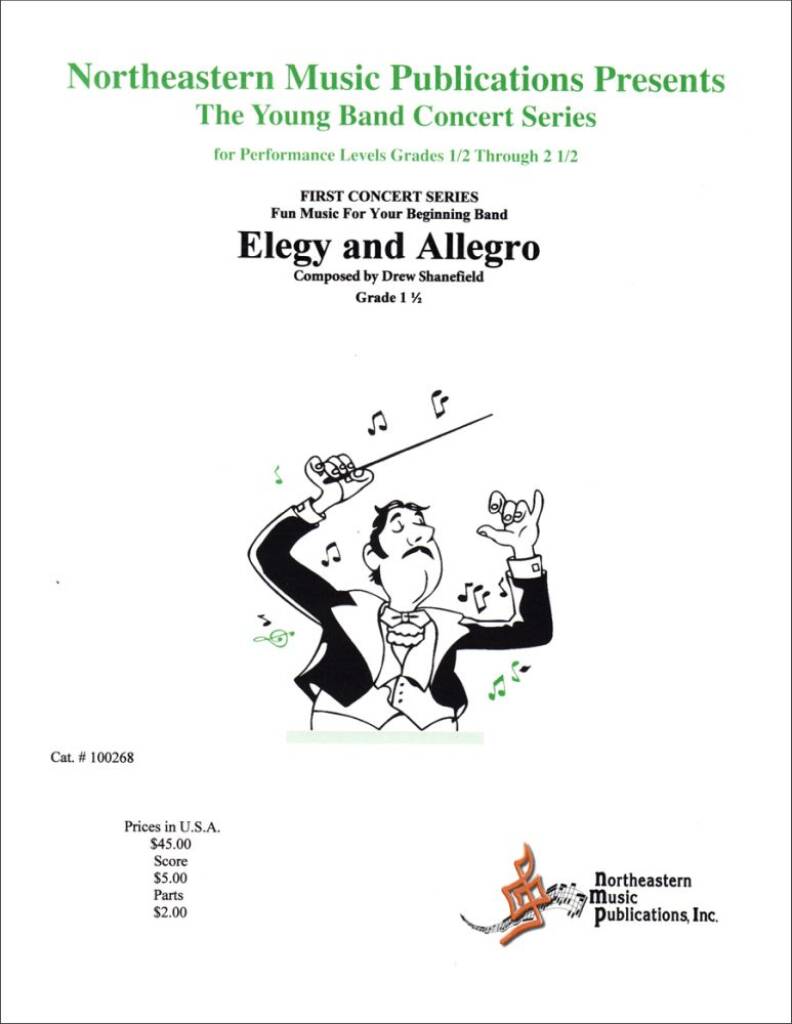
Elegy and Allegro - Drew Shanefield
This is an up tempo work where the quarter note equals 120 per minute. There are a lot of whole note trills for the upper woodwinds, which they love to play. It is an exciting work that is fun to play and not as difficult as it sounds. The 1st clarinets play over the break. 1st trumpet's highest note is A (in the staff).
Estimated dispatch 7-14 working days
-
 £174.99
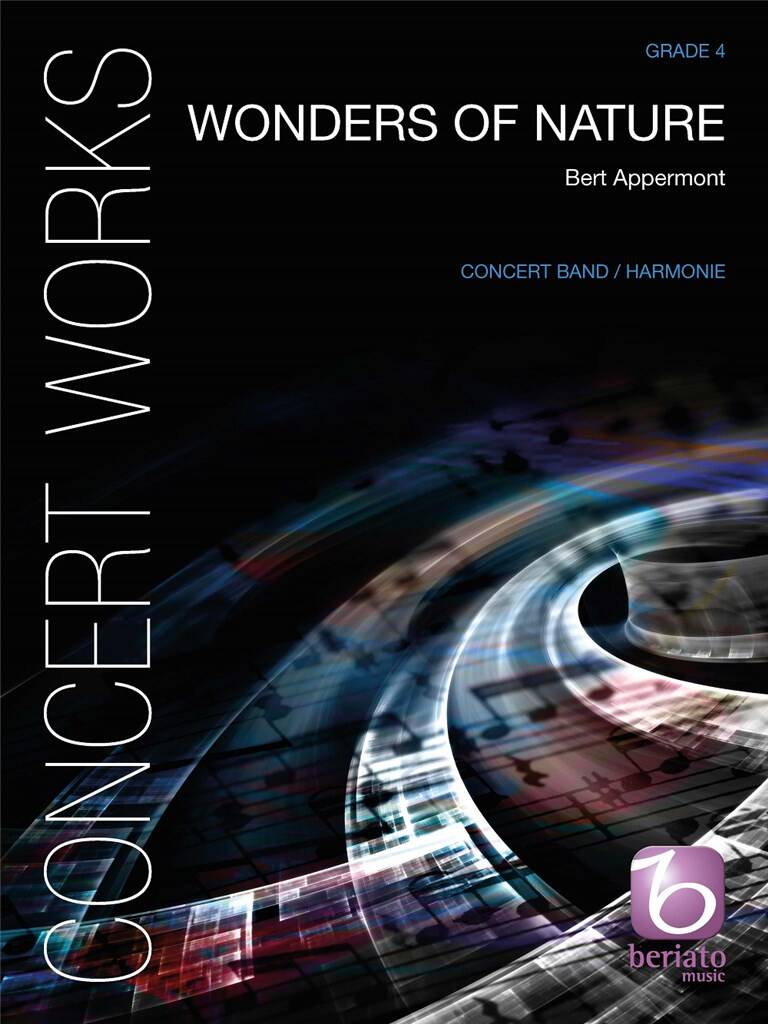
Wonders of Nature - Bert Appermont
This work was commissioned by Fanfare Sint-Willibrordus Wintelre from the Netherlands and describes the power and wonders of nature in 4 atmospheric movements: Birth, Battle, Silence and Water.Wonders of Nature was composed as a soundtrack for a nature film and even without the images, the work will appeal to the performers as well as the audience.It appeals to the listener's own fantasy and imagination, as one can attempt to visualise the imagery whilst listening to the music.
Estimated dispatch 7-14 working days
-
 £106.99
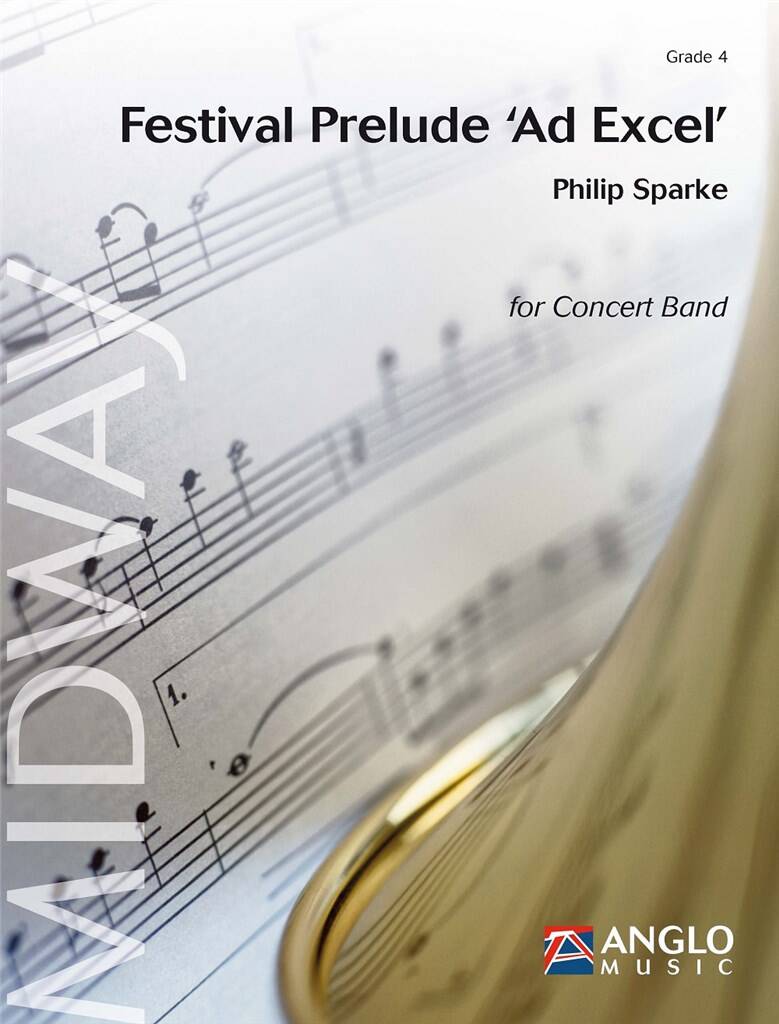
Festival Prelude Ad Excel - Philip Sparke
Festival Prelude 'Ad Excel' was commissioned by the AD Concert Band, from Solihull in the UK, to celebrate their 40th Anniversary in 2016. The title, Ad Excel, is a play on words: it is Latin for 'to excel' but also celebrates the band's anniversary as XL is 40 in Roman numerals. The work opens with a bright fanfare with frequent changes of meter. This leads to a playful main subject, played first by woodwinds, followed by full band. A bridge passage leads to a legato second subject, played twice. The bridge passage returns to introduce the both main melodies in new keys and instrumentations before a coda, derived from the opening fanfare, brings the work to a close.
Estimated dispatch 7-14 working days
-
 £118.99
Morricone Medley - Ennio Morricone
Ennio Morricone has written over 500 scores for fi lm and TV and is one of the most famous composers in the world. The Japanese arranger Ritsu Ono compiled a medley with popular and less popular songs written by this famous Italian composer: Nuovo Cinema Paradiso, The Crisis, Playing Love, Danny's Blues and the 1900s Theme. A must play for every Morricone fan.
Estimated dispatch 7-14 working days
-
 £101.20
Overture to a Jubilee - Andreas Ludwig Schulte
The Winkler Prins School, in Veendam, commissioned Overture to a Jubilee on the occasion of their 150th anniversary. Andreas Ludwig Schulte has based the work on the schools logo: three owls. These represent the three phases of the student's school life. From being led, to being guided to being independent. In Overture to a Jubilee each of these phases is announced by an opening fanfare.
Estimated dispatch 7-14 working days
 View Music