
Results
-
 £68.80
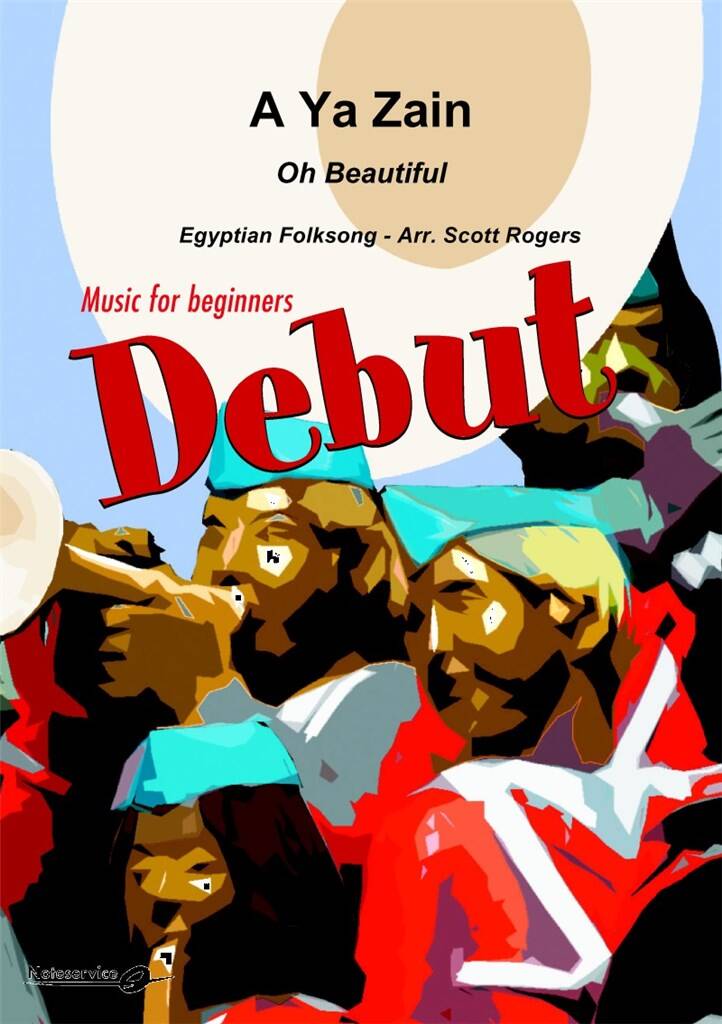
Oh Beautiful
The melody known as "A Ya Zain" (also "Aya Zein" or "Ayazein,") is most often credited as an Egyptian folk song. The tune is easily recognizable as having Arabic origins by its use of the double harmonic minor scale (containing two augmented 2nd intervals). This arrangement gives us a good opportunity to expose young players to non-western tonalities. The use of short melodic sequences and repetition in the melody make it especially appropriate for young instrumentalists
Estimated dispatch 7-14 working days
-
 £50.50
Simple Gifts
This grand traditional American folk song is suitable for every beginning band. The concrete scoring of the melody in a straightforward manner allows the flowing melody of sheer spender to dominate. Although it is set in 4/4 time, this arrangement, once mastered, would serve as a splendid introduction to cut-time.
Estimated dispatch 7-14 working days
-
 £50.50
America - My Country Tis Of Thee
This timeless patriotic melody by S.F. Smith is the perfect musical setting for exceptional teaching. The "Melody Mine" gives each member of the band the opportunity to play the melodic line while the teacher focuses on phrasing, shaping and other core musical concepts. The full band arrangement provides a lush chorale setting of the American standard. The director also has the option to craft their own arrangement to feature soloist(s), instrumental choirs and full band. Master teacher Susan L. Smith has created a powerful teaching resource for use in any beginning band program.
Estimated dispatch 7-14 working days
-
 £95.95
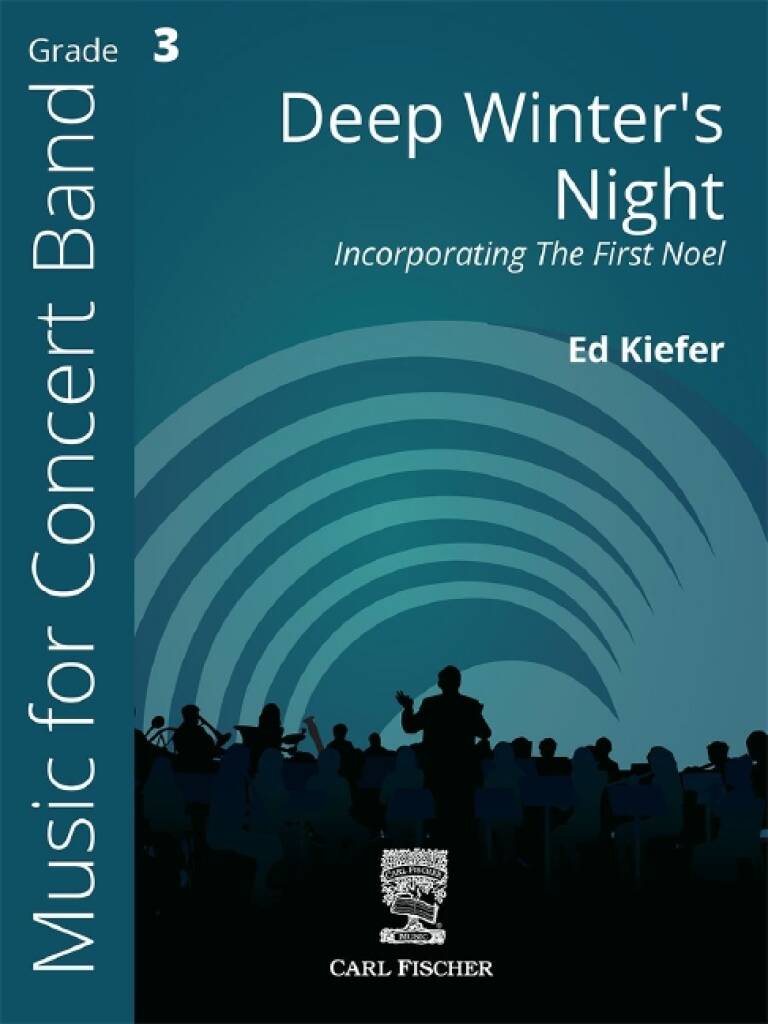
Deep Winter's Night - Ed Kiefer
Beginning with percussion and dissonant chords, this setting of The First Noel quickly moves to a beautiful flute duet. With a freely adapted melody using rhythmic motives, tone clusters, and creative alterations of the main thematic material, this piece although holiday oriented will work well in many performance situations. Every section plays the melody at some point and with modern compositional styles mixed with traditional chorale will engage performers and audiences alike. A great choice for holiday and Christmas concerts.
Estimated dispatch 7-14 working days
-
£106.95
Invocation and Dance - Carl Strommen
Starting from a lovely and haunting melody introduced by the clarinets, Carl Strommen's Invocation and Dance, in two contrasting sections, is an object lesson in how to write memorably for young musicians using simple, straightforward and appealing material. The fast second section begins with some wonderful quiet percussion writing and the phrase and meter shifting versions of the original tune cleverly vary it before leading to the fully-scored return of the melody in its original form. This selection is contest and festival material of the highest quality. Duration: 4'40"
Estimated dispatch 7-14 working days
-
£69.99
An Irish Lullaby - Stephen Bulla
What can be more charming than a comely Irish folk melody? This is music that allows the band to play in the rubato style, with much room for expression. Found in an old British publication and simply called "Irish Air," this endearing arrangement is a rhapsodic treatment that takes fragments of the melody and develops them into a large symphonic work. The freedom of tempi allows you to work with your band in a sensitively conducted way that only a beautiful piece like this will allow.There is always room on a concert program for at least one lush, melodic contrast piece. Perhaps this one is for you. It's so difficult to describe a thing of real beauty. Please listen tothe demo recording and hear it for yourself.
Estimated dispatch 7-14 working days
-
 £154.99
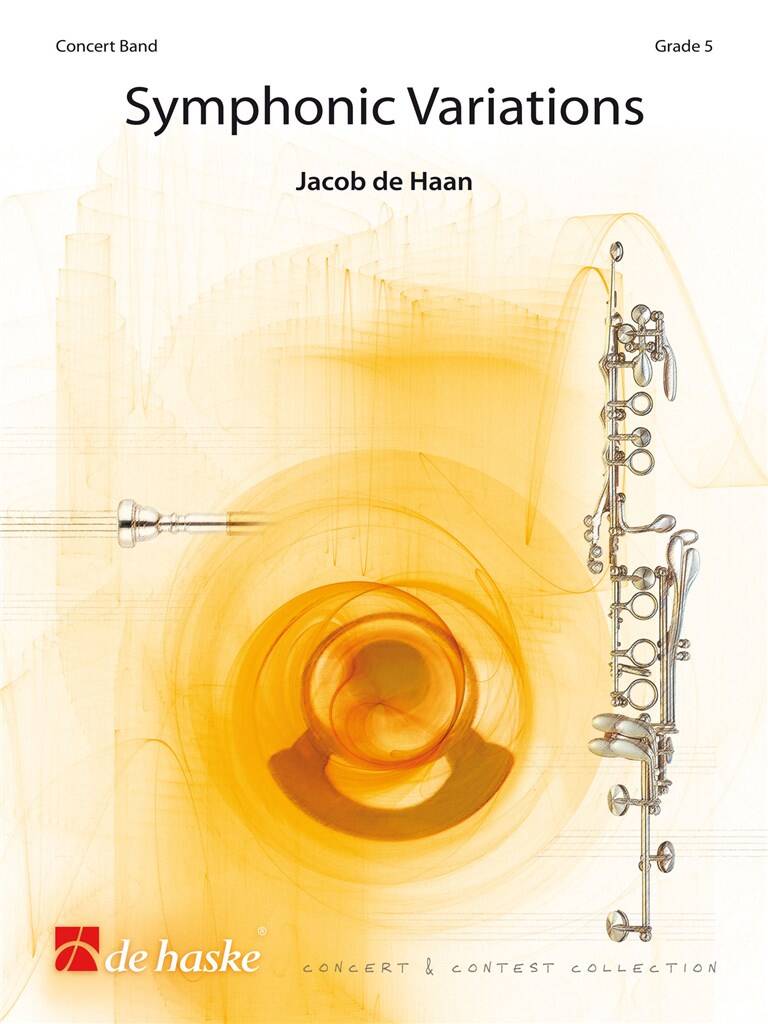
Symphonic Variations - Jacob de Haan
This composition is based on a passacaglia theme, in which artistic perfection, symphonic drama and oriental melody lines play a role. The passacaglia is originally a dance made up of a series of variations above a bass line constantly present as an ostinato. It is not in this sense that the "Symphonic Variations" are in the passacaglia form but in the sense of the open form of the variations. Jacob de Haan, himself originally an organist, took his inspiration for this piece from the famous passacaglia for organ in C-minor by J.S. Bach. Following the introduction of the passacaglia theme (in the bass) the entry by the trumpets and trombones forms the majestic start to amusical adventure, in which this theme (often fragmentary) returns in variations. Then there follow two faster movements with dramatic contrasts and virtuose passages. Particularly striking here is the use of two characteristic intervals from the beginning of the theme namely the minor second and the augmented fourth. An apause in the composition comes in the slow bridge where a syncopated bourdon (perfect fifth) is constantly repeated. The tension grows in dynamics and harmony, and the oriental-flavour becomes obvious in the melody. We arrive at a faster movement via an accelerando, in which a perpetuum mobile based on the passacaglia theme is central. Finally the whole flows into a martial theme, in which the ostinato accompaniment n the descant derives from the passacaglia theme.
Estimated dispatch 7-14 working days
-
£84.99
Bundeslied - Jacob de Haan
The melody of Bundeslied originates from Mozart's' Frimaurerkantate (KV62) from 1791. However research has shown evidence that it was probably composed by Johann Holzer, a freemason brother of his, but there is no definite evidence for this. Following the Second World War this melody was used as the basis for the new Austrian national anthem. Micheal Bilkes has adapted this beautiful, stately hymn for concert band. The result is a captivating work for both performers and audience.
Estimated dispatch 7-14 working days
-
 £94.99
O Christmas Tree
The tradition of the Christmas tree in Western Europe dates back to a time long before any Christianization had taken place. During the severely cold winter nights, so it was believed, evil spirits tried to 'kill' nature. Needle-leaved trees were the only ones which kept their green colour throughout the year, and therefore became symbols of immortality. These 'living' trees, said to be the work of benign spirits, were brought into people's houses to ward off evil, life-threatening powers. In the 14th century people first started to decorate Christmas trees. It was a pagan custom, originated by the inhabitants of Alsace. This custom was taken over by the Church inthe course of the 15th and 16th century. At first the decoration consisted mainly of edibles, such as apples and wafers, but later small presents were added. Legend has it that the reformer Martin Luther was the first person to decorate a Christmas tree with candles. The flickering candle flames were meant to create the image of a starry sky in which Christ's apparition could be recognized. The German organ-player Ernst Anschtz from Leipzig was the first person to notate the song 'O Tannenbaum', the melody being a well-known folk song. Next to 'Stille Nacht' 'O Tannenbaum' is the most famous German Christmas song, now known throughout the world. In the United States of America the melody of 'O Tannenbaum' has even been used in four States (among which the State of Maryland) for their State song. In David Well's arrangement the song is first heard as many of us know it. After this introduction, however, it is transformed into a solid rock version, and the beat has been changed. In the second part the familiar three-four time is back, but here the rhythm is different from the original. After the richly ornamented rock beat the basic theme can be heard once again and the composition is concluded in a festive manner.
Estimated dispatch 7-14 working days
-
 £64.99
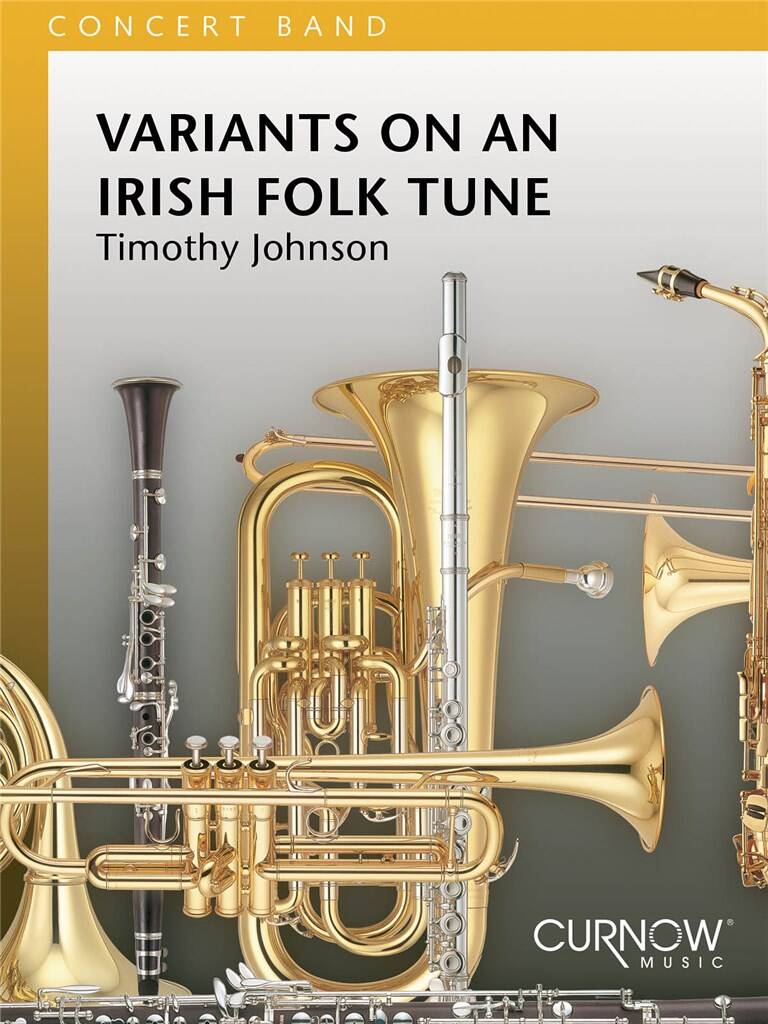
Variants on an Irish folk tune - Timothy Johnson
The Irish folk tune Slane (the melody used in the hymn Be Thou My Vision) forms the foundation for this melodically expansive and inspired work for concert band. A flowing exploration of the melody in variation inspires thelistener with its bold and thrilling progression. The piece remains within reach of a solid grade 3 band but gives the impression of a higher level of composition. A rich variety of style and orchestration make this a goodchoice for festival use as well as concert performance, as well as a great opportunity to study the rich cultural heritage of Ireland. You'll be glad you programmed Variants on an Irish Folk Tune by Timothy Johnson.
Estimated dispatch 7-14 working days
 View Music