
Results
-
£104.99Prelude and Polonaise - Nikolai Rimsky-Korsakov
Nikolai Rimsky-Korsakov (1844-1908) composed his opera The Night before Christmas in 1894-95. The premiere took place on December 10 1895 in St. Petersburg. The libretto to the opera came from Rimsky-Korsakov himself and is based on a tale by Nikolai Gogol, which some years earlier had already served as operatic material for Pjotr Tchaikovsky. The opera tells the story of Vakula, the blacksmith of a small Ukranian village. He is madly in love with Oxana who demands - as proof of his love - a most unusual Christmas present: the magnificent slippers of the Empress. Knowing full well that, in normal circumstances, he would never be able to fulfil Oxana's wish, Vakula seekssupernatural assistance and finds it in the shape of the devil, who comes up with a ploy to help him. The devil carries him on his back to St. Petersburg, where during a lavish reception at court Vakula finds an opportunity to present his request to the empress. The Empress actually agrees to Vakula's wish and hands over her slippers to him. Thereupon he returns to his own village. Here, in the meantime, he had been given up for dead, and Oxana had been plunged into great sorrow as she had come to realise that she also truly loved Vakula. In the end, however, all misunderstandings are resolved and all adversities overcome: Oxana receives her extravagant present, the lovers are united, and the church bells call the villagers to the Christmas service.The vibrant Polonaise is played in the 3rd act of the opera at the entrance of the Empress, whose appearance is anticipated in the prelude by the fanfare motives. The music paints a vivid picture of the party atmosphere and the marvellous dcor at the imperial court of St. Petersburg, which Rimsky-Korsakov conjures up in his opera and which can also be played outside of the Advent and Christmas season, for example as an opening piece to any festive concert.
Estimated dispatch 7-14 working days
-
£184.99
Il Cantico - Oliver Waespi
Commissioned by the Stadtharmonie Zurich Oerlikon-Seebach for the 2005 WASBE Conference in Singapore"Il Cantico" was inspired by the poem "Cantico di Frate Sole" (Canticle of Brother Sun) by St. Francis of Assisi. In this famous mystic poem, St. Francis expresses his gratitude to God for the creation of nature, the sun, the earth and the living beings."Il Cantico" is based on specific parts of St. Francis's poem. A slow, dreamlike song in the flute leads gradually to the appearance of the sun, the light energy of which is expressed by radiant, powerful music in the brass instruments. The next, slower part of the work is dedicated to the moon (sora luna), a sort of mirror of thesun, and to the stars (le stelle). The music becomes more thoughtful, leads to a calm sound field in the woodwinds and later to a mystic horn solo. Still during the slow part, several chord fragments flash up, thereby announcing the fast ultimate part of the work. This part is about the fire (frate focu) illuminating the night, some sort of representative of the sun on earth. Towards the end of the work, the sun theme is combined with the fire theme.Besides these images, a purely musical structure guides the development of Il Cantico. Almost the entire piece evolves from a basic four-tone cell which appears in the horns and flute at the beginning. Consequently, the work is mainly monothematic and structured in the form of a metamorphosis. The basic cell gradually leads to a rich melodic and harmonic development. This basic material is later completed by a new chord series belonging to the fire theme. In the conclusion both approaches are combined.
Estimated dispatch 7-14 working days
-
£154.99The Fever Tree - Rob Goorhuis
The composition ".The Fever Tree". in 2008 was commissioned by the Music Association of Central and Eastern Netherlands St.Willibrord as a gift to all its members on the occasion of the formation of a national music organization and the elimination of the music union for Central and Eastern Netherlands St.Willibrord. The fever tree is a controversial legend about St. Willibrord (658-739). The daughter of a pagan chieftain of Hoemannen that made the area around Heumen unsafe, was seriously ill. They feared for her life. The chief of the gang turned to predatory Willibrord, who same time in this region led mission. Willibrord commanded theman to repent and a headband of the girl to a certain special tree to hang. The desperate captain obeyed, and his daughter was a miraculous heal. Then came the anger of the Hoemannen against their leader, who in their eyes had committed treason by the group to convert. They abused themselves to him and killed him brutally. The daughter remained behind in great sorrow, comforted by Willibrord. The composition has the following scenes: - Andante moderato - the calling of Willibrord - Allegro moderato - Willibrord passes through the province of Brabant and try to people to repent - Vivace - Hoemannen terrorize the inhabitants of the area Heumen - Andante - the healing of the sick girl and the conversion of the centurion - Inquieto - the revenge of the Hoemannen - Adagio - elegy on the death of the chief
Estimated dispatch 7-14 working days
-
£128.80La Citt - Michael Geisler
Symphonic concert work, dedicated to the Bauernkapelle St. Georgen, conductor Johannes Biegler. The concert work "La Citt", which translates as "The City", is a tribute to the district of St. Georgen near Eisenstadt in Austria.The work begins with a majestic introduction in which the main theme is presented. The following Allegro con Spirito. Is intended to symbolize the occupation of the Romans after the birth of Christ. The "St. George's Song", a folk tune arranged in various registers, is heard. Another fast section reminds us once again of the Romans. After a reprise of the opening theme with various solos, the work ends in a grandiose finale with the whole orchestra.
Estimated dispatch 7-14 working days
-
£110.00All Creatures of our God and King (Concert Band with Optional Choir - Score and Parts) - Rutter, John - Noble, Paul
All Creatures of Our God and King is an English Christian Easter hymn by William Henry Draper, based on a poem by St. Francis of Assisi. It was first published in a hymn book in 1919. The words of the hymn were initially written by St. Francis of Assisi in 1225 in the Canticle of the Sun poem, which was based on Psalm 148. The words were translated into English by William Draper, who at the time was rector of a Church of England parish church at Adel near Leeds. Draper paraphrased the words of the Canticle and set them to music. It is not known when Draper first wrote the hymn but it was between 1899 and 1919. The hymn is currently used in 179 different hymn books. The words written by St Francis are some of the oldest used in hymns after Father We Praise Thee, written in 580 AD. Like Ye Watchers and Ye Holy Ones, Draper's text is usually set to the tune of Lasst uns erfreuen, a German Easter hymn published by Friedrich Spee in 1623 in his book Auserlesene Catholische Geistliche Kirchengesng. This tune became widespread in English hymn books starting with a 1906 arrangement by Ralph Vaughan Williams. John Rutter also wrote a piece of music for the hymn. Despite the hymn being initially written by Draper for Whitsun (the Anglican and English designation for Pentecost), it is mostly used in the ealier weeks of the Easter season. This setting by John Rutter begins with a rousing fanfare for trumpets and trombone, which segues in to the first verse of the hymn. There are seven verses included, but the director has the option of deleting verses as desired.
Estimated dispatch 7-14 working days
-
£154.99The Fever Tree Wind Band Set (Score & Parts)
The composition ".The Fever Tree". in 2008 was commissioned by the Music Association of Central and Eastern Netherlands St.Willibrord as a gift to all its members on the occasion of the formation of a national music organization and the elimination of the music union for Central and Eastern Netherlands St.Willibrord. The fever tree is a controversial legend about St. Willibrord (658-739). The daughter of a pagan chieftain of Hoemannen that made the area around Heumen unsafe, was seriously ill. They feared for her life. The chief of the gang turned to predatory Willibrord, who same time in this region led mission. Willibrord commanded the man to repent and a headband of the girl to a certain special tree to hang. The desperate captain obeyed, and his daughter was a miraculous heal. Then came the anger of the Hoemannen against their leader, who in their eyes had committed treason by the group to convert. They abused themselves to him and killed him brutally. The daughter remained behind in great sorrow, comforted by Willibrord. The composition has the following scenes: - Andante moderato - the calling of Willibrord - Allegro moderato - Willibrord passes through the province of Brabant and try to people to repent - Vivace - Hoemannen terrorize the inhabitants of the area Heumen - Andante - the healing of the sick girl and the conversion of the centurion - Inquieto - the revenge of the Hoemannen - Adagio - elegy on the death of the chief 09:45
Estimated dispatch 7-14 working days
-
£138.00The Saints And the Royal - Eric Swiggers
The Saints and the Royal was composed on behalf of Royal brass band St. Willibrord Heeswijk on the occasion of its 200th anniversary in 2023.When the marching band was founded in 1823, it was given the name "Harmonie Sint Cecilia," referring to Saint Cecilia, the patron saint of music. Around 1904, the name was changed to 'Kerkelijke fanfare Willibrord', strongly emphasizing the connection with the church in Heeswijk, of which Saint Willibrord is the patron saint. In 1973, at its 150th anniversary, the band received the predicate 'royal'. From that time on one speaks of the Royal brass band Saint Willibrord.The composition musically depicts both Saints Saint Cecilia and Saint Willibrord and the jubilee royal brass band. Although one of the oldest musical societies in the Netherlands, this fanfare is alive and kicking and will celebrate its 200th anniversary in 2023. The composition therefore opens festively and energetically. The alto saxophone plays a recitative, the Gregorian "Cantantibus organis Caecilia virgo in corde suo soli domino decantabat" from the vespers of the feast day of Saint Caecilia, the patron saint of music. This is taken over by the full wood and soft brass group. After a brief, playful interlude, this chant is played by the full orchestra, like an organ, larded with circumambulations.St. Willibord was born in England but made the crossing to the Netherlands in 690 to preach the gospel as a missionary. This was far from harmless and he faced frequent uprisings. After his death he was buried in Echternach in Luxembourg. In this place he is commemorated to this day with the annual "Spring Procession" or "Dance Procession". This procession of Echternach went as follows until 1947: 3 steps forward, 2 steps backward. Hence we hear this procession back in a 5/8 measure: 3 + 2.After this procession, the Gregorian vesper of Sint Caecilia sounds one more time, leading the composition to a reprise of the opening: The jubilee Royal Fanfare Sint Willibord Heeswijk.
Estimated dispatch 7-14 working days
-
£95.995 Tantum Ergo - Anton Bruckner
Anton Bruckner (b. 4.9.1824, Ansfelden, d. 11.10.1896, Vienna) didn't have it easy. Throughout his life, the Austrian composer was plagued by self-doubt. Anton Bruckner came from a simple, rural background. After the death of his father, he was accepted as a choirboy at the monastery of Sankt Florian in 1837. After several years as a school assistant and his own organ and piano studies, he first worked as organist in St. Florian, then from 1855 as cathedral organist in Linz. Introduced to music theory and instrumentation by Simon Sechter and Otto Kitzler, he discovered Richard Wagner as an artistic role model, whom he admired throughout his life and also visited several times in Bayreuth.In 1868 Anton Bruckner became professor of basso continuo, counterpoint and organ at the Vienna Conservatory; ten years later court organist; and in 1891 finally honorary doctor of the University of Vienna. He was considered an important organ virtuoso of his era, but had to wait a long time for recognition as a composer. It was not until Symphony No.7 in E major, composed between 1881 and 1883, with the famous Adagio written under the effects of Wagner's death, that he achieved the recognition he had hoped for, even if he was reluctant to accept it given his inclination towards scepticism and self-criticism.Anton Bruckner was a loner who did not want to follow a particular school or doctrine. He composed numerous sacred vocal works, such as his three masses, the Missa Solemnis in B flat minor (1854), the Te Deum (1881-84) and numerous motets. As a symphonic composer, he wrote a total of nine symphonies and many symphonic studies from 1863 onwards, tending to revise completed versions several times over. Bruckner's orchestral works were long considered unplayable, but in fact were merely exceptionally bold for the tonal language of their time, uniting traditions from Beethoven through Wagner to folk music, on the threshold between late Romanticism and Modernism.Hymns for four-part mixed choir a cappella (1846, St. Florian)No. 1 in E flat major (WAB 41/3): Quite SlowNo. 2 in C major (WAB 41/4): AndanteNo. 3 in B flat major (WAB 41/1): SlowNo. 4 in A flat major (WAB 41/2): SlowHymn for five-part (2 S, A, T, B) mixed choir and organNo. 5 in D major: SolemnlyThey are simple works, completely subordinate to their liturgical use, which nevertheless already show numerous characteristics of personal expression. These small pieces were able to stand up to the harsh scrutiny of the mature master: in 1888, Bruckner subjected them to a revision in which he made only minor corrections.
Estimated dispatch 7-14 working days
-
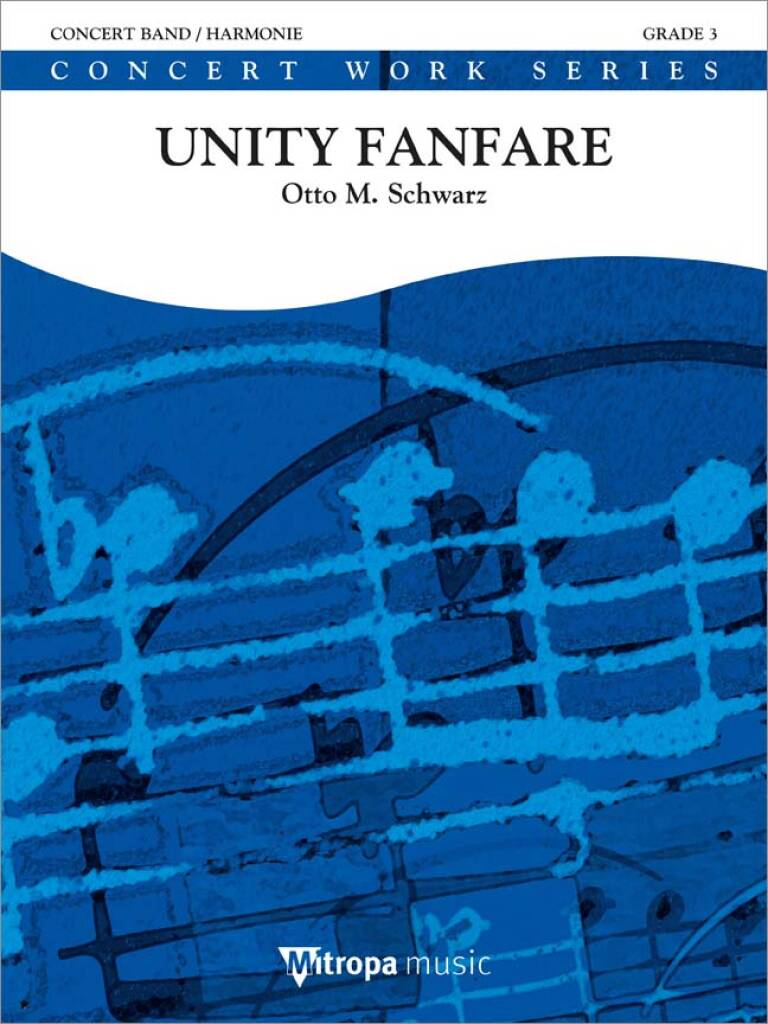
£134.99Compostela - Thierry Deleruyelle
"Four roads lead to Santiago", so begins the Book of the Pilgrim. Written in the 12th century, the Codex Calixtinus opened the way for pilgrimage from most cities in Europe and North Africa to Santiago de Compostela, in Spain. Compostela - The Way of St James describes the pilgrims' journey. After a slow introduction, a brilliant theme announces the start of the journey. The arrival in Spain is indicated by incantatory chants and majestic chords. Finally, the music softens as the pilgrims venerate St James.
Estimated dispatch 7-14 working days
-
£109.99Around a Village - Menno Haantjes
The idyllic village Beetsterzwaag, in the east of Friesland, and its surroundings are depicted in this suite. The first part describes the main street with its liveliness. The second part brings us to the nearby church of St. Hippolytus-Olterterp while the final section describes the children playing in the woods of Sparjebird. Het idyllisch in de Friese bossen gelegen dorp Beetsterzwaag en haar omgeving staat model in deze landelijke suite. Het eerste deel beschrijft de hoofdstraat met al haar levendigheid. Het tweede deel brengt ons in het naburige St. Hippolytus-kerkje van Olterterp terwijl het slotdeel de spelende kinderen beschrijft in het speelbosSparjebird.
Estimated dispatch 7-14 working days
