
Results
-
 £76.99
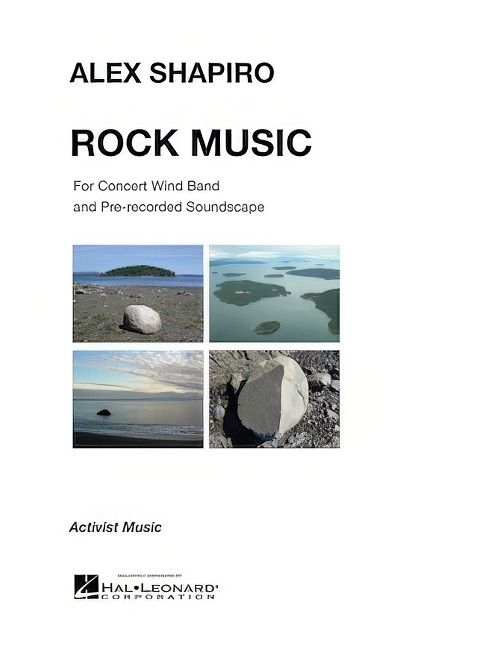
Rock Music (Concert Band - Score and Parts) - Shapiro, Alex
For Concert Wind Band and Pre-Recorded Soundscapes.Alex Shapiro first brought electroacoustic music - paired with using an everyday object as an instrument - to middle school bands with her 2010 piece, PAPER CUT. Now comes ROCK MUSIC, possibly the very first geo-electroacoustic minimalist band piece, largely devoid of melody, and of rhythm. Conceptual and atmospheric, the music features compelling textures from instruments, voices, and rocks that weave a wind band into a piece of sonic fabric stretched across linear time. As the notes slowly crawl, melt, and scrape over a sonic landscape in random, irregular ways, we're connected to the ancient glaciers which carved the world we know, and which we strive to protect. Like PAPER CUT, ROCK MUSIC can be equally appreciated by mature bands and their audiences, as well. To perform ROCK MUSIC, you'll need an audio system capable of playing the prerecorded audio tracks from a laptop computer via a small digital audio interface connected to an audio mixer. Download information is provided in the printed piece.Duration: 4:15
Estimated dispatch 7-14 working days
-
 £118.99
Morricone Medley (Concert Band - Score and Parts) - Morricone & Morricone - Ono, Ritsu
Ennio Morricone has written over 500 scores for fi lm and TV and is one of the most famous composers in the world. The Japanese arranger Ritsu Ono compiled a medley with popular and less popular songs written by this famous Italian composer: Nuovo Cinema Paradiso, The Crisis, Playing Love, Danny's Blues and the 1900s Theme. A must play for every Morricone fan. Duration: 7.45
Estimated dispatch 7-14 working days
-
 £49.95
Autopilot (Concert Band - Score and Parts) - Bernotas, Chris M.
With its catchy melody and exhilarating rhythm, every band member fills an important role in this original composition. The rhythmic theme leads to a legato section before the low brass and winds take over with the melody, finishing strong with the full band coming in for a landing. Duration: 2:00
Estimated dispatch 7-14 working days
-
 £55.00
Chorale and Exultation (Concert Band - Score and Parts) - Bobrowitz, David
The opening chorale provides an poignant introduction to the rhythmic vitality of the fast and dance-like exultation. Short punctuated notes over a driving rhythmic background underscore a feeling of rejoicing and jubilance. The chorale melody returns in juxtaposition with the energetic rhythms of the exultation. This is a wonderful concert selection to feature your band's rhythmic skills that will be appreciated by audience and players alike for years to come!
Estimated dispatch 7-14 working days
-
 £66.95
Escape from Dead Raider's Hollow (Concert Band - Score and Parts) - Bell, Jeremy
"Escape from Dead Raider's Hollow" is a fast-paced adventure. Opening quietly, the introduction gradually builds in volume and energy up to a tempo change where the piece takes off and doesn't relent until the end. Combining rhythms of 3 over a pulse of 2 creates a hemiola effect that drives the piece forward, creating a feeling of anxiety and being chased. This is a bombastic, action-packed piece with loud percussive hits, huge brass, and soaring woodwinds that ends with a bang.Duration: 2:45
Estimated dispatch 7-14 working days
-
 £74.95
Sonata for Clarinet Op.120 No.2 in Eb (Concert Band - Score and Parts) - Brahms, Johannes - Farr, Ray
'Scaff' is an adaptation of the famous 4th movement of the Symphonie Fantastique by Berlioz in swing style. The story of the 'March to the scaffold' is a tragic one where the subject, in a depressive state over a love interest, overdoses on opium. He dreams that he has killed his beloved and after his procession to the scaffold is now witnessing his own death. This arrangement doesn't really reflect those tragic circumstances but instead redresses this great tune into a toe-tapping 'big band' number.
Estimated dispatch 7-14 working days
-
£14.95
Sonata for Clarinet Op.120 No.2 in Eb (Concert Band - Score Only) - Brahms, Johannes - Farr, Ray
'Scaff' is an adaptation of the famous 4th movement of the Symphonie Fantastique by Berlioz in swing style. The story of the 'March to the scaffold' is a tragic one where the subject, in a depressive state over a love interest, overdoses on opium. He dreams that he has killed his beloved and after his procession to the scaffold is now witnessing his own death. This arrangement doesn't really reflect those tragic circumstances but instead redresses this great tune into a toe-tapping 'big band' number.
Estimated dispatch 7-14 working days
-
 £38.50
Latin Yuletide (Concert Band - Score and Parts) - Sweeney, Michael
Here is a unique setting of two holiday favourites set in a smooth Latin style.?Bells Over Bethlehem (Andalusian Carol)?uses a mixture of unison and harmony sections as the melody is passed around the band.?O Tannenbaum?has a contemporary flavor and utilises interesting chord progressions. Fresh!?
Estimated dispatch 7-14 working days
-
 £64.95
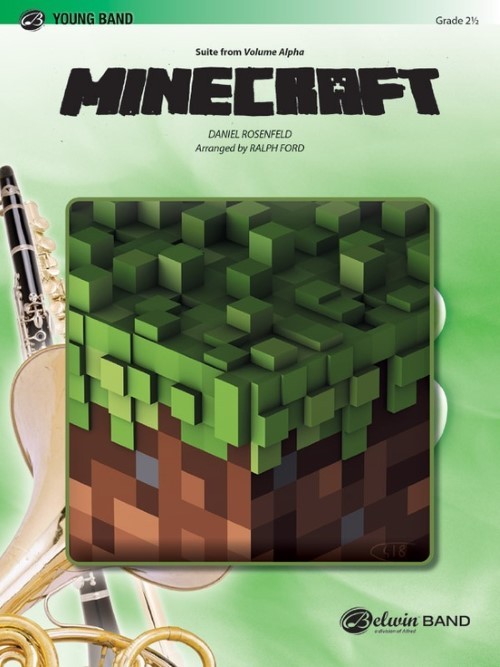
Minecraft, Suite from Volume Alpha (Concert Band - Score and Parts) - Rosenfeld, Daniel - Ford, Ralph
Minecraft has won numerous awards and sold over 54 million copies across all technology platforms. Originally developed as a sandbox game that allows the player(s) to construct objects, cities, worlds, etc. out of textured cubes in a 3D world, there are four distinct modes. Its brilliance lies in the fact that players have no specific goals and are free to choose how to play the game. This medley was compiled from selected music released with the Alpha version of the game including:Minecraft (Main Theme)Mice on VenusSwedenSubwoofer LullabyWet HandsHaggstromDuration: 7.00
Estimated dispatch 7-14 working days
-
 £72.99
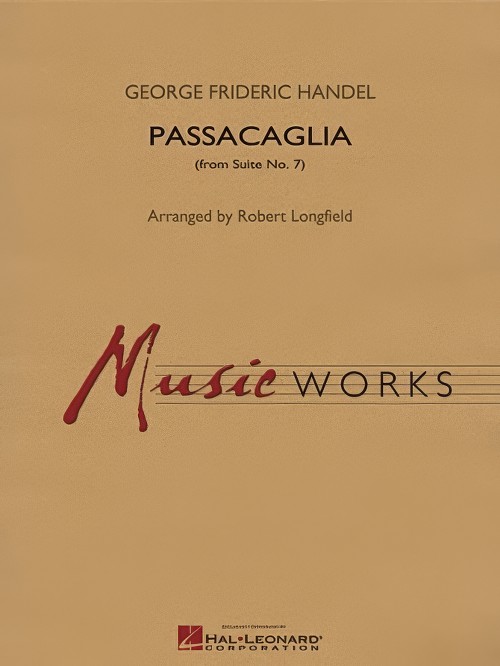
Passacaglia (from Suite No.7) (Concert Band - Score and Parts) - Handel, George Frideric - Longfield, Robert
Handel's Passacaglia from Suite No. 7 in G minor was originally written for harpsichord and consists of a series of variations over a repeating four-measure harmonic progression. In this masterful transcription by Robert Longfield, Handel's Baroque gem serves as a vehicle to showcase the colours and timbres of the modern concert band.Duration: 4:30
Estimated dispatch 7-14 working days
 View Music