
Results
-
 £113.30
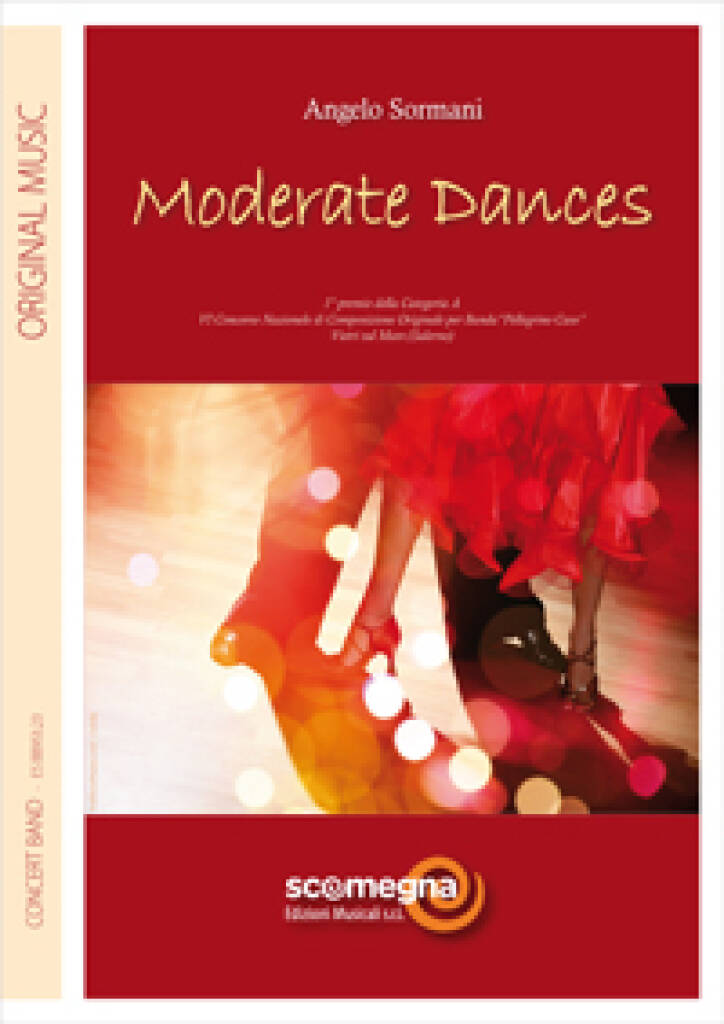
Moderate Dances - Angelo Sormani
This piece is a tribute to dance music, especially passionate, intense and meditative dance music. "Moderate Dances" is divided into three movements: a "Tango", a "Slow Waltz" and a "Bossa Nova". Each movement and each dance has its own particular characteristics but, when combined, these different rhythmic beats and times give the piece a feeling of completeness and uniformity. The Tango started to flourish in the suburbs of Buenos Aires in around 1880. There is still some doubt as to its origins, which may be Cuban (Habanera) but are probably African. It was most popular in Argentina and Brazil: here the male protagonist was originally the "gaucho" with his inseparable guitar, later to be replaced by the proud, elegant "compadre". By around 1910 the Tango had spread to Italy and France. New clubs opened, where the upper classes could watch and dance the Tango. Here the dance also underwent some rapid transformations. The exaggerated and extravagant gestures and body movements disappeared. Slow, gliding steps replaced the old rotational movements. The women's red ankle-boots and the partners "staring into each other's eyes" accentuated the erotic nature and sensuality of this dance. So much so that, in 1913, the German government banned soldiers from dancing the Tango. Those who broke the law were immediately discharged from the army. From a strictly musical perspective, the basic instruments were a flute, a harp (the diatonic harp typically played by the Indians of Paraguay) and a violin, or flute, guitar and violin or even clarinet, guitar and violin. These instruments were easy to transport, ideal for playing at parties, in the streets and in courtyards. The musicians played by ear, frequently improvising: there were no scores, no records, which is the main reason why it is impossible to trace the Tango back to its exact origins. However, the Tango's evolution (and growing popularity) was once again fostered by its fundamental ability to absorb "other" cultures, languages and sounds. And it was the arrival of the "bandoneon" (an accordion-like instrument that was invented in Germany and brought to Rio de la Plata by some immigrant), which replaced the flute, that marked the beginning of the Tango's huge success outside Argentina. A number of talented composers, above all the great Astor Piazzola (1921-1992), transformed the bandoneon from a simple accompanying instrument to a solo instrument that was to become the distinguishing feature of the 20th century Tango. The Slow Waltz originated from the Waltz, the typical dance of the Bavarian and Tyrolese peasants in the 1700s. It was composers like Johann Strauss, father and son, who carried the Waltz to its zenith in the 1800s, creating the sensual and melancholy yet joyful and charming dance we are all familiar with. When the Waltz first became popular in Germany, the members of respectable society were shocked at the closeness of the dancing partners, who had always previously danced apart. The main difference between the Waltz and Slow Waltz is that the latter has a slower, more expressive rhythm: the men wear tails and the women wear ball gowns decorated with beads and feathers and couples dance in graceful rotational movements. "Bossa Nova" is the title of the last movement in the piece. Jobim, the great Brazilian musician, described this musical genre as a combination of modern Jazz and Samba. Bossa Nova means "new wave". This was the name of the artistic and musical movement that evolved in Brazil in the late Fifties and was extremely popular throughout the Sixties. The songs are usually about love or social matters, drawing inspiration from the slums of Rio De Janeiro and the lives of their inhabitants. Bossa Nova, with its original compositions and the artistic talent of its musicians, also became hugely popular in the United States and Europe, and top Jazz musicians (Ella Fitzgerald, Stan Getz, Bob Cooper, Charlie Bird, Sonny Rollins, Dexter Gordon, Dizzy Gillespie) started to include Bossa in their repertoires.
Estimated dispatch 7-14 working days
-
 £168.50
Grand Serenade - P.D.Q. Bach
Thanks to the untiring editor Peter Schickele, who has rendered the work now playable by modern concert band, audiences can now marvel at the misbegotten meanderings offer. Bach and shake their collective heads, wondering "What was he thinking?" Trying to realize the composer's intentions is a waste of time, since he probably didn't have any. On the other hand, rehearsing the music well does seem advisable, so that when the inevitable critical backlash develops, the performing organization can justly claim that it wasn't their fault.
Estimated dispatch 7-14 working days
-
£168.50
The Three Embraces - Carter Pann
The first two of three movements are meant to be aural aromas, says Pann, with soft, languid, and lush winds (a long trail of the softest dynamics). Harp and celesta are used to impart an aura of ancient, inward elegance. The Three Embraces ends with a celebratory mix of pastoral melodies juxtaposed over more modern, angular harmonies. Written to celebrate Allan McMurray's 35 years as Director of Bands at the University of Colorado. (all quotes from the composer) Dur.: 12'30
Estimated dispatch 7-14 working days
-
 £104.50
Florentiner March - Julius Fucik
A classic "Grande marcia" in the Italian style, The Florentiner is now available in an edition for modern concert bands. Conductors, musicians, scholars and audiences will enjoy this march in the first American edition that is faithful to the original Fucik manuscript.
Estimated dispatch 7-14 working days
-
 £121.00
Commemoration and Celebration - Robert E. Foster
Based on J. S. Bachs well-known chorale Sheep May Safely Graze, this work is dedicated to commemorating and celebrating the life and memory of Claude T. Smith. The full, rich scoring effectively utilizes the colors and tonal resources of the modern symphonic band while projecting youthful rhythmic energy.
Estimated dispatch 7-14 working days
-
 £104.50
Time Travel - Daniel Bukvich
A modern minimalist work by the popular contemporary composer, Daniel Bukvich, Time Travel was based originally on the mathematical relationships found in the wheels/gears of a mechanical clock movement. It evolved into a work with a very distinctive Ravel flavor.
Estimated dispatch 7-14 working days
-
 £104.50
Hands Up - Andrew Boysen Jr.
This highly original new work uses creative techniques to increase both the aural and the visual resources of the modern concert band, effectively creating an exciting new rhythmic musical adventure. The title alludes to the use of hand clapping as an integral part of the composition. The composer states, "I intended the use of the clapping to be an integral part of the fabric of the piece. It is not a novelty piece."
Estimated dispatch 7-14 working days
-
 £104.50
Threnos - Andrew Boysen Jr.
Probably no speech in modern history has been examined and studied as much as Lincolns Gettysburg Address, and few speeches have been so often quoted and used in other peoples presentations, whether oral or musical. A fascinating recent study examines the rhythm of the words Lincoln used, researching the drama and the implications of their rhythmic content. These rhythmic implications are the basis of Bukvichs effective and dramatic new work, beginning appropriately enough with, Four Score and Seven.
Estimated dispatch 7-14 working days
-
 £121.00
Looking Upward Suite - John Philip Sousa
This new definitive edition of one of the "March Kings" greatest compositions is a welcome addition to the historic legacy of the modern concert band. Meticulously researched and studied, and based on the actual parts and materials used by the Sousa Band on their legendary tours, this is a tour de force that will be enjoyed by fine bands for many years.
Estimated dispatch 7-14 working days
-
 £71.50
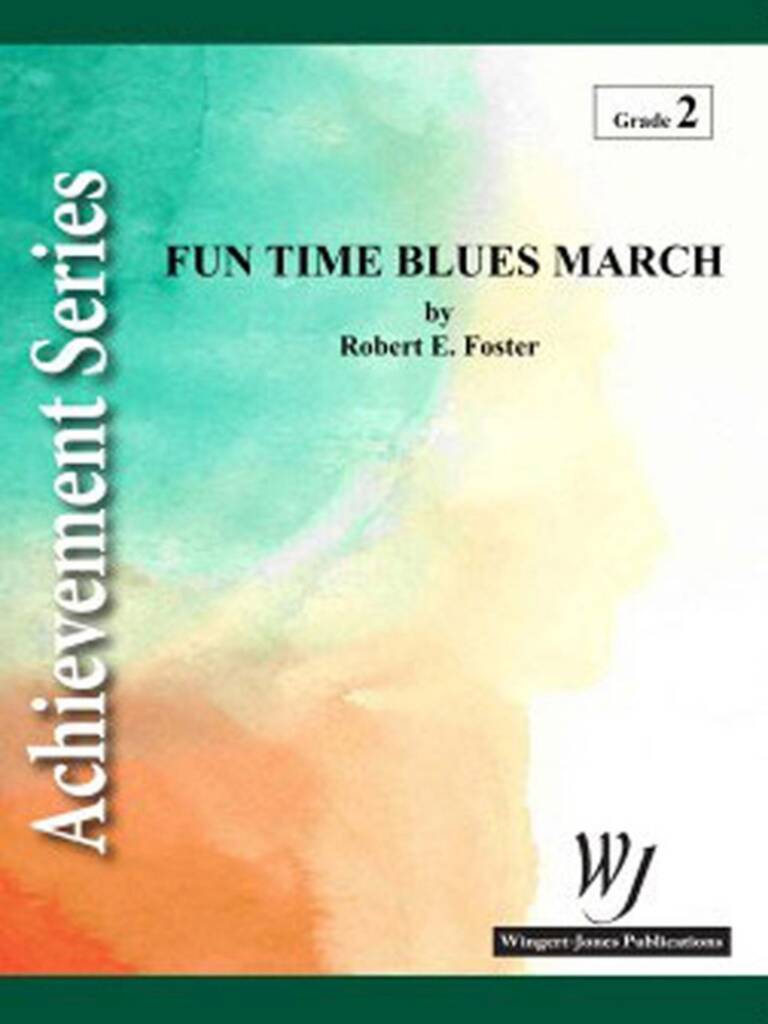
Fun Times Blues March - Robert E. Foster
Combining modern "jazz-rock" rhythms with the standard, traditional 12-bar blues form results in a rhythmic jazz march that will be fun for bands and audiences alike. "Flexible" percussion parts enable everyone in the percussion section to play.
Estimated dispatch 7-14 working days