
Results
-
 £159.99
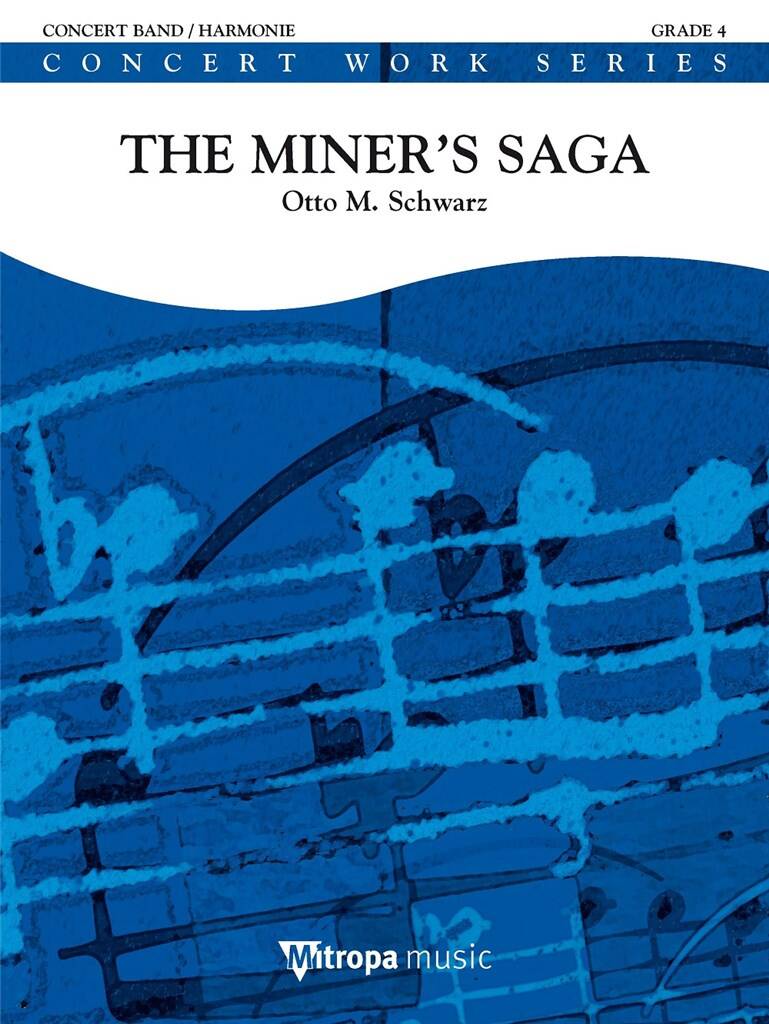
The Miner's Saga - Otto M. Schwarz
This programmatic piece is about a simple miner by the name of Gottlieb Bumler and his pact with the devil. In the program note one can follow each step of the story so you can almost hear the events as if they were happening in front of you! This cinematic piece is full of sound effects, great brass sequences, solid percussion and virtuosic winds. An ideal piece for a thematic concert, or a challenging choice for a contest. This programmatic piece is about a simple miner by the name of Gottlieb Bumler and his pact with the devil. In the program note one can follow each step of the story so you can almost hear the events as if they were happening in front of you! Thiscinematic piece is full of sound effects, great brass sequences, solid percussion and virtuosic winds. An ideal piece for a thematic concert, or a challenging choice for a contest.
Estimated dispatch 7-14 working days
-
 £332.99
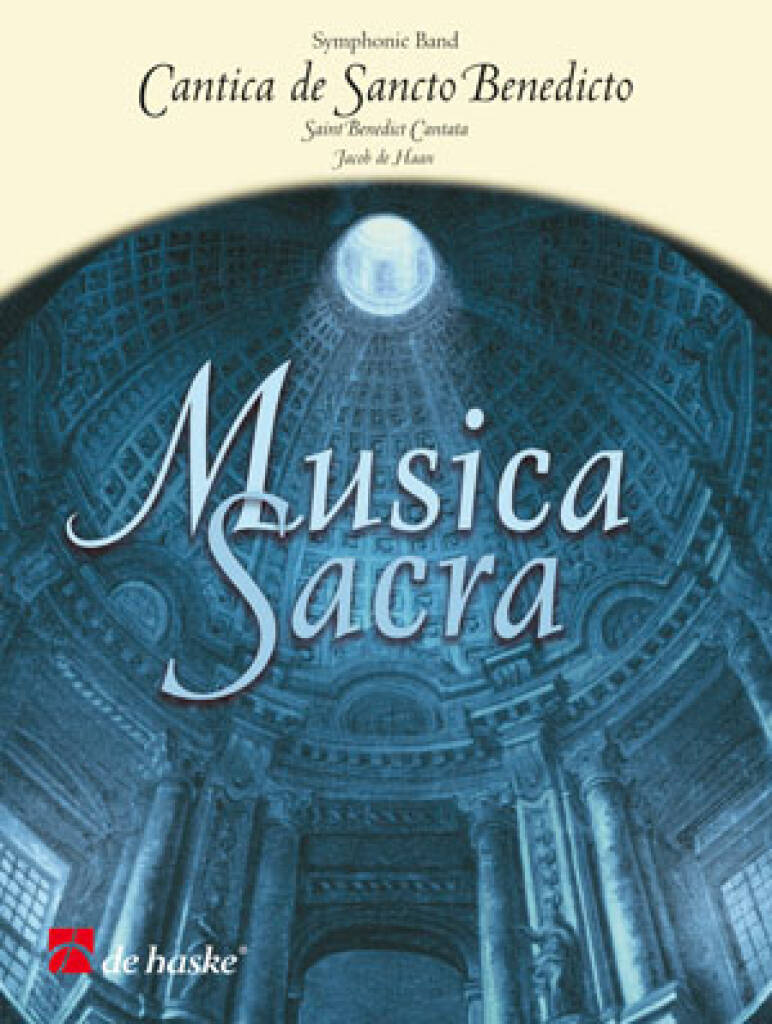
Cantica de Sancto Benedicto - Jacob de Haan
Cantica de Sancto Benedicto is a three-movement work for mixed choir, soprano solo, concert band and organ ad libitum - on Latin lyrics that relate to the life of Saint Benedict. It was commissioned by the city of Norcia in Italy, whereBenedict was born. The holy Benedict (480-547) is considered the founder of monastic life within the Roman Catholic Church. His enormous influence is especially owing to his monastic rule, the Regula Benedicti.Jacob de Haan has named the movements ofCantica de Sancto Benedicto after the Holy Trinity: the Father (Gloria Patri), the Son (Gloria Filio) and the Holy Spirit (Gloria Spiritui Sancto). The lyrics of thehymn Gemma Caelestis, (which, like the othertexts, were originally used in Gregorian chant) are voiced by the choir. To this purpose, Jacob de Haan composed new, choral-like, homophone music. The sequence Laeta Quies is rendered by the soprano; the verses (divided over the threemovements) are alternated with those of Gemma Caelestis. The work closes with an impressive grand finale, in which texts are used from the proprium of the mass in honor of the saint's day of the holy Benedict (11 July). Notes to the conductor:For this cantata, there are various possibilities for the performance. The first involves a performance in which the choir and soprano parts are only accompanied by organ. Such a performance has several advantages: since the band never soundstogether with the choir and the soprano, no balance problems occur, and even a performance with a large concert band and a small cantata choir is conceivable. A special layout is also possible - with which you can set up a three-dimensionalperformance in a church. For example, the choir can sing in the chancel, accompanied by the choir organ; the soprano can stand on the gallery, accompanied by the main organ; and the band can be seated in another part of the church. The choir couldalso sing from a gallery. With layouts like this, working with two conductors is advisable. Choral parts available separately.
Estimated dispatch 7-14 working days
-
 £137.99
Odyssee - Jan Bosveld
The Odyssee tells the story of Odysseus, the undaunted hero. In times long ago the blind poet Homer wrote this famous epic. The "Odyssey" follows the "Iliad", the story of the bloody war between the Greek and the Trojans. This battle endsafter ten years thanks to the Odysseys famous trick. the Trojan Horse. The Odyssey is not a war epic, but a story about perseverance, loyalty, adventure, and the survival instinct of its ingenious hero. In The Odyssey, Homer describes howOdysseus, the king of Ithaca, had to endure another ten years of affliction after the ten years of war in Troy before he could finally return to his home land. During those years, his wife, Penelope, had to try and keep her many admirers away.These men not only wanted het hand but also the kingship. To prove her husbands worth, she played a trick: "As soon as I have finished weaving this shroud for my father-in-law, Laertes, I will choose one of you to become my husband", she promisedthem. But during the night, she secretly loosened what she had woven during the day, prolonging the time until Odysseus would finally return. After twenty long years, when he finally stood at the door, she wondered: Is this really my husband? Ishe an imposter? Cunningly, she asked him to move the bed, because only she and her husband know that the bed was immovable and was build around an old three trunk! Odysseus was deeply moved: this really was his wife, his Penelope! Nearly threethousands years later, the loyalty and strength of this character, and all the dangerous adventures that Odysseus survived thanks to courage and intelligence, still moves us today. Odyssee by Jan Bosveld is not just an adventure story, butrather a characteristic piece in which memories of Homers story can be heard. The composition opens with a firm, stirring theme describing our hero, Odysseus, in detail: This man is not to be taken lightly. The further development of thisshort introduction completes this character sketch: trustworthy, perseverant, and a genius. After that we can picture Odysseus on the lonely beach of Ogygia. Do the trumpets depict his memories of the war of Troy? Does he think of his wife, as werecognise the weaving loom of Penelope in the murmuring eighth? In the solemn, plaintive part that follows, we can imagine Penelope feeling lonely, sitting in the womens room with her servants.One of the girls plays the harp, but that does notclear the sombre atmosphere. Then we can imagine seeing the sorceress Circe, who changed Odysseus men into swine. After she gives a simple magic sign something follows that reminds us of the sound of pigs grunting. Then the Odysseus theme resounds:the hero comes to savi his comrades. Assisted by Hermes, he forces Circe to lift the spell. The piece ends the same way as it began, with an animated theme: Odysseus is still the same, undefeated and not to be taken lighty!
Estimated dispatch 7-14 working days
-
 £228.70
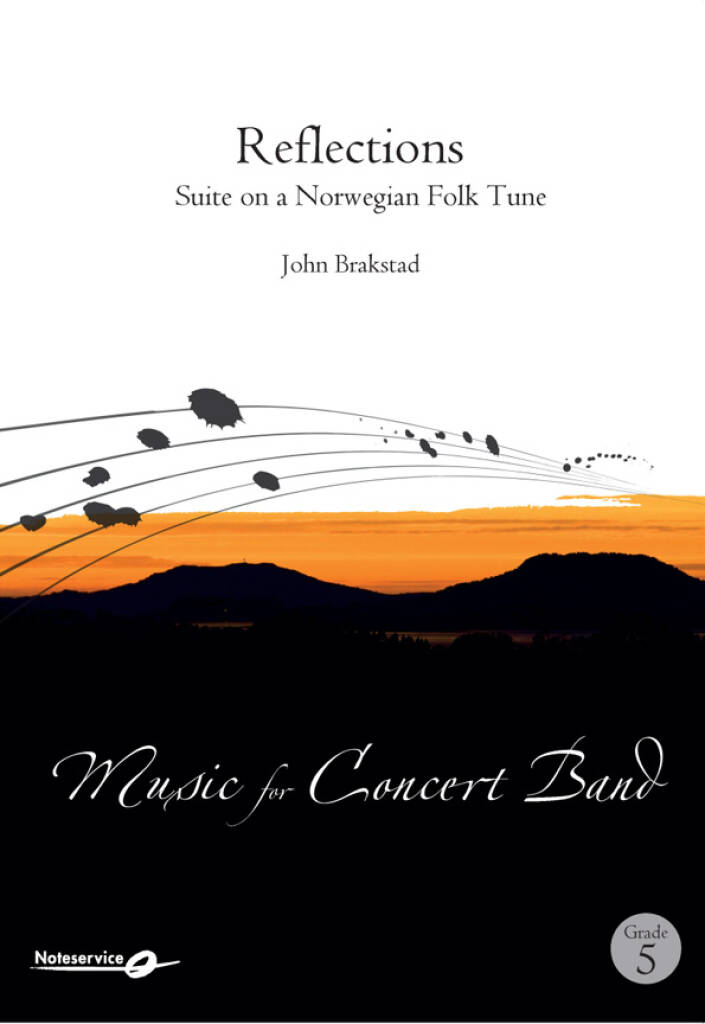
Reflections - Suite on a Norwegian Folk Tune - John Brakstad
The suite is constructed around a Norwegian folk tune. The melody is called "Dark Forebodings", and the words of the song revolve around thoughts and reflections on a future that can take unexpected, insecure, or perhaps dramatic and tragic turns.This is essentially a sad song with a beautiful melody. The folk tune itself is presented in the 2nd movement. In the 1st movement, the folk tune is joined with fleeting themes that indicate the unexpected; as if the music sometimesis confused as to which way to go. There are constant changes in atmosphere and feeling, from the harsh and dissonant, to the harmonious and melodic. The 3rd movement presents a more lively variant of thefolk tune, showing optimism andhappiness, even though the "halting" character of the rhythm underscores the unpredictable. The title "Reflections", therefore, refers to thoughts we can have about life. To the Conductor:The 2nd movement has an alternativeending which is may be used if the movement is played as an independent lyrical piece in a concert.It is advisable to begin first rehersal with the 2nd movement so that the main theme is known, before beginning on the 1st movement with itsmore semi-tonal parts. Intervals and intonation can provide much of the challenge in this movement.The 3rd movement can be more technically challenging, but there is considerable leeway in the tempo marking! It is important to maintain theenergy and intensity of the music through the whole movement.
Estimated dispatch 7-14 working days
-
£69.99
Scale Studies for Band - James Curnow
An important part of our Essentials of Musicianship Series, Scale Studies for Band is designed to be used as an instructional aid during your normal daily practice. Written so that the scale studies can be interlaced at appropriate times into your rehearsal, they enable you to address the scale and key considerations of your next piece just before starting that piece. For instance, if the next arrangement you will rehearse has a section in the key of G Major, you can take a moment and review the study in that key (Study Number 7). It's amazing how many wrong notes can be avoided by reviewing the key signature in an interesting and exciting manner, before diving into theperformance piece rehearsal. In the long run, this "key signature review" approach can actually save more rehearsal time than it uses. In addition to the full band aspect of Scale Studies, you may find value in quickly and easily administered "playing tests" using these materials. However you choose to use them, the Scale Studies from the Curnow Music Press Essentials of Musicianship Series will be valuable indeed!
Estimated dispatch 7-14 working days
-
 £149.40
Diplodocus - Ingebjørg Vilhelmsen
Diplodocus is said to be one of the largest dinosaus to ever have lived. This plant munching beast weighted approximately 20 tons, and could measure up to 30 metres from head to tail. The dinosaur lived in North America during the Jurassic period.This piece describes the carefree nature of a Diplodocus.A life with no natural enemies, and with an exceptionally small brain.To the conductor:The drum set part (Perc. 1) can be played as written, or ad lib. There is also a simplified drum set part that can replace Perc 1. if needed.Perc 2. is optional, and can be omitted.
Estimated dispatch 7-14 working days
-
 £204.99
Humperdinck Variations - Bert Appermont
After attending a performance of Hnsel und Gretel by Engelbert Humperdinck, the composer decided to write a commissioned piece for 4 horns and concert band based on the beautiful melody "Abendsegen", as used in Engelbert's famous overture. The composition can be performed with three or four solo horns with cues in the others parts and in the band. This work can be played with the horn section of your own band; the two extra horn parts noted in the full score are optional and can be left out. This piece is a stunning challenge for your french horn section!
Estimated dispatch 7-14 working days
-
£64.99
Record Breaker - Barnhouse
Here's a piece that's accelerated fun for performers and audiences, from start to finish! "Record Breaker" can be played at a wide range of tempos, but is most effective when taken at a full-blown galop tempo. Limited ranges and technical demands present the opportunity to lay this rollicking galop at rapid tempos. An excellent and fun closer or encore for any concert situation. See how fast you can go, and maybe you can break the record! Zoom!
Estimated dispatch 7-14 working days
-
 £50.50
Super Mom Symphony - Ed Huckeby
Bringing together your youngest players and your "coolest" Moms will be a huge hit with both the students and your audiences. "SuperMom Symphony" uses themes from Haydn and Beethoven and incorporates everything but the kitchen sink (OK, you can use that too if you really want to!). From the first pots and pans ostinato to the sustained blender "solo," this piece will have everyone "in stitches" and generating plenty of laughter and good will. P.S. You can use Dads as soloists also, but only if they can cook! Highly recommended for your first-year players!
Estimated dispatch 7-14 working days
-
 £109.99
The Duke's Finest - Duke Ellington
Duke Ellington (1889- 1974) was a very successful American pianist, conductor, composer and arranger. His orchestra existed for decades and was able to survive thanks to the enormous hits that he and his collaborators wrote. Many of those songs now belong to the standard repertoire of jazz musicians.Billy Strayhorn (1915-1967) was arranger and composer with the orchestra from 1939, and also wrote Take the A-Train, which became the band's favourite song from 1941. Many recordings were made of it. Juan Tizol (1900-1984, valve trombone) played with Duke Ellington almost his entire career and composed Latin songs for the orchestra. He is co-composer of Caravan and Perdido.Just likein the original Duke Ellington concerts, the medley begins with Take the A-Train, followed by a number of classics from the repertoire of the legendary orchestra. In some songs there are soloists, notable a solo on kettledrums in C- Jam Blues. This solo can also be improvised.When rehearsing a lot of attention has to be paid to the drum and bass, which together form the rhythm section and drive the orchestra on. The other sections have to be tight and create a coherent swing effect. The swing shouldn't be too stiff, and can vary per song. For example in "In a Sentimental Mood", the melody can be played almost straight (classically), while the rhythm section continues swinging.
Estimated dispatch 7-14 working days
 View Music