
Results
-
 £89.99
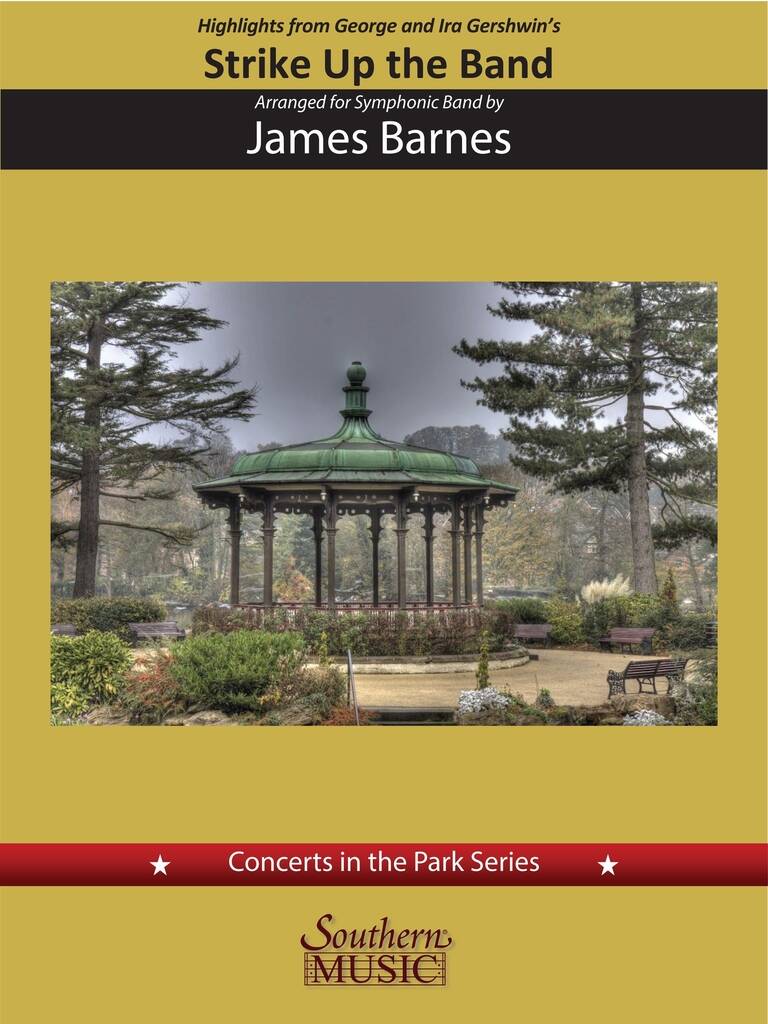
Highlights from George and Ira Gershwin's - George Gershwin
Strike Up the Band is a 1927 Broadway musical by George and Ira Gershwin, based on a book by George S. Kaufman. Surprisingly, the show proved to be an early failure for the talented Gershwin brothers, closing while the out-of-town tryouts were still underway. Despite this setback, it was revised in 1930 with a somewhat similar plot by Morrie Ryskind, and the show enjoyed a respectable run of 191 performances. This arrangement by James Barnes includes four of the best tunes from Strike Up the Band: Mademoiselle in New Rochelle (composed for the 1930 revival), Soon (also composed in 1930), The Man I Love, and Strike Up the Band. Curiously, The Man I Love, which is now considered to be one of the most popular George and Ira Gershwin standards, was NOT included in the 1930 run of the show.
Estimated dispatch 7-14 working days
-
 £127.30
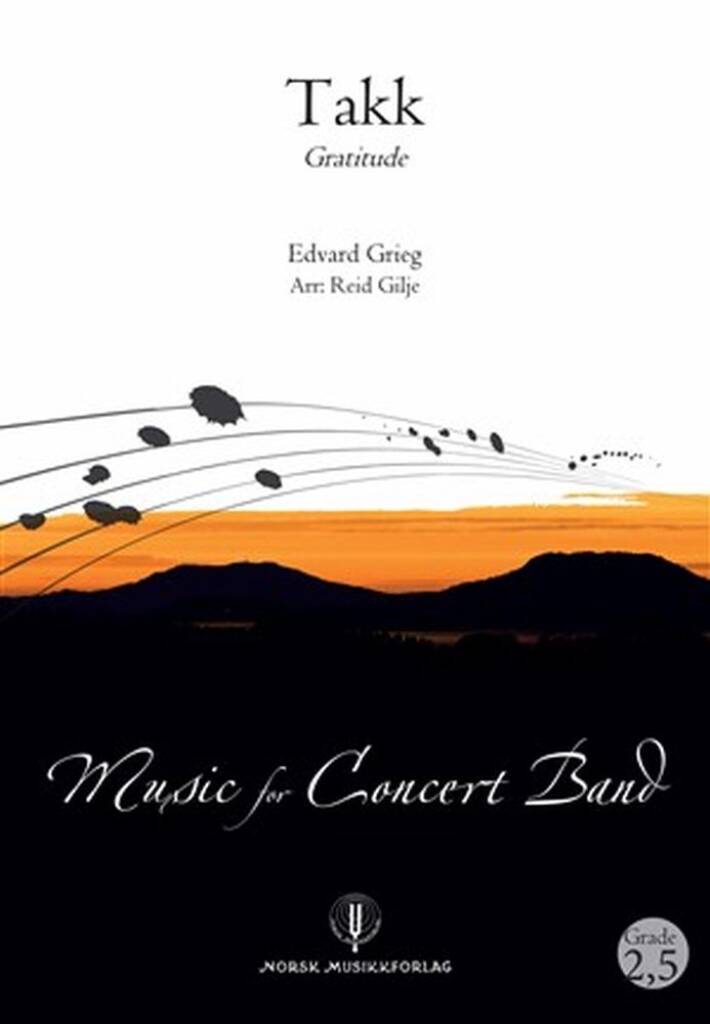
Takk - Edvard Grieg
"Gratitude" is one of Grieg's beautiful lyrical pieces, Op. 62 No. 2.Eva Knardahl made a beautiful recording that I well remember was used as background for a picture cavalcade by the Norwegian Broadcasting Corporation during the passing of His Majesty King Olav V of Norway in 1991.In this arrangement for band, I have tried to vary the instrumentation, both for the sake of more colours and to emphasize the drama.This piece should be played rubato with elastic phrasing. The form can be described as AABACoda. The most dramatic section is the B part from measure 25, which peaks just before measure 38. The last four measures (from measure 53) can be done a bit 'meno' in tempo.Reid Gilje
Estimated dispatch 7-14 working days
-
 £252.10
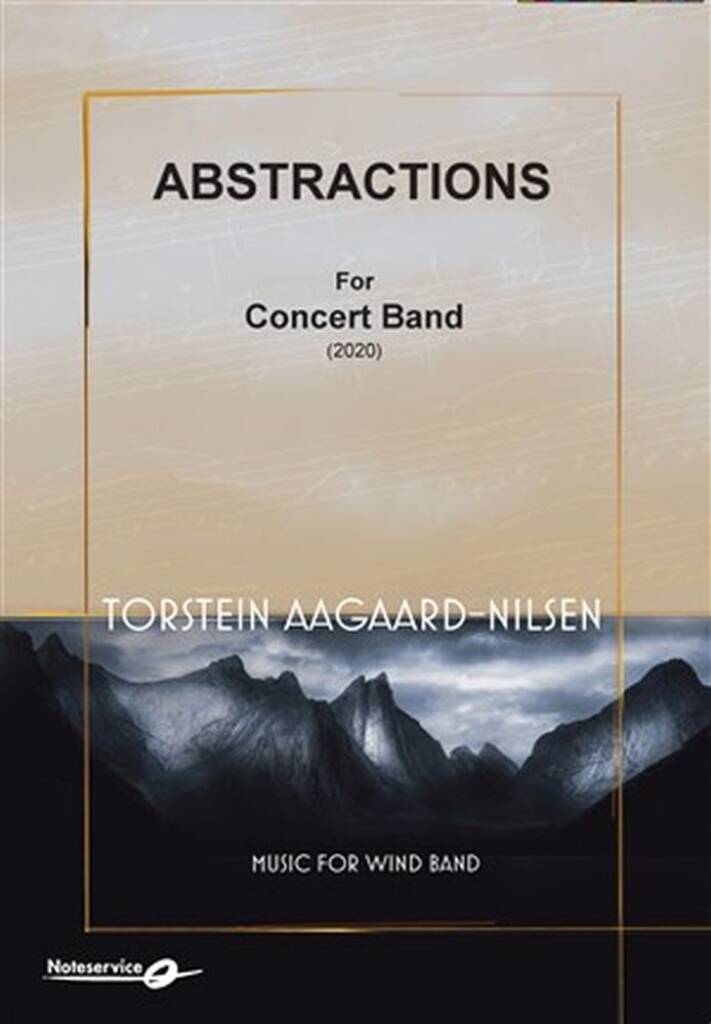
Abstractions - Torstein Aagaard-Nilsen
The titles of this three-movement work are abstractions where visual experiences are thought to be recreated as music, i.e. an abstract presentation of a motif, similar to an abstract image where one cannot immediately see the similarity.The first movement is inspired by the northern lights. It constantly changes in colour and shape.The title of the second movement is a play with the word "rock" is a well-known word describing a musical genre.But it is also a giant stone or a part of a mountain.The titles of this three-movement work are abstractions where visual experiences are thought to be recreated as music, i.e. an abstract presentation of a motif, similar to an abstract image where one cannot immediately see the similarity.
Estimated dispatch 7-14 working days
-
 £183.20
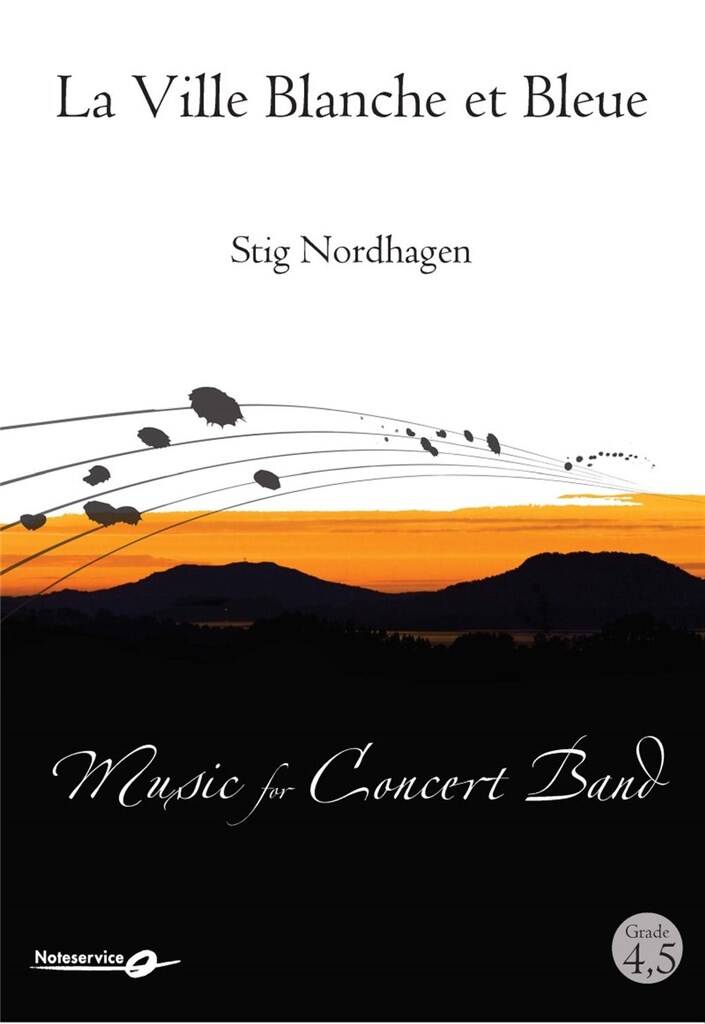
La Ville Blanche et Bleue - Stig Nordhagen
This piece is a kind of flashback on my experiences of my time as an amateur musician in my hometown of Gjvik (often called "The White City"). It was at a time when the expressionas had to be created by myself and the music performed by the band ("The Liverflower") was a kind of a voyage of discovery for a young boy. A lot of the music I played at that time has shaped me as composer and musician. I remember the beautiful melodies and the rhythmic passages with a nostalgic smile. Maybe this music can make an impression on new generations of band musicians.
Estimated dispatch 7-14 working days
-
 £174.10
Graceful Ghost - William Bolcom
I came to know of this piece when hearing famous Norwegian ragtime pianist Morten Gunnar Larsen playing it at a concert with the Norwegian Navy Band Bergen.I was struck by its melancholic beauty and wanted to arrange it for band. Ragtimes are rarely in a minor key (which this one is) and when you first hear it, you might think it was written around the time when Scott Joplin was the main ragtime composer. But, if you listen more carefully, you notice that some of the harmoniesare more advanced than one might expect in traditional ragtime, giving the piece a slightly more contemporary feel. The composer William Bolcom wrote Graceful Ghost in 1970 to honour the memoryof his father and it is one of his mostpopular pieces.
Estimated dispatch 7-14 working days
-
 £356.00
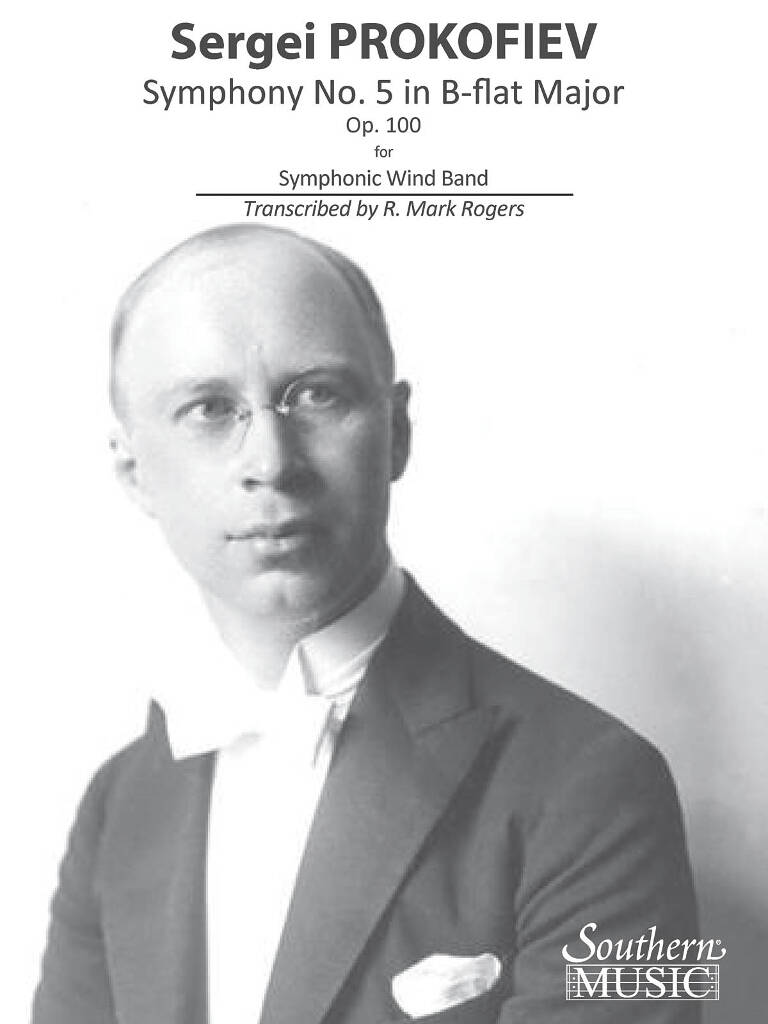
Symphony No. 5 in B-flat Major, Op. 100 - Sergei Prokofiev
Written in a single summer month while World War II was still raging in 1944, Prokofiev's Symphony No. 5 would become not only one of the composer's most celebrated and performed works, it would stand among the giants in all of 20th Century classical compositions. Cast in four movements, Prokofiev once gave a statement that he intended it as a hymn to free and happy Man, to his mighty powers, his pure and noble spirit. He added, I cannot say that I deliberately chose this theme. It was born in me and clamoured for expression. The music matured within me. It filled my soul. Deliberate or not, his statement likely helped placate the Communist Soviet Party, who under Stalin ruthlessly, and often fatally, censored the art and music of the time. This Southern Music publication represents the first complete band transcription of Prokofiev's monumental work by one of the world's most respected wind band editors, Dr. R. Mark Rogers. The edition provides a rare opportunity in the symphonic wind band repertoire for ensembles to perform an orchestral masterpiece in its entirety.
Estimated dispatch 7-14 working days
-
 £86.00
Postcard From Kampala - Dirk Brossé
Sir Dirk Bross, music director at the Philadelphia Chamber Orchestra, is a versatile composer of orchestral and symphonic repertoire, chamber music, film & musical. His compositions are performed worldwide by the most prominent orchestras and soloists. About the new series of 10 "Musical Postcards" for wind band, Dirk says the following: "Composing is a commitment; it is my life's mission. For me composing means creating a vacuum around myself and allowing myself to be submerged by impressions. It is a continual struggle between fantasy and reality, between dream and reality. Out of chaos of sounds and emotions I try to order my thoughts by juggling shreds of melodies, original chords, striking sound colours and alternating rhythms. Melody, harmony, rhythm and sound colours are finally balanced to generate a harmonious universe. This series of ten 'Musical Postcards' are a reflection of my travels, thoughts, discoveries and musical career so far, which has brought me around the globe. I look forward to you joining me on this voyage of discovery..."
Estimated dispatch 7-14 working days
-
 £76.40
Postcard From Benares - Dirk Brossé
Sir Dirk Bross, music director at the Philadelphia Chamber Orchestra, is a versatile composer of orchestral and symphonic repertoire, chamber music, film & musical. His compositions are performed worldwide by the most prominent orchestras and soloists. About the new series of 10 "Musical Postcards" for wind band, Dirk says the following: "Composing is a commitment; it is my life's mission. For me composing means creating a vacuum around myself and allowing myself to be submerged by impressions. It is a continual struggle between fantasy and reality, between dream and reality. Out of chaos of sounds and emotions I try to order my thoughts by juggling shreds of melodies, original chords, striking sound colours and alternating rhythms. Melody, harmony, rhythm and sound colours are finally balanced to generate a harmonious universe. This series of ten 'Musical Postcards' are a reflection of my travels, thoughts, discoveries and musical career so far, which has brought me around the globe. I look forward to you joining me on this voyage of discovery..."
Estimated dispatch 7-14 working days
-
 £73.00
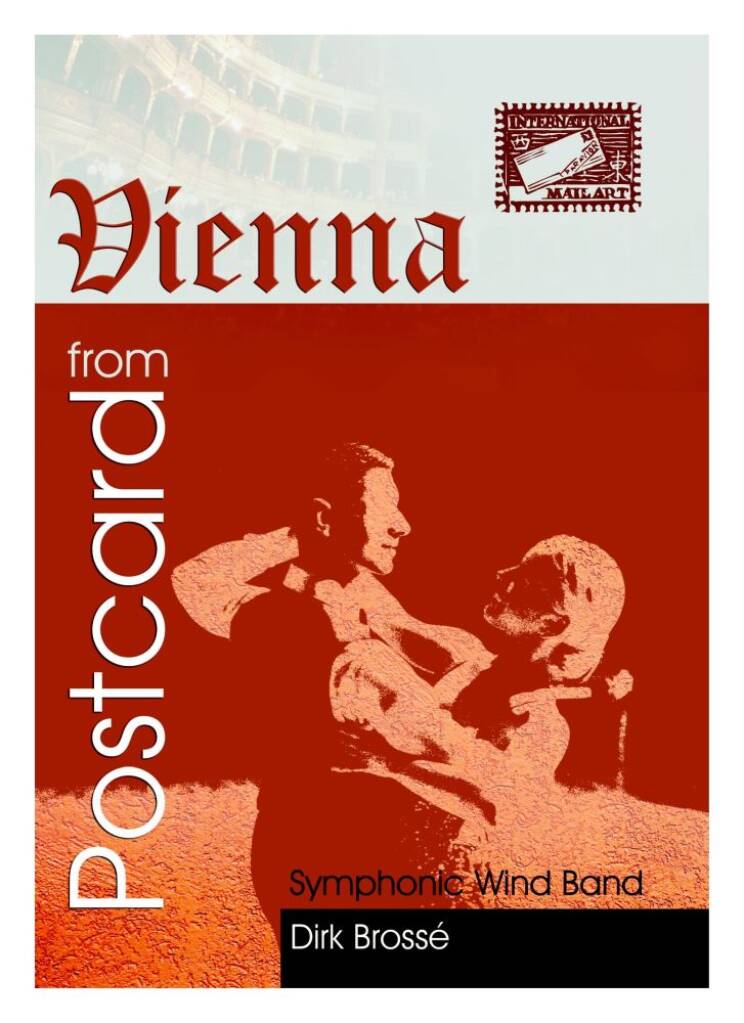
Postcard From Vienna - Dirk Brossé
Sir Dirk Bross, music director at the Philadelphia Chamber Orchestra, is a versatile composer of orchestral and symphonic repertoire, chamber music, film & musical. His compositions are performed worldwide by the most prominent orchestras and soloists. About the new series of 10 "Musical Postcards" for wind band, Dirk says the following: "Composing is a commitment; it is my life's mission. For me composing means creating a vacuum around myself and allowing myself to be submerged by impressions. It is a continual struggle between fantasy and reality, between dream and reality. Out of chaos of sounds and emotions I try to order my thoughts by juggling shreds of melodies, original chords, striking sound colours and alternating rhythms. Melody, harmony, rhythm and sound colours are finally balanced to generate a harmonious universe. This series of ten 'Musical Postcards' are a reflection of my travels, thoughts, discoveries and musical career so far, which has brought me around the globe. I look forward to you joining me on this voyage of discovery..."
Estimated dispatch 7-14 working days
-
 £86.00
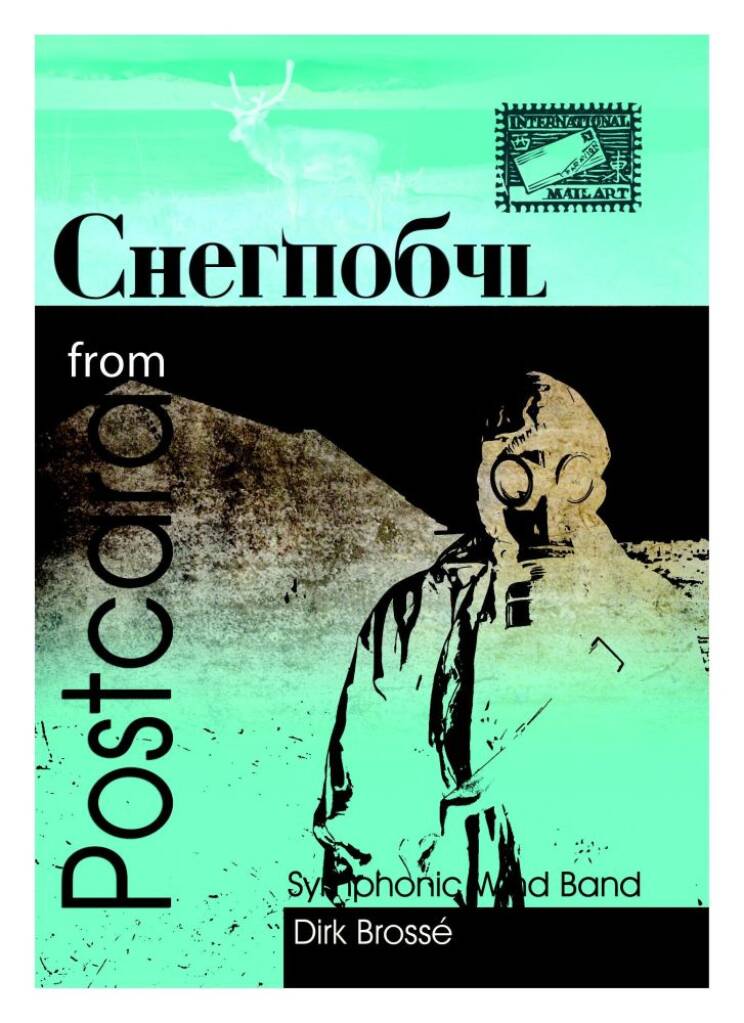
Postcard From Chernobyl - Dirk Brossé
Sir Dirk Bross, music director at the Philadelphia Chamber Orchestra, is a versatile composer of orchestral and symphonic repertoire, chamber music, film & musical. His compositions are performed worldwide by the most prominent orchestras and soloists. About the new series of 10 "Musical Postcards" for wind band, Dirk says the following: "Composing is a commitment; it is my life's mission. For me composing means creating a vacuum around myself and allowing myself to be submerged by impressions. It is a continual struggle between fantasy and reality, between dream and reality. Out of chaos of sounds and emotions I try to order my thoughts by juggling shreds of melodies, original chords, striking sound colours and alternating rhythms. Melody, harmony, rhythm and sound colours are finally balanced to generate a harmonious universe. This series of ten 'Musical Postcards' are a reflection of my travels, thoughts, discoveries and musical career so far, which has brought me around the globe. I look forward to you joining me on this voyage of discovery..."
Estimated dispatch 7-14 working days
 View Music