
Results
-
 £49.95
SOMEBODY THAT I USED TO KNOW (Goyte) (Beginning Band) - Lopez, Victor
Internationally acclaimed, this bouncy Gotye tune will be a high point on your beginners' concert. Reinforcing staccato style with a bit of percussion support, if you are looking for a selection for your band that the whole world knows, look no further, because you just found it! Infectious! (2:00)
Estimated dispatch 7-14 working days
-
 £435.40
Goldberg 2012 - Svein H. Giske
The first time I heard Bach's Goldberg Variations was in the movie Silence of the lambs, in the early 1990s. I noticed the beautiful background music in one of the scenes, but at that time I didn't know what it was. A few years later, when I was studiying at the Grieg Academy, I got to know the entire piece. For me, this is a piece of music which I can listen to countless times. I think it sounds as fresh today as it did more than 15 years ago and it never ceases to inspire me. Both Bach's composition and Glenn Gould's famous 1955 recording (which was the first one I heard) still makes a great impression on me. Before Gould recorded it at age 22, it wasn't a highly ranked piece amongst pianists and Bach was by many viewed as a bit old-fashioned. The young Canadian turned all this around. He managed to portray Bach in a reformed way, producing fine nuances in phrasing and making the many layers in Bach's music more transparent than anyone before him. Thus he plunged both himself and Bach (back) onto the international music scene. When The Norwegian Band Federation (NMF) asked me to write the test piece for NM in 2012, it was only natural for me to use the Goldberg Variations as a starting point and inspiration for my work. Since I was a teenager at NMF's summer courses in the mid eighties I've always listened to many different styles of music. Growing up in Sunnmre with the Brazz Brothers as teachers and mentors, jazz-, pop/rock- and folk music were early on a natural part of my musical background. I also have my classical education from the Grieg Academy on trumpet. As the title of my piece implies, I've wanted to bring Bach to the present and put his music into various modern musical landscapes. I think you can bring about a special kind of energy when music from different genres are mixed and I've tried to do this by mixing Bach with artists and musical styles from the present. In Goldberg 2012, the music is often constructed by several layers, which in a way are living parallel musical lives. They are seemingly moving or floating freely, almost unaware of each other, but bound together by the same basic pulse. The rythms, however, are often notated on a different rythmic subdivision level than the usual 8th- or 16th note levels. By doing this, I hope to achieve transparent sounds that rythmically are perceived as more free and detached from each other. In large sections of the piece, pop/jazz is fusioned with elements from Bach. I guess you could have this little scene as a synopsis for the piece: picture a group of musicians meeting: some are classical performers, some are jazz. They start to improvise together, each in their own voice or musical dialect and I'm sort of in the middle, trying to write down what they are playing. This is what I feel much of Goldberg 2012 is about. The foundation of the piece, in addition to Bach and references from pop/jazz music, lies also in my own material. This material, basically two chords, is heard in it's purest form in the 1st movement. I use these chords to create scales, new chords and different motifs which contribute to blend together the different moods of the piece. It has not been my intention to copy Bach's form (theme and 30 variations), but rather to use the bits and pieces that I like the most as an inspiration for my own variations. The 1st movement, Aria 2, is for my 3rd son, Olav, who was born on the 21st of April 2011, and the 5th movement, From long ago, is dedicated to the memory of my father, Svein J. Giske, who passed away on the 6th of June 2011. -Svein H. Giske, January 2012-
Estimated dispatch 7-14 working days
-
 £252.10
Rhapsodie Norvegienne Nr.2 - Johan Halvorsen
This arrangement was written for Dragefjellets Musikkorps Bergen for their performance at the Norwegian Wind Band Championships in 2019.The original orchestral work is one of our country's greatest national works for symphony orchestra.It combines Norwegian folk music with the symphonic tradition, but on a slightly different way than Edvard Grieg.Compared to the original score, I have made parts of the work more chamber-music like by making the instrumentation a bit thinner. By doing this, I hope the span in dynamics will benefit the tutti sections as well. Unlike the symphony orchestra, concert bands do not have the large string section to enrich the soundscape.- Svein H. Giske -
Estimated dispatch 7-14 working days
-
 £105.80
May I Have This Dance ? - Günter Noris
Estimated dispatch 7-14 working days
-
£105.00
-
 £99.95
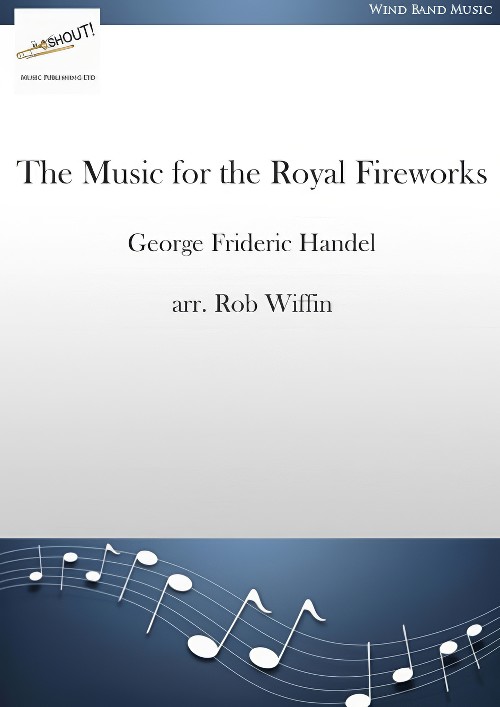
The Music for the Royal Fireworks (Concert Band - Score and Parts) - Handel, George Frideric - Wiffin, Rob
This complete arrangement of The Music for the Royal Fireworks was made in January 2017 at the request of Lieutenant-Colonel Kevin Roberts, Senior Director of Music of the Household Division. I tried to make the version as close to the original as possible while arranging it to work for modern symphonic band. Although tempting, I did not want to ?€arrange?€ it too much, certainly not as much as the familiar Hamilton Harty arrangements. Consequently I kept the whole work in the same key of B flat, either major or minor, and made a few logical adjustments for the lower key and the technical facility of modern instruments. I have added a few apposite dynamics and articulations. I have also notated the music in the appropriate ?€French?€ style, writing out the double-dotted figures, especially in the Overture. In doing this I have gone further than the limited suggestions in the Eulenburg edition and taken account of the expertise of exponents of ?€Historically Informed Performance?€. The instrumentation is for full band but would work without trombones and saxophones and, to a lesser extent, flutes; clarinets though, are essential.Duration: c. 20
Estimated dispatch 7-14 working days
-
 £134.99
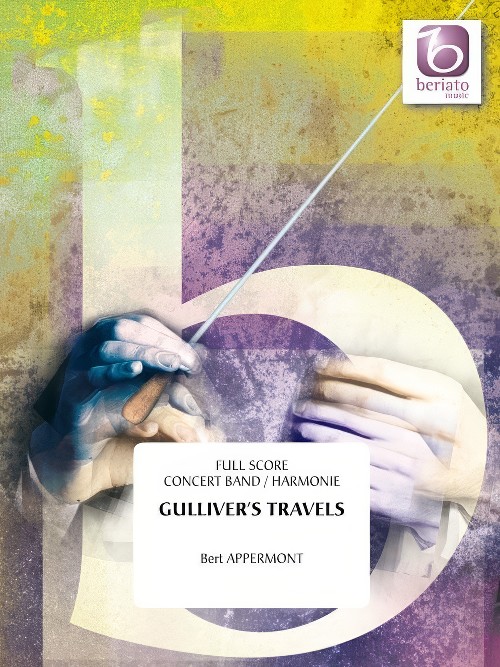
Gulliver's Travels (Concert Band - Score and Parts) - Appermont, Bert
The book Gullivers Travels (1726) by author Jonathan Swift formed the provocation for writing this composition. Even though this composition isnt a literal representation of the original story, a number of elements were still retained. The ships doctor Gulliver finds himself in 4 (fictive) areas, each with their own inhabitants and customs. Each part of this suite also received the name of one of these areas:I. Lilliput The enterprising Lilliputians are represented by a playful, common theme in the first part.II. BrobdingnagIn the land of "Brobdingnag" Gulliver is carried off by gigantic giants, which you hear approaching with the sounds of the bassinstruments. The same theme is constantly repeated and quickened in order to increase the tension.III. LaputaLaputa is an island that floats in the air; its inhabitants are strange people with slanting heads. The dreamy, special atmosphere is especially well conveyed here.IV. The HouyhnhnmsFinally Gulliver finds himself in the land of the Houyhnhnms, where intelligent and noble horses rule over the primitive, undeveloped people (yahoos). The trumpets in the brilliant opening express the galloping horses; the gallant theme that follows (horns and trombones) symbolises the primitive yahoos. The whole composition ends with a big finale.I intentionally tried to limit the degree of difficulty of Gullivers Travels. Despite this I think that this work can appeal to many orchestras due to the colourful orchestration (cues are provided where needed), the simple and clear theme and the highly imaginative breeding ground of a beautiful story around which this composition is built." Duration: 8:00
Estimated dispatch 7-14 working days
-
 £66.95
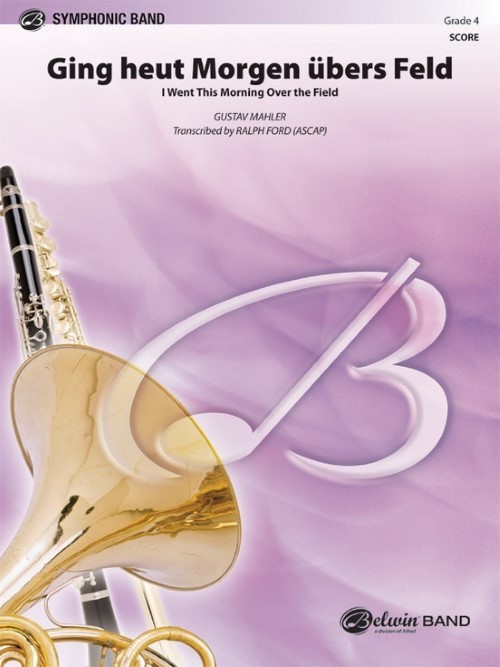
Ging heut Morgen ubers Feld (I Went This Morning Over the Field) (Concert Band - Score and Parts) - Mahler, Gustav - Ford, Ralph
The second movement of Mahler's "Songs of the Wayfarer" was originally scored for voice and piano. The second and most-musical movement, has been set for symphonic band without a vocal soloist, however, the part is included and may also be performed with the soloist. A cherished addition to the literature transcribed for the first time! Duration: 4.30
Estimated dispatch 7-14 working days
-
 £123.40
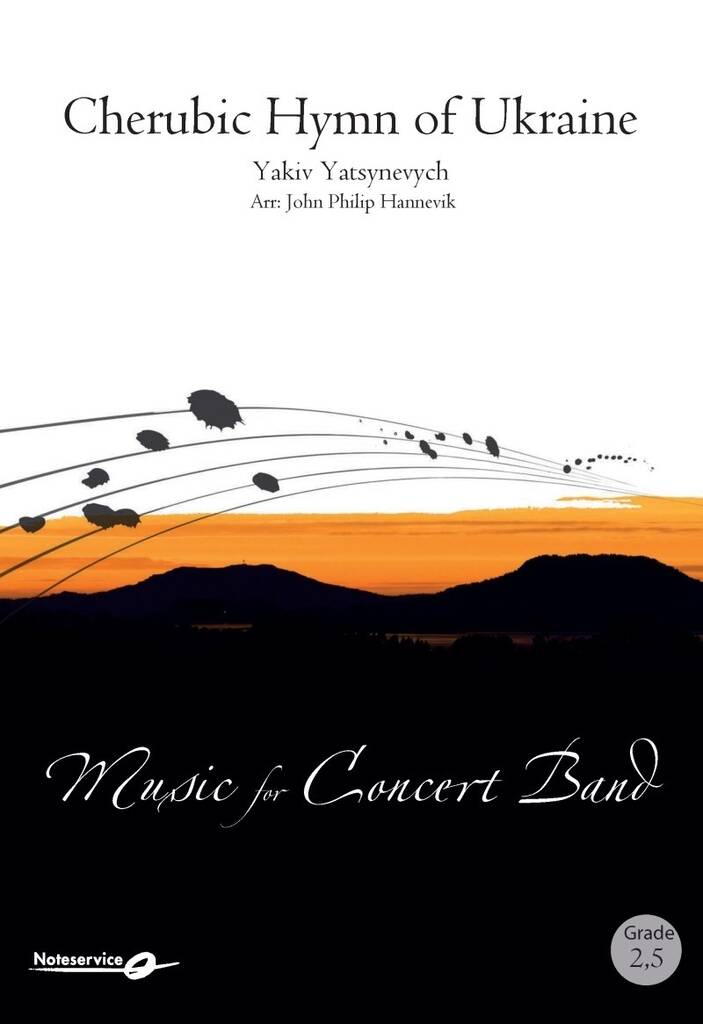
Cherubic Hymn of Ukraine - Yakiv Yatsynevych
Ukraine was invaded on February 24, 2022, and the world again became spectators to a conflict between unequal opponents. Once again we saw lies, injustice and brutality up close.I must admit that a feeling of powerlessness arose when experiencing this, an empty feeling of not being able to do anything useful.One early Monday morning, a few weeks into the conflict, I sat down to listen to Ukrainian music.I hardly knew any Ukrainian music, but I was familiar with the composer Mykola Leontovych, the man who composed "Carol of the Bells". He was a member of the Ukrainian liberation movement, and he was assassinated by a Soviet agent in 1921.One of his contemporary colleagues was the composer, teacher and conductor Yakiv Yatsynevych (1869-1945). He wrote church music and choral music, and I became very taken by his Hymn to the Cherubim, a part of the Orthodox Mass.I could not find any sheet music for this. But I have listened to numerous choral recordings, and I have tried to notate the music as I believe the composer himself has done originally.I chose to do the arrangement for a solo group of 4 players. These players can be placed at a distance from the ensemble, maybe on a gallery or at the back of your concert hall.The arrangement was made for Brttum Brass for their participation in the Oslo Brass Festival in April 2022.The performance in the church this particular night was met with a long-lasting silence after the last note. The warm respect, the moving response and love we felt from the audience is a memory I will carry with me for a long time.In the lyrics to this psalm, one finds the phrase:Let us now lay aside all earthly cares- John Philip Hannevik - |
Estimated dispatch 7-14 working days
-
 £214.80
Skies - Oliver Waespi
Program notes by Oliver Waespi on his composition Skies:Skies is the plural of Sky. We may wonder are there several skies? Is the sky we all long for not the same for everybody? While travelling on foot and "in the open air" I have observed the firmament often in quite different shapes, so that I can say I have indeed experienced the sky in different ways. Years ago I already wanted to portray "my sky" in music; I finally have been able to realise this long-cherished dream.This composition deals with the sky, more precisely with my sensual and emotional experience of the sky in all its aspects. Two point of views are combined in this composition: one showing the sky as it presents itself to me, the other showing the sky as I observe it. The music was bom simultaneously by intemal and extemal inspiration: it describes nature but also the emotional and spiritual experience of nature. To me, the experience of nature is not abstract, but it is connected with concrete ages, places or people from my neighbourhood. This is why I have combined several parts of this composition with certain landscapes.The sky presents itself in different landscapes in the most varied ways: for the sensual experience, there is no sky as such. The indications of places spread all over the score, are primarily clues for myself; they represent certain atmospheres, which I have experienced especially in England and Scotland. They can however also be useful to the musicians and the audience, providing they know those landscapes and the celestial atmospheres linked to them.The music is independent from the atmospheres described in the subtitles, as those are rather connected to a tragic nature, and so the music is not based on any program. Musically spoken, the composition has a symphonic structure, which means that the complete musical material is derived from three contrasting main themes. In the first part, the description of a noctumal sky ("Night") two themes are developed in an organic way; the first, rather "dusky", is to be found with the horns, the second, "in bright daylight", with the oboe and flute, the third, "more quiet" , with the brass instruments. In the next part, we have clouds and rain over the Isle of Skye (one of the Hebrides islands in Scotland) and here several elements of the first theme are still more developed. Then we get an increasingly dark mood, which is released, in heavy chords. Then suddenly, the sun breaks through and the music gets a majestic character. We have a new shape of the initial theme, first with the French horns and then with the trombones. The music gets a quicker tempo and flows into a quick movement describing the winds and waves at sea ("Wind and Waves"). Three themes are gathering and some variations are developed. The music gets more and more energetic and, after a climax, calms down again. Then we have a kind of "summer pastoral" which suggests summer at the South coast of Cornwall ("South Coast of Penwith Peninsuia in Summer"). This is certainly not the hotte st summer in Europe, but still it is beautiful in this country that is blessed with so much rain. In the "pastoral" , the sea is already sketched in broad outlines in the French horn solo. The magnificence of an aftemoon at the seaside is developed at the end of the composition ("Noon at Treen Cliff', a rock protruding in the sea next to Porthcumo at the South Coast of Cornwall); here the music gets stronger and stronger and after a majestic climax it vanishes completely.
Estimated dispatch 7-14 working days
 View Music