
Results
-
 £139.99
Light Cavalry Wind Band Set (Score & Parts)
Although he was born in Split, Croatia, of Belgian descent, Franz von Supp?'s nationality is defined less by his actual descendents than by the country and city where he lived and worked and had the great majority of his success, the Austrian capital, Vienna. It was here where, with assistance from the Johan Strausses and Franz Lehar, he helped to assure Vienna's reputation as the operetta capital of the world. He achieved this by pioneering operetta as a major medium for the theatre. The overture to Light Cavalry is one of his two most famous works, the other being the Poet and Peasant Overture written as incidental music for a play of the same name. 0:06:45
Estimated dispatch 7-14 working days
-
 £137.99
The Gipsy Baron Wind Band Set (Score & Parts)
The operetta The Gipsy Baron is, together with Die Fledermaus (The Bat), the most famous theatre work by Johann Strauss Jr. A libretto full of romance, original musical ideas, compelling Viennese dances, fiery rhythmic Hungarian music and beautiful arias, were just some of the ingredients that lead to its huge success. The Gipsy Baron can also be thought of as a comic opera. The main motif of this overture won first prize in a contest that was to provide a new Hungarian anthem, however because Strauss did not have Hungarian nationality, another melody was chosen. A great transcription to bring a Hungarian twist to any programme. 0:08:15
Estimated dispatch 7-14 working days
-
 £148.00
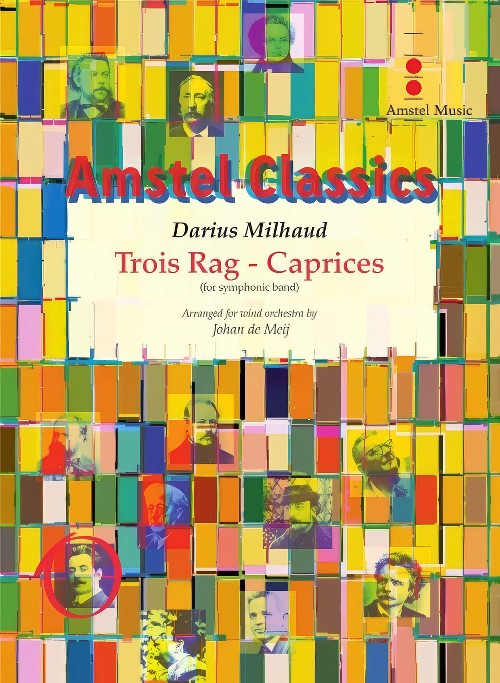
Trois Rag - Caprices (Concert Band - Score and Parts) - Milhaud, Darius - De Meij, Johan
The French composer Darius Milhaud (1892-1974) was a member of the Groupe des Six. This group of six composers gathering Honegger, Poulence, Auric, Durey, Tailleferre and Milhaud, imitated Erik Satie by revolting against the deeply rooted traditional conventions of that time. They reacted against impressionism (Debussy) and romanticism (Wagner, Mahler) and felt very strongly about the music of Satie and Stravinsky. Milhaud's most popular work is undoubtedly the ballet La Creation du Monde, one of the most striking examples of jazz influences in classical music. The premiere at the Theatre des Champs Elysees in October 1923 caused a real scandal with the Paris public. The Trois Rag-Caprices for piano were composed one year earlier, in the summer of 1922, and could be considered as a kind of preliminary sketch for La Creation du Monde. There are indeed clear similarities between both compositions as to the rhythmical and harmonic aspects. The Trois Rag-Caprices were orchestrated for symphony orchestra by Milhaud himself some time later. The same happened to Saudades do Brasil (1920), a piano composition punctuated with Latin-American influences, which was written after his stay in Rio de Janeiro (1917-18) exactly as his ballet Le Boeuf sur le Toit. Johan de Meij's orchestration of Trois Rag-Caprices for symphonic band is a most welcome addition next to the original band works of Milhaud, such as Suite Francaise (1945) and West Point Suite (1951).Duration: 8.00
Estimated dispatch 7-14 working days
-
 £78.00
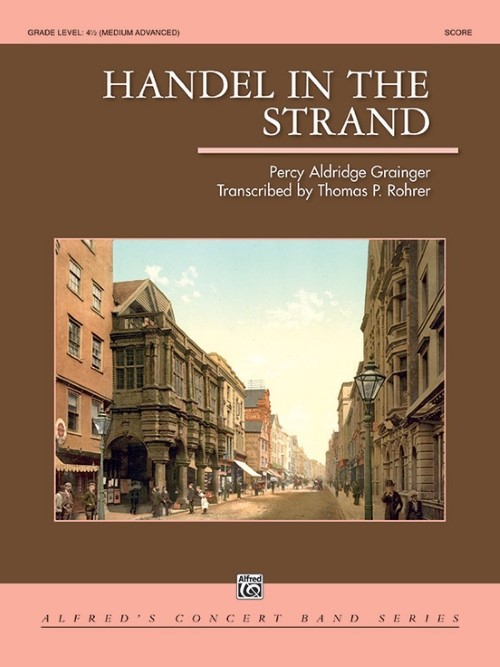
Handel in the Strand (Concert Band - Score and Parts) - Grainger, Percy Aldridge - Rohrer, Thomas P.
This delightful Grainger classic was written to depict a jolly old George Friedrich Handel careening down the Strand (the theatre district of London) accompanied by the English popular music of the day. Given the original instrumentation and label as a chamber piece in Grainger's original publication, this transcription is taken directly from Grainger's "four-some" edition of 1912, transposed down a step from G to F major. It is scored to best depict the light (and sometimes percussive) quality of the piano along with the lyrical flow of the strings and the general character of chamber music. Ultimately, the "room music" quality of the original shines through in this skilful transcription while depicting the spirit of the piece in a way that Grainger might have chosen.Duration: 3:35
Estimated dispatch 7-14 working days
-
 £106.99
A Klezmer Karnival (Concert Band - Score and Parts) - Sparke, Philip
Klezmer music originated in the 'shtetl' (villages) and the ghettos of Eastern Europe, where itinerant Jewish troubadours, known as 'klezmorim', had performed at celebrations, particularly weddings, since the early Middle Ages. Since the 16th century, lyrics had been added to klezmer music, due to the 'badkhn' (the master of ceremony at weddings), to the 'Purimshpil' (the play of Esther at Purim) and to traditions of the Yiddish theatre, but the term gradually became synonymous with instrumental music, particularly featuring the violin and clarinet. In recent years it has again become very popular and in A Klezmer Karnival Philip Sparke has used three contrasting traditional tunes to form a suite that will bring a true karnival atmosphere to any concert.Duration: 4:45
Estimated dispatch 7-14 working days
-
 £69.99
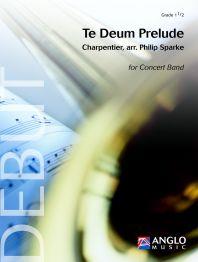
Te Deum Prelude (Concert Band - Score and Parts) - Charpentier, Marc-Antoine - Sparke, Philip
Who does not know the famous Te Deum Prelude by Marc-Antoine Charpentier (1634-1704)? This French composer studied both painting and composition in Italy. Returning to France, he took up the post of music master to the dauphin. He collaborated with Molire, working for the Thatre Francais until 1685. He then returned to court and was music director to the Princesse de Guise, composition teacher to the Duke d'Orleans and wrote music for the dauphin's chapel. His Te Deum, of which the Prelude has become well known (particularly in Europe, where it is used as the Eurovision signature tune) is one of many pieces he wrote for important state and religious occasions.Duration: 2:30
Estimated dispatch 7-14 working days
-
 £140.00
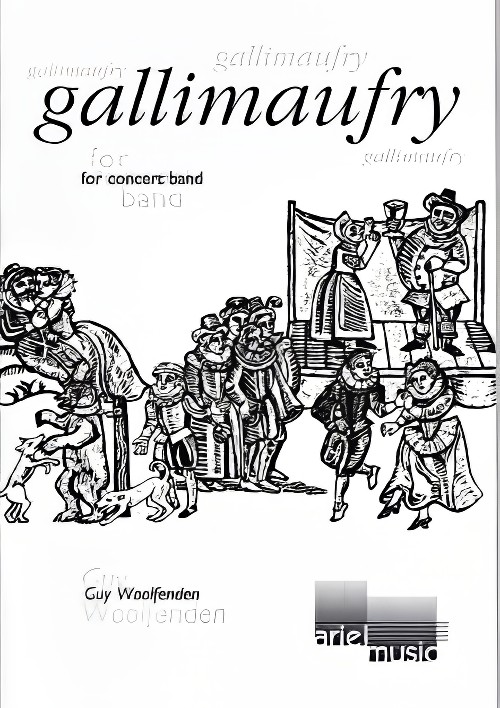
GALLIMAUFRY (Concert Band) - Woolfenden, Guy
Gallimaufry (gali maw'fri): A medley; any confused jumble of things; but strictly speaking, a hotch potch made up of all the scraps of the larder. cf Shakespeare: The Winter's Tale: "a gallimaufry of gambols"I. Church and StateII. Inn and OutIII. Starts and FitsIV. Father and SonV. Advance and RetreatVI. Church and Status QuoGallimaufry was inspired by Shakespeare's Henry IV plays, and derives from music I composed for the Royal Shakespeare Company's production which opened the Barbican Theatre in 1982. The score is dedicated to Trevor Nunn, then Artistic Director of the RSC, with grateful thanks for his suggestion that I should expand and mould the music from these productions into a form suitable for concert performance.My thanks also to Timothy Reynish and the British Association of Symphonic Bands and Wind Ensembles who, with funds provided by North West Arts, commissioned the work and helped to ensure its first performance on September 24th 1983 with the Royal Northern College of Music Wind Orchestra.The work is continuous and the thematic material of each of the six sections closely related. The "establishment" - leadership, temporal and ecclesiastical power - are depicted in the stately march which opens the work. (Church and State)The second section, Inn and Out, in an energetic hemiola rhythm, is concerned with the stews and low-life revels at the Boar's Head Tavern. This is interrupted and finally integrated with the Tavern Brawl and Gadshill Ambush of Starts and Fits.The mood changes and the ambivalence of Prince Hal's relationship with his father and surrogate father, Falstaff, is portrayed in a serene cor anglais solo. (Father and Son)Advance and Retreat is a recruiting march, derived from the Tavern Tune and leads into the last movement, Church and Status Quo, which deals with the rejection of Falstaff and the crowning of Price Hal. Order is restored with a majestic affirmation of the opening material.
Estimated dispatch 7-14 working days
-
 £57.50
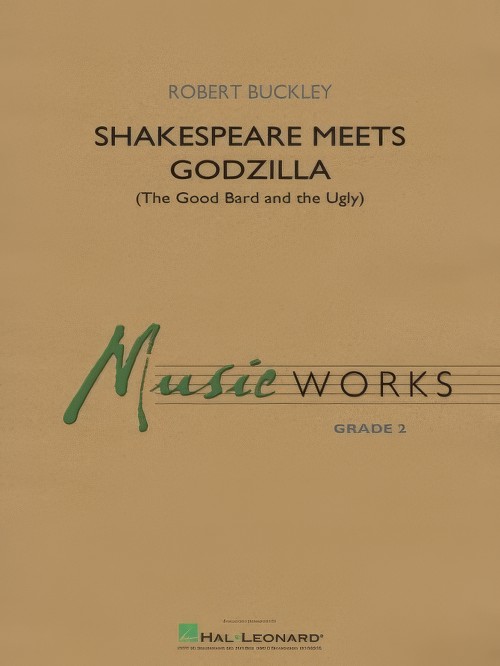
Shakespeare Meets Godzilla (The Good Bard and the Ugly) (Concert Band - Score and Parts) - Buckley, Robert
This inventive and entertaining piece is a mash-up of two entirely different music styles - Renaissance music and classic horror music. Danger is afoot! Shakespeare, armed with only his quill, must stop an enormous creature from destroying his Globe Theatre. As in an epic film score, the music underpins and adds drama to the heroic tale. The effective orchestration and artful interplay between the two music styles gives this piece the colorful sound and intensity of a much more advanced piece.
Estimated dispatch 7-14 working days
 View Music