
Results
-
 £140.00
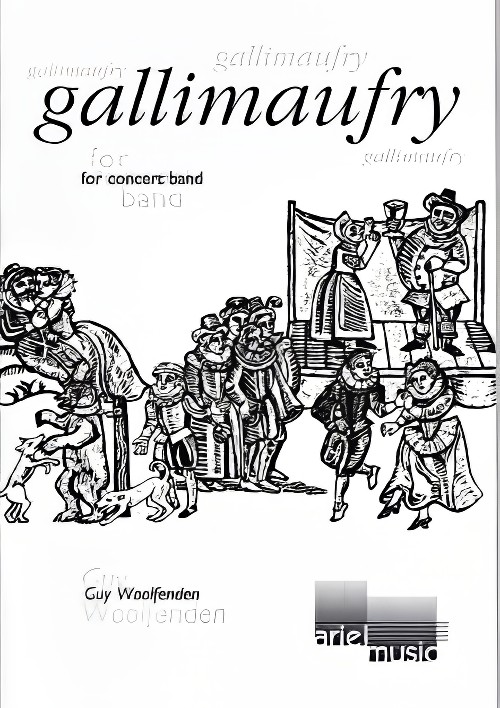
GALLIMAUFRY (Concert Band) - Woolfenden, Guy
Gallimaufry (gali maw'fri): A medley; any confused jumble of things; but strictly speaking, a hotch potch made up of all the scraps of the larder. cf Shakespeare: The Winter's Tale: "a gallimaufry of gambols"I. Church and StateII. Inn and OutIII. Starts and FitsIV. Father and SonV. Advance and RetreatVI. Church and Status QuoGallimaufry was inspired by Shakespeare's Henry IV plays, and derives from music I composed for the Royal Shakespeare Company's production which opened the Barbican Theatre in 1982. The score is dedicated to Trevor Nunn, then Artistic Director of the RSC, with grateful thanks for his suggestion that I should expand and mould the music from these productions into a form suitable for concert performance.My thanks also to Timothy Reynish and the British Association of Symphonic Bands and Wind Ensembles who, with funds provided by North West Arts, commissioned the work and helped to ensure its first performance on September 24th 1983 with the Royal Northern College of Music Wind Orchestra.The work is continuous and the thematic material of each of the six sections closely related. The "establishment" - leadership, temporal and ecclesiastical power - are depicted in the stately march which opens the work. (Church and State)The second section, Inn and Out, in an energetic hemiola rhythm, is concerned with the stews and low-life revels at the Boar's Head Tavern. This is interrupted and finally integrated with the Tavern Brawl and Gadshill Ambush of Starts and Fits.The mood changes and the ambivalence of Prince Hal's relationship with his father and surrogate father, Falstaff, is portrayed in a serene cor anglais solo. (Father and Son)Advance and Retreat is a recruiting march, derived from the Tavern Tune and leads into the last movement, Church and Status Quo, which deals with the rejection of Falstaff and the crowning of Price Hal. Order is restored with a majestic affirmation of the opening material.
Estimated dispatch 7-14 working days
-
 £44.95
Eine Kleine Klarinette Musik (Clarinet Solo with Concert Band - Score and Parts) - Wiffin, Rob
A solo for solo clarinet and band featuring the well-known tune from Mozart's Eine kleine Nachtmusik. I have always thought that Woody Herman's Golden Wedding is a great showpiece for clarinet. He takes a tune entitled La Cinquantaine by the French Romantic composer Jean Gabriel-Marie (1852 - 1928) and sets it as a big band swing piece complete with Krupa Toms. In seeking to emulate it I suddenly realised that the Rondo from Mozart's Eine Kleine Nachtmusik K.525 had very much the same character if I presented it in a minor key. It was then really just a matter of organizing the various sections, setting them in a swing manner and adding a cadenza-like passage. There is, of course, a strong connection between Mozart and the clarinet. It was fun to write and will hopefully be a fun solo vehicle for clarinettists. - Rob Wiffin. Duration: 3.30
Estimated dispatch 7-14 working days
-
 £53.95
In My Garden (Concert Band - Score and Parts) - Vogel, Kirk
In My Garden is inspired by one family's struggle with an untimely death. The healing process was aided by the construction of a beautiful garden in their back yard with the inscription in stone as you enter saying: If I had a flower for every time I think of you, I could walk forever in my garden.Duration: 4.00
Estimated dispatch 7-14 working days
-
 £84.95
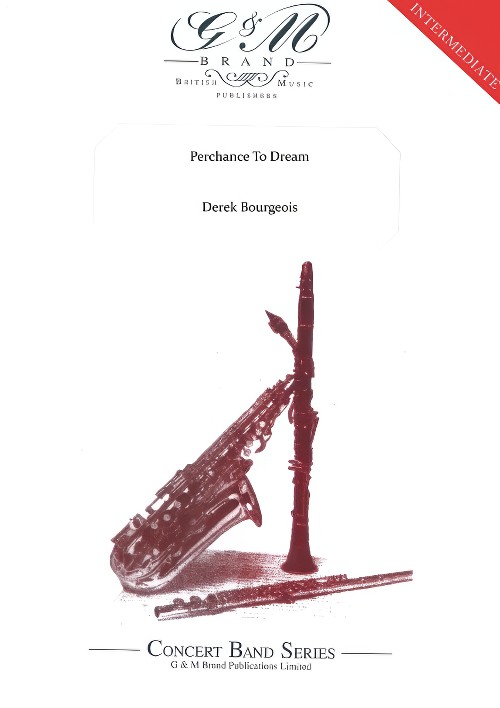
Perchance To Dream (Concert Band - Score and Parts) - Bourgeois, Derek
In 1969 I was teaching music at Cranleigh School in Surrey. I was asked to write a work for the orchestra and produced a four-movement piece entitled Concerto for School Orchestra. I have now reworked the music for wind band and re-titled it Perchance to Dream. the piece has a slow introduction followed by a loose sonata form movement in which the introductory material is reintroduced.
Estimated dispatch 7-14 working days
-
£16.95
Perchance To Dream (Concert Band - Score Only) - Bourgeois, Derek
In 1969 I was teaching music at Cranleigh School in Surrey. I was asked to write a work for the orchestra and produced a four-movement piece entitled Concerto for School Orchestra. I have now reworked the music for wind band and re-titled it Perchance to Dream. the piece has a slow introduction followed by a loose sonata form movement in which the introductory material is reintroduced.
Estimated dispatch 7-14 working days
-
 £36.95
Heroic Etude (Trombone Solo with Concert Band - Score and Parts) - Wiffin, Rob
Back in the day I always enjoyed playing the well-known trombone works by Alexandre Guilmant and Ferdinand David and I wanted to return to that type of language and writing in a short concert piece. The music is direct in its expression, mostly exciting but sometimes expressive. The pace of this tude is relentless and requires some deft double tonguing although I stayed away from too many running semiquavers. The last note should ideally be the high D (concert) but a B flat is indicated as a suitable alternative.- Rob WiffinDuration: 3.45
Estimated dispatch 7-14 working days
-
 £79.95
Variations on 'Was Lebet' (Concert Band - Score and Parts) - Wainwright, Andrew
Variations on 'Was Lebet' is based on the German chorale of the same name, the first line of which translates as 'O worship the Lord in the beauty of holiness!' The opening fanfare figure in the Trumpets should be supported by bold, organ-like sostenuto chords in the lower band. Ensure that the fanfare in the Trumpets and Trombones from bars 25 to 28 is given equal articulation and volume in the antiphonal parts. After this majestic introductory section, the first of five contrasting variations is presented, although the tune is never realised in full form until the final variation, with fragments gradually being revealed as the piece progresses.Variation I is somewhat classical in approach, with its energy coming from a regular contrast between cantabile references to the theme, set against lively staccato figures. Ensuring a lightness of touch will be important here; the music should be poised and never sound frantic. As a result, careful attention should be paid to the tempo marking, being no quicker than 136 beats per minute. Snippets of the chorale come and go, with the last phrase of the hymn completing the movement. This final statement, at bar 95, should be an immediate change in tempo and a separate statement to the music that comes before.Variation II is plaintive in mood, giving the listener the chance to reflect on the following words, which form part of the second verse: 'Comfort thy sorrows and answer thy prayerfulness, Guiding thy steps as may best for thee be.' There is opportunity for rubato in this movement, at the discretion of the conductor.Variation III is somewhat quirky and volatile in nature, and takes its inspiration from the 3rd and 4th verses which describe the fearful times in life that we must entrust to the Lord. Driven by the Percussion section in particular, there are references here to Variation I with its chorale-like figures and hurtling scalic figures, and there is a feeling of a lack of resolution. A somewhat abrupt ending suggests that our sense of completeness in Christ is yet to be resolved. It is important that clarity and tempo are maintained in the bass line between sections L and M. Aim for consistency of line in the bass parts, particularly with the trade-offs between players here.There is a French romantic feel to the waltz in Variation IV, with the opportunity for various soloists to display their musicianship. A sense of ironic humour pervades throughout. The Clarinet and Bassoon duet from section U should be playful and display a lightness of touch, with that sense of style continued throughout the movement.Variation V is fugal in nature, with each section of the band being handed the theme at various points. Again it is important that a steady tempo is set at Y in order to maintain control. The sense of momentum gradually increases to a grandiose presentation of the full theme, beginning at section CC, affirming our completeness in the Lord, with the words of the first and last verses reiterated: O worship the Lord in the beauty of holiness! Bow down before him, his glory proclaim; With gold of obedience and incense of lowliness, Kneel and adore him, the Lord is his name.Duration: 11.45
Estimated dispatch 7-14 working days
-
 £15.95
Variations on 'Was Lebet' (Concert Band - Score only) - Wainwright, Andrew
Variations on 'Was Lebet' is based on the German chorale of the same name, the first line of which translates as 'O worship the Lord in the beauty of holiness!' The opening fanfare figure in the Trumpets should be supported by bold, organ-like sostenuto chords in the lower band. Ensure that the fanfare in the Trumpets and Trombones from bars 25 to 28 is given equal articulation and volume in the antiphonal parts. After this majestic introductory section, the first of five contrasting variations is presented, although the tune is never realised in full form until the final variation, with fragments gradually being revealed as the piece progresses.Variation I is somewhat classical in approach, with its energy coming from a regular contrast between cantabile references to the theme, set against lively staccato figures. Ensuring a lightness of touch will be important here; the music should be poised and never sound frantic. As a result, careful attention should be paid to the tempo marking, being no quicker than 136 beats per minute. Snippets of the chorale come and go, with the last phrase of the hymn completing the movement. This final statement, at bar 95, should be an immediate change in tempo and a separate statement to the music that comes before.Variation II is plaintive in mood, giving the listener the chance to reflect on the following words, which form part of the second verse: 'Comfort thy sorrows and answer thy prayerfulness, Guiding thy steps as may best for thee be.' There is opportunity for rubato in this movement, at the discretion of the conductor.Variation III is somewhat quirky and volatile in nature, and takes its inspiration from the 3rd and 4th verses which describe the fearful times in life that we must entrust to the Lord. Driven by the Percussion section in particular, there are references here to Variation I with its chorale-like figures and hurtling scalic figures, and there is a feeling of a lack of resolution. A somewhat abrupt ending suggests that our sense of completeness in Christ is yet to be resolved. It is important that clarity and tempo are maintained in the bass line between sections L and M. Aim for consistency of line in the bass parts, particularly with the trade-offs between players here.There is a French romantic feel to the waltz in Variation IV, with the opportunity for various soloists to display their musicianship. A sense of ironic humour pervades throughout. The Clarinet and Bassoon duet from section U should be playful and display a lightness of touch, with that sense of style continued throughout the movement.Variation V is fugal in nature, with each section of the band being handed the theme at various points. Again it is important that a steady tempo is set at Y in order to maintain control. The sense of momentum gradually increases to a grandiose presentation of the full theme, beginning at section CC, affirming our completeness in the Lord, with the words of the first and last verses reiterated: O worship the Lord in the beauty of holiness! Bow down before him, his glory proclaim; With gold of obedience and incense of lowliness, Kneel and adore him, the Lord is his name.Duration: 11.45
Estimated dispatch 7-14 working days
-
 £137.99
Odyssee Wind Band Set (Score & Parts)
The Odyssee tells the story of Odysseus, the undaunted hero. In times long ago the blind poet Homer wrote this famous epic. The "Odyssey" follows the "Iliad", the story of the bloody war between the Greek and the Trojans. This battle ends after ten years thanks to the Odysseys famous trick. the Trojan Horse. The Odyssey is not a war epic, but a story about perseverance, loyalty, adventure, and the survival instinct of its ingenious hero. In The Odyssey, Homer describes how Odysseus, the king of Ithaca, had to endure another ten years of affliction after the ten years of war in Troy before he could finally return to his home land. During those years, his wife, Penelope, had to try and keep her many admirers away. These men not only wanted het hand but also the kingship. To prove her husbands worth, she played a trick: "As soon as I have finished weaving this shroud for my father-in-law, Laertes, I will choose one of you to become my husband", she promised them. But during the night, she secretly loosened what she had woven during the day, prolonging the time until Odysseus would finally return. After twenty long years, when he finally stood at the door, she wondered: Is this really my husband? Is he an imposter? Cunningly, she asked him to move the bed, because only she and her husband know that the bed was immovable and was build around an old three trunk! Odysseus was deeply moved: this really was his wife, his Penelope! Nearly three thousands years later, the loyalty and strength of this character, and all the dangerous adventures that Odysseus survived thanks to courage and intelligence, still moves us today. Odyssee by Jan Bosveld is not just an adventure story, but rather a characteristic piece in which memories of Homers story can be heard. The composition opens with a firm, stirring theme describing our hero, Odysseus, in detail: This man is not to be taken lightly. The further development of this short introduction completes this character sketch: trustworthy, perseverant, and a genius. After that we can picture Odysseus on the lonely beach of Ogygia. Do the trumpets depict his memories of the war of Troy? Does he think of his wife, as we recognise the weaving loom of Penelope in the murmuring eighth? In the solemn, plaintive part that follows, we can imagine Penelope feeling lonely, sitting in the womens room with her servants.One of the girls plays the harp, but that does not clear the sombre atmosphere. Then we can imagine seeing the sorceress Circe, who changed Odysseus men into swine. After she gives a simple magic sign something follows that reminds us of the sound of pigs grunting. Then the Odysseus theme resounds: the hero comes to savi his comrades. Assisted by Hermes, he forces Circe to lift the spell. The piece ends the same way as it began, with an animated theme: Odysseus is still the same, undefeated and not to be taken lighty! 07:45
Estimated dispatch 7-14 working days
-
 £87.95
A Tamworth Tapestry (Concert Band - Score and Parts) - Wiffin, Rob
A Tamworth Tapestry was commissioned by the Tamworth Wind Band who gave the first performance in Fazeley, Tamworth, on 27 Apr 2024. In composing it I drew on aspects of Tamworth starting with a short malicious outburst to depict the warlike history of the town's Norman castle. From there the music moves into a slow-flowing minor key movement entitled River Tame. The Celtic derivation of the word Tame means dark and slow-moving. The suite ends with a saltarello - Tomsaete. The Tomsaete were an Anglo-Saxon tribe who lived in the valley of the River Tame and remained around Tamworth throughout the duration of the Kingdom of Mercia. There is also a play on words with the band's conductor - Tom Sears. I combined the saltarello with some allusions to various other Tamworth references including Kingsbury Water Park, Drayton Manor Theme Park, Tamworth Pigs and even a reference to the Robin Reliant!Duration: 6.15
Estimated dispatch 7-14 working days
 View Music