
Results
-
 £420.99
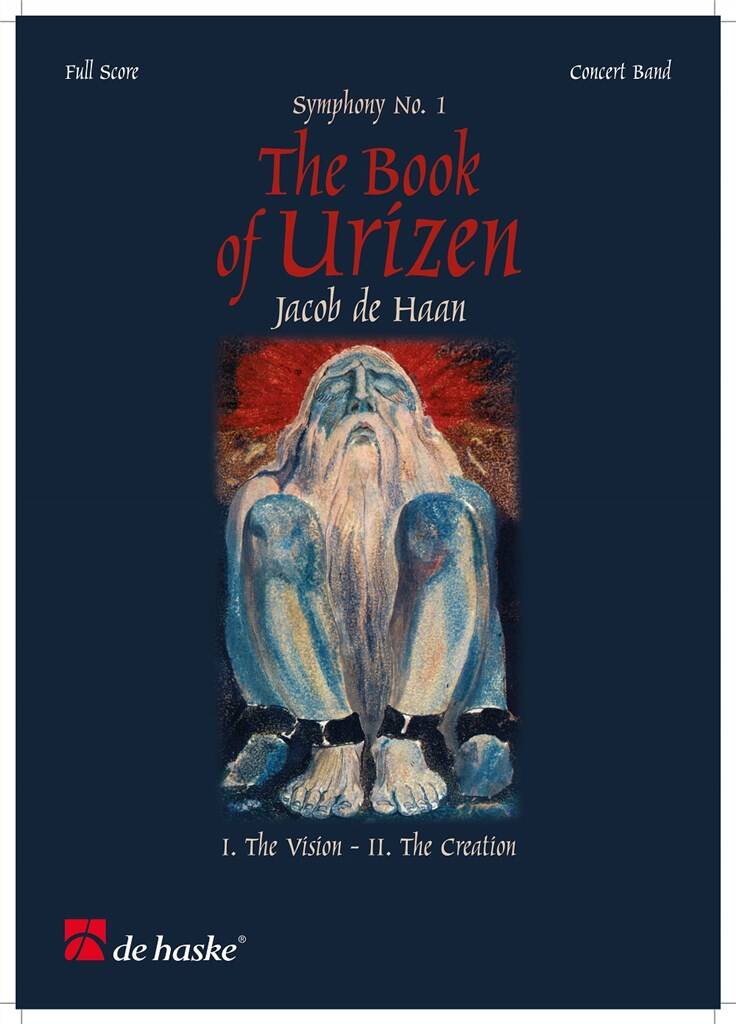
The Book of Urizen I + II - Jacob de Haan
The Book of Urizen is Jacob de Haan his first Symphony for concert band, solo soprano, and a male narrator in which sound collages of expressions are used. The piece is inspired by the compelling visionary poem of the samename (which the poet illustrated himself) by the Englishman William Blake (1757-1827). The Vision, first movement and The Creation, second movement of The Book of Urizen are available by following editionnumber: DHP 1043551. The Web, the third movement of The Book of Urizen is available by the following edition number: DHP 1125252. Download the audio samples from the 'Attachments'.
Estimated dispatch 7-14 working days
-
 £53.95
Pranks of the Pesky Poltergeist - Timothy Loest
Experience the paranormal in this spine-tingling work by Timothy Loest that includes spooky sound effects, unexplained noises that interrupt frightful melodies, and even a hint of Mussorgsky's "Night on Bald Mountain". Pranks of the Pesky Poltergeist is destined to be the hit of your fall or spring concert. Simply suspenseful, yet delightfully dreadful! (1:45)
Estimated dispatch 7-14 working days
-
 £50.50
Entrance of the Shogun - Douglas E. Wagner
Entrance of the Shogun, by veteran composer Douglas E. Wagner, is a stunning work that uses only the first few notes of the B-flat concert scale. With easy rhythms and a dramatic sound, your students will love this piece while exploring the history of the Shoguns.
Estimated dispatch 7-14 working days
-
 £53.50
The Legend of Billy Miner - Robert Buckley
This composition reflects a colorful time in American history and is an opportunity for your band to discover ragtime rhythms. Folk hero Billy Miner (the Grey Fox) was the last of the old-time bandits. He was noted for his unusualpoliteness and is believed to be the originator of the phrase, Hands up! This composition is like a mini movie score and starts with the Billy Miner ragtime theme, followed by a train robbery, his capture, and final release. Theartful interplay between sections gives this piece the sophisticated sound and intensity of a much more advanced work. Dur: 3:35
Estimated dispatch 7-14 working days
-
£67.95
March Of The Royals - Bill Calhoun
March of the Royals is a concert march for developing concert bands. Although familiar, with all the ingredients found in a typical march, this piece is written in a more regal and elegant style that is characteristic of English style marches. The piece is written for younger musicians but directors will find that it is carefully scored to help ensembles sound older than their years.
Estimated dispatch 7-14 working days
-
£65.50
Fantasy Of Bells - Sean O'Loughlin
An aggressive, outgoing fantasy on the famous Westminster Chimes, Fantasy of Bells utilizes the ability of winds and brass to make bell-like sounds as well as employing the actual bell-sounds of various "metalophones." Quartal harmony and colorful scoring give this piece an up-to-date sound and make it ideal as a concert opener for contest and festival time. Duration: 2'
Estimated dispatch 7-14 working days
-
£56.50
Pride of the Cadets - Joseph Compello
Pride of the Cadets is a stunningly easy, yet effective little march for the youngest of students. Joseph Compello draws on his incredible wealth of experience teaching beginners to continually write excellent pieces for these students. Get them started out right by learning the march style and they'll sound like a million bucks at their very first concert!
Estimated dispatch 7-14 working days
-
 £123.95
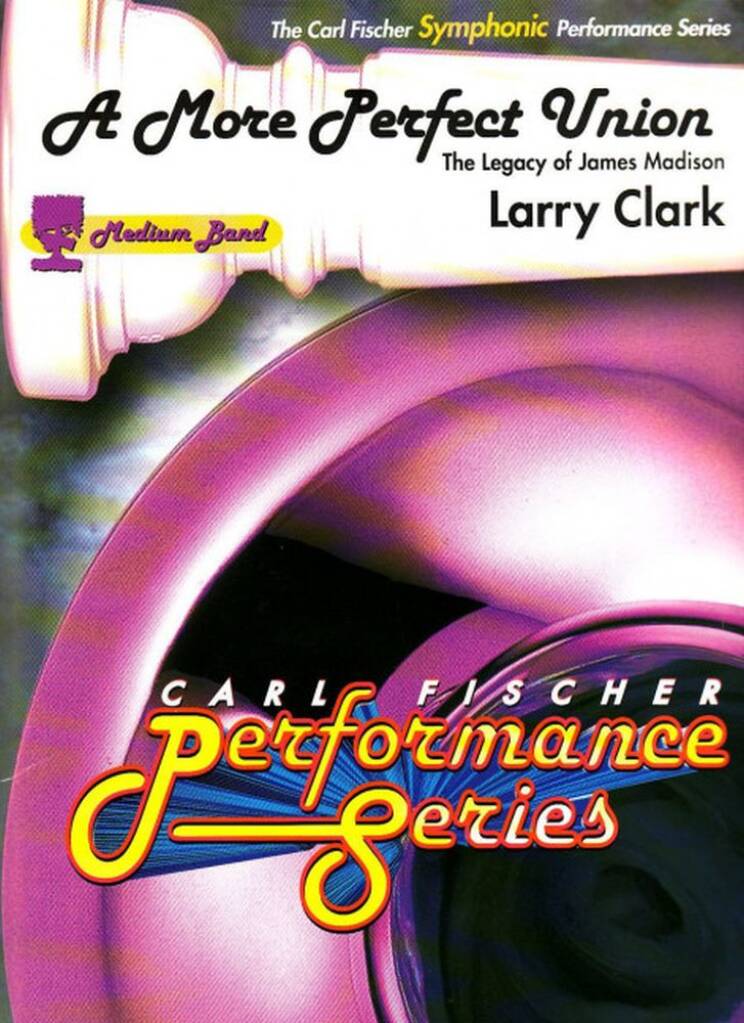
A More Perfect Union - The Legacy of James Madison - Larry Clark
Commissioned by the James Madison University Wind Symphony, Dr. J. Patrick Rooney, Larry Clark have produced a dynamic original piece for Narrator and Band that uses words by and about James Madison, the fourth President of the United States and principal author of the Bill of Rights. A patriotic piece with a characteristically "American" sound, A More Perfect Union is a challenging piece for band that will be a welcome alternative to Copland's A Lincoln Portrait, for directors seeking a patriotic selection using a narrator. Duration: 8'
Estimated dispatch 7-14 working days
-
 £93.50
Land of Enchantment - Carol Brittin Chambers
Heavily inspired by one of the Composer's favorite places on earth - Land of Enchantment pays tribute to the beautiful landscape of New Mexico. Sound effects and clever scoring make this new work by Carol Brittin Chambers truly...Enchanting!
Estimated dispatch 7-14 working days
-
 £109.99
The Horn of Plenty - Marc Cunningham
The Horn of Plenty is a composition which allows to present the Horn in many styles. The opening has an heroic character and exudes an Spanish atmosphere. The next part is a playful and lighthearted Leggiero. The melody used in bar 38 has an oriental sound through melodic use of the harmonic scale. The Andante is a parody on a piano etude by the composer Stephen Heller, a Frenchman of Hungarian descent. The piece ends with a relaxed swing area in which the Horn also in a different way can be heard.
Estimated dispatch 7-14 working days
 View Music