
Results
-
 £11.88
Theme from Piano Concerto in C Major (Concert Band - Score and Parts)
Green and good! This execptional arrangement by Forsblad and Livingston will make you feel as if every day was St. Patrick's day.
Estimated dispatch 7-14 working days
-
 £19.95
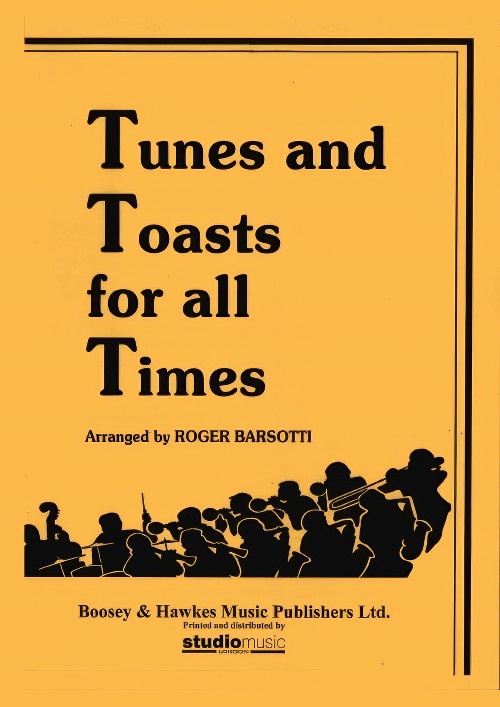
Tunes and Toasts for all Times (Piano Conductor Score) - Barsotti, Roger
Titles:ENGLISH AIRSA fine old English GentlemanA-hunting we will goBritish GrenadiersCherry ripeClementineCome, lassies and ladsDrink to me onlyDulce DomumDrunken sailor (The)For he's a jolly good fellowFarmer's boy (The)Floral DanceFrothblowers' AnthemGirl I left behind me (The)Here's a health to all good ladiesHere's a health unto her MajestyHere's to the maidenJohn PeelKeel row (The)Love's old sweet songMarch of the Fire BrigadesMistletoe bough (The)On Ilkla MoorPrincess Royal's Red Cross marchRoast beef of old EnglandSir Roger de CoverleySee the conquering hero comesSoldiers of the QueenThere is a tavern in the townNAUTICALHeart of oakHornpipeLife on the ocean waveShenandoahRed, white and blue (The)Rule, BritanniaSCOTTISH AIRSAnnie LaurieAuld lang syneBonnie banks of LochBonnie DundeeBlue-bells of ScotlandCampbells are coming (The)Charlie is my darlingFlowers of the forestHundred pipers (The)Highland LaddieRobin AdairScotch ReelScots wha haeWill ye no come back againYe banks and braesIRISH AIRSCome back to ErinDanny boy (Londonderry air)Harp that once through Tara's hallIrish Washerwoman (The)KillarneyMinstrel boy (The)Oft in the stilly nightOff to PhiladelphiaSt. Patrick's DayWELSH AIRSAll through the nightAsh grove (The)Bells of AberdoveyDavid of the white rockLand of my fathersMen of HarlechAMERICAN AIRSCarry me back to old VirginnyDixieGood-night (shine, shine, moon)John Brown's bodyMarching thro' GeorgiaOld folks at home (The)Star Spangled BannerTramp, tramp, tramp, the boys are marchingWhen Johnny comes marching homeYankee doodleCANADA AlouetteMaple leaf (The)O CanadaAUSTRALIAWaltzing MatildaSACRED AIRS & CAROLS Abide with meEternal Father strong to saveO God our help in ages pastFirst Nowell (The)Good King WenceslasO come all ya faithfulWhile shepherds watchedJerusalemSupreme sacrifice (The)Dead march in SaulPARADES (All organisations)General saluteSlow march or troop "Scipio"Troop "May-blossom"FANFARES, etcDeclamatory No. 1Occasoinal Fanfare No. 2"Reveille""Retrear""Last Post"Galop from "Orpheus in the Underworld"God save the Queen (in B flat)God save the Queen (in F)
Estimated dispatch 7-14 working days
-
 £57.50
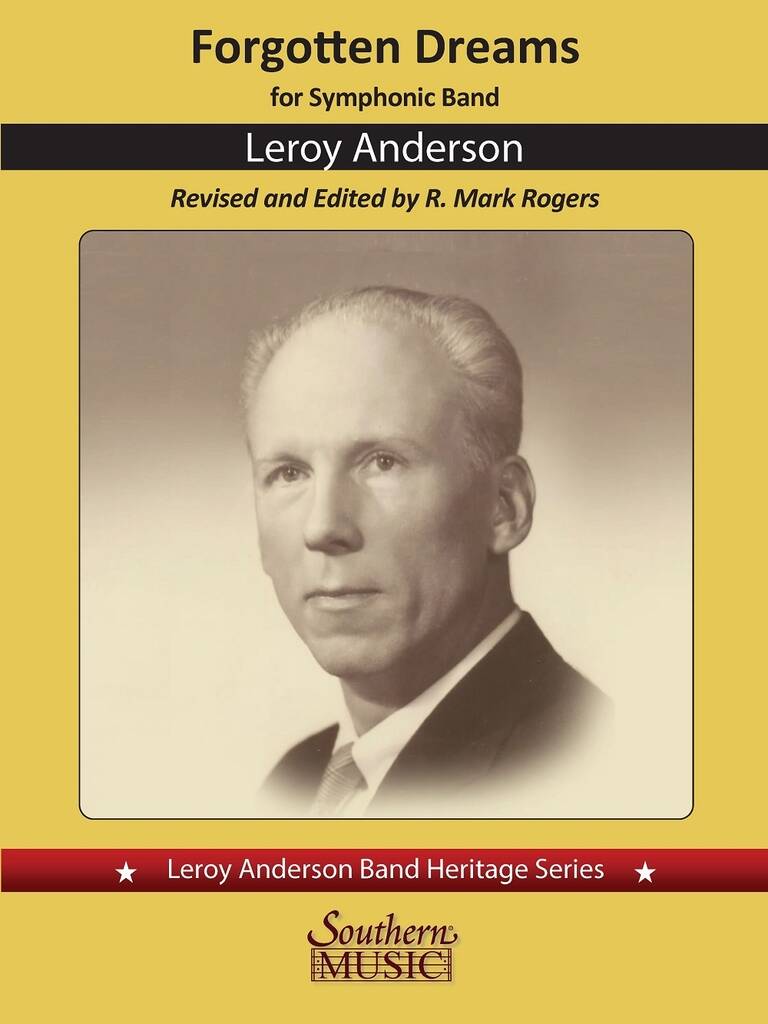
Forgotten Dreams - Leroy Anderson
FORGOTTEN DREAMS was completed on May 28, 1954. The first performance was a few days later on June 2nd during a recording session for Delta Records in New York, at which time Leroy Anderson performed the piano solo himself. Although the main theme of FORGOTTEN DREAMS was intended to be played on the piano (and with simplicity), the composer_x001A_s band edition of the piece allowed for a solo flute to substitute (Play only in absence of Piano). It is also suggested the melody might be beautifully rendered on vibraphone due to the sustaining quality of that instrument. In any event, this charmingly romantic miniature will delight audiences whenever it is performed. This edition includes a full score.
Estimated dispatch 7-14 working days
-
 £149.40
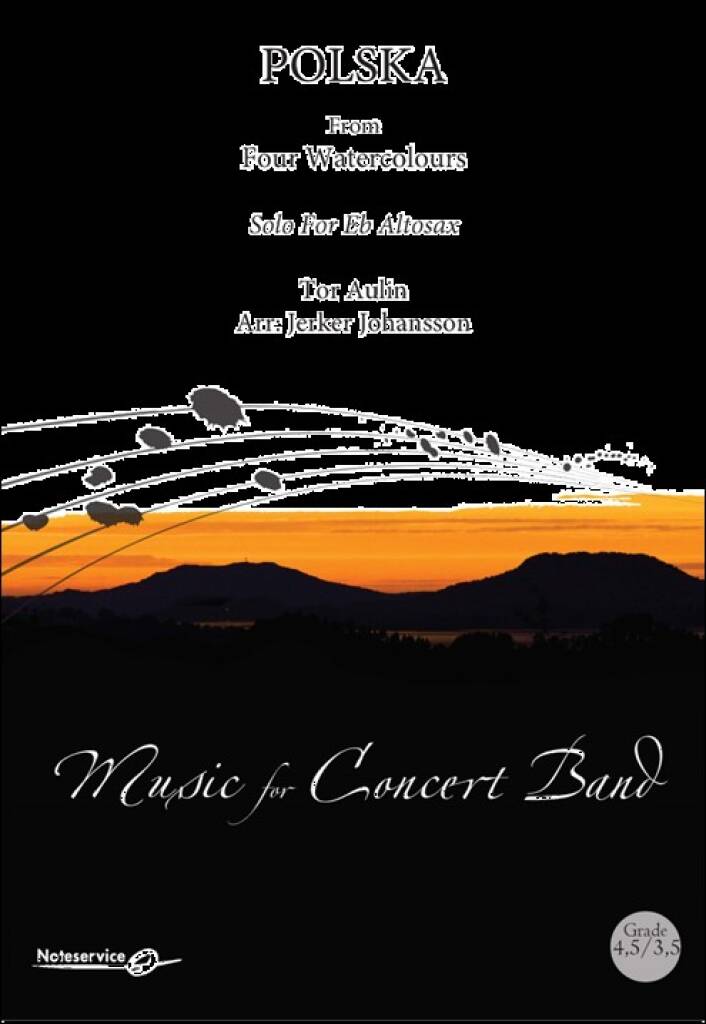
Polska from Four Watercolours - Tor Aulin
Few composers have had such an impact on Swedish music life as Tor Aulin (1866 1914). He studied violin and music theory in Stockholm 1877 83, and in Berlin 1884 86. In 1887 he founded the Aulin Quartet, which for more than 20 years played animportant role in broadening Swedish interest in chamber music. The quartet was often on tour with the composer Wilhelm Stenhammar at the piano.1889 1902 Aulin was the leader of the orchestra at the Royal Opera in Stockholm.At Aulinsinstigation the Concert Association in Stockholm (later The Royal Philharmonic Orchestra) was founded in 1902, and he was its conductor until 1909. From then on he was the conductor of the Gothenburg ConcertAssociation (nowadays The GothenburgSymphony Orchestra).Besides being a first class violinist, Tor Aulin was also an accomplished pianist, and Edvard Grieg was deeply impressed by Aulin's rendering of his piano concerto.Aulins list of works is dominated by his musicfor violin. He wrote three violin concertos, the third of which still has a place in the repertoire.Four Aquarelles for violin and piano from 1899 is his most beloved composition. In 1996 Jerker Johansson arranged this work for soloinstruments, one for each of the four movements, and concert band. The solo instruments being clarinet, trumpet, flute and alto saxophone.
Estimated dispatch 7-14 working days
-
 £149.40
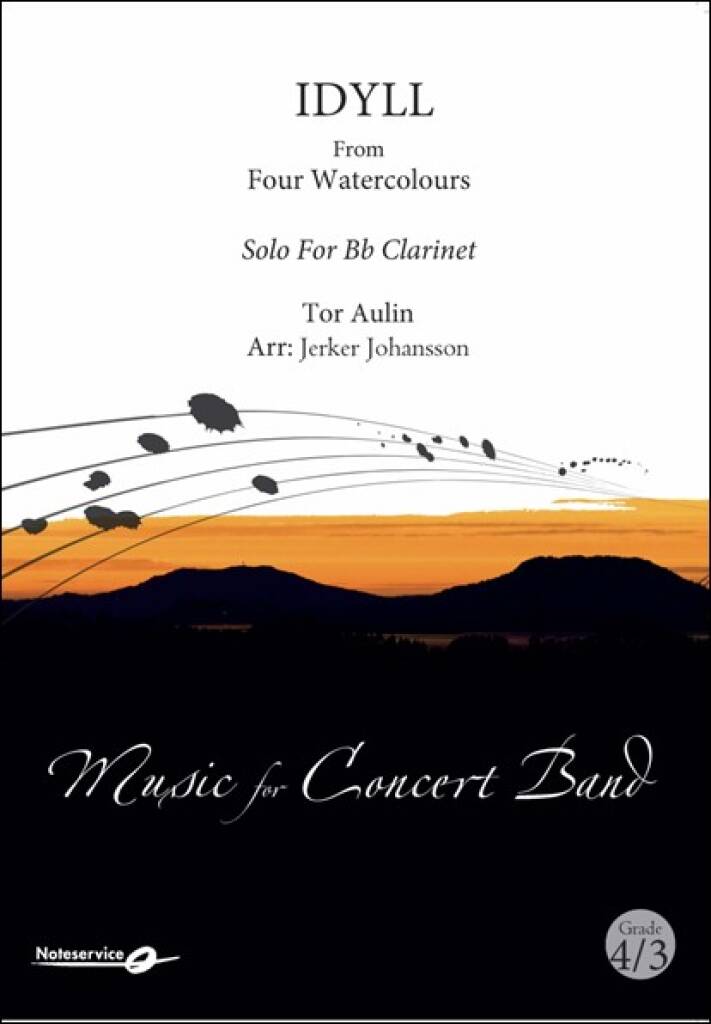
Idyll - Tor Aulin
Few composers have had such an impact on Swedish music life as Tor Aulin (1866 1914). He studied violin and music theory in Stockholm 1877 83, and in Berlin 1884 86. In 1887 he founded the Aulin Quartet, which for more than 20 years played animportant role in broadening Swedish interest in chamber music. The quartet was often on tour with the composer Wilhelm Stenhammar at the piano.1889 1902 Aulin was the leader of the orchestra at the Royal Opera in Stockholm.At Aulinsinstigation the Concert Association in Stockholm (later The Royal Philharmonic Orchestra) was founded in 1902, and he was its conductor until 1909. From then on he was the conductor of the Gothenburg ConcertAssociation (nowadays The GothenburgSymphony Orchestra).Besides being a first class violinist, Tor Aulin was also an accomplished pianist, and Edvard Grieg was deeply impressed by Aulin's rendering of his piano concerto.Aulins list of works is dominated by his musicfor violin. He wrote three violin concertos, the third of which still has a place in the repertoire.Four Aquarelles for violin and piano from 1899 is his most beloved composition. In 1996 Jerker Johansson arranged this work for soloinstruments, one for each of the four movements, and concert band. The solo instruments being clarinet, trumpet, flute and alto saxophone.
Estimated dispatch 7-14 working days
-
 £149.40
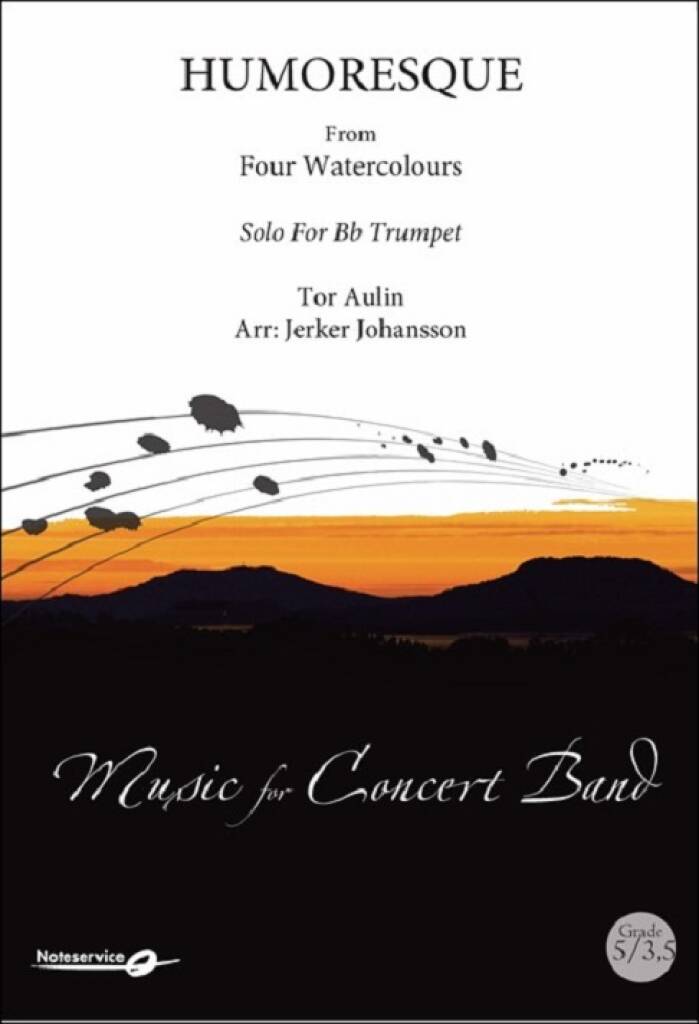
Humoresque - Tor Aulin
Few composers have had such an impact on Swedish music life as Tor Aulin (1866 1914). He studied violin and music theory in Stockholm 1877 83, and in Berlin 1884 86. In 1887 he founded the Aulin Quartet, which for more than 20 years played animportant role in broadening Swedish interest in chamber music. The quartet was often on tour with the composer Wilhelm Stenhammar at the piano.1889 1902 Aulin was the leader of the orchestra at the Royal Opera in Stockholm.At Aulinsinstigation the Concert Association in Stockholm (later The Royal Philharmonic Orchestra) was founded in 1902, and he was its conductor until 1909. From then on he was the conductor of the Gothenburg ConcertAssociation (nowadays The GothenburgSymphony Orchestra).Besides being a first class violinist, Tor Aulin was also an accomplished pianist, and Edvard Grieg was deeply impressed by Aulin's rendering of his piano concerto.Aulins list of works is dominated by his musicfor violin. He wrote three violin concertos, the third of which still has a place in the repertoire.Four Aquarelles for violin and piano from 1899 is his most beloved composition. In 1996 Jerker Johansson arranged this work for soloinstruments, one for each of the four movements, and concert band. The solo instruments being clarinet, trumpet, flute and alto saxophone.
Estimated dispatch 7-14 working days
-
 £129.99
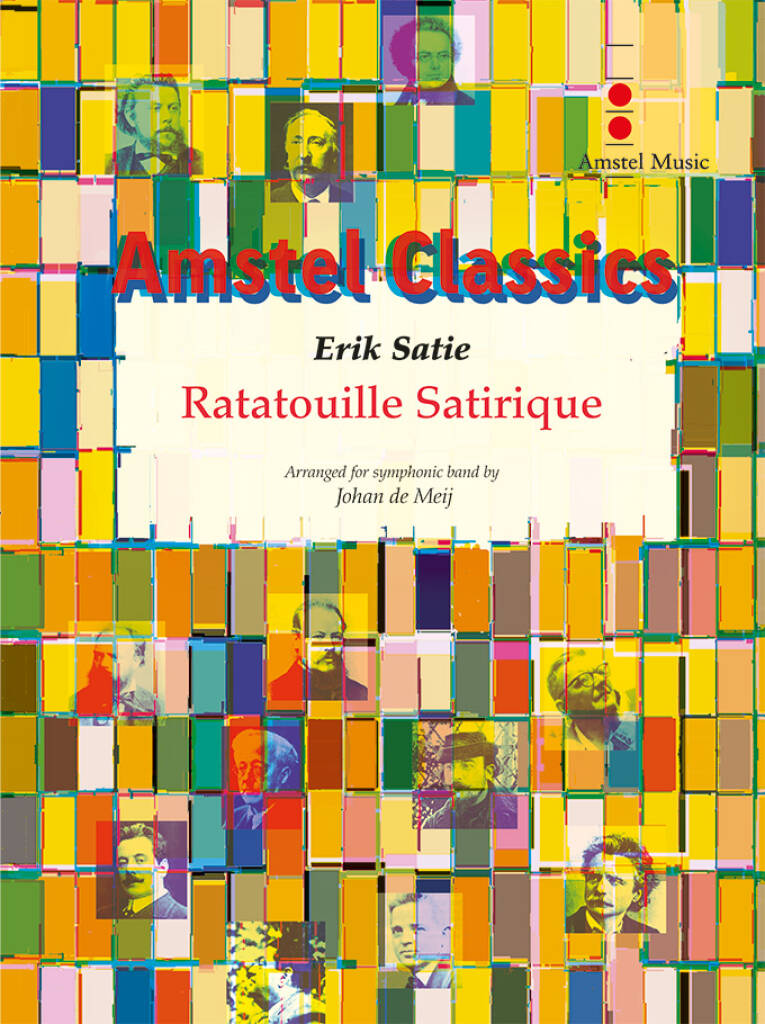
Ratatouille Satirique
Erik Satie, born in Honfleur in Normandy (France) in 1866 is undoubtedly one of the most striking personalities in the history of French music. He composed in various, often quite divergent, styles. Besides light-hearted, entertaining works he also wrote several serious compositions, among which the three ballets: Parade, Rel che and Les Aventures de Mercure. However his piano pieces, such as Trois Gymnopdies or Gnossiennes will remain his most popular compositions. Satie co-operated with almost all great artists of his time: Pablo Picasso, Jean Cocteau, Sergej Diaghilev and Georges Braque and the composers Darius Milhaud (Le Groupe des Six) and Claude Debussy. Johan deMeij made an orchestration of three short pieces by Erik Satie: I. Prlude (from: Jack in the Box) II. Rverie (from: Trois petites pices montes) III. Marche: Le Piccadilly (1904) It was only after Satie's death in 1925 that the manuscript of the piano piece Jack in the Box was recovered. Satie himself thought he had lost the manuscript in a bus. When his flat in Arceuil was cleaned out, a small notebook was discovered behind his piano and it contained the manuscript which was assumed to be lost forever. The Rverie (De l'Enfance de Pantagruel) is an extract from Trois petites pices montes, originally composed for small symphony orchestra. In this suite it is meant as a restful intermezzo. It is clear that, as with Milhaud (La Cration du Monde) and Debussy (Golliwogg's Cakewalk; Le Petit Ngre), it is hard to deny obvious influences of jazz music in Erik Satie's compositions. Le Piccadilly, dating from 1904, displays a lot of similarities with the compositions of Scott Joplin.
Estimated dispatch 7-14 working days
-
 £90.30
Triana - Isaac Albéniz
TRIANAThe twelve part piano composition 'Iberia', published in four volumes between 1906 and 1909, is often considered as the absolute summit of all piano compositions by Albniz. Among those pieces 'Triana' is one of the most popular, not in the least thanks to the splendid orchestration by Fernndez Arbs, who also made famous orches-trations of 'Corpus Christi en Sevilla' (Feast Day in Sevilla), 'Evocacin' (Evocation) and 'El Puerto' (The Harbour).'Triana' evokes the famous suburb separated from the centre of Sevilla by the Guadalquivir river. It combines the rhythms of the 'sevillanas' and the 'rasguedo' (arpeggios) of the guitars with the charm of a melodic song. Juan V. Mas Quiles made this arrangement for symphonic band from the original piano score.
Estimated dispatch 7-14 working days
-
 £90.30
Goyescas - E. Granados
The pianist and composer Enrique Granados y Campina (Lrida 1867) studied composition with Pedrell in Barcelona. He went to Paris in 1887 to study the piano with de Beriot. In 1901 he founded his own piano school in Barcelona. Granados and his wife died on their way back from America when the passenger ship 'Sussex' was torpedoed by a German submarine in the Channel on 24 March 1916. As a composer he became the founder of the specific Spanish national music. He was most of all inspired by the Spanish capital and more precisely by the Madrid of Francisco Goya. In 1911 he composed two piano albums 'Goyescas', inspired by paintings and tapestries of the painter Francisco Goya y Lucientes (1746-1828), famous for his brillant originality and bizarre imagination. Later on he developed this music into an opera, based on a libretto by Fernando Periquet.
Estimated dispatch 7-14 working days
-
£149.40
Lullaby from Four Watercolours - Tor Aulin
Few composers have had such an impact on Swedish music life as Tor Aulin (1866 1914). He studied violin and music theory in Stockholm 1877 83, and in Berlin 1884 86. In 1887 he founded the Aulin Quartet, which for more than 20 years played animportant role in broadening Swedish interest in chamber music. The quartet was often on tour with the composer Wilhelm Stenhammar at the piano.1889 1902 Aulin was the leader of the orchestra at the Royal Opera in Stockholm.At Aulinsinstigation the Concert Association in Stockholm (later The Royal Philharmonic Orchestra) was founded in 1902, and he was its conductor until 1909. From then on he was the conductor of the Gothenburg ConcertAssociation (nowadays The GothenburgSymphony Orchestra).Besides being a first class violinist, Tor Aulin was also an accomplished pianist, and Edvard Grieg was deeply impressed by Aulin's rendering of his piano concerto.Aulins list of works is dominated by his musicfor violin. He wrote three violin concertos, the third of which still has a place in the repertoire.Four Aquarelles for violin and piano from 1899 is his most beloved composition. In 1996 Jerker Johansson arranged this work for soloinstruments, one for each of the four movements, and concert band. The solo instruments being clarinet, trumpet, flute and alto saxophone.
Estimated dispatch 7-14 working days
 View Music