
Results
-
 £85.00
Amsterdam Suite, 2nd Movement (Concert Band - Score and Parts) - Curtis, Matthew - Noble, Paul
The Amsterdam Suite, written in 1995 and first performed by the Slaithwaite Philharmonic Orchestra the following year, seeks to convey some impressions of a city I have visited several times. It opens with the waltz sequence, Barrel Organs, recalling the hurdy-gurdies positioned at strategic points in the city with the aim of parting tourists with their loose change. The tunes, however, are mine rather than an attempt to reproduce the real thing. Amsterdam takes its Saturday nights seriously, with the result that those who get up (or are still up) early on Sunday morning will find themselves in eerily deserted streets, whose atmosphere to me suggests one instrument above all, the saxophone, which plays a prominent part in Lonely City. The Saturday nights themselves are depicted in Trams and Crowds. I have taken liberties with the chronology for the obvious musical reason of wanting to go out with a bang rather than a whimper. The basic structure is very much that used by Eric Coates for similar piece, a bustling outer section with a quick march trio, presented in a fuller and more embellished orchestration on each of its three appearances. - Matthew Curtis.
Estimated dispatch 7-14 working days
-
 £85.00
Amsterdam Suite, 3rd Movement (Concert Band - Score and Parts) - Curtis, Matthew - Noble, Paul
The Amsterdam Suite, written in 1995 and first performed by the Slaithwaite Philharmonic Orchestra the following year, seeks to convey some impressions of a city I have visited several times. It opens with the waltz sequence, Barrel Organs, recalling the hurdy-gurdies positioned at strategic points in the city with the aim of parting tourists with their loose change. The tunes, however, are mine rather than an attempt to reproduce the real thing. Amsterdam takes its Saturday nights seriously, with the result that those who get up (or are still up) early on Sunday morning will find themselves in eerily deserted streets, whose atmosphere to me suggests one instrument above all, the saxophone, which plays a prominent part in Lonely City. The Saturday nights themselves are depicted in Trams and Crowds. I have taken liberties with the chronology for the obvious musical reason of wanting to go out with a bang rather than a whimper. The basic structure is very much that used by Eric Coates for similar piece, a bustling outer section with a quick march trio, presented in a fuller and more embellished orchestration on each of its three appearances. - Matthew Curtis.
Estimated dispatch 7-14 working days
-
 £139.99
Pacific Dreams (Concert Band - Score and Parts) - De Haan, Jacob
Pacific Dreams describes the experience of Miguel, a traveling composer from Spain who, feeling somewhat alienated from his homeland, is wandering through an area of Sydney known as The Rocks. At a small outdoor market in a typical street of this old colonial neighbourhood, he discovers a print of William DeShazos painting Pacific Dreams. Portrayed in the painting is the surf of one of the exotic islands in the Pacific. Next, with the impressive Sydney Harbour Bridge looming over the narrow streets of The Rocks, he envisions sultry Pacific beaches. Suddenly a theme he once composed about the lakes in Japan comes to him. Is it the Asian influences present in cosmopolitan Sydney that bring this theme to mind? Or perhaps the waters around Sydney, over which he could sail to Tahiti? He is uncertain. Could this same theme be used to create a new composition about his feelings for the metropolis Sydney? How then to work his Pacific Dreams into the mix? Miguel is certainly no fan of Hawaiian music. Maybe he could use the vocabularies of islands like Hawaii and Tahiti, their beautiful vowel combinations being sung ad libitum by a mixed choir.With these ideas and his newly purchased print of Pacific Dreams, he boards the Metro at Circular Quay. He has a final glimpse of the harbour and the Sydney Opera House as the train races into the ground. On to the hotel! To work! He must compose!Maestoso: Miguel is impressed as he gazes upon the Sydney Harbour Bridge. And yet, he wants to go away from this city. Away, to an exotic island in the Pacific.Steady Rock : In the Rocks, musicians are playing at a square. Miguel basks in the atmosphere but at the same time he is fantasising about Hawaii and Tahiti.Andante Lamentoso: In his hotel room, Miguel is feeling sad and lonely in this big city. He takes comfort in his Pacific Dreams.Allegro: Miguel boards the boat that takes him from Darling Harbour to Circular Quay. In his mind he is travelling on to Hawaii. Or is it home, where the bolero is playing? He is pulled back to reality by the skyline of Sydney.Duration: 9:15
Estimated dispatch 7-14 working days
-
 £84.99
Cornfield Rock (Concert Band - Score and Parts) - De Haan, Jacob
Originally Cornfield Rock was written by Jacob de Haan as a version for male choir. It was based on a text by William Shakespeare on a melody of Thomas Morley (It was a lover and his lass). The original melody however was abandoned completely and in its place Jacob de Haan created a new one in rock style. The title refers to the text: That o're the green corne fields did passe.Duration: 3:45
Estimated dispatch 7-14 working days
-
 £64.35
Menuetto - Mozart, Wolfgang Amadeus
A forceful brass introduction followed by a playfully lyric woodwind statement opens this arrangement for concert band of the third movement to Mozart's famous "Symphony No. 35." While remaining true to the original orchestral version, this arrangement maintains modest range and technical demands on the student musician. The "Menuetto from Symphony No. 35" is an appropriate choice for developing bands as well as more mature ensembles and would make an excellent concert or contest selection. Don't miss this opportunity for your students to perform music composed during the classical style period by one of the masters.
Estimated dispatch 7-14 working days
-
 £40.95
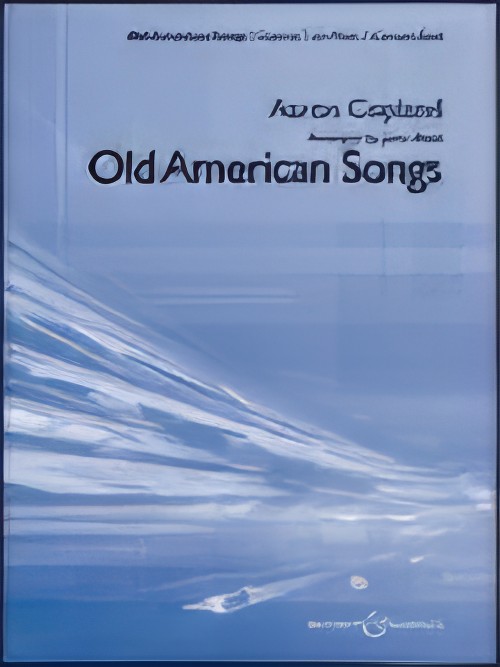
OLD AMERICAN SONGS (Young Band) - Copland, Aaron - Moss, John
From Copland's well-known collection for voice (accompanied by piano or orchestra), John Moss has crafted an exquisite suite of four selected movements for young band. Certain to become a welcome addition to the band repertoire, this arrangement offers a wonderful opportunity to program accessible music by one of our greatest American composers. Includes All the Pretty Little Horses, Ching-a-Ring Chaw, The Golden Willow Tree, and Simple Gifts.
Estimated dispatch 7-14 working days
-
£54.99
Onward! Wind Band Set (Score & Parts)
A brief history: Pentecost Monday was a special day for schools in Yorkshire (England). There were a variety of activities. The pupils of Sabine Baring-Gould would meet with the children of a nearby village. It seemed like a good idea that during the walk would be sung. But she could not find a suitable song and decided to write one by herself. "Onward Christian Soldiers" was the result. It soon became very popular, though she herself was not entirely satisfied with the rhyme scheme. The melody used (St. Gertrude) was by the famous English composer Sir Arthur S. Sullivan. Back to now: Gawan Roberts, has given the hymn a proper update. He gave the still popular song a solid rock beat and added daring harmonies. So it's popular, for current generations, again for years. Onward! 01:45
Estimated dispatch 7-14 working days
-
£51.48
The Old Castle - Mussorgsky, Modest
Mussorgsky's "Pictures At An Exhibition" has captured the imaginations of musicians worldwide over the past century. Robert W. Smith has created a new and unique setting of the beautiful and poignant "Old Castle" for the concert band. Beginning with a quote from the "Promenade," the listener is transported into a different world that is highlighted by one of the most beautiful melodies in all of music. Performable by bands of varying levels, the musical teaching opportunities in this work will place this in your standard repertoire. Beautiful, emotional and exceptionally scored!
Estimated dispatch 7-14 working days
-
 £28.99
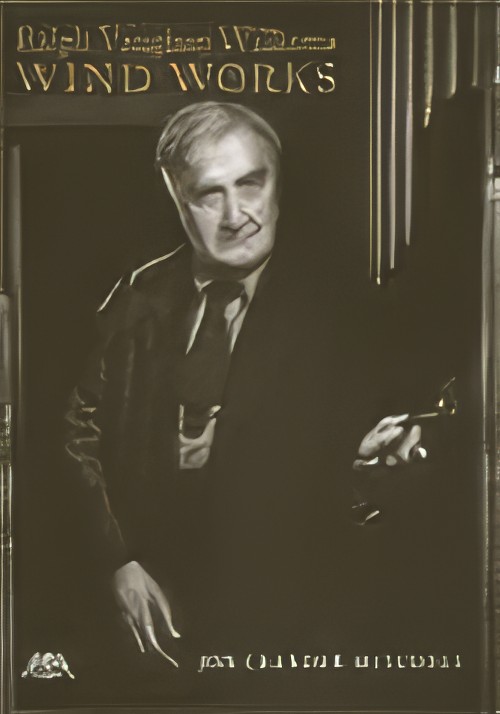
WIND WORKS (Ralph Vaughan Williams) - Mitchell, Jon Ceander
This exciting new work by one of today's most highly regarding music scholars, brings new light to the more than two dozen works by Ralph Vaughan Williams for military band, brass band and wind ensemble. Vaughan Williams' unique relationship with fellow composer Gustav Holst is examined as well as his relationships with personnel at the Royal Military School of Music, the BBC and the Salvation Army. There's much more to this hard-to-put-down volume for conductors, performers, students and aficionados! Soft cover. 176 pages.
Estimated dispatch 7-14 working days
-
 £78.00
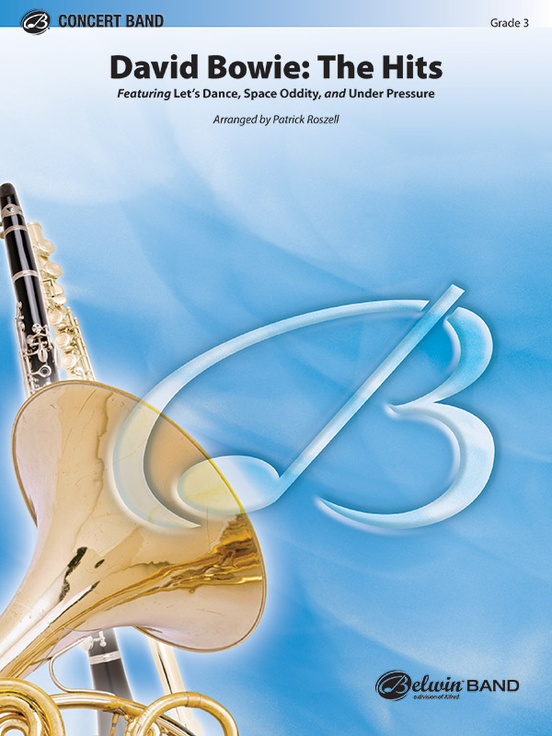
David Bowie: The Hits (Concert Band - Score and Parts) - Roszell, Patrick
Bowie. Some artists only need to be known and recalled by one name. This fantastic medley contains three of his biggest hits. The jazzy and funky Let's Dance, the ethereal Space Oddity, and the ever-grooving hit, with rock group Queen, Under Pressure.Duration: 6.45
Estimated dispatch 7-14 working days
 View Music