
Results
-
 £79.99
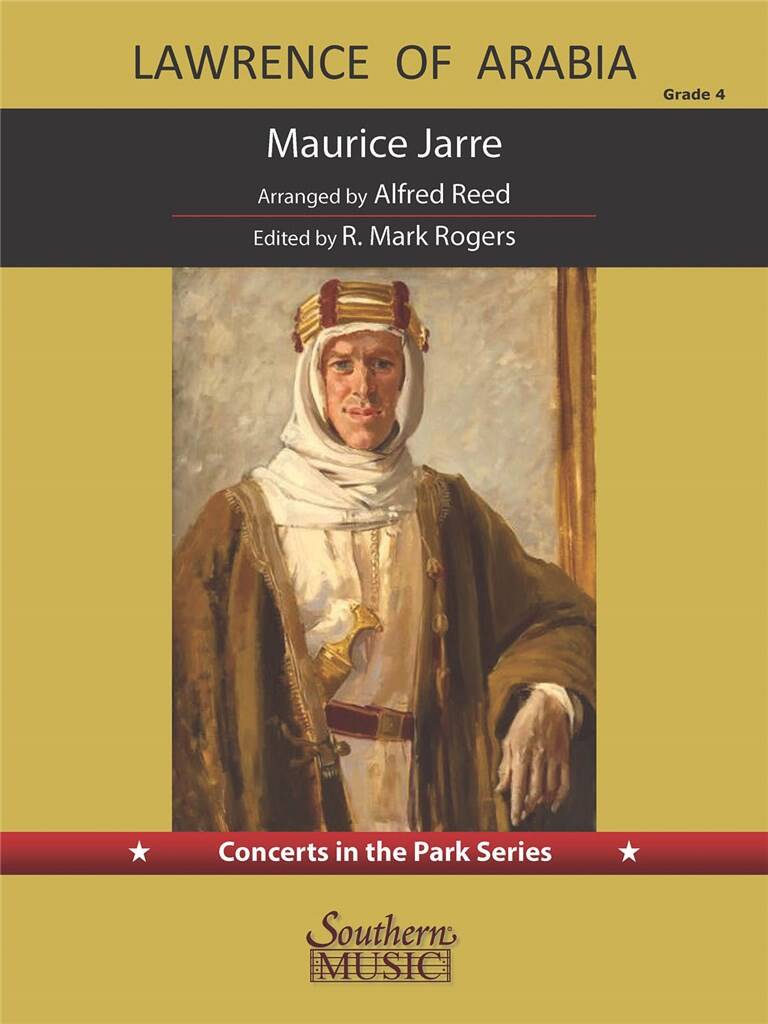
Lawrence of Arabia - Maurice Jarre
David Lean's epic film Lawrence of Arabia was nominated for ten Academy Awards and won seven, including Best Original Score for Maurice Jarre's masterful musical depiction of the exotic world through which T.H. Lawrence passed. Alfred Reed's setting of the music for concert band, available here for the first time in full score with newly edited parts, is built on two of the main themes: the Arabian motif, with its blazing color and almost-barbaric effects; and the Lawrence theme, a haunting, poignant melody that reflects both his love of the desert and his internal, psychological conflicts.
Estimated dispatch 7-14 working days
-
 £72.99
Adirondack Festival Overture - Stephen Bulla
Adirondack Festival Overture is an exciting work for band that combines original music with a variety of traditional fiddle tunes from the Adirondack region of New York state. The fiddle was far and away the most popular folkinstrument of the time, and these appealing melodies have been handed down through generations of amateur players. Includes: Chateaugay Reel, The Wild Mustard River and Ripsaw. Dur: 5:30
Estimated dispatch 7-14 working days
-
 £50.50
Rising Waters - Mark J. Connor
The rain won't stop and time is running out! "Rising Waters" perfectly captures the feeling of extreme urgency through energetic rhythmic interplay and exciting percussion. Written for beginning band using only the first six notes, this dramatic music has plenty to teach and will keep everyone on the edge of their seat!
Estimated dispatch 7-14 working days
-
 £44.99
Fable and Folk Tale - Timothy Broege
Two spirited movements evoke the mystery and excitement of good storytelling. The opening Fable features boldly profiled music interjected with spoken words - "Once upon a time..." The Folk Tale takes a simple melody through a set of brisk and often surprising variations.
Estimated dispatch 7-14 working days
-
£89.95
At Twilight - William G. Harbinson
A beautiful ballad for band, At Twilight will help your ensemble address phrasing and melodic nuance, and is sure to bring about an expressive performance. Twilight is a subtle time of day, and composer Harbison has channeled this feeling expertly through this welcome addition to the Carl Fischer Music library.
Estimated dispatch 7-14 working days
-
 £186.20
Le Mont St.Michel - Serge Lancen
Serge Lancen (Paris 1922) undoubtedly belongs to the top of contemporary European wind music composers. His MANHATTAN SYMPHONY (1962), CAP KENNEDY (1970), SYMPHONIE DE L'EAU (1986) and MISSA SOLEMNIS (1989) are now part of the classical modern symphonic band repertoire. Lancen always writes in the French tradition and is often inspired by folkore, the beauty of the French landscapes and even the great architectural monuments of his country. In this fine suite of four symphonic sketches he was inspired by the splendid site of the 'MONT SAINT-MICHEL'. The work dates from 1976 and was premiered by the French National Police band, conducted by Pierre Bigot, at a concert in the Paris 'Palais des Congrs' on May the 4th 1977. It evokes the splendour of one of Western Europe's great monumental abbeys.The mount arises amidst a symphony of mist and sand; the visitor goes through the main gate and enters the medieval town. He walks up to the abbey church and discovers the magnificent panorama. He recovers some time in an unexpected patch of green and admires the mighty fortress. Finally he reaches the actual abbey and visits the inspiring church and the sober refectory. At sunset, the abbey complex casts fanciful shadows on the beach and soon, in the light of the spots, the spire with the Archangel Michael lits up, high above the sea and the sand, right on the border between Normandy and Brittany.
Estimated dispatch 7-14 working days
-
 £71.50
Aspire - Mark Lortz
This celebratory piece for younger bands uses driving percussion and rhythmic ostinatos to create an overall sense of energy and passion for excellence. Opening with a resplendent fanfare, the music gains momentum, constantly moving forward, even through a softer section of longer note values. After introducing a new syncopated motive the initial fanfare returns, this time supported by an intense rhythmic pulse to the triumphant flourish.
Estimated dispatch 7-14 working days
-
 £139.99
Story of a Village - André Waignein
This work relates the story of Maasbracht, a town on the banks of the Meuse River in the Dutch province of Limburg. Like all fairy tales, the story begins serenely with ?Once upon a time?? The music evokes the atmosphere of this very pleasant region, where the gentle way of life is the key to happiness. A lively and joyful passage depicts the cheerfulness of the people of Maasbracht. Maasbracht, like many other towns, suffered during World War II: sound colours darken and pictures of destruction run through our mind. In the midst of despair there is hope, from grief comes new life. The future looks promising. The work leaves Maasbracht, looking forward to the 21st century withconfidence. A highly descriptive work that is suitable for any concert or contest situation.
Estimated dispatch 7-14 working days
-
 £149.99
Broken Sword - Kevin Houben
The Broken Sword is one of the five ceremonial swords kept in the Tower of London and is used during the coronation of a new king or queen. Legend has it that an angel broke off the tip of the sword in an effort to prevent an unjust killing.Composer Kevin Houben lets his music retell this intriguing legend. Broken Sword resembles a film score in many ways and will paint vivid images as the band plays its way through the legend. Many different moods create a contrast-rich workthat makes for an exciting listening and playing experience every time!
Estimated dispatch 7-14 working days
-
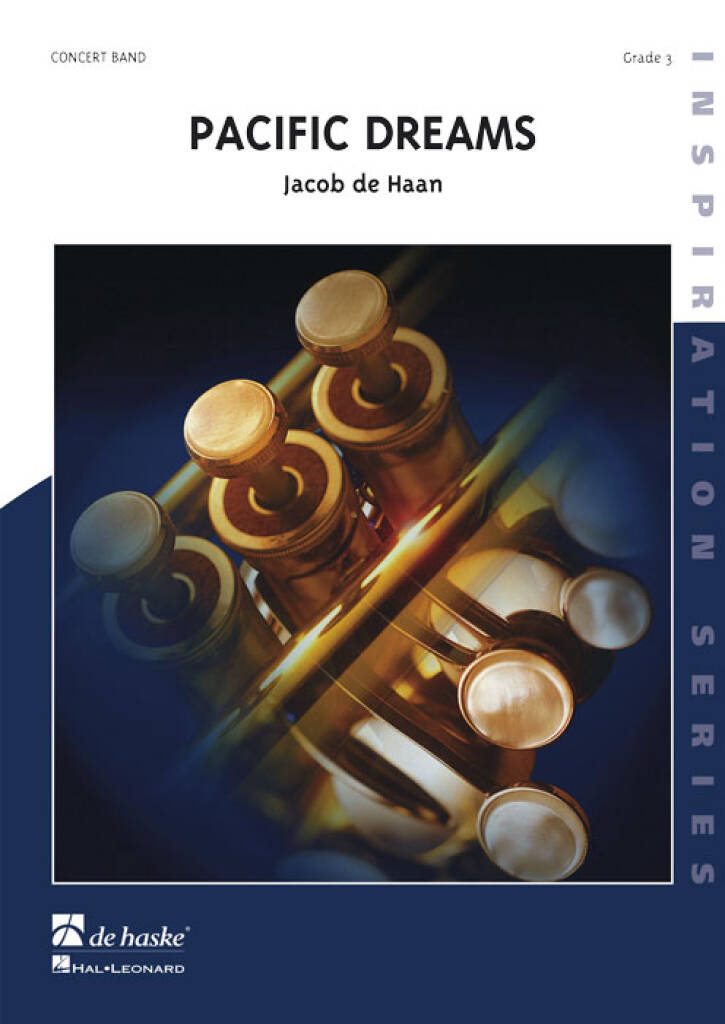 £139.99
Pacific Dreams - Jacob de Haan
Pacific Dreams describes the experience of Miguel, a traveling composer from Spain who, feeling somewhat alienated from his homeland, is wandering through an area of Sydney known as The Rocks. At a small outdoor market in a typical street of this oldcolonial neighbourhood, he discovers a print of William DeShazos painting "Pacific Dreams" Portrayed in the painting is the surf of one of the exotic islands in the Pacific. Next, with the impressive Sydney Harbour Bridge looming over the narrowstreets of The Rocks, he envisions sultry Pacific beaches. Suddenly a theme he once composed about the lakes in Japan comes to him. Is it the Asian influences present in cosmopolitan Sydney that bring this theme to mind? Or perhaps the waters aroundSydney, over which he could sail to Tahiti? He is uncertain. Could this same theme be used to create a new composition about his feelings for the metropolis Sydney? How then to work his Pacific Dreams into the mix? Miguel is certainly no fan ofHawaiian music. Mayby he could use the vocabularies of islands like Hawaii and Tahiti, their beautiful vowel combinations being sung ad libitum by a mixed choir.With these ideas and his newly purchased print of "Pacific Dreams", he boards the Metroat Circular Quay. He has a final glimpse of the harbour and the Sydney Opera House as the train races into the ground. On to the hotel! To work! He must compose!Maestoso : Miguel is impressed as he gazes upon the Sydney Harbour Bridge. And yet, hewants to go away from this city. Away, to an exotic island in the Pacific.Steady Rock : In the Rocks, musicians are playing at a square. Miguel basks in the atmosphere but at the same time he is fantasizing about Hawaii and Tahiti.Andante Lamentoso :In his hotel room, Miguel is feeling sad and lonely in this big city. He takes comfort in his "Pacific Dreams".Allegro : Miguel boards the boat that takes him from Darling Harbour to Circular Quay. In his mind he is traveling on to Hawaii. Or is ithome, where the bolero is playing? He is pulled back to reality by the skyline of Sydney.
Estimated dispatch 7-14 working days
 View Music