
Results
-
 £105.00
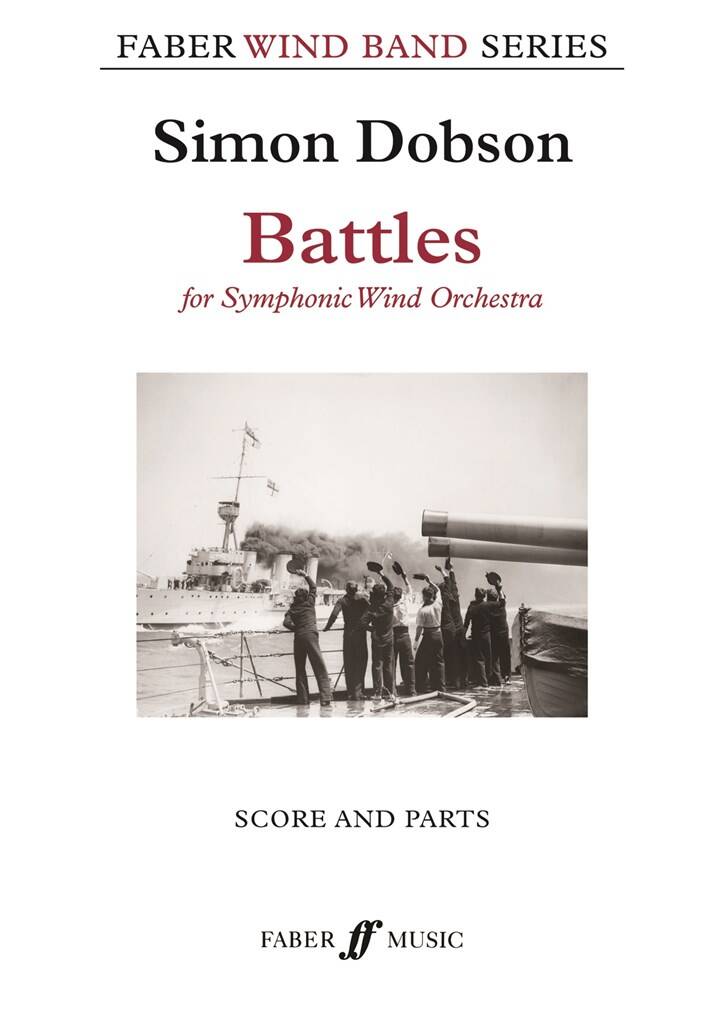
Battles - Simon Dobson
Battles was written for the restoration of the epic 1927 silent film The Battles of Coronel and Falkland Islands, and was commissioned by the British Film Institute (BFI) in 2013. The work presents eight contrasting scenes as a continuous sequence: War, Introduction of Admiral von Spee, German Banquet, Building Steam/Preparing, Islanders, Call to Arms, Great Battle at Sea and Victory. The original score was written for a small chamber orchestra, symphonic brass and a substantial batterie of tuned and untuned percussion. Battles has been edited for symphonic wind orchestra with percussion and harp.Composer Simon Dobson says of hiscolourful score, "I wanted to keep things simple and clear, so there is a British theme, a fanfare march idea, often heard on trumpet, and a German naval theme, which is a more angular motif."
Estimated dispatch 7-14 working days
-
 £101.30
Geburtstags-March - Ferdinand Kühne
Ferdinand Khne was a German composer who lived from 1858 to 1939. He wrote many marches, and this is the most well-known one.The march, also known as "Jour de Fete", is a march in traditional german style with a light hearted, optimisticcharacter suitable for marching as well as for concert purpose.
Estimated dispatch 7-14 working days
-
£76.99
Bergischer March - Reiner Lüghausen
It is a tradition that a concert must include a real, classic march. Traditions are made to be kept. This is also true of our German neighbours. Reiner Lghausen obtained his inspiration from the German march literature.
Estimated dispatch 7-14 working days
-
 £94.99
O Christmas Tree
The tradition of the Christmas tree in Western Europe dates back to a time long before any Christianization had taken place. During the severely cold winter nights, so it was believed, evil spirits tried to 'kill' nature. Needle-leaved trees were the only ones which kept their green colour throughout the year, and therefore became symbols of immortality. These 'living' trees, said to be the work of benign spirits, were brought into people's houses to ward off evil, life-threatening powers. In the 14th century people first started to decorate Christmas trees. It was a pagan custom, originated by the inhabitants of Alsace. This custom was taken over by the Church inthe course of the 15th and 16th century. At first the decoration consisted mainly of edibles, such as apples and wafers, but later small presents were added. Legend has it that the reformer Martin Luther was the first person to decorate a Christmas tree with candles. The flickering candle flames were meant to create the image of a starry sky in which Christ's apparition could be recognized. The German organ-player Ernst Anschtz from Leipzig was the first person to notate the song 'O Tannenbaum', the melody being a well-known folk song. Next to 'Stille Nacht' 'O Tannenbaum' is the most famous German Christmas song, now known throughout the world. In the United States of America the melody of 'O Tannenbaum' has even been used in four States (among which the State of Maryland) for their State song. In David Well's arrangement the song is first heard as many of us know it. After this introduction, however, it is transformed into a solid rock version, and the beat has been changed. In the second part the familiar three-four time is back, but here the rhythm is different from the original. After the richly ornamented rock beat the basic theme can be heard once again and the composition is concluded in a festive manner.
Estimated dispatch 7-14 working days
-
 £207.00
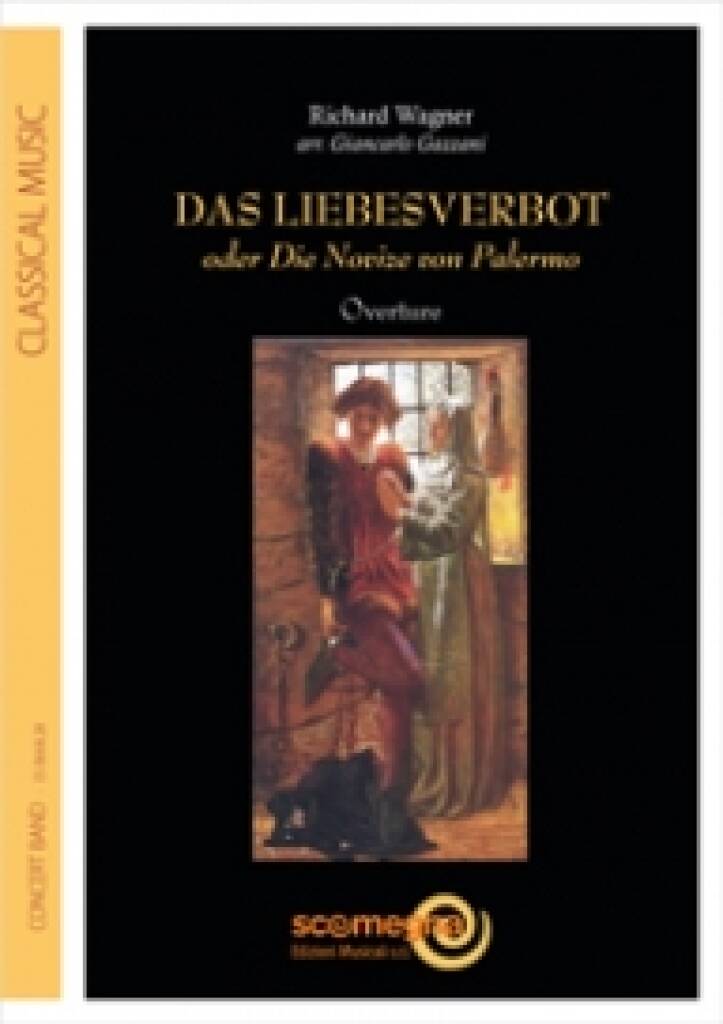
Das Liebesverbot - Richard Wagner
This young, comic opera, composed in 1835 on one of Wagner's own libretti, based on a play by Shakespeare, was unsuccessful at the Magdeburg theatre in 1836 and even the composer considered it a "sin of youth". After attempting in vain to have his first opera, "Le Fate", performed in Germany, Richard Wagner decided that his lack of success was due to the overwhelming competition of Italo-French music. He listened to Bellini, and became aware of the objective reasons for the great success of this music, comparing the warmth of life of Italian music to the frozen and meticulous German style. Hence he composed " Das Liebesverbot " with the sole aim of giving intense pleasure tothe public, without worrying about succumbing to the clichs of French and Italian music. That is why, when we listen to this music without knowing the name of the composer, we find ourselves in an embarrassing situation. We could easily attribute the work to some French composer, Meyerbeer, or Auber, for instance, but then the melodic ease and constructive linearity would bring Rossini to mind. By paying closer attention, however, we notice a boldness, an aggressiveness and a wealth of ideas that, together with clever orchestration, reveal the touch of the great German musician. " Das Liebesverbot " deserves to be performed more often, and we feel sure that the transcription for band will be an excellent vehicle of diffusion for this symphony.
Estimated dispatch 7-14 working days
-
 £84.99
Alle Jahre wieder - Michael Friedmann
Alle Jahre wieder (Every Year Again) is an old Christmas song by Friedrich Silcher, who lived from 1789 to 1860. This well-known German song portrays the birth of Christ on earth, bringing peace to all people. The German composer/arranger Michael Friedmann has expertly made this contemporary arrangement of Alle Jahre wieder.
Estimated dispatch 7-14 working days
-
 £139.99
The Bridge on the Border - Otto M. Schwarz
The Bridge on the Border is a European bridge connecting the German city of Kehl to the French city of Strasbourg. This piece tells the passionate story of German and French lovers who meet at the bridge on the eve of war. Fortunately, this story has a happy ending, with enemies becoming friends, no longer separated by the river between them!
Estimated dispatch 7-14 working days
-
 £76.99
Maria durch ein' Dornwald ging - Traditional
Maria durch ein? Dornwald ging (Blest Mary Wanders Through the Thorn) is a traditional German Christmas song. The earliest known version is recorded in the Andernacher Gesangbuch from 1608. Halfway through the nineteenth century it was a regional pilgrimage song in Thringen, and at the beginning of the twentieth century, the current version was registered in the songbook Zupfgeigenhansl of the German youth movement. Michael Bilkes used the well-known melody to create this attractive arrangement for concert band.
Estimated dispatch 7-14 working days
-
 £159.99
Alliance Day - Thierry Deleruyelle
On 22 January 1963, the signing of the lyse Treaty between France and Germany marked the beginning of a solid relationship of cooperation and friendship, embodying the reconciliation of two nations after decades of conflict. Alliance Day celebrates this treaty by using the French and German national anthems as compositional material. Emblems of each nation, they are transformed throughout the work, symbolising the journey towards unity. The piece moves between intense, lyrical moments and playful, melodic ones. The orchestral climax culminates in an explosion of sound before reaching a grandiose finale.
Estimated dispatch 7-14 working days
-
 £106.99
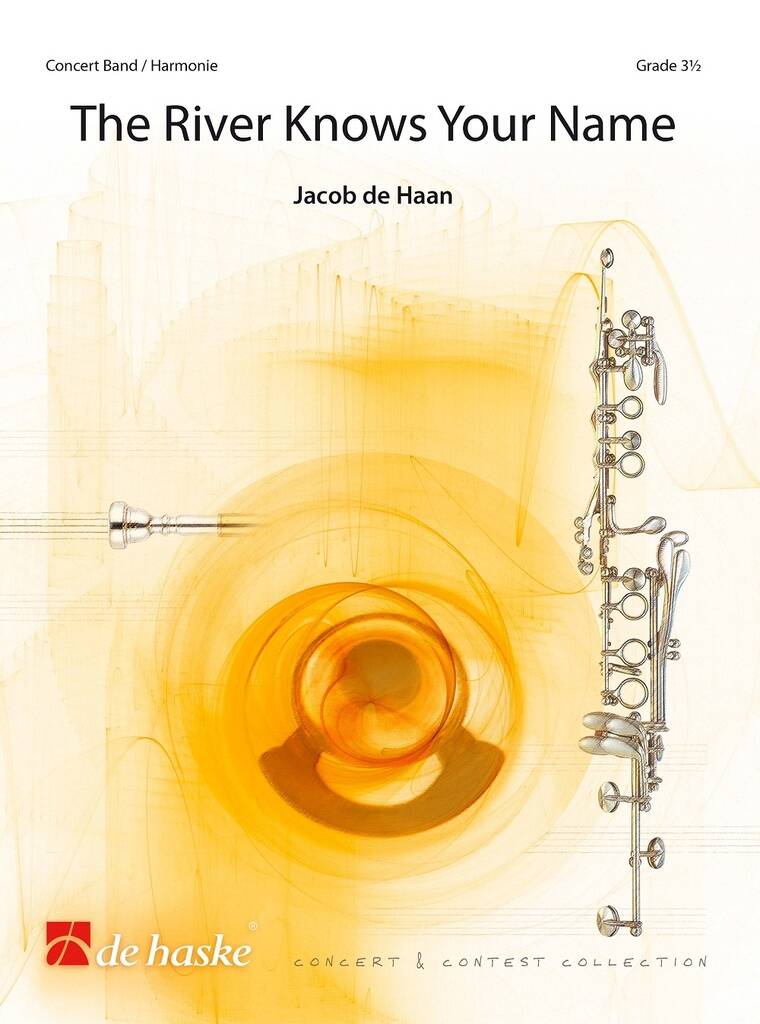
The River Knows Your Name - Jacob de Haan
This work describes the way the German river Saar holds the names of all the people who once lived in the area and of those who live there now. The introduction depicts the river flowing toward its confluence with the Mosel. The first names revealed by the river, in a dance, are those of the Romans, who established their first settlement here. Then the beautiful Saar Cathedral is portrayed, where believers give voice to the names of the people they know. Next, a powerful passage resounds: a reflection of the entrepreneurial spirit in Dillingen that has taken shape through the famous metal industry. Via a short clarinet solo, the work flows toward its conclusion in an emotional, stirring fashion, from nostalgic strains to full-blown euphoria.
Estimated dispatch 7-14 working days
 View Music