
Results
-
 £71.50
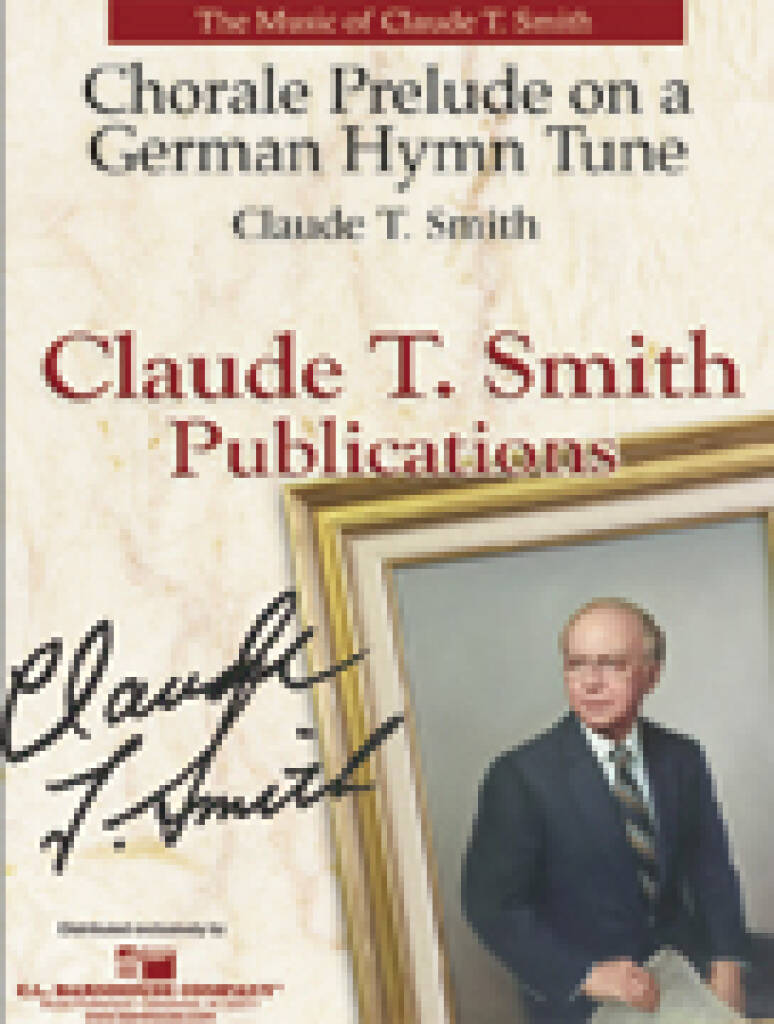
Chorale Prelude On A German Hymn Tune - Claude T. Smith
Magnificent and full of musical variety, this outstanding work will set your band apart. Solidly scored to sound full and well-balanced. Effective for both sacred and secular performances.
Estimated dispatch 7-14 working days
-
 £142.60
German Folk Song Suite - Horst Haas
Estimated dispatch 7-14 working days
-
£141.00
-
 £53.50
The Brandenburg Gate (German March) (Concert Band - Score and Parts) - Vinson, Johnnie
Heralded by a fanfare-like figure for trumpets in the first strain, here is an appealing German-style march solidly scored for young players. Low brass take the lead on the second strain, followed by a contrasting lyrical section featuring the woodwinds. The full ensemble brings us to a rousing finish in this terrific-sounding march. Duration: 2.30
Estimated dispatch 7-14 working days
-
 £69.99
Two German Dances (Concert Band - Score and Parts) - Beethoven, Ludwig van - Sparke, Philip
Duration: 1.45
Estimated dispatch 7-14 working days
-
 £76.99
German Love Song (Concert Band - Score and Parts) - De Haan, Jacob
Dreaming of love. This is the theme of the folksong on which the composition was based. Its characteristic melody inspired Jacob de Haan to this instrumental romance with a transparent structure consisting of an introduction, the folk-melody, a development of the theme, the folk-melody accompanied by ornamental triplets followed by the final bars.Duration: 2:45
Estimated dispatch 7-14 working days
-
 £105.00
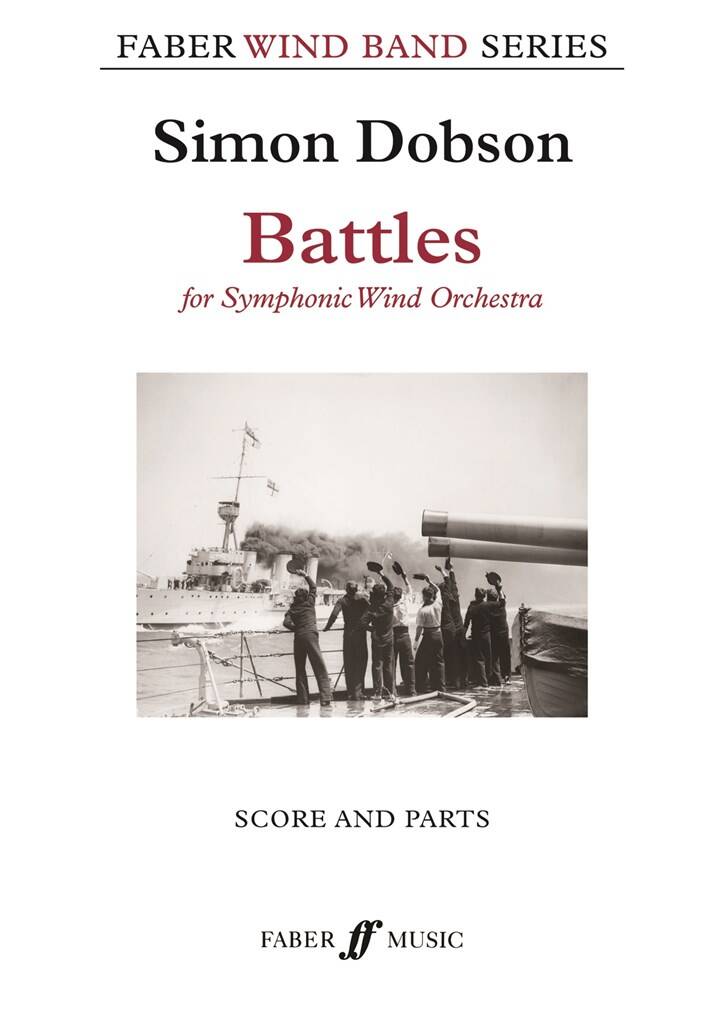
Battles - Simon Dobson
Battles was written for the restoration of the epic 1927 silent film The Battles of Coronel and Falkland Islands, and was commissioned by the British Film Institute (BFI) in 2013. The work presents eight contrasting scenes as a continuous sequence: War, Introduction of Admiral von Spee, German Banquet, Building Steam/Preparing, Islanders, Call to Arms, Great Battle at Sea and Victory. The original score was written for a small chamber orchestra, symphonic brass and a substantial batterie of tuned and untuned percussion. Battles has been edited for symphonic wind orchestra with percussion and harp.Composer Simon Dobson says of hiscolourful score, "I wanted to keep things simple and clear, so there is a British theme, a fanfare march idea, often heard on trumpet, and a German naval theme, which is a more angular motif."
Estimated dispatch 7-14 working days
-
 £101.30
Geburtstags-March - Ferdinand Kühne
Ferdinand Khne was a German composer who lived from 1858 to 1939. He wrote many marches, and this is the most well-known one.The march, also known as "Jour de Fete", is a march in traditional german style with a light hearted, optimisticcharacter suitable for marching as well as for concert purpose.
Estimated dispatch 7-14 working days
-
 £94.99
O Christmas Tree
The tradition of the Christmas tree in Western Europe dates back to a time long before any Christianization had taken place. During the severely cold winter nights, so it was believed, evil spirits tried to 'kill' nature. Needle-leaved trees were the only ones which kept their green colour throughout the year, and therefore became symbols of immortality. These 'living' trees, said to be the work of benign spirits, were brought into people's houses to ward off evil, life-threatening powers. In the 14th century people first started to decorate Christmas trees. It was a pagan custom, originated by the inhabitants of Alsace. This custom was taken over by the Church inthe course of the 15th and 16th century. At first the decoration consisted mainly of edibles, such as apples and wafers, but later small presents were added. Legend has it that the reformer Martin Luther was the first person to decorate a Christmas tree with candles. The flickering candle flames were meant to create the image of a starry sky in which Christ's apparition could be recognized. The German organ-player Ernst Anschtz from Leipzig was the first person to notate the song 'O Tannenbaum', the melody being a well-known folk song. Next to 'Stille Nacht' 'O Tannenbaum' is the most famous German Christmas song, now known throughout the world. In the United States of America the melody of 'O Tannenbaum' has even been used in four States (among which the State of Maryland) for their State song. In David Well's arrangement the song is first heard as many of us know it. After this introduction, however, it is transformed into a solid rock version, and the beat has been changed. In the second part the familiar three-four time is back, but here the rhythm is different from the original. After the richly ornamented rock beat the basic theme can be heard once again and the composition is concluded in a festive manner.
Estimated dispatch 7-14 working days
-
 £186.20
Ricercare Harmonie
The original 16th century Ricercare was actually a vocal work without words.Instrumental music is in search of its independence: the content was so to say a musical invocation.The Ricercare in this case is an invocation of the various themes - seemingly contradictory - yet forming a symphonic unity, which is attained by their contrast and their dialogue in counterpoint.One of these themes is formed by the tones B - A - C - H (B = German for B-flat; H = German for B-natural).This Ricercare has nothing to do with the old Motet character.
Estimated dispatch 7-14 working days
 View Music