
Results
-
 £109.99
The Marbled Midnight Mile - Steven Bryant
The Marbled Midnight Mile is a companion to Bryant's earlier works Dusk and First Light - the three of them together forming a loosely-related night cycle. The title evokes an extended journey through the myriad wandering thoughts that occur in the solitude of night. The music makes only modest technical demands of the ensemble, but is a perfect vehicle to expand the band's musical maturity and sensitivity. Dur: 8:00 (Grade 4)
Estimated dispatch 7-14 working days
-
 £134.99
Prima Luce Wind Band Set (Score & Parts)
Prima Luce (First Light) was commisioned by the Holy Angels Elementary School located in Aurora (USA). The name of the town (which means dawn), the town's great religious history and the fact that this town was one of the first in the USA to have streetlights were the inspiration for this Gregorian influenced atmospheric composition. 0:08:43
Estimated dispatch 7-14 working days
-
£514.99
The Venetian Collection
The Venetian Collection by Johan de Meij consists of four movements which are all a musical reflection of the four paintings of the same names from the Peggy Guggenheim Museum in Venice.Voice of Space is the first movement of The Venetian Collection. The picture on which the music is based on was painted by the Belgian surrealist artist Ren Magritte. Along with Ensor, Permeke and Delvaux he was one of the most important painters of the 20th century.The Red Tower was inspired by the painting of the same name (La Torre Rossa) by the Italian artist Giorgio de Chirico, and was awarded first prize in the International Composition Contest in Oman. One of the towers of the mediaevalwalls of the Italian town of Soncino (home to the band for whom Johan de Meij wrote the work for) shows a remarkable resemblance to the tower in the work of De Chirico. Magic Garden contrasts starkly with the other movements of the cycle. As with the painting, Johan de Meij has tried to reflect the colourful, naive dream world of Paul Klee. The transparent texture, in which the woods play an important role, makes a striking impression throughout this serene movement.Empire of Light is also based on a work by Ren Magritte. He was a versatile and productive artist producing over 1100 paintings and 700 gouaches. Johan de Meij used the painting Empire of Light as his theme for the last movement of his Venetian Collection.
Estimated dispatch 7-14 working days
-
 £101.30
Honorary March of Her Majesty Queen Sonja - Svein H. Giske
This march was commissioned by The office of cultural affairs in Fana and Ytrebygda (a part of Bergen Municipality) for the opening of The Bergen Light Rail. The premiere was given by The Norwegian Navy Band Bergen and Smrs skolemusikkduring the light rails maiden voyage. Her Majesty Queen Sonja of Norway opened the light rail on June 22nd 2010.My ida was to give the march a strong link to Bergen. In the bass solo (letter B) I have quoted Bergens "national"anthem Nystemtn and in the Trio (letter E) I have used a bugle call from Bergens unique tradition of archerchery brigades. The first part of the march is meant to have a sort of train feel to it; somethingthats moving steadily through thestreets of the city.
Estimated dispatch 7-14 working days
-
£78.95
The Voyage - George Sweet
At first lush and mysterious, then light and uplifting, The Voyage begins. Newcomer George Sweet brings us some invigorating ideas and harmonic treatments, as well as shifting hythmic feels from 4/4 to 3/4 time. There is some great interplay between various sections of the band that changes from light woodwind sounds to strong brass interjections. George is a composer to watch in the years to come.
Estimated dispatch 7-14 working days
-
 £70.00
Vicennium - Gauthier Dupertuis
Vicennium (Latin for"twenty years") by Gauthier Dupetuis, is a vibrant and uplifting march for concert band, perfectly suited for both concert performance and parade.Bursting with energy from the very first notes, an energetic motif establishes a light and spirited atmosphere that carries the entire first section. The trio, calmer and more expressive, reveals a lyrical theme with rich modulations, before a majestic return brings the work to a brilliant conclusion.Commissioned in 2026 by the Musikgesellschaft Alphorn Plaffeien in the Swiss Canton of Fribourg to celebrate the 20th anniversary of conductor Michel Stempfel, Vicenniumis both a festive tribute and an exciting addition to any concert band repertoire.
Estimated dispatch 7-14 working days
-
 £253.70
Rainforest Concerto - Saskia Apon
Rainforest Concerto has been commissioned by the Brass Band Rijnmond. This double concerto for two trombones and wind band consists of three parts with the cadenza in the slow niddle movement. Saskia Apon was inspired by the threat of the destruction of the rainforest. In the first part, Creation, we hear an accelerated reproduction of the birth of this impressive natural phenomenon. We hear the first birds, we see the growth of the mangrove trees and we witness the struggle for light and the force necessary to keep the realized equilibrium in a perpetual balance.The second part, Ode, is a tribute to the wonder and splendour of the rainforest. By means of subtle and extremely delicate sonorities we hear how nature adds an inestimable value to the rainforest. However it is also extremely fragile and this engenders a certain melancholy due to the awareness of man's impotence to respect this beautiful nature.In the last part, Contra Demolition, we hear the threatening decline, but also the revolt against this possible ruin. It is a heartfelt cry to leave nuture in peace and to work hard for the preservation of the beauty and the value of the rainforest.
Estimated dispatch 7-14 working days
-
£69.99
Mountain March - Wim Laseroms
A fanfare introduces This festive march is introduced by a lively fanfare which leads into the first, playful, melodic line which features a regular dynamic alternation and a light syncopated rhythm. After the traditional bass solo, the first theme returns. The initial theme, performed by piano and cantabile trio, later sounds in a jubilant forte with various figurations in the higher woodwinds. The fine work Mountain March is suitable as a street march, but will also gain much appreciation on the concert platform.
Estimated dispatch 7-14 working days
-
 £96.40
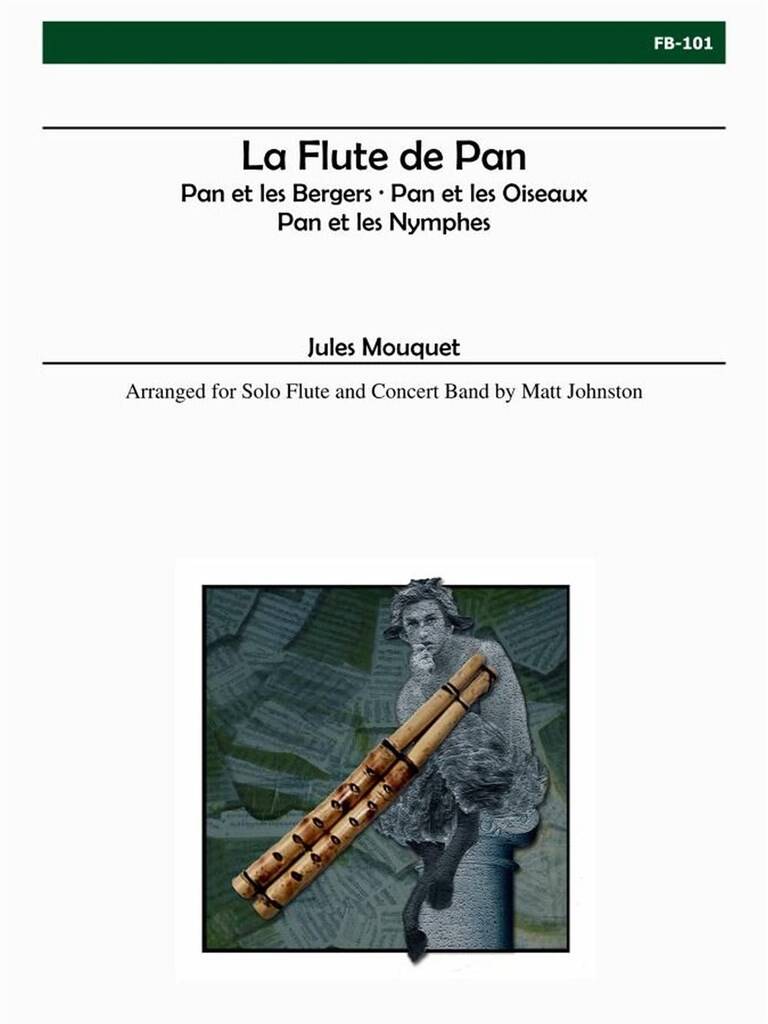
La Flute De Pan - Jules Mouquet
This arrangement features a colorful, yet light accompaniment to this delightful flute solo. A great piece to feature your first chair flute player. The first movement is appropriate for bands of all ages, while the latter two movements are a most likely appropriate for high school groups and up. Instrumentation: Solo Flute, Flute 1/2, Oboe, Bassoon, Clarinet 1/2, Bass Clarinet, Alto Saxophone 1/2, Tenor Saxophone, Baritone Saxophone, Trumpet 1/2, Horn 1/2, Trombone, Euphonium (BC and TC), Tuba, Snare Drum/Bass Drum, Triangle/Suspended Cymbal, Bells
Estimated dispatch 7-14 working days
-
 £274.99
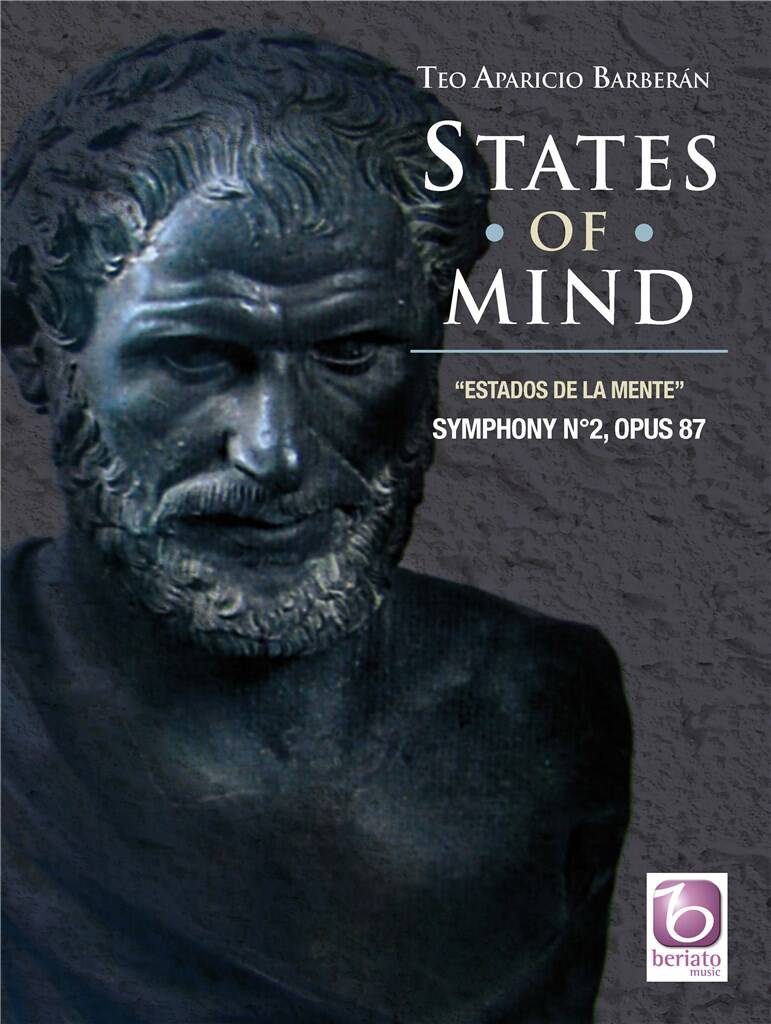
Symphony No. 2: States Of Mind, Opus 87 - Teo Aparicio-Barberán
I- Logos (reason)II- Pathos (emotion)III- Ethos (credibility)The ancient Greeks believed that music shaped the character of man. In Egyptian temples, music was an essential part of the magical rites to alter the course of nature or to treat illness.And today we know that sound can actually alter matter. The secret of music lies in harmony and mathematics, as many great musicians and experts have always known.One of the most important qualities of music is that it enables the listener to focushis attention inwards instead of on what is around him. It is indisputable that music can inspire emotion. Music leads us into a universe of emotions that are difficult to put into words. In short, music reaches into corners of our soul and thoughtsthat words cannot reach and makes it possible to more clearly describe these different States of mind.The composer of this symphony also believes that each "musical argument" must be constructed so that it will induce the desired reaction in thelistener.Music: more than wordsIn recent times, most orchestral symphonies have been based on a story, a text or something similar so that their composition must be structured accordingly.The intention of this work by Teo Aparicio-Barbern is quitedifferent. The composer describes the three elements of the argument as the only formal structure of the work. Since certain philosophers in world history were able to subdivide grammatical argument, why shouldnt that also be possible for the musicalargument?Since ancient times the power of the spoken word has captivated mankind. How can an argument move people and mobilise the masses? Where does the power of words come from today? The answer lays not so much in what people say but in how theysay it.Rhetoric is one of the oldest humanist disciplines in Western civilisation. Aristotle, in the 4th century BC, called it the art of persuasion. Indeed, the terms rhetoric and persuasion are mutually interchangeable.More than 2000 years agoAristotle structured his rhetoric according to the following three elements: the logos, the pathos and the ethos.Logos (words, reason) is the reasoning that gives freedom to the structure of the text by expressing what one wishes to say usingspecialist terms. With logos we create arguments to receive public approval and to defend our ideas.Pathos, the second element, refers to the effective use of public psychology. Pathos can be considered as the capacity to induce the desired emotionalresponse in the public, by creating an emotional connection with the public so that they accept our message.The third element, ethos (credibility), refers to the character of the speaker and is perhaps the most important of the three elements.Aristotle based his concept of ethos upon his belief that truth and justice will always have the upper hand over anger. He believed that what was true and good was easier to prove and was more persuasive.This second orchestral symphony from thecomposer from Enguera follows these three parameters of the argument according to Aristotle. Each movement tries to summon a different state of mind in the listener so that the message itself can be better understood and appreciated. Apart from thesethree general concepts the music is only structured, as Claude Debussy would say, in a "formative way".The first movement, logos, is based on a scherzo melody that undergoes various changes in rhythm and harmony. The arguments are presented by meansof conventional techniques of composition. The second movement, pathos, is characterised by suggestions of sound. It is subdivided into two large parts. The first part is based on a five seven sequence with five sounds that are repeated in differentenvironments, structures and dynamics. The second part, which is largely tonal, brings out more directly the emotional overtones that each argument must have. The third movement, ethos, is a faithful rendition of the composers personality. In thislast part, clear rhythmic sequences stand out, there are large dynamic contrasts and lots of tone variation. In addition, and this is quite in keeping with the composers earlier work, the harmony in States of Mind is handled in a manner that is bothoriginal and efficient, as a result of which Aparicio-Barberns message is well understood by the listener.This second symphony by Teo Aparicio-Barbern is devoted to "my dear Henrie Adams, a guiding light in this eternally dark musical world. Thankyou for everything."
Estimated dispatch 7-14 working days
 View Music