
Results
-
 £204.00
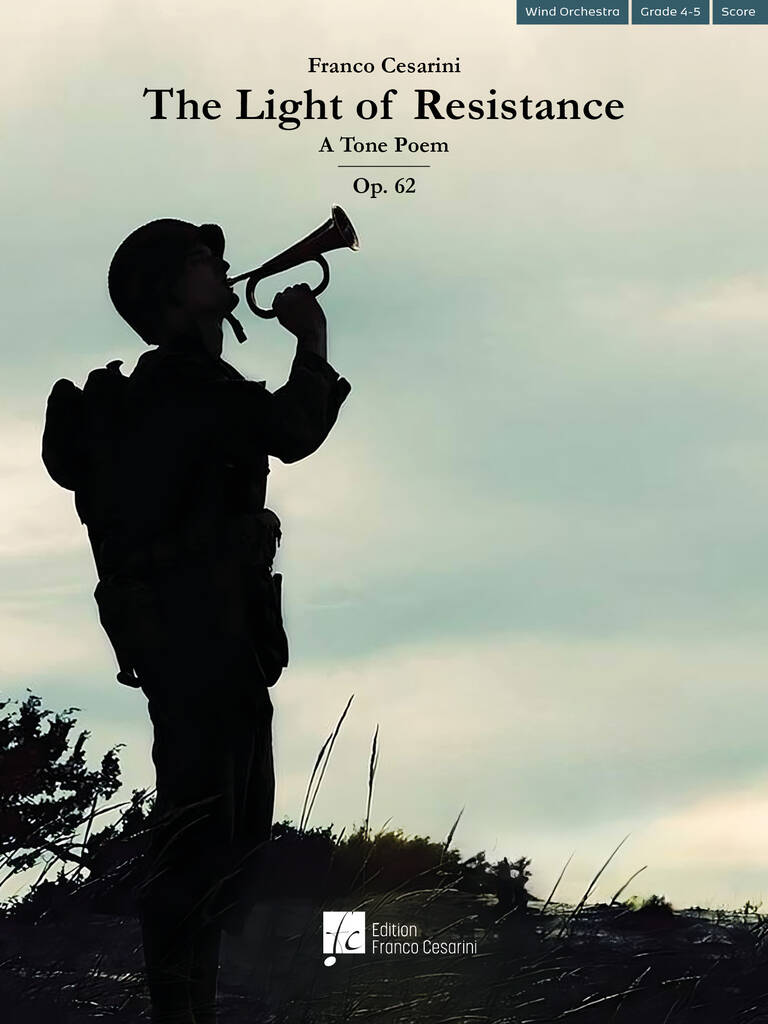
The Light of Resistance - Franco Cesarini
Franco Cesarini was commissioned to write The Light of Resistance by the Filarmonica di Villadossola APS (Piedmont, Italy) for its 125th anniversary. The Villadossola revolt was an uprising that took place in November 1943 in the homonymous municipality during World War II. The partisans, with the support of local workers, managed to temporarily liberate the town from nazi-fascist forces. It was one of the first acts of armed resistance against the German occupation in Italy but was harshly repressed by nazi-fascist troops who regained control of the territory. Although it was suppressed, the uprising remained a symbol of courage and determination.The slow introduction of the composition creates an atmosphere of latent tension, which gradually intensifies until it explodes in a rapid movement, symbolizing the struggle. Two contrasting musical themes collide, embodying the conflict between opposing forces. In the central section, a prayer rises delicately, then evolves into a heroic parade celebrating the temporary triumph of the revolt. However, this victory is fleeting; dissonant harmonies interrupt the scene, representing the brutal repression of the insurrection. In the finale, the heroic theme reemerges, evoking sacrifice as a spark of unshakeable hope. A moment of contemplation closes the composition, honouring the lives broken and reaffirming hope for a future of peace and regained freedom.The premiere of The Light of Resistance took place on 30th March, 2025 in Villadossola, performed by the Filarmonica di Villadossola, Franco Cesarini conductor.
Estimated dispatch 7-14 working days
-
 £99.99
Beyond the Horizon - I. KURE-Core City of the East - Satoshi Yagisawa
Beyond the Horizon is available in three separate movements that each can be played independently, but also link up with each other perfectly to form a rounded whole. Thus it is possible to perform the complete three-movement work, but you can also choose to play one of the movements. The first movement, 'Kure', describes the lively Japanese city of the same name and its surroundings. Movement two, 'Setouchi', reflects the local inland sea. The third movement, 'Yamato', is all about the battleship that was built at the naval shipyard of Kure. Three expressive pieces of music full of atmosphere!DHP 1256483-010 - I. KURE - Core City of the EastDHP 1256484-010 - II. SETOUCHI - The Inland SeaDHP 1256485-010 - III. YAMATO - The Battleship
Estimated dispatch 7-14 working days
-
 £68.99
Beyond the Horizon - II. SETOUCHI-The Inland Sea - Satoshi Yagisawa
Beyond the Horizon is available in three separate movements that each can be played independently, but also link up with each other perfectly to form a rounded whole. Thus it is possible to perform the complete three-movement work, but you can also choose to play one of the movements. The first movement, 'Kure', describes the lively Japanese city of the same name and its surroundings. Movement two, 'Setouchi', reflects the local inland sea. The third movement, 'Yamato', is all about the battleship that was built at the naval shipyard of Kure. Three expressive pieces of music full of atmosphere!DHP 1256483-010 - I. KURE - Core City of the EastDHP 1256484-010 - II. SETOUCHI - The Inland SeaDHP 1256485-010 - III. YAMATO - The Battleship
Estimated dispatch 7-14 working days
-
 £114.99
Beyond the Horizon - III. YAMATO-The Battleship - Satoshi Yagisawa
Beyond the Horizon is available in three separate movements that each can be played independently, but also link up with each other perfectly to form a rounded whole. Thus it is possible to perform the complete three-movement work, but you can also choose to play one of the movements. The first movement, 'Kure', describes the lively Japanese city of the same name and its surroundings. Movement two, 'Setouchi', reflects the local inland sea. The third movement, 'Yamato', is all about the battleship that was built at the naval shipyard of Kure. Three expressive pieces of music full of atmosphere!DHP 1256483-010 - I. KURE - Core City of the EastDHP 1256484-010 - II. SETOUCHI - The Inland SeaDHP 1256485-010 - III. YAMATO - The Battleship
Estimated dispatch 7-14 working days
-
£76.99
China Doll
The year 1951 was very productive for Leroy Anderson. For a recording project with Decca records in June of that year he composed a number of his most popular pieces, many of which were played for the first time in these sessions, including this delightful composition, China Doll. It's a great choice for any time of year, but is also an ideal substitute to the perennial holiday favorite, Sleigh Ride. This publication is the first-ever to offer a full score, edited by Mark Rogers.
Estimated dispatch 7-14 working days
-
 £137.70
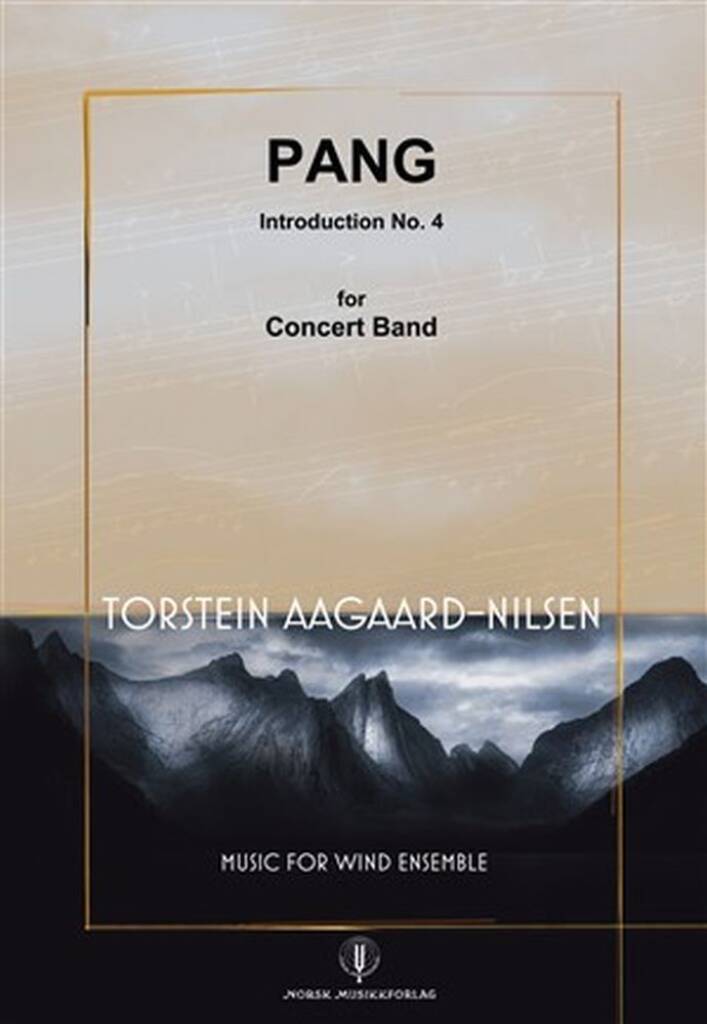
PANG Introduction No. 4 - Torstein Aagaard-Nilsen
"Pang" is an onimatopoeia that discribes the brutal forces unleashed from the very first bar. The stream of energy contiunes throughout the piece.The piece was comissioned by Bispehaugen Ungdomskorps (Bispehaugen Concert Band) in 1998. A version for brass band was written for Manger Musikklag and recorded by them on "Grafitti", Bjrn Sagstad conducting.
Estimated dispatch 7-14 working days
-
 £127.30
Mitt hjerte er ditt - Geir Holmsen
"Mitt hjerte er ditt" ("My Heart is Yours") is primarily known with this Norwegian lyrics and melody from Maj Britt Andersen's recording of the song, first released in 1992. Andersen's husband, Geir Holmsen, composed the new music for this recording, a version that has since been performed by numerous other artists, including Anna of the North on "Hver gang vi mtes" in 2022.The lyrics are Alf Prysen's Norwegian translation of Nils Ferlin's Swedish text, originally written to a Swedish folk tune.This is an arrangement written for a vocal soloist and wind orchestra, but it can also be played with instrumental soloists or purely instrumentally. The song has only two verses, so the middle section of this arrangement is an orchestral verse where the melody begins in the lower instruments.
Estimated dispatch 7-14 working days
-
 £211.80
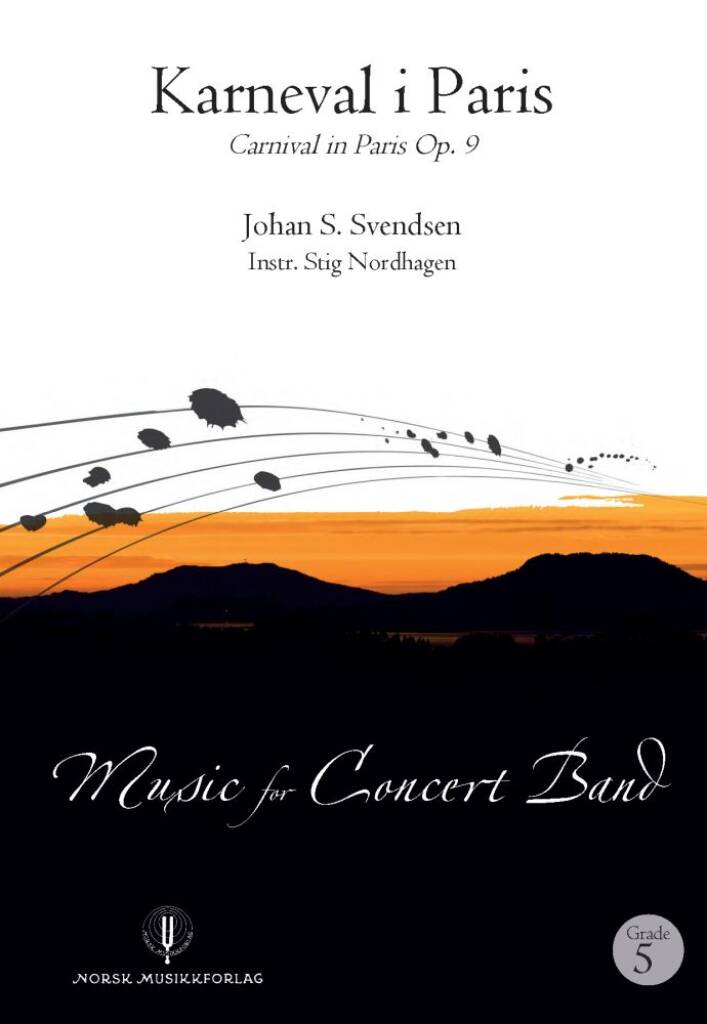
Karneval i Paris - Johan S. Svendsen
Johan Svendsen (1840-1911) composed "Carnival in Paris" in 1872, inspired by the energy and vibrancy of the Parisian carnival celebrations. The piece showcases a variety of moods and orchestral colours, ranging from jubilant and playful sections to more lyrical and elegant passages. It is a lively and colourful work that reflects Svendsen's skill in orchestration and his ability to capture vivid, festive atmospheres in music. In "Carnival in Paris", his Nordic musical roots meet the cosmopolitan influences he encountered while living and working in major European cities. The work has become one of Svendsen's most popular and is frequently performed in concert halls and festivals. About My Transcriptions for Wind Bands Ever since I started playing the clarinet at 8 or 9 years old in the school band "Blveisene" in my hometown of Gjvik, playing transcriptions of orchestral music has been a natural part of the repertoire. In regional bands, Norway's National Youth Band, and during my 10 years in a Military band, I played many such transcriptions. These transcriptions often included handwritten parts, masterfully crafted by colleagues in a time when music notation software didn't exist. Similarly, the scores were often incomplete, typically featuring just a solo clarinet part and condensed score in Bb. The transcriptions also contained parts for instruments like the Eb cornet and multiple tenor horns, but no saxophones, which made them less suitable for modern wind bands. The rise of many skilled Concert Bands and the increasing demands for scores and accessibility made me realize that someone needed to preserve this tradition. The reason I've transcribed these works is to ensure that you can play or conduct a repertoire that I believe has a rightful place in Norwegian Wind Band tradition. These transcriptions are my contribution to preserving some of the unique works in Norwegian music literature. Creating a transcription is a complex task, and I believe the score of "Carnival in Paris" is one of the most intricate I've undertaken. The first part of the process involves entering the entire orchestral score into music notation software. This is time-consuming and requires meticulous work. The next step is to check several editions to see if there are any discrepancies. Mistakes are often found in orchestral material, which can lead to further errors in the transcription. After that, I listen to many different recordings while following along with the score, paying attention to how different conductors emphasize balance and timbre. Gradually, I begin to note down passages I believe will work well for wind bands. One particular challenge in this piece is that the woodwinds and strings operate in the same register. In the original, the tonal difference between the strings and winds helps to clarify the individual musical lines. In the transcription, I've tried to address this by separating the lines, for example through octave adjustments, and highlighting them without compromising other aspects. I've also used some mallet percussion to broaden the tonal palette. There are countless decisions to be made to create a product that will hopefully allow future generations of wind band musicians to play this repertoire. - Stig Nordhagen -
Estimated dispatch 7-14 working days
-
 £133.80
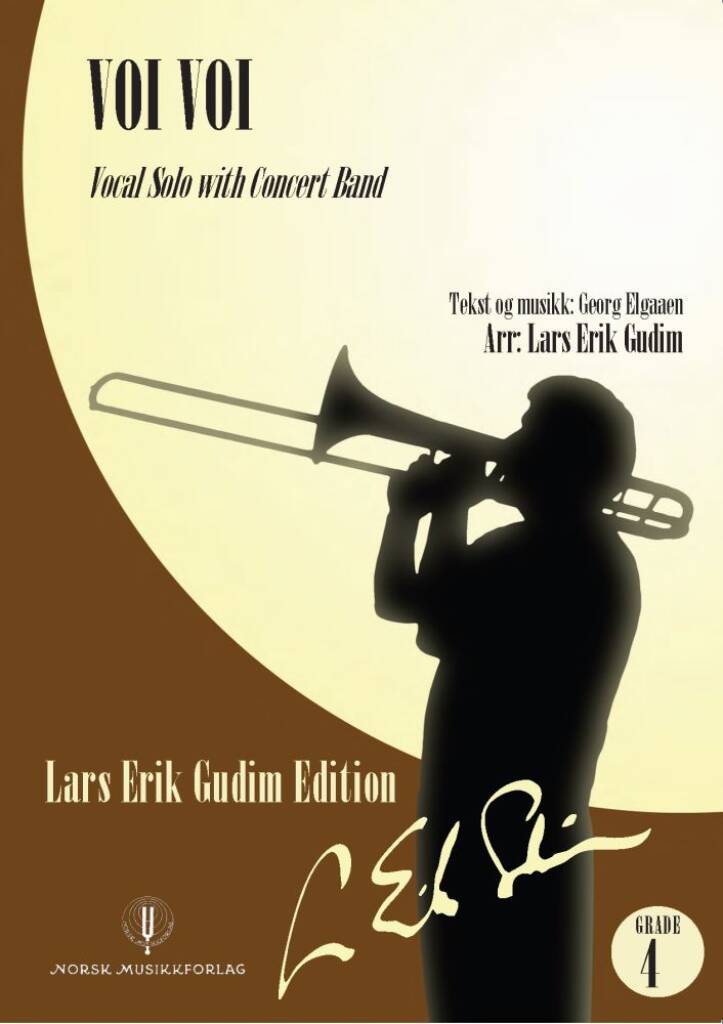
Voi Voi - Georg Elgaaen
"Voi Voi" was written by Georg Elgaaen for the very first edition of the Melodi Grand Prix in Norway in 1960. Nora Brockstedt performed the song, which became a huge success. The song is still one of her biggest hits and an important reason why she became a major icon in Norwegian entertainment music during the 1950s and 1960s. The song is typically lively and colorful, and this arrangement offers challenges in most instrument sections!Georg Elgaaen (1923-2017) was a Norwegian musician, composer, and lyricist primarily active in the fields of entertainment and popular music. He wrote music for a number of artists and was also active as an orchestra leader and arranger.
Estimated dispatch 7-14 working days
-
 £133.80
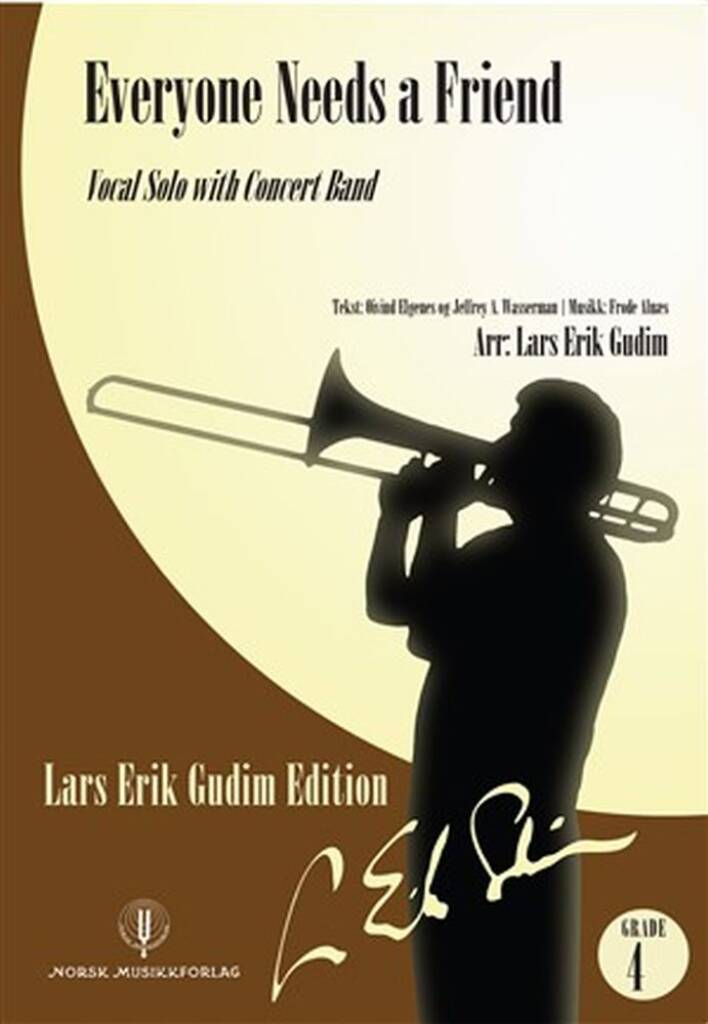
Everyone Needs a Friend - Frode Alnæs
"Everyone needs a Friend" is the most famous song by the band Dance with a Stranger, first released on their self-titled debut album in 1987. It became an instant hit following their performance of the song at Spellemann 1988, one of the band's most important performances during their 40-year-long career.Both guitarist Frode Alns, vocalist ivind "Elg" Elgenes individually, and the entire band have collaborated with the bands of the Norwegian Armed Forces on numerous occasions. This arrangement was created for one of these collaborations and was later recorded on "Gudim & Marinemusikken - p norsk" where Knut Marius Djupvik is the vocal soloist and Alns makes a guest appearance as guitarist.
Estimated dispatch 7-14 working days
 View Music