
Results
-
 £82.50
Conquest - Mark Lortz
This programmatic composition depicts a dark and intense journey to conquer an enemy force. A mysterious introduction exudes an ominous tone as the dampened pulse of the bass drum creates the timbre of a resolute heartbeat as opposing forces gather, then collide. Intense brass statements, brisk woodwind ostinatos, and running lines combine with unrelenting percussive parts to depict a fierce battle scene. The action then subsides into a triumphant flourish that ends the piece with the assertive and uncompromising sounds of victory.
Estimated dispatch 7-14 working days
-
 £60.50
The Ghosts of Edinburgh - Jay Taylor
Quite possibly the oldest inhabited fortress in history, Edinburgh Castle evokes emotions of mystique and wonder. This work, scored for beginning bands, uses mysterious themes, creative orchestration, dynamics and percussion to take the listener on a musical journey through the dark corners of the old castle. Excellent for teaching blend and playing with soft dynamics. Optional bass part.
Estimated dispatch 7-14 working days
-
 £82.50
Tomorrow Shines Soon - Vince Gassi
Commissioned by the W.R. Meyers S.S. band in Taber, Alberta and Inspired by Thomas Harry's poem Song of Hope, this uplifting work celebrates the unlimited potential that each day brings. The title expresses the idea that no matter what dark clouds may appear today, we haven't long to wait until tomorrow, which brings hope for a brighter future.
Estimated dispatch 7-14 working days
-
 £159.60
Sculptures Of An Exhibition - Kees Vlak
This composition was commissioned by the village of Midden-Beemster to commemorate the 375th anniversary of the polder of the same name. It was premiered in august 1987 by the Beemster Fanfare Band. On this occasion some twenty sculptors were invited to create a work of art. Those sculptures were set up at the most picturesque areas of the polder. On a 40 km long bicycle route one can admire the curious statues wile enjoying the beautiful scenery as well. The compostition is based on two themes: a main theme and the promenade theme.1.Introduction: After the grandiose presentation of the main theme, on the dominant, we leave the village to the sound of some pretty music.2.Promenade and Watchman: After some time, we discover a dark statue hidden in the bushes; it is shaped like a square standing on one of its corners. It is called "Watchman". We hear the promenade theme as a solo and all next themes will be variations.3.A Building of Willow-trees: Far away on a dike, we discover the huge skeleton of a kind of house. It is a construction of skilfully interwoven willow-branches. The musical themes are also interwoven. The sculpture is called "Construction of wood used by the farmers".4."Die Flsse, ah die Flsse"and Promenade: We continue our trip and see now a horn of plenty, made of brown ceramics and set up on the green slope of an old fortress. The sun shines on the sheep being at pasture under the willow-trees. No doubt, this scene will have something to do with abundance.5.Cardplayers in front of the Nightingale: A statue in cast iron, representing two carplayers, has been erected in front of the windmill called "The Nightingale". This sculpture suggests a rather animate atmosphere. The opponents with the trumpets and the trombones suggest the cardgame. The trumpets are constantly changing from players. At a certain moment the trumpet gets hold of the decisive trick and starts a victorious blow. The trombone, however, repeats this shout of joy with quite some perverse delight and in a completely wrong pitch. The game continues and after a climax all cards are finally thrown on the table.6.Autumn and Promenade: The trip now brings us a white sculpture in ceramics, decorated with some autumn leaves. Is this a seated man or a chair? Anyway, it looks very nostalgic. This is the time for a moment of reflection with the oboe or the saxophone. It is called "Autumn".7. The Powerlifter: Somewhat hidden in a ditch, we discover a small statue in cast iron, representing a powerlifter who is going to give way under the weight. The music uses the main theme with powerlifting euphoniums, saxophones and clarinets.8.The Bull: Here we have another cast iron sculpture, but this time it is a really powerful figure. This "Bull" statue uses the same theme as that of the powerlifter, but it gets a stronger foundation from the bass insturments.9.Mirror and Promenade: While strolling alongside the channel we suddenly see four mirrors. They not only reflect themselves, but also mirror in the water of the channel. These reflections are suggested by the use of tuned percussion. The promenade theme is also used in mirror image.10.Reflictions or...?: On top of the dike we have a nice view on a farmyard with its orchard. A very big net, coverd with sparkling tin plates, has been stretched between the trees. This sculpture is called "Reflections of ...?. Of what? Yes, of course, reflections of the times when the polder was a lake and the sun was reflecting in the wild waves.11.Willpower: Finally we discover a big statue in cast iron. It is not clear whether it is a man or a woman. Anyway the enormous bundles of muscles in the legs and the thighs are striking. This sculpture is called "Willpower". The idea of determination is musically suggested by a very long preamble to the promenade theme in one great stringendo, leading to the conclusion of the trip.12.The beautiful country: Here we have the most beautiful picture. The magnificent Beemster Polder in bloom. We see a nice windmill with decorated wings. We hear the main theme, now on the tonic.
Estimated dispatch 7-14 working days
-
 £131.30
Hymns And Dances II - J. Slothouwer
In 1990 Jochem Slothouwer composed Hymns and Cances II. This work for symphonic band and harp (ad libitum) is based on Hymns and Dances I for piano, mixed choir and percussion. The compostition is based on the contrast between hymnlike melodies and dance music episodes. The work, in five connected parts, seems to look for a reconciliation of both melodic and rythmical elements. The initial theme with the horns and the answer of the band form the base of the first part.The second part, charcterized by a vitorous dance rhythm, is dominated by the percussionn and syncopated motifs with the brass. A melody with the euphoniums almost imperceptibly slips into the ensemble and gradually gets to the foreground. The dance and the hymn reach a real climax interrupted by a short and dark intermezzo (part three). The clear sonority of part four, a fiery tarantella with many small byt virtuoso solos, is a new contras. The final adagio reuses the previously developed ideas of part one and ends in sheer ecstasy.
Estimated dispatch 7-14 working days
-
 £214.80
Skies - Oliver Waespi
Program notes by Oliver Waespi on his composition Skies:Skies is the plural of Sky. We may wonder are there several skies? Is the sky we all long for not the same for everybody? While travelling on foot and "in the open air" I have observed the firmament often in quite different shapes, so that I can say I have indeed experienced the sky in different ways. Years ago I already wanted to portray "my sky" in music; I finally have been able to realise this long-cherished dream.This composition deals with the sky, more precisely with my sensual and emotional experience of the sky in all its aspects. Two point of views are combined in this composition: one showing the sky as it presents itself to me, the other showing the sky as I observe it. The music was bom simultaneously by intemal and extemal inspiration: it describes nature but also the emotional and spiritual experience of nature. To me, the experience of nature is not abstract, but it is connected with concrete ages, places or people from my neighbourhood. This is why I have combined several parts of this composition with certain landscapes.The sky presents itself in different landscapes in the most varied ways: for the sensual experience, there is no sky as such. The indications of places spread all over the score, are primarily clues for myself; they represent certain atmospheres, which I have experienced especially in England and Scotland. They can however also be useful to the musicians and the audience, providing they know those landscapes and the celestial atmospheres linked to them.The music is independent from the atmospheres described in the subtitles, as those are rather connected to a tragic nature, and so the music is not based on any program. Musically spoken, the composition has a symphonic structure, which means that the complete musical material is derived from three contrasting main themes. In the first part, the description of a noctumal sky ("Night") two themes are developed in an organic way; the first, rather "dusky", is to be found with the horns, the second, "in bright daylight", with the oboe and flute, the third, "more quiet" , with the brass instruments. In the next part, we have clouds and rain over the Isle of Skye (one of the Hebrides islands in Scotland) and here several elements of the first theme are still more developed. Then we get an increasingly dark mood, which is released, in heavy chords. Then suddenly, the sun breaks through and the music gets a majestic character. We have a new shape of the initial theme, first with the French horns and then with the trombones. The music gets a quicker tempo and flows into a quick movement describing the winds and waves at sea ("Wind and Waves"). Three themes are gathering and some variations are developed. The music gets more and more energetic and, after a climax, calms down again. Then we have a kind of "summer pastoral" which suggests summer at the South coast of Cornwall ("South Coast of Penwith Peninsuia in Summer"). This is certainly not the hotte st summer in Europe, but still it is beautiful in this country that is blessed with so much rain. In the "pastoral" , the sea is already sketched in broad outlines in the French horn solo. The magnificence of an aftemoon at the seaside is developed at the end of the composition ("Noon at Treen Cliff', a rock protruding in the sea next to Porthcumo at the South Coast of Cornwall); here the music gets stronger and stronger and after a majestic climax it vanishes completely.
Estimated dispatch 7-14 working days
-
 £186.20
Une Vida Un Dia - Pablo C. Escande
The title a life, a day or life as one day is the basis of the musical contents of this composition. It consists of five parts and is written in a neo baroque style, combining a number of baroque music elements, such as imitative counterpoint, abundant ornamentation and tutti solo effects, with more contemporary elements such as composed rhythms, modal harmonics and dodecaphony.Part 1: Alba - Dawn. Just before the sun rises, the world is full of tensed expectation of a new beginning. At daybreak a new life is received with cries of jubilation.Part 2: La Maana - Morning. The early life has begun. Hardly conscious of its environment, the child is resting in its mother's loving embrace.Part 3: Mediodia - Midday. Now is the time! Time to work, to love and to dance in the midday sun, but also to start the fight, before strength is flowing away. Let's not waste time!Part 4: Tarde - Twilight. The day is not over yet, but time passes by. Dusk is falling, the end approaches inevitably...Part 5: La Noche - Night. The comforting dark relieves the strong anxiety of the soul. Finally the soul is released of all worldly bonds.
Estimated dispatch 7-14 working days
-
 £155.80
Pegasus - Alex Poelman
The composition 'Pegasus' tells us the legend of the mythological flying horse. The birth of Pegasus, his integration with the stars, his spectacular flights and the sufferings of Bellerophon are described by means of a rich orchestration. Pegasus's swiftness, his pride and beauty, as described in the first and second parts, give way to the dark sounds evoking the sufferings of Bellerophon. In the fourth part, Pegasus arrives at Mount Olympus, home place of the Gods, and the themes of the first and second parts are heard again, this time in a warm heroic sounding orchestration. This is a striking musical evocation of one of the most famous characters of the Greek mythology
Estimated dispatch 7-14 working days
-
 £211.60
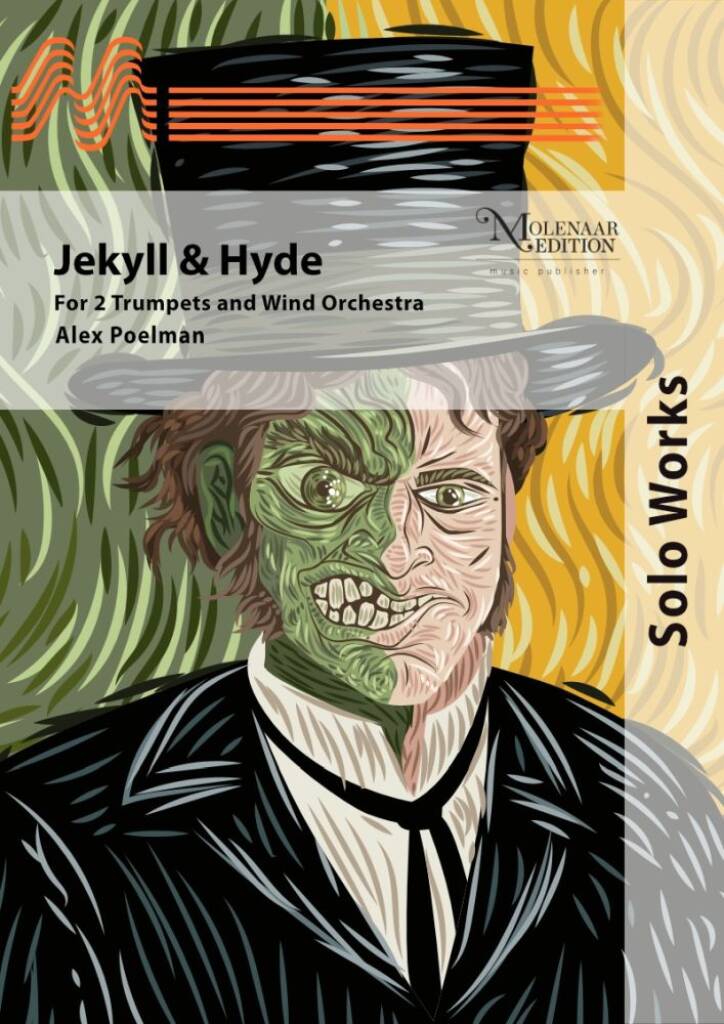
Jekyll & Hyde - Alex Poelman
Dr Jekyll researches the evil in man and succeeds in creating a potion that transforms him into his alter ego, Hyde. However, Jekyll loses control and fights an inner battle with Hyde. He loses this battle when Hyde commits murder. Understanding that there is only one way to resolve this, Jekyll kills himself and thus Hyde. In this solo concert the main characters Jekyll and Hyde are played by two solo trumpeters. The different sides of the trumpet are highlighted in this story: from the lyrical passages (Jekyll) to the sharp, mean and dark passages (Hyde). A challenging adventure for orchestra and soloists.This is rental music. Please contact us at [email protected]
Estimated dispatch 7-14 working days
-
 £138.00
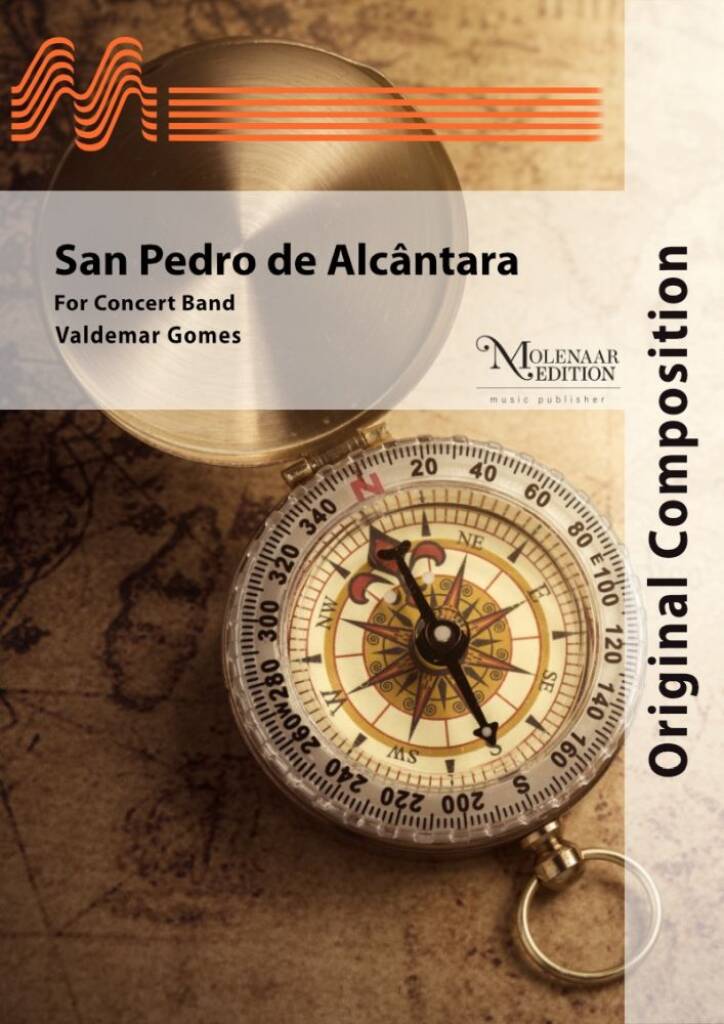
San Pedro de Alcntara - Valdemar Gomes
The Spanish war galleon with 64 cannons, built in Cuba between 1770 and 1771 for an English shipowner in the service of the King of Spain left Peru for Cadiz in 1784 with a huge cargo of copper, gold, silver and other valuables on board. There were also more than 400 people on board, including passengers, crew and Inca prisoners after a revolt. The Atlantic crossing went smoothly, passing Portugal to take advantage of favourable winds. The shipwreck off Peniche was the result of human error, apparently due to French maps with dramatic errors in the position of the islands of Berlengas and neighbouring islets. On 2 February 1786, the sea was calm and the night clear, but they hit the rock formation Papoa and the hull immediately broke in two. The bottom sank quickly, while the deck remained afloat for some time. 128 people lost their lives, including many Indians who were trapped in the basement. This shipwreck is considered one of the most important in maritime history.What the composer wants to convey, and what can be felt as one listens, is first of all the sound of power, of hope, of the glory of conquest, of the splendour of wealth. This is followed by the perception of the maritime environment, the harmony with the softness of the ocean, the gliding of the hull in the foam of the sea on sunny, blue days. But along with this tranquillity, you soon hear a rhythmic chain that makes you feel a representation of the hustle and bustle, of the busy crew, of the hard work of a sailor, of the desperation of an exotic people imprisoned in a dark, damp cellar. A distinct rhythm that reminds us of the "salero" of Andalusia, with its Arab influences and its people, the soothing of the resignation of others who are forced to submit. Then we clearly hear a crescendo that makes us imagine the agony of the collision that precedes the shipwreck. The breaking of the hull, the water flooding everything, the despair, the clash of bodies on the rocks, the tragedy to come. Before the "grand finale", in which the return of musical softness reminds us that the story is over. The supremacy of nature over human greed. The waves, though gentle, sweep the wreckage, the lives and the treasures of the New World to the bottom of the sea.
Estimated dispatch 7-14 working days
 View Music