
Results
-
£149.99Variants on an English Hymn Tune - Philip Sparke
This set of variations on the well-known hymn tune 'Holy, holy, holy!' will make a most satisfying addition to the solo repertoire for euphonuim and concert band. It is in the traditional air vari form with an introduction, theme and 3 variations. The original melody (known as Nicaea) was composed by John Bacchus Dykes' especially for Reginald Heber's renowned hymn of praise and became universally popular when it was included in Hymns Ancient and Modern in 1861. A beautiful solo that will test the soloists ability to show true emotion.
Estimated dispatch 7-14 working days
-
£137.99An English Sea Song Suite - Philip Sparke
The four tunes used in this suite have been made universally popular in Sir Henry Wood?s Fantasia on British Sea Songs, which is an ever-present ingredient in The Last Night of the Proms.He introduced this colourful suite into the Proms in 1905,to celebrate the centenary of Nelson?s brilliant victory at Trafalgar, when ?Britannia? really did ?rule the waves?. Bring the excitement of The Last Night of The Proms to any concert with this stirring new edition.
Estimated dispatch 7-14 working days
-
£91.99Prelude on an Irish Folk Tune - Philip Sparke
The Irish folk tune, which appears towards the end of the piece, is Slane, a hymn tune version of the much older folk melody The Banks of the Bann. In Prelude on an Irish Folk Tune, fragments of the folk tune hint at what is to come later in the piece, but another folk-like tune is predominant. This later acts as a descant to Slane when it finally appears. Add a little Sparke sparkle to any concert with this lovely interlude.
Estimated dispatch 7-14 working days
-
£264.99
Diferencias on an Old Spanish Song - Yasuhide Ito
I am immensely happy that my Gloriosa, symphonic poem for band (1990), has been performed by so many bands in the last thirty years.During this period, the growth of the internet has made it much easier to access information.When I composed Gloriosa, I only had limited information about the period when Christianity and Western music was first introduced to Japan, and had to rely a lot on my imagination.However, nowadays, it is easy to obtain various source materials and to read interesting studies on the music of the past.In recent years, the music of Luis de Narvez (born ca.1500 - died between 1555-1560), Spanish composer and vihuela player, has become increasingly known, and several CDs of his music are now available.Narvez composed the earliest-known set of diferencias, a forerunner of the variation form. One of his works is Seys diferencias sobre el himno "O gloriosa domina" [Six diferencias on the hymn "O gloriosa domina"] (1538), based on the Spanish Marian hymn, and it was this melody I used in the first movement of my Gloriosa.Western music has been my musical roots since childhood, and throughout my career as a composer, it has continued to fascinate me. One could say that this has provided the inspiration for Diferencias on an Old Spanish Song, my own take on the diferencias form.Actually, such music from the early sixteenth century could sound fresh to our modern ears. So I decided to quote the melody from Narvez's Sey diferencias at the beginning and end of the piece, in order that people can get the feel for the period.The main section (bars 42-390) is formed of 13 diferencias, similar to the first movement of the Gloriosa.In the middle section, which begins after the eighth diferencia(from bar 187), one should be totally absorbed in the tranquility and the beauty of the music. Although it's in the style of a sarabande, it should be taken slower and played as pianissimo as possible.This is followed by folk-style dance music. (As only standard percussion instruments are used, try to be creative with tonal colours and sense of rhythm).The structure of the work is simple, but be aware of the connection between the sections when constructing the whole.Also, think about the tonality. Overall, the work is in F minor. The main section is basically in D minor, but from bar 102, it modulates to A flat minor and G minor, and then in the middle section it suddenly switches to A flat major (which is the furthest key from D minor, and the relative major of F minor). From bar 219, it modulates to F minor and then to C minor, then back to F minor by way of A minor.N.B. The Oboe II part can be substituted by the English Horn (as indicated in the parts). One can choose according to the player's skills or preference.Recent new compositions for wind band are often full of rhythm, dynamism, and tonal colour, and compositional techniques and orchestration have also evolved greatly. Yet on the other hand, they tend to feature fewer melodic or expressive elements. Since this work is the test piece for WMC Kerkrade 2022, I had to think about what "tests" or "challenges" to set, and I decided to compose something that doesn't involve a lot of technical display, but requires beautiful sounds and harmonies, and above all, musical expressivity. I didn't put many expression markings in the score, because I wanted the performers to think about how best to express this music. If it is played merely as notated, it's not going to sound very interesting.Christianity was introduced to Japan in the mid-16th century, but it was subsequently banned and Japan entered a period of national isolation, which meant that there was hardly any international exchange for two hundred years. As a result, the Christian hymns that were introduced prior to the isolation became almost unrecognizable over the centuries. This was the theme I explored in my Gloriosa thirty years ago.Now, in 2021, the whole world has been forced to "isolate" due to the Covid-19 pandemic. In such times, it seems pertinent that I've written a work using this melody again. I sincerely hope that people will be able to gather in Kerkrade in 2022.(English Translation:Nahoko Gotoh)
Estimated dispatch 7-14 working days
-
£58.50
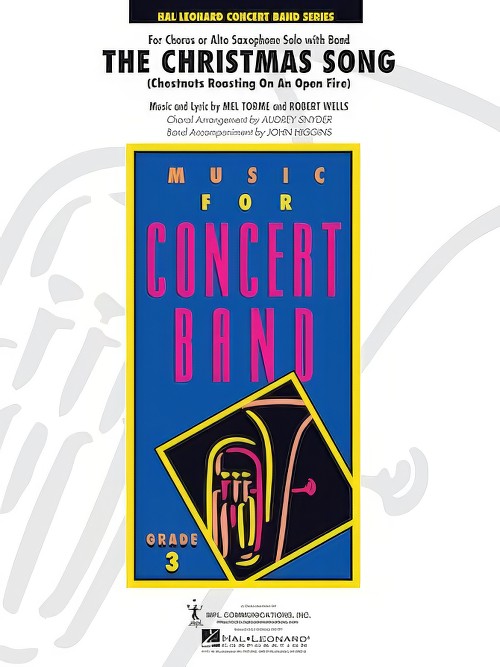
Passacaglia On An Old English Carol - Robert Longfield
Here is a wonderful theme and variations setting of Coventry Carol. The familiar 16th century hymn is skillfully transformed several times in a most interesting and innovative manner similar to J. S. Bach. A great teaching tool, and an exceptional choice for contests, festivals, or concerts.
Estimated dispatch 7-14 working days
-
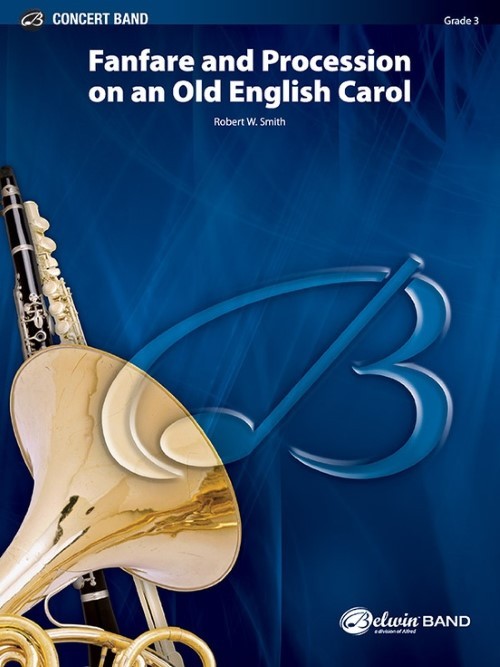
£64.99An Irish Party in Third Class
An Irish Party In Third Class is the music taken from one of the most memorable moments in the motion picture Titanic - the Irish dancing scene in the steerage section of the ship. The music for this scene was provided by the group Gaelic Storm.Your concert band will love the energy of this version, which features the woodwind section throughout. This piece has been adapted by Richard Saucedo. The score and complete set of parts are included.
Estimated dispatch 7-14 working days
-
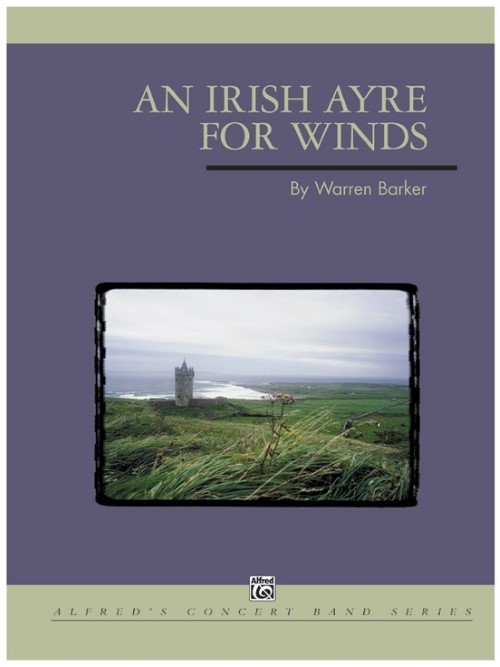
£79.99Along an English Countryside - Richard L. Saucedo
Composed in 12/8 and entirely in one energetic tempo, this masterful work is a musical tribute to the late Sir Malcolm Arnold, one of the most notable English composers of our time. The opening section features a variety of shortsolo statements of the theme, which then leads to well-timed and impressive declarations from the entire ensemble. Within in the confines of this brief yet impressive work, Richard manages to skillfully capture feelings of bothseriousness and playfulness. Along an English Countryside is wonderful as a program opener for festival or contest.
Estimated dispatch 7-14 working days
-
£76.99Hymne an die Nacht - Ludwig van Beethoven
Hymne an die Nacht is a deeply moving theme by the master composer Ludwig van Beethoven. It is taken from his Sonata No. 23 in F minor, Op. 57 (Appassionata), which he composed between 1804-1806. This theme originates from the second movement of this famous sonata which Beethoven himself considered his best work in this genre. The passion of this sonata inspired Michael Bilkes to make this beautiful arrangement.
Estimated dispatch 7-14 working days
-
£121.50An Irish Rhapsody - Clare Grundman
First published in 1971, An Irish Rhapsody has become a staple in the literature for young concert bands. It demonstrates Clare Grundman's mastery of orchestration and exceptional treatment of transitions and pacing. Including thefolk melodies The Morren (Minstrel Boy), I Know Where I'm Going, Shepher's Lamb Reel, Cockles and Mussels, The Rakes of Mallow and Kathleen O'More, it is just as fresh-sounding and effective today as it was more than 30 years ago!(Grade 3) (6:45) Recorded by the North Texas Wind Symphony - Eugene Corporon, conductor. Teaching Music through Performance in Band, Vol. 2, Grade 2-3 Reference Recordings, CD-466. Used with permission from GIA Publications, Inc.
Estimated dispatch 7-14 working days
-
An English Folksong Trilogy - Hillary Nick
Estimated dispatch 7-14 working days
