
Results
-
 £84.99
Laurena (Concert Band - Score and Parts) - Nijs, Johan
For this composition, the Flemish composer Johan Nijs takes his inspiration from people and events in his life. It was written for the birth and is dedicated to his daughter Laurena. It's beautiful simple melodic lines makes it a perfect item to bring a little peace and calm any concert.Duration: 3:15
Estimated dispatch 7-14 working days
-
 £79.20
Kyrie and Gloria (Concert Band - Score and Parts)
Powerful, exciting, emtionally charged and moving are just a few words that best describe this work in which, in the composer's own words is "my best and most satisfying". "Alleluias" musically portrays the life, crucifixion and resurrection of Jesus Chirst. Truely outstanding!
Estimated dispatch 7-14 working days
-
 £45.95
TWO SONGS OF MORNING (Concert Band) - Erickson, Frank
Two Songs of Morning contains two beautifully contrasting melodies, scored to demonstrate the lush tonal capabilities of the concert band. The Gaelic Melody used in movement tow is the well-known "Morning has Broken". Upon conclusion of the eight-bar introduction, the first presentation of the theme appears in the first trumpet accompanied by the expressive style throughout the movement, and students will enjoy the challenge of having to play the extended phrases needed to bring this music to life.
Estimated dispatch 7-14 working days
-
 £144.99
Vents Catalans Wind Band Set (Score & Parts)
Vents Catalans (Catalan Winds) is a symphonic fantasy which, while it does no directly reference any melody or song from Catalonian folk music, still manages to convey all the life, beauty and energy of this charming region in southern Spain. After a triumphant and majestic introduction, reminiscent of folksongs and lively dances, the mood calms down with an elegant, yet playful, melody, followed by the Sardana, the traditional Catalonian dance par excellence. 09:50
Estimated dispatch 7-14 working days
-
£159.99
Fantasia Per La Vita E La Morte - Bert Appermont
The mystique surrounding life and death formed the starting point of this composition. I wanted to write a work without a story, mixed up in a kind of musical quest for a new world of sound, original rhythm sequences, melodies filled with suspenseand distinct orchestral tones.The indirect cause was the birth of my first child which took place during this time, followed by the death of a close family member. At such a moment you experience just how close life and death are to each other, anddespite one being the antithesis of the other, they are incredibly similar. Both radical events are passages into new worlds and have great emotional impact. Moreover, the work was commissioned by "New Life", an orchestra that lost one of itsmusician in a plane crash, which also led me to believe that this approach would be appropriate.I would prefer not to comment on which passages in the composition concern life (birth) and which refer to death. It seems to me that it is moreinteresting to question traditional conceptions and leave it open for the listener. If you think that a passage is about birth, and this idea then shifts, it is this that raises fascinating questions, on both a musical and metaphysical level.Music isin an indirect but incredibly persuasive way in which to express the endless striving and seeking of mankind. Music can even touch eternity, as it were, and give us the feeling that we can transcend death. This endless search (and also longing) canbe heard throughout the work; as much in the sound fields and accent shifts in the first part as in the enormous tension curves and compelling themes of the second part. The semi-tone functions in this way as a guide or something to hold on to,running through the whole work and upon which much of the musical material is based. Traces of profound love resound with quiet simplicity in the slow section's melodious solos, after which the work contemplates life and death one last time, musesupon joy and sadness, on the possibilities and limitations of people and on the why of all things.I would like to dedicate this work to my dearest daughter Paulientje, to Meterke and to Johan de Jong of the "New Life" orchestra. May it fare themwell, here or in another dimension...
Estimated dispatch 7-14 working days
-
 £129.99
Canzona di Bacco - Oliver Waespi
This piece comprises a series of variations on the melody of "Ami, dans cette vie" ("Friend, in this life), an 18th century French song. Like the famous poem "Canzona di Bacco" by Lorenzo de' Medici, this song invites the listener to enjoy life, friendships, love and wine while there is still time to do so. The epicurean nature of this text contrasts with a deeply melancholic melody, a contradiction which is explored in the present work. After a somewhat turbulent first part, the original melody is revealed in a serene and pensive middle section which highlights several soloists. In the last movement, the atmosphere is transformed to become increasingly exuberant, like a Bacchus incantation. The piece concludes with a final dazzling statement of the original theme. Canzona di Bacco was commissioned by the Vesoul Municipal Wind Band, who premiered the work on 24 June 2022 at the Edwige Feuillre Theatre in Vesoul (France), under the direction of Mathieu Anguenot.
Estimated dispatch 7-14 working days
-
 £264.99
Panoptikum - Thomas Doss
Armin Schaer commissioned this work in his search for a new piece for the tuba. More specifically, he wanted a work that showed off the versatility of this splendid instrument, written in a musical style that is both fresh and modern, while not banishing the orchestra to a simple supporting role. Taking all these specifications into account, Thomas Doss created a work that allows stylistic leaps and is fun, exciting, romantic, and virtuosic, but does not lose sight of the thread that connects the opening measures to the very last.Armin Schaer describes his Panoptikum as follows:Panoptikum is a show of appreciation for my beautiful home and community at LakeConstance, an eventful life, the people that have enriched this life, and a fascinating instrument: the tuba. This work musically embodies the many different moods found around theBodensee - cheerfulness and melancholy, departures and longing, calm and agitation. The roles of the soloist and the orchestra were consciously crafted in a way that does not follow the usual conventions of the genre. The work should spark emotions, address broad segments of listeners, and persuade them of the tuba's ability to be a solo instrument as well as the richness symphonic wind ensembles have to offer. I hope this work enriches the lives of all the soloists and orchestras that cross its path, as well as everyone in the audience who gets to partake!
Estimated dispatch 7-14 working days
-
 £134.99
Robinson Crusoe - Bert Appermont
This work is based on Daniel Defoe's world-famous 1719 novel and with broad brushstrokes typifies the hero's life in four parts. The first part describes his life as a seaman. The second part is an impressive, stormy description of the shipwreck he falls victim to. The next covers his happy life with his friend Friday, which takes the form of a melodious hymn. Lastly, the fourth part describes the tense confrontation with the Cannibals and his return home.
Estimated dispatch 7-14 working days
-
 £159.99
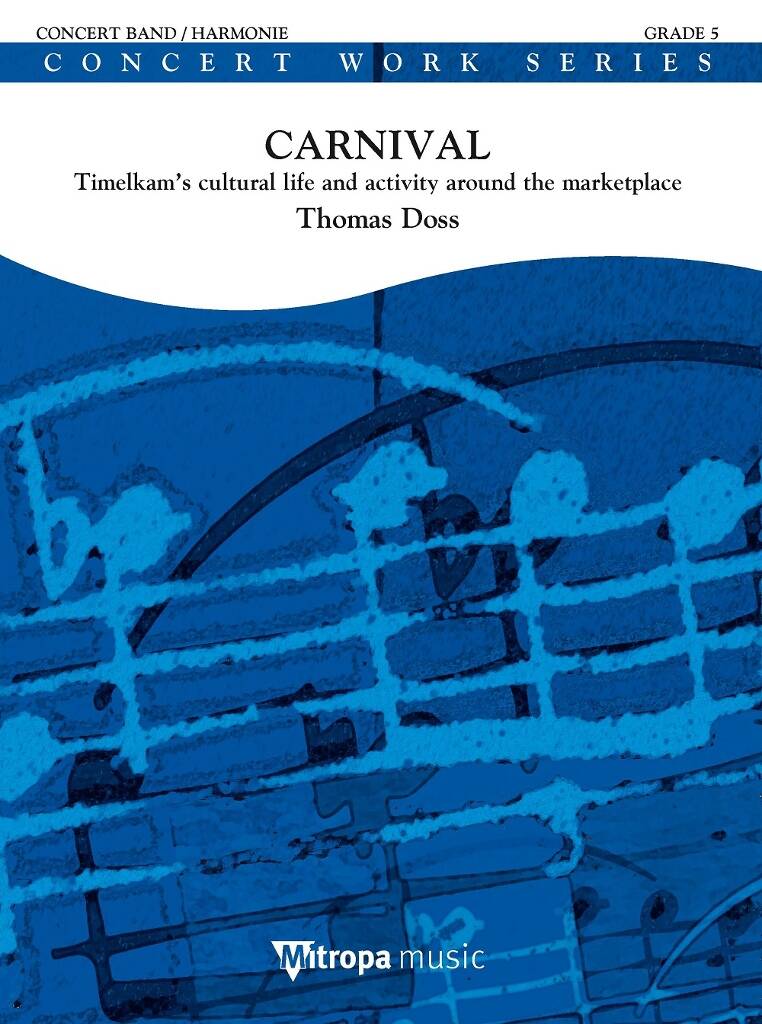
Carnival - Thomas Doss
This work was commissioned by Marktmusik Timelkam to celebrate its 170th anniversary. It describes the cultural life and hustle and bustle of the band's home base, the Austrian town of Timelkam. Carnival pictures a festive procession starting at the marketplace and lasting well into the night. The work features many 'carnivalesque' elements and is a joy for players to perform. There is a lot of merry activity going on in the music; people cheerily chatting in the inn; singing and dancing together and having fun. There is also room for a melancholy mood, accompanied by reminiscences about eternal goodbyes and searching for love. With the added musical representation of children's playing and pranks, a beautiful sunrise as well as a depiction of the churches and societies in town, this composition is not just an account of a carnival parade but a small portrayal of life.
Estimated dispatch 7-14 working days
-
 £119.99
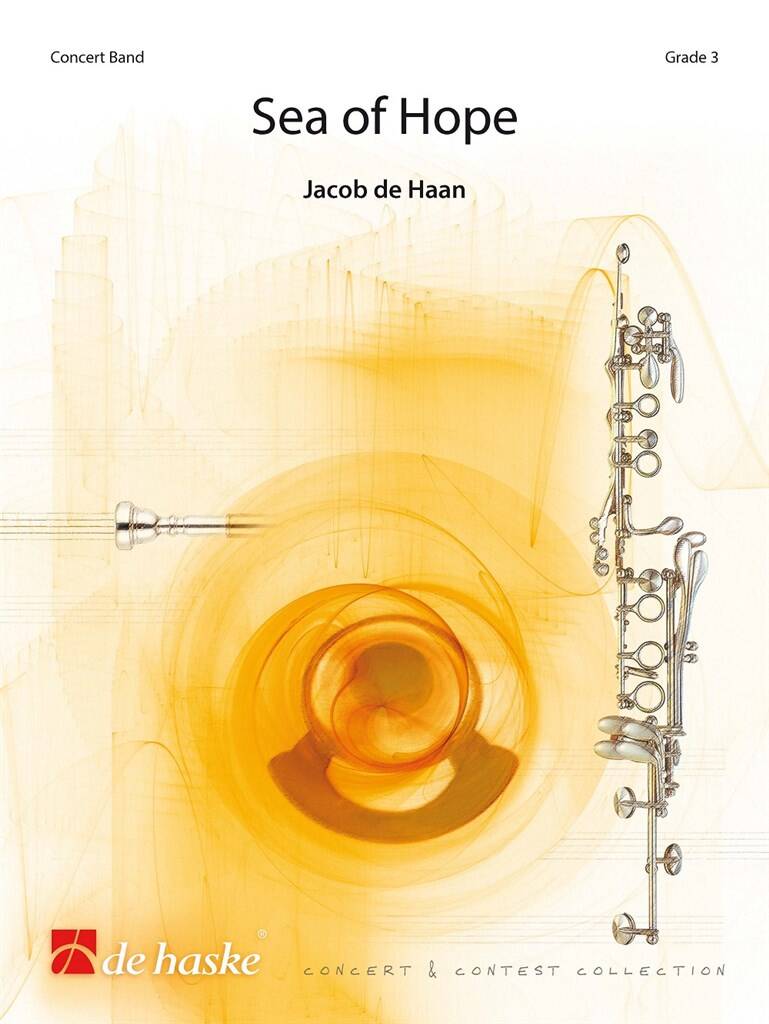
Sea of Hope - Jacob de Haan
Sea of Hope is an optimistic work about new land arisen from the former Zuiderzee (the Netherlands). In the introduction, the sea is conveyed in all its glory and ferocity, through a melody that keeps you wondering whether it makes you happy or sad. Then, finally, there is a glimmer of hope, when the water is dammed up and the land partly reclaimed (by conversion into polder land). The town of Dronten, for instance, develops into a place where one day two people meet up and fall in love. This love is reflected in the slow, passionate middle movement. New life in the town is celebrated joyfully: the zest for life clearly shines through this part of the work, followed byoptimism and celebration in the closing bars.
Estimated dispatch 7-14 working days
 View Music