
Results
-
 £57.50
Deep Dish
Deep Dish is an engaging new piece for band inspired by the quintessential pizza in Chicago, from where composer James M. Stephenson hails. Deep Dish serves up a bluesy feel with challenging chromatic passages and saucy harmonies,and gives students the opportunity to create their own percussive sounds with kitchen utensils. A free downloadable interdisciplinary curriculum for teaching Deep Dish is available for download at www.BandQuest.org. Learn more on YouTube! BandQuest, anexciting series of new music and accompanying curricula for band, is a program published by the American Composers Forum. The series was started as a response to feedback from music educators that there is a pressing need for new,fresh band music. The heart of this program is new works written by a diverse group of leading American composers who have created challenging pieces that are a true departure from standard middle school repertoire. EveryBandQuest project includes a residency component in which the composer works collaboratively with a middle school as they create their new piece.Many BandQuest pieces are accompanied by an interdisciplinary curriculum designed toassist students as they learn the music and to integrate each piece with non-music studies. Visit www.bandquest.org to learn more about this innovative series, and email [email protected] to request a free downloadableaudio catalog.
Estimated dispatch 7-14 working days
-
 £101.20
Forrest Gump Suite - Alan Silvestri
Life is like a box of chocolates, you never know what you're gonna get". But not where this music is concerned! Everyone knows the beautiful sounds of this rippling melody that builds to a climactic finish. The soundtrack from the hit film Forrest Gump, was composed by film music master Alan Silvestri. And with Henk Ummels as arranger, you are guaranteed a high quality piece. A "must" for any band that loves playing film music.
Estimated dispatch 7-14 working days
-
 £134.99
Trains of Thought (Concert Band - Score and Parts) - Shapiro, Alex
Evocative train sounds allow listeners' own trains of thought to wander freely, in this emotionally captivating electroacoustic tone poem. As with other signature Shapiro works like Immersion and Liquid Compass, an expansive palette of shifting textures and density creates striking, unexpected contrasts. A remarkably seamless wash of acoustic and digital sounds offers new meaning to the term "prerecorded track," as the piece picks up steam and arrives at a forceful, abrupt end. To perform the piece, you'll need an audio system capable of playing the prerecorded audio tracks from a laptop computer via a small digital audio interface connected to an audio mixer. Download information is provided in the score. Duration: 7:15
Estimated dispatch 7-14 working days
-
 £45.00
2 Minutes to Christmas (Concert Band - Score and Parts) - Shaffer, David
Opening with a percussive fanfare, this cleverly crafted medley includes "Ding Dong Merrily on High," "Pat a Pan," and "Jingle Bells" (what holiday arrangement would be complete without it?). Lots of sectional soli moments encourage independence of performance. Unique percussive sounds bring this arrangement alive with all of the sounds of the holiday season. And as the title implies, it can be played in exactly 2 minutes! Happy holidays! Duration: 2.00
Estimated dispatch 7-14 working days
-
 £43.50
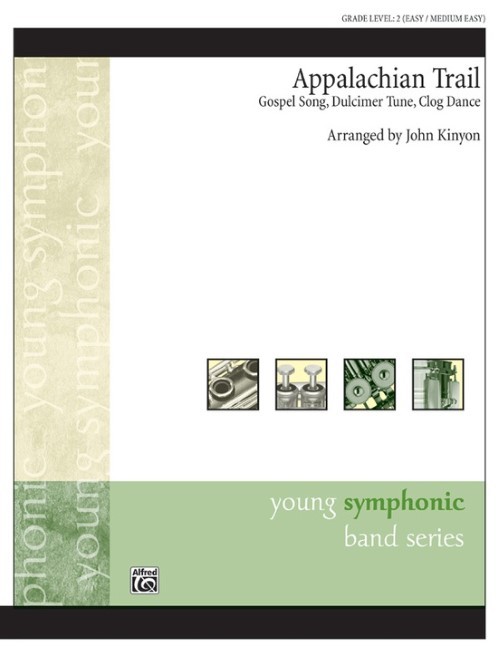
Appalachian Trail (Concert Band - Score and Parts) - Kinyon, John
This suite captures the flavor of the musical sounds indigenous to the mountain people of Appalachia. The first movement is based on the well-loved hymn 'Amazing Grace.' The pensive second movement is titled 'Dulcimer Tune' and provides an excellent contrast to the lively third movement 'Clog Dance' which features wood block and snare drum that simulate the sounds of hill country clogging.
Estimated dispatch 7-14 working days
-
 £52.95
In a New York Jam (Concert Band - Score and Parts) - McClearn, Lon
The sounds of the city come alive in this fun and funky tune. Easy to prepare with very comfortable ranges and infectious rhythms. The audience will enjoy the sounds of the city traffic and construction, all set to a rock beat. Duration: 2:10
Estimated dispatch 7-14 working days
-
 £45.95
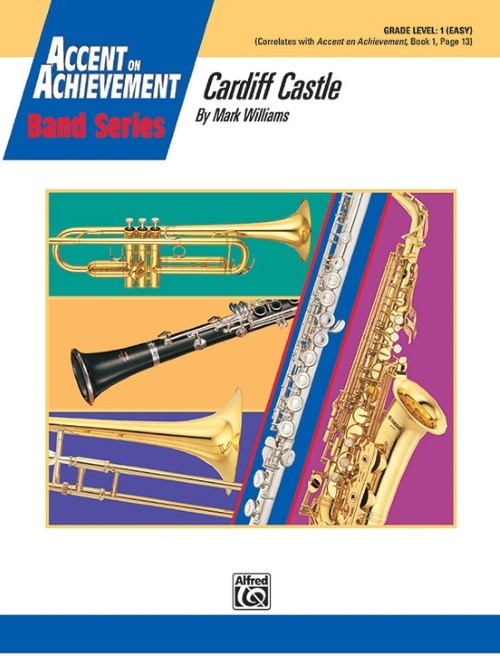
Cardiff Castle (Concert Band - Score and Parts) - Williams, Mark
The sounds of a valiant knight going into battle are heard in this powerful original by Mark Williams. This work uses only seven notes yet sounds surprisingly sophisticated. Named after the famous castle in Cardiff, Wales, this selection will make your first-year band sound great. An excellent introduction to the modal sounds of Medieval and Celtic music.Duration: 2.15
Estimated dispatch 7-14 working days
-
 £67.32
Moonlight Sonata
The lush and haunting sounds of Beethoven's universally loved "Moonlight Sonata" are faithfully brought to life in Andrew F. Poor's colorful setting for band. Listeners and performers alike will be able to imagine Beethoven sitting at a piano as the sounds of the band dramatically emerge from the musical score. As an added feature, this beautiful setting includes an optional piano part that, along with the band, are sure to make this work a favorite with both your students and audiences alike. Perfect for any concert or contest program.
Estimated dispatch 7-14 working days
-
 £49.50
Rock Fever (Concert Band - Score and Parts)
An innovative musical journey through the sounds of the day. By combining the accompanying pre-recorded CD of popular video game sounds with your band, this powerful work will be a guaranteed hit with both your band and the audience!
Estimated dispatch 7-14 working days
-
 £173.00
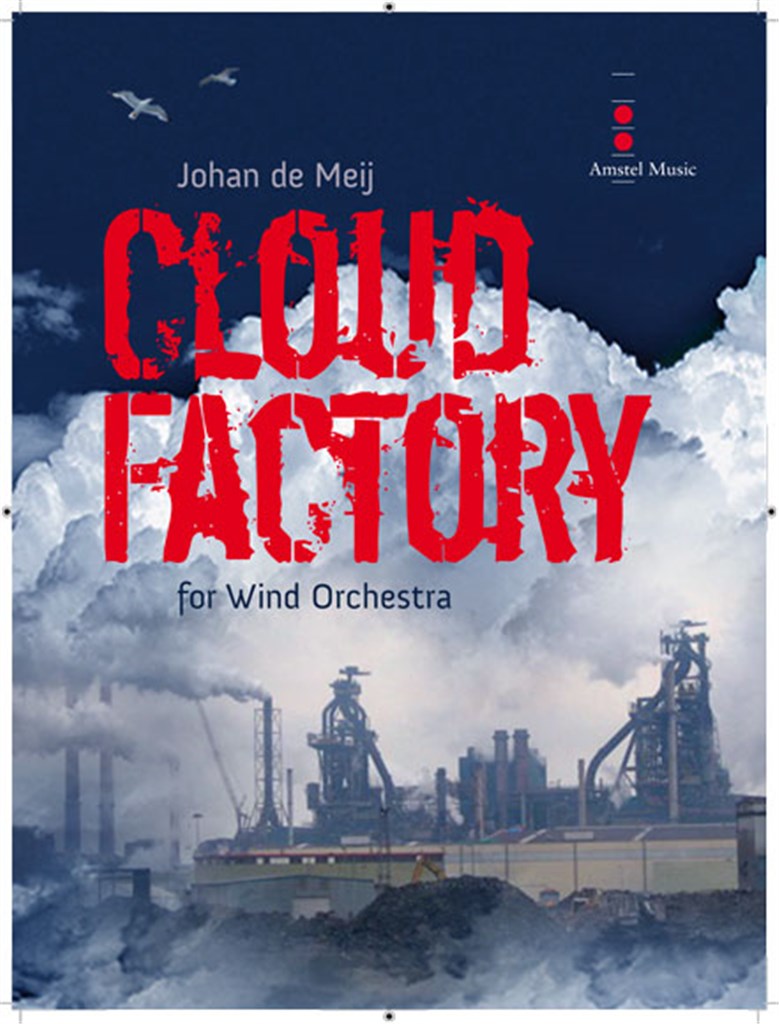
Cloud Factory (Concert Band - Score and Parts) - De Meij, Johan
Cloud Factory is an industrial piece, inspired by a huge steel plant in Holland. Following an opening section that recalls the sounds of the nearby North Sea, we hear the factory locomotives, the machinery and finally, with metallic timbres, the steel product is presented in musical form. Special vocal effects and unusual percussive sounds give this creative work an extraordinary feel! Duration: 14.15
Estimated dispatch 7-14 working days
 View Music