
Results
-
 £454.99
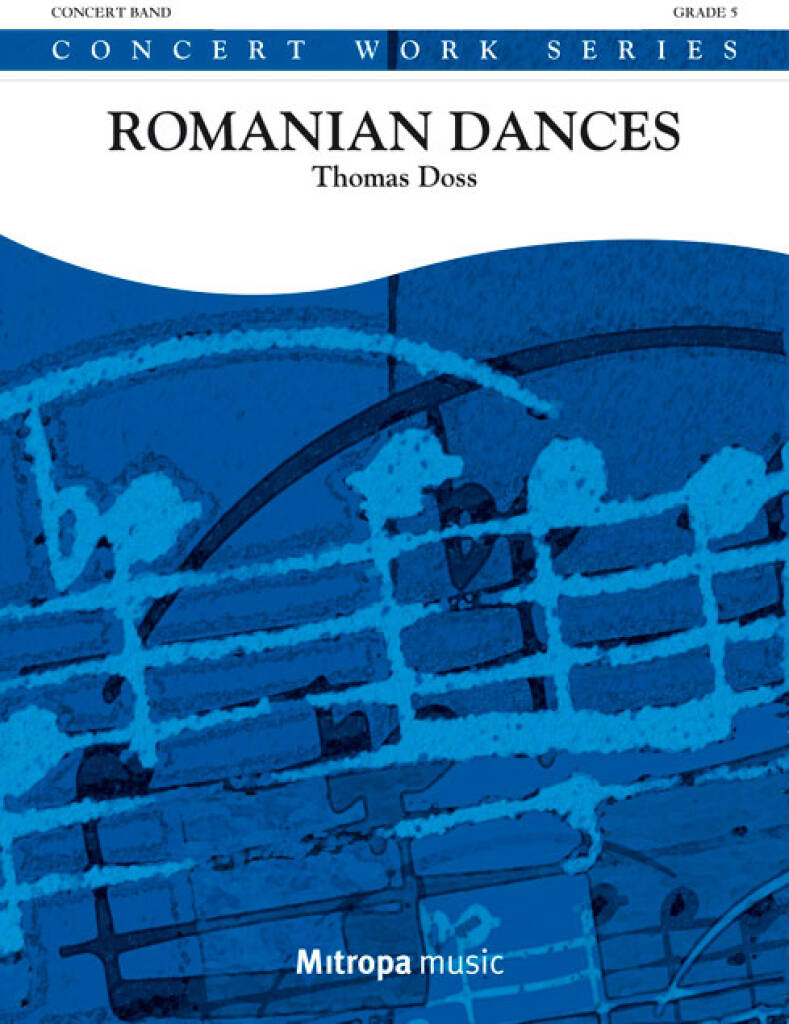
Romanian Dances (complete edition) - Thomas Doss
Romania boasts an endless wealth of folk music and culture. Whilethe music of the north still sounds familiar to West-European ears,it becomes gradually faster and fierier towards the south. The sixmovements of Romanian Dances consist of various folk songs, whichthe composer collected and arranged, and represent a cross sectionof styles from dances with stomping and drumming to dancesassociated with prayer. Each movement can be performed separatelyensuring you will find something for all occasions.
Estimated dispatch 7-14 working days
-
 £83.50
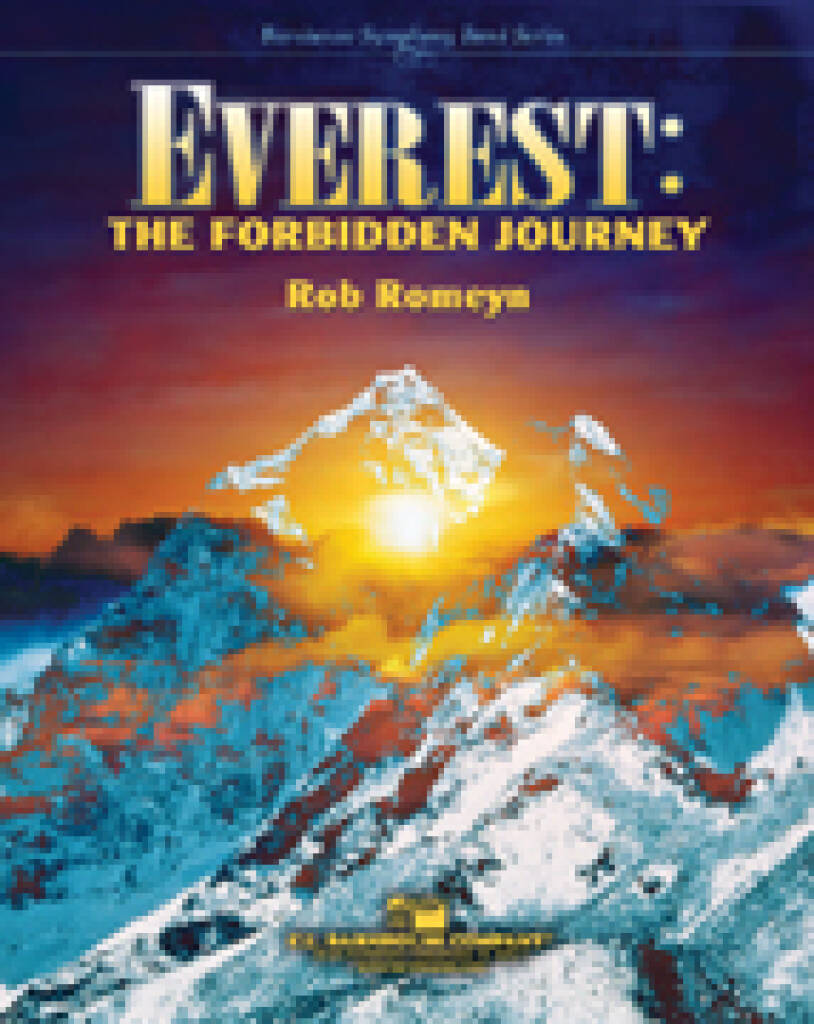
Everest - Rob Romeyn
Mt Everest has attracted the most adventurous of mountain climbers for decades, with many meeting their fate in the attempt to scale the world's highest mountain. The legend of the Yeti has tales of the wild, hairy creatures serving as protectors of Everest and it's villages. The music begins boldly, depicting the majestic sight of this magnificent mountain as our journey begins. The music develops as our journey progresses, telling an eventful and tumultuous tale reaching a stunning climax as the apex of the mountain is reached. From here, the work subsides as the breathtaking vistas unfold in the beautiful, lyric sounds before building to a stunning conclusion of majesty and grandeur. A truly outstanding work, "Everest: The Forbidden Journey" is destined to become a classic for concert and festival use. Don't miss this epic musical adventure!
Estimated dispatch 7-14 working days
-
 £69.99
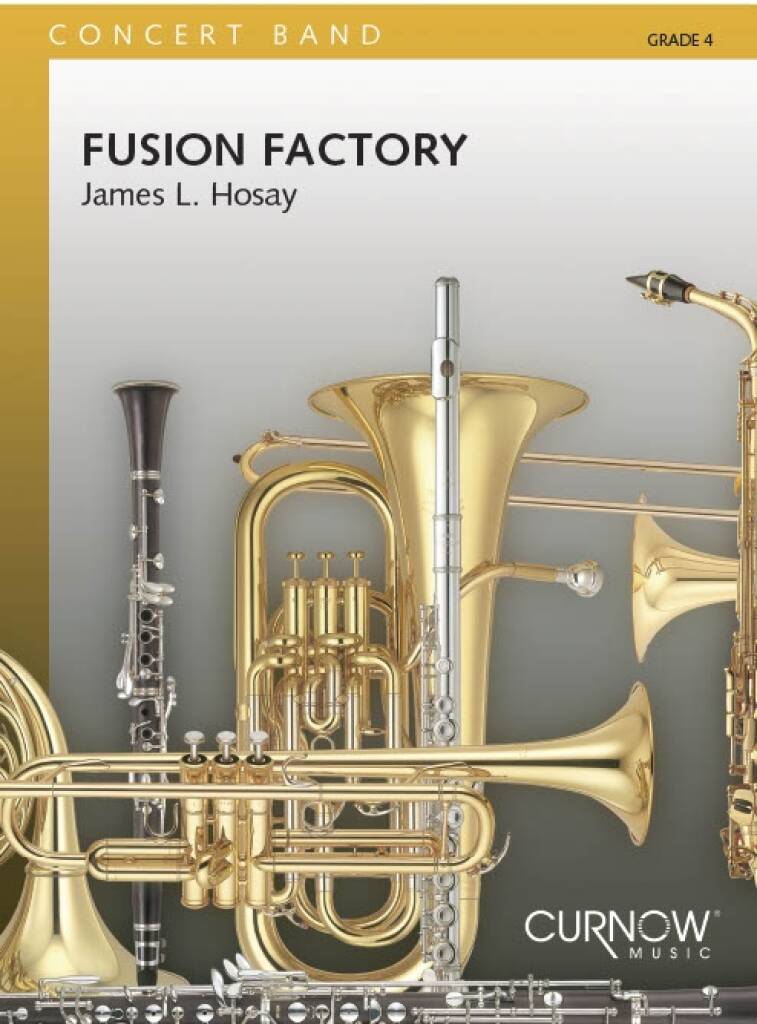
Fusion Factory - James L. Hosay
At the end of the Sixties and the beginning of the Seventies, slowly but surely, a new exciting music style arose in pop music. Pop groups enlarged the musical spectrum by combining jazz harmonies with rock 'n' roll rhythms. These experiments are now known as 'fusion'. Fusion Factory combines elements of early fusion with modern fusion sounds. Listen to the excellent result!
Estimated dispatch 7-14 working days
-
 £159.99
Tanczi - Jan Van der Roost
This suite was written in the style of traditional Russian folk music, but does not use existing melodies or themes as its basis. The colourful and varied work contains a number of surprising turns, but also familiar sounds. After the introduction, a kind of Trepak follows ? a fairly quick dance with attractive themes. The second movement (Garovot) is predominantly slow and conveys some melancholy, although, during a more dynamic passage the passion flares up again. Finally, the Troika takes us along in a reindeer sleigh through a grand snowy landscape. This is a wonderful tribute to the music of Eastern Europe in the style of some of the great Russian masters.
Estimated dispatch 7-14 working days
-
 £104.99
Time To Say Goodbye - Lucio Quarantotto
This beautiful duet was an appropriate way to mark the end of Henry Maske's career and simultaneously introduce Andrea Bocelli to the international music scene. His collaboration with Sarah Brightman resulted in an unforgettable performance. Perfect for ending or providing an intimate moment during your concert, this arrangement exhibits the high standards the New Sounds for Concert Band series is known for.
Estimated dispatch 7-14 working days
-
 £57.50
Illuminations - Jay Bocook
Here is a terrific way to feature your alto sax soloist with band on a non-pop piece of music that is not too difficult. Jay Bocook's original features band parts that are easy to learn and a soloist part that sounds flashy but lays well under the fingers. Great for adding variety to any program. (4:15)
Estimated dispatch 7-14 working days
-
 £76.99
Only One Glimpse - Agathe Backer-Grøndahl
A gem from the Norwegian folk music. No difficult and complicated matter but music based on sounds and atmosphere. The melody is one of pure beauty and mystical characteristic of the tranquil scenery of Norway. Solo for 2 B-flat instruments. Een juweeltje uit de Noorse volksmuziek. Geen moeilijke, ingewikkelde materie maar muziek gebaseerd op klank en sfeer. De melodie is er een van pure schoonheid en karakteristiek voor het mystieke verstilde Noorse landschap. Solo voor 2 bes instrumenten.
Estimated dispatch 7-14 working days
-
 £54.99
Mombassa Beat - Peter Martin
Mombassa Beat is an extremely infectious piece composed by Peter Martin, which references the popular light music of Bert Kmpfert. Mombassa is a bustling port in Kenya, and this characteristic can clearly be heard in the music. The bright, fresh sounds of Mombassa Beat are sure to excite and delight performers and audiences alike!
Estimated dispatch 7-14 working days
-
 £76.99
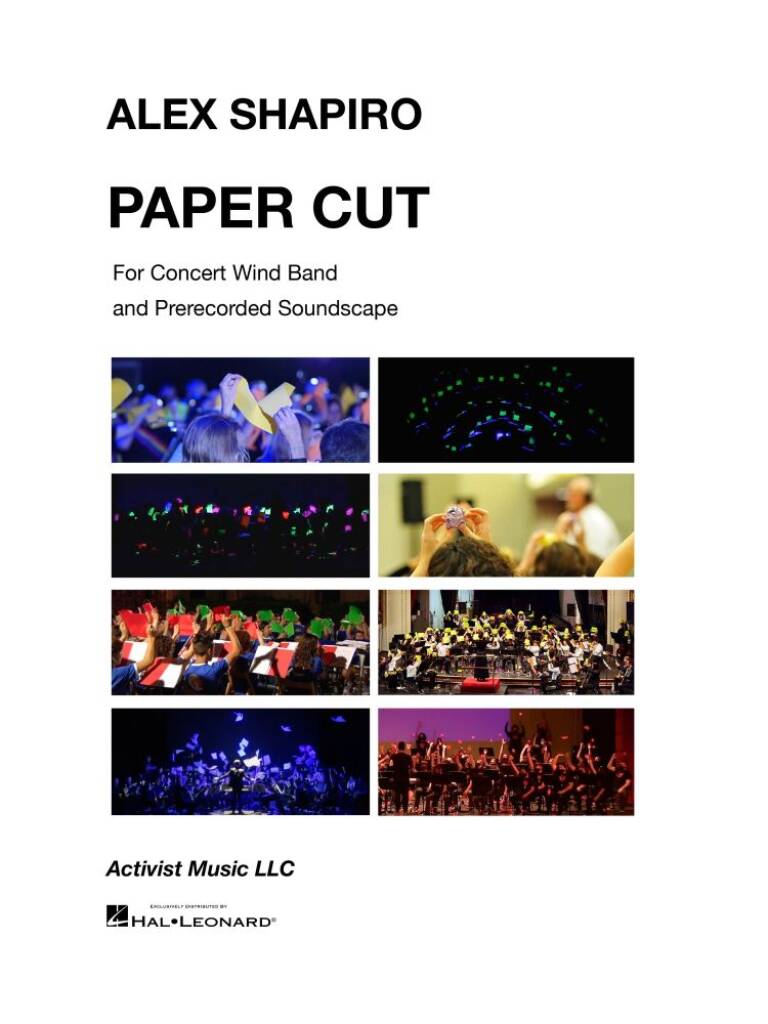
Paper Cut - Alex Shapiro
Composer Alex Shapiro's piece Paper Cut is reminiscent of a movie soundtrack to which the musicians can imagine their own dramatic scene. Paper Cut is written to make the players themselves part of the action with choreographed maneuvers that look as compelling as they sound. In fact, the band members don't even play their instruments until halfway into the piece - instead they play paper along with a prerecorded track! The unusual element of paper and the myriad sounds that can emerge from something so simple offers a fresh view of what music-making can be and opens everyone's ears to the sonic possibilities found among everyday objects. Although Paper Cut was composed with middle schoolers in mind, it's also suited to more advanced musicians, since the paper techniques and the skill of playing against a prerecorded track are interesting for all ages. To perform the piece, you'll need an audio system capable of playing the prerecorded audio tracks from a laptop computer via a small digital audio interface connected to an audio mixer. Download information is provided in the printed piece. A free downloadable interdisciplinary curriculum for teaching Paper Cut is also available for download at www.BandQuest.org. Learn more on YouTube!. Bandquest, an exciting series of new music and accompanying curricula for band, is a program published by the American Composers Forum. The series was started as a response to feedback from music educators that there is a pressing need for new, fresh band music. The heart of this program is new works written by a diverse group of leading American composers who have created challenging pieces that are a true departure from standard middle school repertoire. Every BandQuest project includes a residency component in which the composer works collaboratively with a middle school as they create their new piece.Many BandQuest pieces are accompanied by an interdisciplinary curriculum designed to assist students as they learn the music and to integrate each piece with non-music studies. Visit www.bandquest.org to learn more about this innovative series, and email [email protected] to request a free downloadable audio catalog.
Estimated dispatch 7-14 working days
-
 £113.30
Via Della Terra - Marco Somadossi
Composing music also involves being able to imagine the sound of something that has no sound of its own. "Via della Terra" is a soundtrack without a film, a story without a narrator; "Via della Terra" is a street in a town, but not just any street, because if a street could tell its story, "Via della Terra" would not know where to start or where and indeed if it should finish. Like all "Vie della Terra", this street in this piece is full of sounds, none of which, however, have ever belonged to it for more than a fleeting moment, just long enough to be reflected here and there and then up and away from the earth, to be lost in the air. The steps of Mozart as a child as he whistled a piece of music, never again to be remembered or written; the philosophical thoughts, or mere everyday cares, uttered to a friend by Rosmini (whispered? or declaimed?); the excited or humorous comments of people who saw Depero's futuristic works for the first time; the voices of marketstall owners, rendered louder and more acute by the noisy crowd of women sorting through the stalls of rustling and colourful silk (so many desires; silent pauses between one item of gossip and the next); the absolute and devastating roar of cannons that violated every corner of the town, injuring bodies and mutilating the memories of its inhabitants... followed by a seeming eternity, as the citizens held their breath, waiting... "Via della Terra" is the old imperial road along which the town of Rovereto was built and has developed. "Via della Terra" is music for an imaginary, impossible and simultaneous representation of all its stories. The composer has always lived in this town, which he dearly loves, and on innumerable occasions he has imagined the voices, smells, people and the lives that have been such a part of it. With his composition, "Via della Terra", Marco Somadossi won second prize (no first prize was awarded) at the XXI Corciano International Competition for original band music in the grade 4 category.
Estimated dispatch 7-14 working days
 View Music