
Results
-
 £113.30
Enjoy - Marco Tamanini
"Enjoy", but also savour, relish: this is not descriptive music, but music to be appreciated. From three points of view: the rhythm of the first movement, the melody of the second and the swing of the third. This piece is characterised by a continuous variation of timbres and colours, in a quest for instrumental solutions that are constantly changing. Examples of this are the main theme in the first movement, which provides the rhythmic backing for the introduction of the third movement, or the sinuous melody of the Bolero, which unravels in a constant development of sounds and timbres.
Estimated dispatch 7-14 working days
-
 £113.30
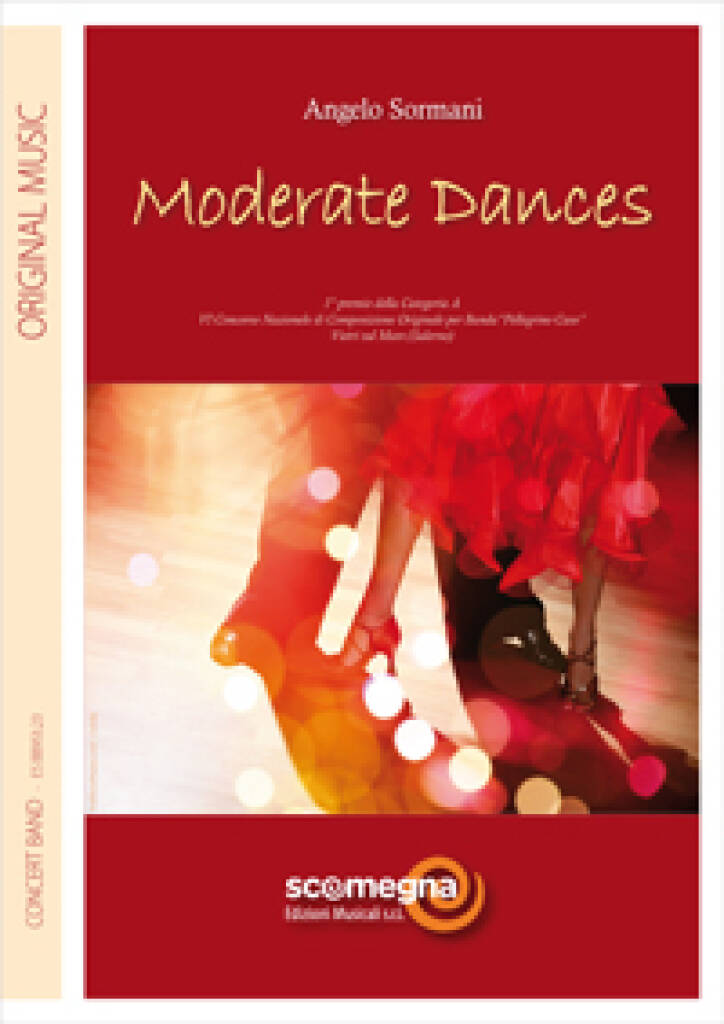
Moderate Dances - Angelo Sormani
This piece is a tribute to dance music, especially passionate, intense and meditative dance music. "Moderate Dances" is divided into three movements: a "Tango", a "Slow Waltz" and a "Bossa Nova". Each movement and each dance has its own particular characteristics but, when combined, these different rhythmic beats and times give the piece a feeling of completeness and uniformity. The Tango started to flourish in the suburbs of Buenos Aires in around 1880. There is still some doubt as to its origins, which may be Cuban (Habanera) but are probably African. It was most popular in Argentina and Brazil: here the male protagonist was originally the "gaucho" with his inseparable guitar, later to be replaced by the proud, elegant "compadre". By around 1910 the Tango had spread to Italy and France. New clubs opened, where the upper classes could watch and dance the Tango. Here the dance also underwent some rapid transformations. The exaggerated and extravagant gestures and body movements disappeared. Slow, gliding steps replaced the old rotational movements. The women's red ankle-boots and the partners "staring into each other's eyes" accentuated the erotic nature and sensuality of this dance. So much so that, in 1913, the German government banned soldiers from dancing the Tango. Those who broke the law were immediately discharged from the army. From a strictly musical perspective, the basic instruments were a flute, a harp (the diatonic harp typically played by the Indians of Paraguay) and a violin, or flute, guitar and violin or even clarinet, guitar and violin. These instruments were easy to transport, ideal for playing at parties, in the streets and in courtyards. The musicians played by ear, frequently improvising: there were no scores, no records, which is the main reason why it is impossible to trace the Tango back to its exact origins. However, the Tango's evolution (and growing popularity) was once again fostered by its fundamental ability to absorb "other" cultures, languages and sounds. And it was the arrival of the "bandoneon" (an accordion-like instrument that was invented in Germany and brought to Rio de la Plata by some immigrant), which replaced the flute, that marked the beginning of the Tango's huge success outside Argentina. A number of talented composers, above all the great Astor Piazzola (1921-1992), transformed the bandoneon from a simple accompanying instrument to a solo instrument that was to become the distinguishing feature of the 20th century Tango. The Slow Waltz originated from the Waltz, the typical dance of the Bavarian and Tyrolese peasants in the 1700s. It was composers like Johann Strauss, father and son, who carried the Waltz to its zenith in the 1800s, creating the sensual and melancholy yet joyful and charming dance we are all familiar with. When the Waltz first became popular in Germany, the members of respectable society were shocked at the closeness of the dancing partners, who had always previously danced apart. The main difference between the Waltz and Slow Waltz is that the latter has a slower, more expressive rhythm: the men wear tails and the women wear ball gowns decorated with beads and feathers and couples dance in graceful rotational movements. "Bossa Nova" is the title of the last movement in the piece. Jobim, the great Brazilian musician, described this musical genre as a combination of modern Jazz and Samba. Bossa Nova means "new wave". This was the name of the artistic and musical movement that evolved in Brazil in the late Fifties and was extremely popular throughout the Sixties. The songs are usually about love or social matters, drawing inspiration from the slums of Rio De Janeiro and the lives of their inhabitants. Bossa Nova, with its original compositions and the artistic talent of its musicians, also became hugely popular in the United States and Europe, and top Jazz musicians (Ella Fitzgerald, Stan Getz, Bob Cooper, Charlie Bird, Sonny Rollins, Dexter Gordon, Dizzy Gillespie) started to include Bossa in their repertoires.
Estimated dispatch 7-14 working days
-
 £82.50
Oracle - Vince Gassi
Much like the prophecies of ancient seers, musical works have the power to communicate the profound. Shrouded in mystical sounds, the opening creates an air of mystery and intrigue as though peering through time at misty images of future events. As the visions grow and take shape, the music intensifies, leading to bold musical proclamations that will make a lasting impression.
Estimated dispatch 7-14 working days
-
 £89.99
Demasiado Corazon - Willy (Mink) Deville
Demasiado Corazn, from the Latino icon Willy (Mink) Deville, has been adapted very professionally by Filip Sandras, who already revealed his love for this kind of music in many of his previous arrangements. These sounds from the South will definitely put your audience in a good mood.
Estimated dispatch 7-14 working days
-
£65.50
Moon Song and Tribal Dance - Carol Brittin Chambers
Moon Song and Tribal Dance is a two part composition for the developing band that is written to depict sounds of Native American music. It starts out lush, mysterious, and choral-like, then leads into a tribal dance. The percussion gets a chance to shine in this piece. Perfect for the end of the year concerts or at festivals.
Estimated dispatch 7-14 working days
-
 £139.99
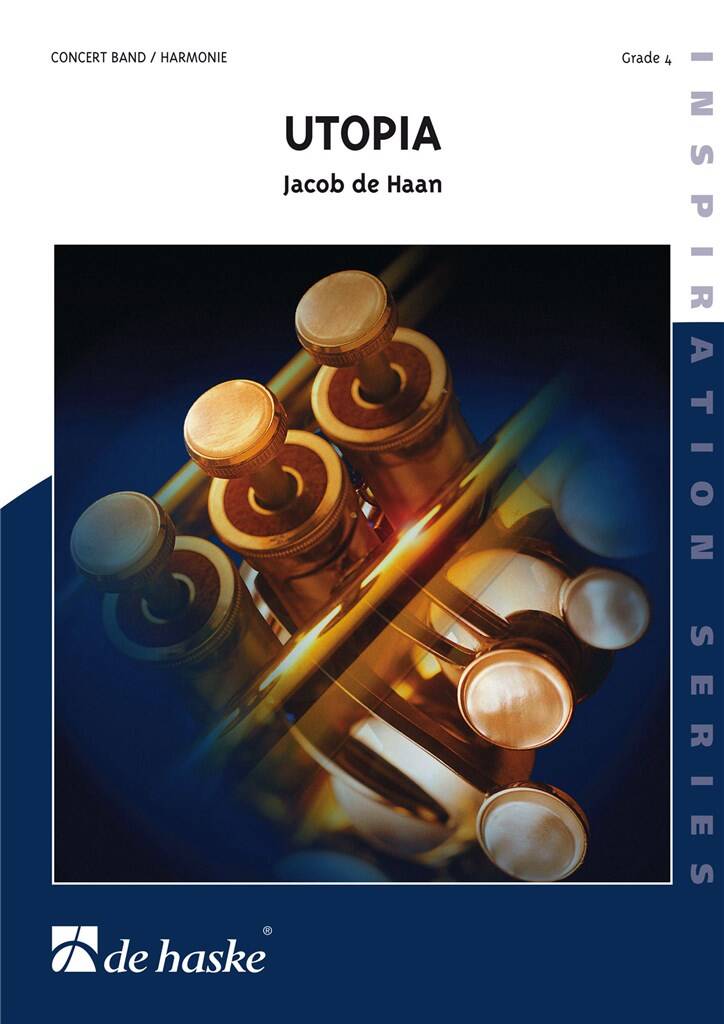
Utopia - Jacob de Haan
Utopia is the name of a book written by the English author Thomas More and was published in 1516. The title is a word thought up by More himself, after the Greek language, meaning "Nowhereland" and leading to the invention of the words utopian scheme and utopian. Utopia pictured an ideal state on an island far from the inhabited world. This idea was the basis of the composition. It makes one think of Oregon in variety of themes and style. Utopia also exists of a combination of styles that breathe the atmosphere of film music. However, Utopia sounds less American. The slow and stirring middle part for example is closer to the European romanticism: the chord signals in the brasssection remind of Wagner's music.
Estimated dispatch 7-14 working days
-
£84.99
Brazilian Bay Dance - Harm Evers
This piece, by the Dutch composer Harm Evers, takes you and your musicians to the hot atmosphere of a Brazilian beach party. Everyone celebrates until late at night and dances to the cheerful sounds of Latin American music.
Estimated dispatch 7-14 working days
-
 £420.99
Tre Sentimenti - Jan Van der Roost
At last the bass clarinet can shine in this major new solo work for bass clarinet and concert band. This composition begins with a rather mysterious opening passage with atmospheric sounds and effects. The soloist plays - preferably backstage - a number of fragments and melodic patterns, without actually "starting" the piece. After this somewhat hesitant introduction, a lively, cheerful allegro entitled Con Giocondita (with joy) bursts out. It is swarming with irregular meters, changing tempos, and polyrhythm, through which the listeners (and sometimes also the musicians) constantly get the feeling that they are being tossed around. The second movement brings rest andpeace making careful use of sound colours. The upbeat finale, titled Con Allegria (with cheerfulness), is the most significant movement for the soloist. This is a challenging piece of music that demands great virtuosity, but with the correct performer it will be a real highpoint in any concert..
Estimated dispatch 7-14 working days
-
 £104.99
Light-walk - Barrie Gott
Change your band into a Big Band with the swinging sounds of this composition. It is a transcription by top arranger Klaas van der Woude of original light music by Barrie Gott. Various instruments can play the solo in this versatile piece, and there is even an invitation to improvise! . The audience will find it impossible to keep still as your band plays the rhythmic Light-walk. However, that's no problem: dancing is allowed!
Estimated dispatch 7-14 working days
-
 £76.99
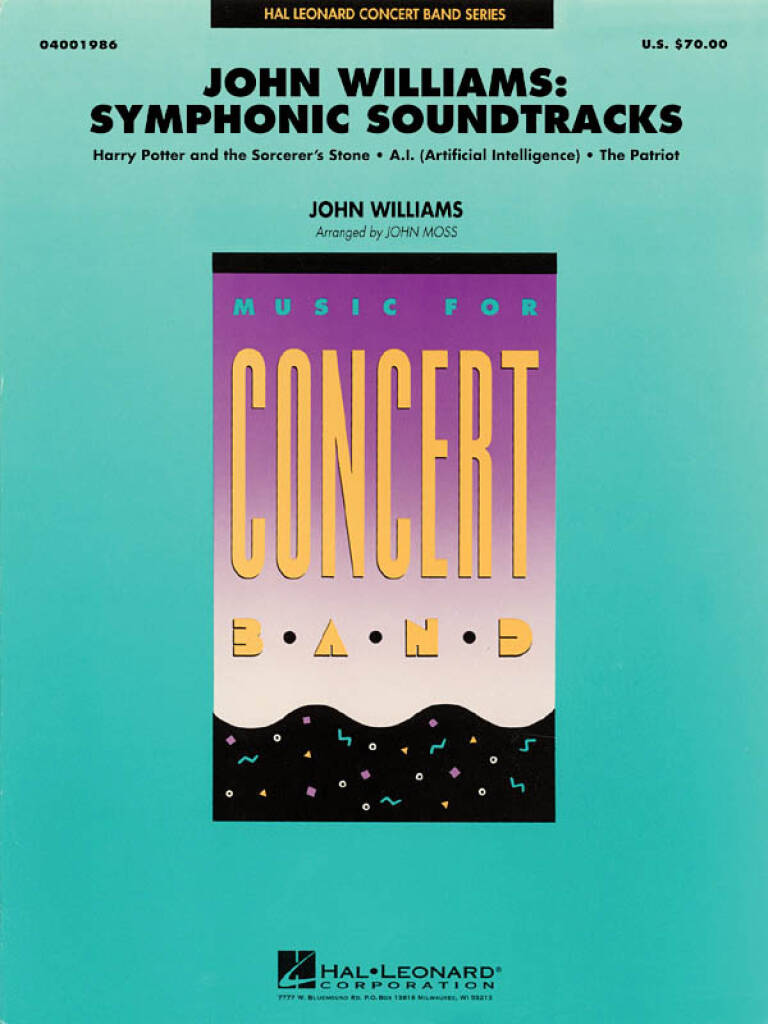
John Williams: Symphonic Soundtracks - John Williams
The recent film work of John Williams demonstrates why he is considered the master of this medium. This impressive medley features the mystical and magical sounds from the delightful Harry Potter and the Sorcerer's Stone, the beautiful melodies of A.I. Artificial Intelligence, and the moving and dramatic music from The Patriot, in a marvelous adaptation by John Moss.
Estimated dispatch 7-14 working days
 View Music