
Results
-
 £420.99
Tre Sentimenti Wind Band Set (Score & Parts)
At last the bass clarinet can shine in this major new solo work for bass clarinet and concert band. This composition begins with a rather mysterious opening passage with atmospheric sounds and effects. The soloist plays - preferably backstage - a number of fragments and melodic patterns, without actually "starting" the piece. After this somewhat hesitant introduction, a lively, cheerful allegro entitled Con Giocondita (with joy) bursts out. It is swarming with irregular meters, changing tempos, and polyrhythm, through which the listeners (and sometimes also the musicians) constantly get the feeling that they are being tossed around. The second movement brings rest and peace making careful use of sound colours. The upbeat finale, titled Con Allegria (with cheerfulness), is the most significant movement for the soloist. This is a challenging piece of music that demands great virtuosity, but with the correct performer it will be a real highpoint in any concert..
Estimated dispatch 7-14 working days
-
 £79.99
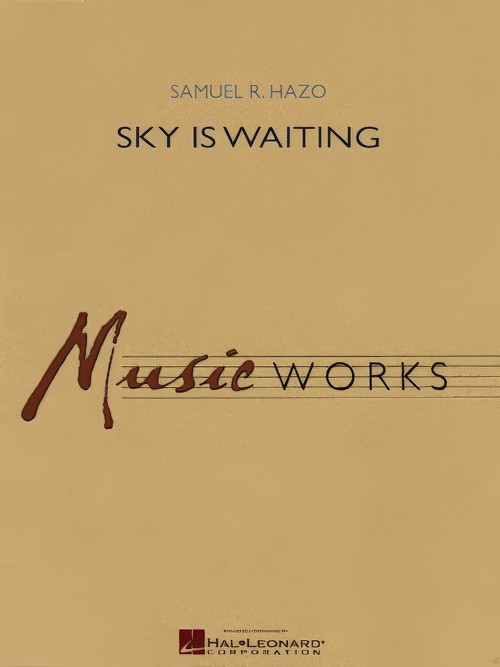
Sky is Waiting (Concert Band - Score and Parts) - Hazo, Samuel R.
This impressive tour de force displays a wide range of tonal colours, stylistic variations, and emotional depth for the contemporary wind band. Known for his lyric writing style and powerful ensemble peaks, Samuel Hazo maximises the effectiveness of the medium in this stunning work.Duration: 7:00
Estimated dispatch 7-14 working days
-
 £286.40
Fourth Symphony - Alfred Reed
Commissioned for the World Music Festival in Kerkrade, Holland, in July 1993, this work was completed in the summer of 1992, with the composer reading the final proofs in November of that year. The music is in three movements, an opening Elegy built largely on a gentle, insisting, basic rhythm first heard in the flutes under the main theme in the oboe. These two motifs are developed through all of the colours of the wind band, at times sorrowful and song-like, and at other times highly dramatic in character, before the movement finally settles down to a soft close on an E minor chord after having been heard mainly as non-tonal in structure and feeling throughout. The second movement, by way of contrast, a gracious Intermezzo, is developed from a quiet, lilting theme with just a touch of Latin flavour, featuring the woodwind colours of the band cast in 5/8 meter through much of the texture. Joining the wind and soft percussion colours here is the harp, which at times seems almost to be sounding as a large Spanish guitar strumming accompaniments to the various melodic lines. The third movement, again as a major contrast to what has come before, is a fiery Tarantella, drawing on a fugal-like theme that is developed with all of the virtuosity inherent in the modern, fully integrated wind group, and which sweeps along relentlessly to a final, brilliant conclusion both as to its own movement and the work as a whole.
Estimated dispatch 7-14 working days
-
 £211.80
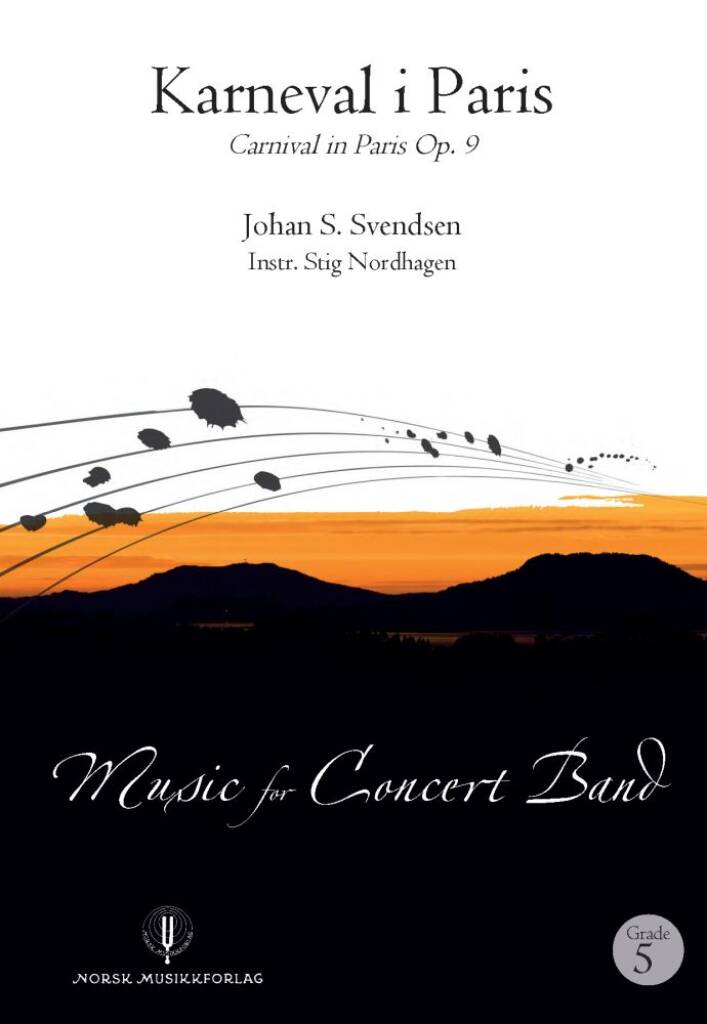
Karneval i Paris - Johan S. Svendsen
Johan Svendsen (1840-1911) composed "Carnival in Paris" in 1872, inspired by the energy and vibrancy of the Parisian carnival celebrations. The piece showcases a variety of moods and orchestral colours, ranging from jubilant and playful sections to more lyrical and elegant passages. It is a lively and colourful work that reflects Svendsen's skill in orchestration and his ability to capture vivid, festive atmospheres in music. In "Carnival in Paris", his Nordic musical roots meet the cosmopolitan influences he encountered while living and working in major European cities. The work has become one of Svendsen's most popular and is frequently performed in concert halls and festivals. About My Transcriptions for Wind Bands Ever since I started playing the clarinet at 8 or 9 years old in the school band "Blveisene" in my hometown of Gjvik, playing transcriptions of orchestral music has been a natural part of the repertoire. In regional bands, Norway's National Youth Band, and during my 10 years in a Military band, I played many such transcriptions. These transcriptions often included handwritten parts, masterfully crafted by colleagues in a time when music notation software didn't exist. Similarly, the scores were often incomplete, typically featuring just a solo clarinet part and condensed score in Bb. The transcriptions also contained parts for instruments like the Eb cornet and multiple tenor horns, but no saxophones, which made them less suitable for modern wind bands. The rise of many skilled Concert Bands and the increasing demands for scores and accessibility made me realize that someone needed to preserve this tradition. The reason I've transcribed these works is to ensure that you can play or conduct a repertoire that I believe has a rightful place in Norwegian Wind Band tradition. These transcriptions are my contribution to preserving some of the unique works in Norwegian music literature. Creating a transcription is a complex task, and I believe the score of "Carnival in Paris" is one of the most intricate I've undertaken. The first part of the process involves entering the entire orchestral score into music notation software. This is time-consuming and requires meticulous work. The next step is to check several editions to see if there are any discrepancies. Mistakes are often found in orchestral material, which can lead to further errors in the transcription. After that, I listen to many different recordings while following along with the score, paying attention to how different conductors emphasize balance and timbre. Gradually, I begin to note down passages I believe will work well for wind bands. One particular challenge in this piece is that the woodwinds and strings operate in the same register. In the original, the tonal difference between the strings and winds helps to clarify the individual musical lines. In the transcription, I've tried to address this by separating the lines, for example through octave adjustments, and highlighting them without compromising other aspects. I've also used some mallet percussion to broaden the tonal palette. There are countless decisions to be made to create a product that will hopefully allow future generations of wind band musicians to play this repertoire. - Stig Nordhagen -
Estimated dispatch 7-14 working days
-
 £135.70
Scherzo for Band - Luís Cardoso
Fantasy for Wind Band, explores the full range of colours and dynamic possibilities of a wind band, trying to get the attention of the listener through surprise. Much like a cartoon soundtrack, this work contains constantly alternating rhythms, and the subjects have a vertical character. This piece won the 1st Prize of the II Composition Contest 'City of Aveiro', in 2006.
Estimated dispatch 7-14 working days
-
 £104.99
Canterbury Chorale - Jan Van der Roost
This quiet piece with its broad tones was originally written for brass band on request of Robert Leveugle, chairman of the composers own band: Brass Band Midden Brabant (Belgium). The direct cause was a visit to the beautiful cathedral of theEnglish city Canterbury, in which so many fine compositions sounded throughout the centuries. Later on, Jan Van der Roost rescored this piece for symphonic wind band, exploring the full richness of colours of this formation. Besides solo phrases forseveral instruments, there are some massive tutti passages making the wind orchestra sound like a majestic organ. By the way: an "ad libitum" organ part adds an extra richness, colour and power to this piece, making it sound even more broad andgrand.
Estimated dispatch 7-14 working days
-
 £214.80
Missa Solemnis - Serge Lancen
This Mass has been dedicated to His Holyness Pope John Paul II, to witness Lancens deep and respectful admiration for the Holy Father. The work was composed in 1986 and written for two solo voices: a soprano and a baryton-Martin (high baritone), mixed choir, harp (ad libitum) and symphonic band or organ. It has ten parts: INTROIT - KYRIE - GLORIA - OFFERTORIUM - SANCTUS - PATER NOSTER - AGNUS DEI - COMMUNIO - DEO GRATIAS - and as final part an ALLELUIA. Lancen expressed his views about this Mass as follows: 'The most important aspect of the Mass is the praising of God and the sacrificing to God; that is why I thought it suitable to use both the themes of the Sanctus and the Offertorium in writing the Introtus. It seemed to me also quite logical that the initial themes of the Kyrie and the Agnus Dei would be rather similar as these are two moments where the priest and the worshippers invoke God. The composition ends with a brilliant Alleluia in which I also briefly quote the theme of the Sanctus.' This Mass was premiered on 27 may 1989 at 'Our Lady's Church' in Maastricht, The Netherlands, as part of the celebrations of the fiftieth anniversary of the Roman Catholic Band Federation of the Limburg County. The Bishop Castermans celebrated the Mass, whereas Jan Cober conducted this first performance. The Missa Solemnis is an alternation of meditating, though often impressive, orchestral passages with angelical choral sounds and the pious singing of both soloists. This may not be the type of music we usually expect from Serge Lancen, but nevertheless the composer remains faithful to his own typical style of composition. You can call this work romantic, though it surely is 'contemporary' or, why not, 'from all times'. The instrumentation is varied and extremely rich, mostly due to Lancen's typical use of 'wind band colours'. This Latin Mass suits perfectly well in the tradition of Roman-Catholic Masses that have been written by several great composers.
Estimated dispatch 7-14 working days
-
 £204.00
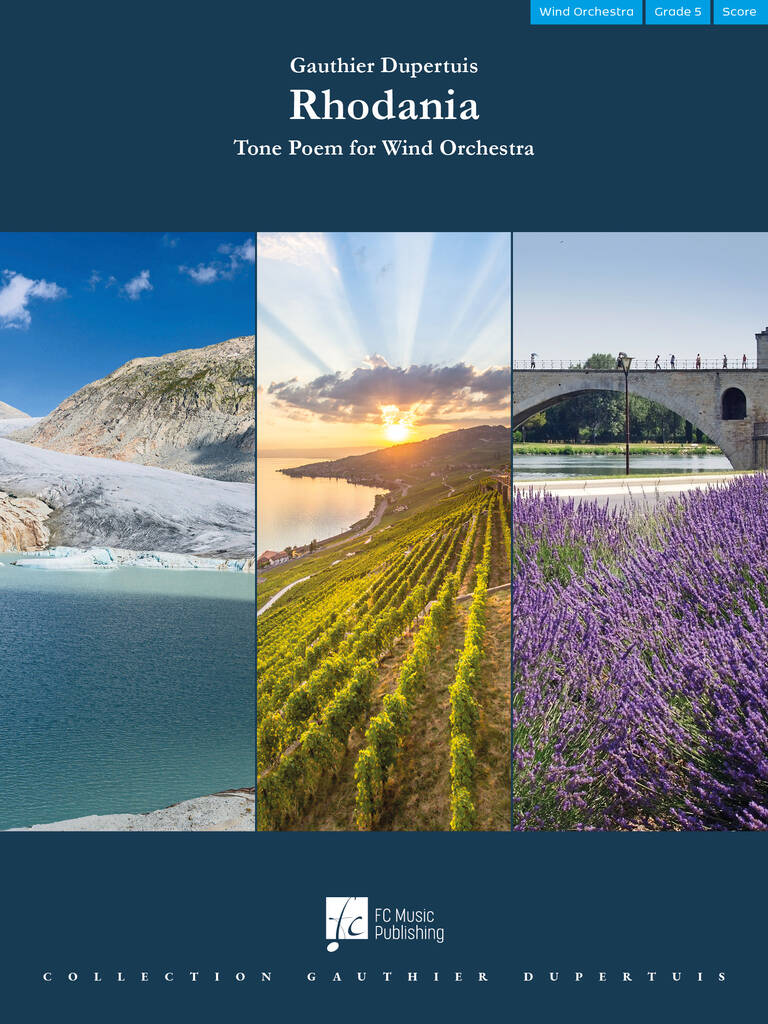
Rhodania - Gauthier Dupertuis
Rhodania, by Swiss composer Gauthier Dupertuis, pays tribute to the Rhone, the majestic river that rises at the Rhone Glacier in the Swiss Alps, flows through Lake Geneva, and continues its journey to the Mediterranean Sea.Across three vividly contrasting movements, the work takes listeners on a musical journey through breathtaking landscapes: the dramatic power of towering mountains and rushing waters, the tranquil beauty of sunlit vineyards, and the colours and scents of southern France carried by the Mistral wind. Blending cinematic grandeur, lyrical expression, and rhythmic vitality,Rhodaniacelebrates the beauty, strength, and ever-changing character of one of Europe's great rivers.Commissioned by the Harmonie Lausannoise and its conductor, Antoine Rabut, for its Gala Concert on 7 December 2025,Rhodaniais a compelling musical ode to the river that unites the Alps and the Mediterranean.
Estimated dispatch 7-14 working days
-
 £143.00
Psych et ros - César Franck
Csar Franck, composer, pianist, organist and music teacher, completed Cupid and Psych, his sixth and last symphonic poem in 1887. It was first performed in Paris in 1888 and was a complete success, but the piece later fell completely into oblivion, and it was only thanks to some meticulous research that it has returned to concert halls. The intricate love affair between Psyche and Cupid is an original story of the Metamorphoseswritten in the 2nd century AD by Apuleius. The tale is about overcoming obstacles in love and their final union. The symphonic poem is divided into three parts and calls for a choir. The movement that is the subject of this arrangement, Psych et rosis positioned at the end of the second part.Franco Cesarini's version for wind orchestra carefully illustrates the nuances of the instrumental colours, and represents a real test aimed at demonstrating the musicality and interpretative skills of orchestras and their conductors.
Estimated dispatch 7-14 working days
-
 £140.80
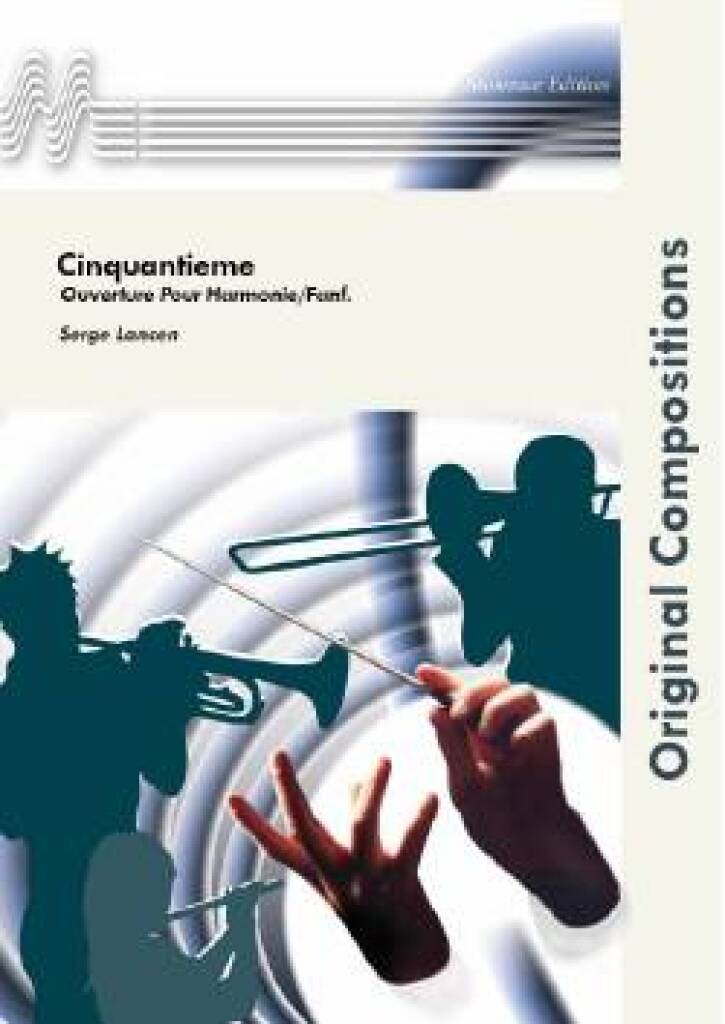
Cinquantieme - Serge Lancen
Cinquantieme, the fiftieth composition for symphonic band by Serge Lancen, was composed in the fall of 1993. It is written in an overture form and built on four distinct themes. First there is a merry and dynamic March, followed by a Waltz of the same character; then comes a small melody and finally the March turns up again, but this time it ends with a triumphant theme. The overture is dedicated to Alain Thiery and his Symphonic Band of Pont-Ste-Marie/La-vau/Creney. It was premiered during the gala concert closing the 120th anniversary celebrations of that band. The number in the title 'Cinquantieme' (Fiftieth), indicates the richness of Lancen's wind band repertoire. Fascinated by the symphonic band's extremely rich range of tone colours, Lancen has devoted all his talent and passion to it. For this type of orchestra he has written symphonies, rhapsodies, several concertos and even religious compositions with choirs and soloists.
Estimated dispatch 7-14 working days
 View Music