
Results
-
£134.99Fanfare And Funk - Oliver Waespi
This work by Swiss composer Oliver Waespi was one of the highlights at the 2006 Eidgenssische Musikfest in Lucerne. The piece opens with a festive fanfare featuring the brass section. The mood changes to a funk passage which develops and grows into a James Brown-like groove. It also includes an ad libitum drum solo. A slow blues lends a calmer feel and the piece culminates with striking interwoven fanfare and funk styles. This work is highly recommended for concert programmes but it can also make a spectacular, unconventional choice for a competition.
Estimated dispatch 7-14 working days
-
£71.50We Wish You A Calypso Christmas - Robert E. Foster Jr.
This arrangement brings something different to young band holiday concerts. Based on We Wish You a Merry Christmas, this version is in 4/4 time and has a lively Latin beat to lighten the mood, providing young percussion sections interesting parts and a variety of instruments to play. Students will enjoy this fun setting and its sure to complement your winter music program.
Estimated dispatch 7-14 working days
-
£309.99Ninth Symphony (Concert Band - Score and Parts) - Barnes, James
Premiered on 21 September, 2018 in Lawrence, Kansas by The University of Kansas Wind Ensemble (Dr. Paul Popiel, conducting), James Barnes' Ninth Symphony was composed between January and late June of that same year. This large work was commissioned by a consortium of twenty-one college bands, community bands, professional bands and individuals to help mark the 70th birthday of the composer (b. 1949). It is an expansive forty-minute work in four movements, of which the composer writes, "This is my last symphony...this work represents a compendium of all that I have learned during the fifty years of composing and scoring for this wonderful new medium: the modern wind band." The first movement, subtitled Elegy, is based around G minor. It is the longest movement of the symphony. Tragic and despondent in character, it is cast in sonata-allegro form. The second movement is entitled Scherzo. Barnes claims that "I have always wanted to write a waltz," and that is how this movement is cast, in a modified rondo form in D minor. In contrast to the mood of the first movement, the scherzo is a delightful posy of expansive melody, splashy color, humor and rhythm. The third movement, which is in a modified tertiary form, is entitled Night Music. In contrast to the scherzo, this movement begins with a mysterious incantation, first displayed by solo Alto Flute. The music becomes even darker and more mysterious, while overall the movement effectively expresses an "otherworldly" mood, ending with a solo soprano offstage which suddenly emerges, eerily singing a modified version of the opening incantation. Cast in sonata-allegro form, the fourth movement is most definitely a rousing Finale, beginning with a brilliant fanfare and undergoing several mood transformations before emerging into the final coda, ending the symphony with an energetic splash of color. Duration: 40.00
Estimated dispatch 7-14 working days
-
£84.95Partita (Concert Band - Score and Parts) - Gregson, Edward
Partita' was originally composed for brass band in 1973. The work is in three movements, and uses material based on the 13th century plainsong 'Dies Irae". the opening Intrada is sombre. the second movement is a 'chorale and variations. the chorale melody follows the main outline of the plainsong. the five variations are varied in mood and intensity. the final March is much happier in mood and has a lyrical tune in the middle first heard on horns. However, references to the 'Dies Irae' are still apparent and the final bars of the work contain a quote from the opening movement.
Estimated dispatch 7-14 working days
-
£16.95Partita (Concert Band - Score Only) - Gregson, Edward
Partita' was originally composed for brass band in 1973. The work is in three movements, and uses material based on the 13th century plainsong 'Dies Irae". the opening Intrada is sombre. the second movement is a 'chorale and variations. the chorale melody follows the main outline of the plainsong. the five variations are varied in mood and intensity. the final March is much happier in mood and has a lyrical tune in the middle first heard on horns. However, references to the 'Dies Irae' are still apparent and the final bars of the work contain a quote from the opening movement.
Estimated dispatch 7-14 working days
-
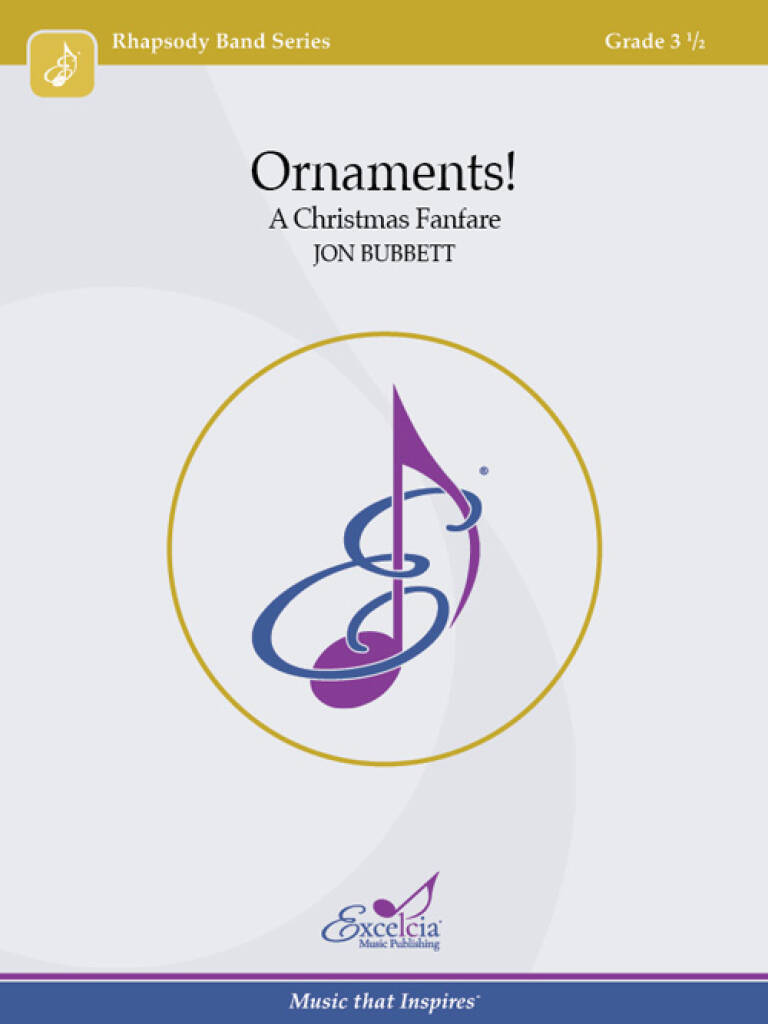
£118.99North Hills Fantasy (Concert Band - Score and Parts) - Sparke, Philip
North Hills Fantasy was commissioned by the North Hills High School Bands, Pittsburgh, Pennsylvania (director: Len Lavelle) as part of a commissioning programme that has run since 1965 - the longest of its kind in the USA. The work opens with a reflective, unaccompanied solo for alto saxophone which develops into a chorale for horns and saxes. This is taken up by the trumpets and subsides to a change of key and mood, with highly decorated folk-like solos for clarinet, bassoon and saxes. These solos build to a climax for full band, which heralds a triumphant return of the horn chorale, accompanied by florid woodwind figuration. But the mood soon winds down; fragments of earlier melodies return calmly to peacefully close the work. Duration: 5.30
Estimated dispatch 7-14 working days
-
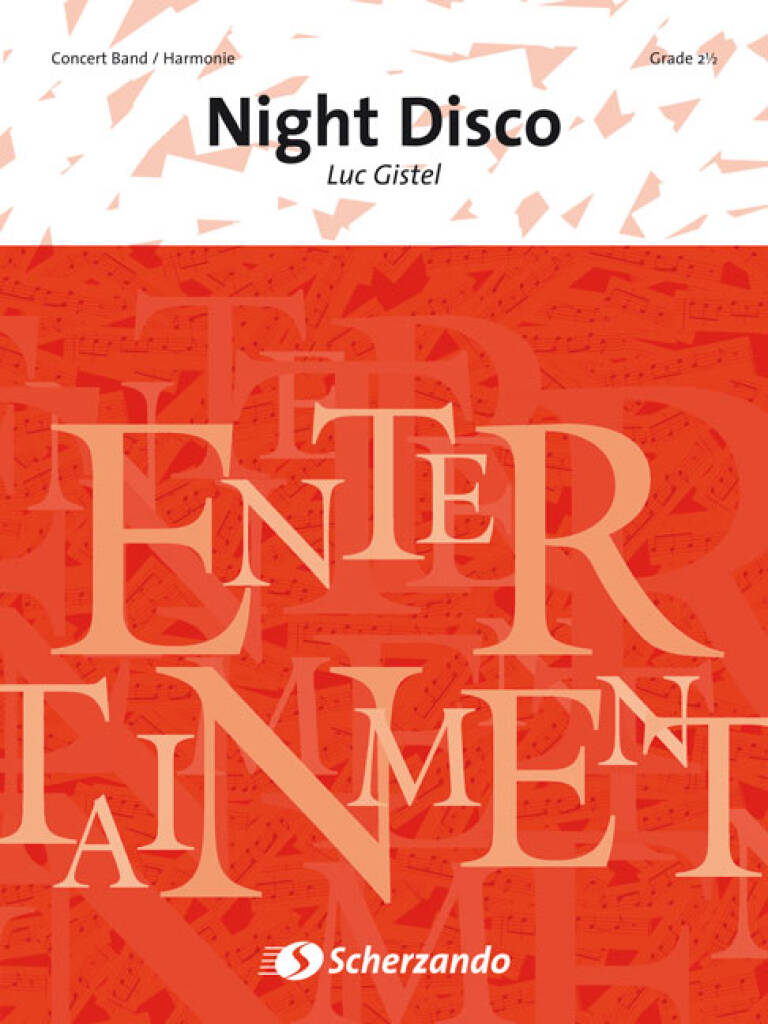
£140.00Capriccio (Concert Band - Score and Parts) - Holst, Gustav - Noble, Paul
The following notes have been excerpted by the arranger from those presented in the Introduction by Imogen Holst, daughter of Gustav Holst: Holst wrote this work in the spring of 1932, while he was guest Lecturer in Composition at Harvard University. He had been asked by Nathaniel Shilkret to write 'a short radio piece, not longer than five or six minutes.' for a composers' series on folk music themes. Holst wrote to me on 13 May 1932, saying: 'On May 1 I started sketching a piece for Shilkret's Radio jazz band in New York. I finished the sketch on the 4th and the full score on the 8th... Shilkret wanted something on American airs but I've left them out because I prefer my own so he may reject the thing.' Shilkret was enthusiastic about the piece, but he was unable to use it for his series. 'I hate to give it up,' he told the composer, 'but I cannot play it because it is not based on a definite English or American folk theme.' Holst never revised his hurriedly-written work, probably because he had too many other things to write during the remaining two years of his life, when he was having to spend a good deal of his time in hospital. The autograph manuscript of his original full score is in the British Library, MS Add.47833. The work had no name: Holst referred to it either as his 'Jazz band piece' or as 'Mr. Shilkret's Maggot.' The score needed editing. There were gaps and patches, with incomplete dynamics and phrase marks. I made the version for orchestra and named it 'Capriccio' in spite of the viola's (now saxophone's) expressive opening, because from the moment of the marimba's first animated remark there can be no doubt about the mood of the music. - Imogen Holst (1968)
Estimated dispatch 7-14 working days
-
£209.99Diamond Concerto (Euphonium Concerto No.3) (Euphonium Solo with Concert Band - Score and Parts) - Sparke, Philip
Diamond Concerto was commissioned by Musikverein Morschied from Germany - Dr. Eric Grandjean, conductor - for a special concert featuring Steven Mead as guest soloist. Together they gave the world premiere on 28th April 2012 in the town theatre of Idar-Oberstein. The commission is a highlight in the 30-year friendship between composer and soloist, which has included many mutual CD projects and concerts and, now, a concerto. Sparke had Steven Mead's special euphonium sound in his head throughout the composition process and made free use of the variety of styles which the world-renowned virtuoso has made his own during his highly successful solo career.The village of Morschied lies to the west of Frankfurt am Main in the area known as the German Road of Precious Stones, which is famous for its thriving gem industry. Because of this it was decided to give the commission a local connection by choosing the title, Diamond Concerto. Each of the three movements is named after a famous diamond:Earth Star is rather stern in mood, opening with a free fantasy for the soloist over a static chord from the band. This leads to an Allegro Moderato in minor mode where small motives are gradually repeated and developed by both band and soloist.Ocean Dream uses a varied quote from the composer's Music for Battle Creek, including a melting slow melody that was originally written with Steven Mead in mind.Blue Heart was written, at Steven Mead's suggestion, in bebop style and takes the form of a jazz waltz. The quasi-improvisatory central section features a call-and-response passage for the soloist and upper woodwinds.Duration: 15:45
Estimated dispatch 7-14 working days
-
£164.95Euphonium Concerto (Concert Band - Score and Parts) - Ellerby, Martin
This Euphonium Concerto was written between late 1994 and early 1995 in response to a commission from Steven Mead to whom the work is dedicated. It is cast in four movements and lasts a little over 22 mins:I. Fantasy: After the briefest of introductions, the solo euphonium enters with the key melodic phrase of the movement in a fast 'Tempo I'. This idea is developed up to the point where a slower 'Tempo II' breaks the argument - here the mood is reflective but it is only to be a brief interruption as 'Tempo I' returns very quickly. The opening material is then subjected to further transformation with 'Tempo II' making occasional returns en route, the distances between the contrasting tempi becoming ever closer, and the movement closes in a rather soft though definite manner.II. Capriccio: This relatively short presto movement forms a bridge between the first movement and the work's slow movement. The majority of the band parts are bright and muted with the percussion players enhancing the texture with contributions from xylophone, glockenspiel and vibraphone. Again the initial solo euphonium phrase provides the basis for almost all the movement's material. This is extremely virtuosic for the soloist and band alike and makes great play of the rhythmic possibilities of combining simple and compound music either in close proximity or together.III. Rhapsody (for Luis): A Lento movement, sitting between two different but essentially rapid ones, this provides the work's emotional core exploiting the soloist's cantabile qualities in an almost seamless fashion. Again, as will all the work's movements, the initial idea paves the way for subsequent development, eventually culminating in a passionate climax; thereafter it winds down with an affectionate backward glance towards the close of the the slow movement of the Euphonium Concerto of Joseph Horovitz, whose mark had been made indelibly on the euphonium repertoire. This movement is dedicated to Luis Maldonado who set the full score of the brass version before his untimely death.IV. Diversions: The work's variation finale is cast in 3/4 throughout though the barline is often a guideline and was seen by the composer as a challenge of metrical restraint! There is an obvious jazz feel to this movement (both rhythmically and harmonically) with a swaggering ritornello theme first announced by the solo euphonium. Thereafter follows a series of interludes and 'adjusted' returns of the main theme. A lyrical idea is allowed to enter but the underlying momentum is ever present. The band also contributes to the interludes and eventually the tempo increases towards a 'wild' and absolute conclusion.Duration: 22.30Recorded on QPRM143D Dreamscapes, Royal Northern College of Music Wind Orchestra
Estimated dispatch 7-14 working days
-
£32.95Euphonium Concerto (Concert Band - Score only) - Ellerby, Martin
This Euphonium Concerto was written between late 1994 and early 1995 in response to a commission from Steven Mead to whom the work is dedicated. It is cast in four movements and lasts a little over 22 mins:I. Fantasy: After the briefest of introductions, the solo euphonium enters with the key melodic phrase of the movement in a fast 'Tempo I'. This idea is developed up to the point where a slower 'Tempo II' breaks the argument - here the mood is reflective but it is only to be a brief interruption as 'Tempo I' returns very quickly. The opening material is then subjected to further transformation with 'Tempo II' making occasional returns en route, the distances between the contrasting tempi becoming ever closer, and the movement closes in a rather soft though definite manner.II. Capriccio: This relatively short presto movement forms a bridge between the first movement and the work's slow movement. The majority of the band parts are bright and muted with the percussion players enhancing the texture with contributions from xylophone, glockenspiel and vibraphone. Again the initial solo euphonium phrase provides the basis for almost all the movement's material. This is extremely virtuosic for the soloist and band alike and makes great play of the rhythmic possibilities of combining simple and compound music either in close proximity or together.III. Rhapsody (for Luis): A Lento movement, sitting between two different but essentially rapid ones, this provides the work's emotional core exploiting the soloist's cantabile qualities in an almost seamless fashion. Again, as will all the work's movements, the initial idea paves the way for subsequent development, eventually culminating in a passionate climax; thereafter it winds down with an affectionate backward glance towards the close of the the slow movement of the Euphonium Concerto of Joseph Horovitz, whose mark had been made indelibly on the euphonium repertoire. This movement is dedicated to Luis Maldonado who set the full score of the brass version before his untimely death.IV. Diversions: The work's variation finale is cast in 3/4 throughout though the barline is often a guideline and was seen by the composer as a challenge of metrical restraint! There is an obvious jazz feel to this movement (both rhythmically and harmonically) with a swaggering ritornello theme first announced by the solo euphonium. Thereafter follows a series of interludes and 'adjusted' returns of the main theme. A lyrical idea is allowed to enter but the underlying momentum is ever present. The band also contributes to the interludes and eventually the tempo increases towards a 'wild' and absolute conclusion.Duration: 22.30Recorded on QPRM143D Dreamscapes, Royal Northern College of Music Wind Orchestra
Estimated dispatch 7-14 working days
