
Results
-
 £82.50
Cross River Overture - Nancy H. Seward
The opening fanfare fades to an expressive andante featuring contrasts between woodwind and brass sonorities. A short call in the trombones simulates the horn of an excursion boat and heralds a spirited allegro with contrasting articulated patterns, legato passages and repartee between high and low voices.
Estimated dispatch 7-14 working days
-
 £104.50
Jubilo A Concert Overture - Claude T. Smith
Here is an exciting composition full of the multi-rhythms combined with the Smith harmonies that make his works unique. Following a jubilant introduction, the saxophones set the melodic line, which is augmented by the full band. Brass pyramids lead into a slow lyrical section with French Horn backgrounds. A modulation follows leading into a recap of the opening theme. The driving percussion pattern is soon augmented by more instruments building to a dramatic finale.
Estimated dispatch 7-14 working days
-
 £82.50
Days Gone By - Katherine Rorabaugh
Gorgeous themes, beautiful orchestrations, and lush scoring coupled with a dramatic and soaring climax that fades into a soft ending brilliantly invoke warm feelings of nostalgia. This work is an excellent way to showcase your band's musicianship and tone. Features solos for marimba, oboe (cued), trumpet, French horn (cued), and alto sax.
Estimated dispatch 7-14 working days
-
 £87.99
Royal Air Force March Past - H. Walford Davies
This old march, now scored as an accessible grade 3, is brought to the fore by arranger Laurie Lafferty. Your horn in F players will appreciate the inclusion of the melodic line!
Estimated dispatch 7-14 working days
-
 £118.99
Showdown for Band - Gilbert Tinner
Showdown for Band was written as a compulsory exercise for the Third International Light Music Competition at St. Gallen, Switzerland in 1998. The intention of the composer was to write a piece in a light music style that would at the same time challenge the various bands, particularly in the area of rhythm. The work is divided into four parts: Opening, Ballad, Finale and Ending. Using melodies that are easy on the ear and varied instrumentation, many facets of the entire band are displayed. The solo in the middle part can be played by either soprano or alto saxophone, or even by a flugel horn. The impressive composition contains many musical elements, which makes the work anespecially suitable piece with which to open a light classical concert
Estimated dispatch 7-14 working days
-
 £169.99
Concerto Tricolore - Thomas Doss
Concerto Tricolore is a captivating trumpet concerto in three movements. Each movement has its own musical character resulting in a varied and entertaining piece. The first movement has a vivid and virtuoso character composed in a neoclassical style, movement two is written for flugel horn with the accompaniment functioning as a soft, romantic background for this beautiful instrument. The final movement, with its jazzy character, reflects the atmosphere of an old, smoky jazz club in Chicago. A magnificent new opus in the repertoire for solo trumpet and concert band.
Estimated dispatch 7-14 working days
-
 £134.99
Dogon - Kevin Houben
Dogon whisks the audience off on a journey to the steep slopes of the Dogon Valley. Majestic brass sounds sketch the exotic culture of the Malian Dogon people. The Dogon see the valley as both a threat and a promise for the future. This isrepresented in dark and mysterious chords. Now three soloists (horn, trumpet and soprano saxophone) bring the work to a dazzling conclusion, reminiscent of the colourful masked dances of the Dogon.
Estimated dispatch 7-14 working days
-
 £96.40
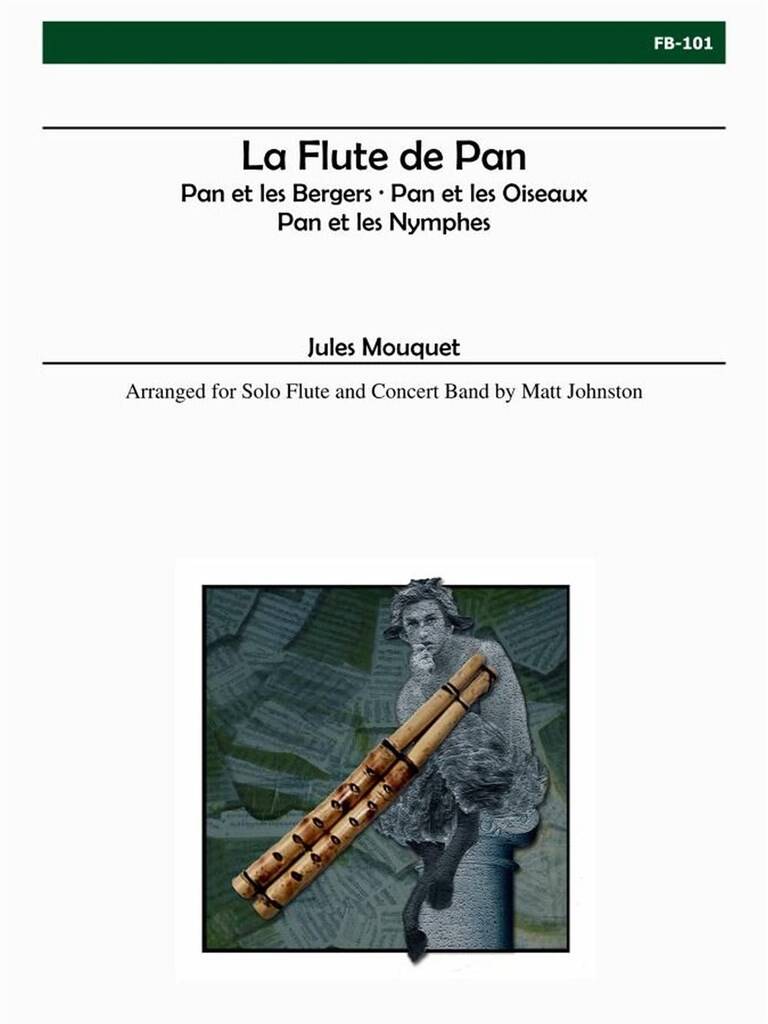
La Flute De Pan - Jules Mouquet
This arrangement features a colorful, yet light accompaniment to this delightful flute solo. A great piece to feature your first chair flute player. The first movement is appropriate for bands of all ages, while the latter two movements are a most likely appropriate for high school groups and up. Instrumentation: Solo Flute, Flute 1/2, Oboe, Bassoon, Clarinet 1/2, Bass Clarinet, Alto Saxophone 1/2, Tenor Saxophone, Baritone Saxophone, Trumpet 1/2, Horn 1/2, Trombone, Euphonium (BC and TC), Tuba, Snare Drum/Bass Drum, Triangle/Suspended Cymbal, Bells
Estimated dispatch 7-14 working days
-
 £137.99
Hanover Festival - Philip Sparke
The Hanover Wind Symphony, New Jersey, USA was founded in 1984 by its conductor Peter Boor. He commissioned HANOVER FESTIVAL to celebrate the band's 15th Birthday and the first performance took place on October 27th 1999. The piece starts with a solemn brass fanfare. Woodwinds join in and the music subsides into an expressive chorale. A climax is reached and the fanfare returns. Trumpets introduce an explosive vivo section, characterised by an energetic theme from the horns and low clarinets. A bridge passage with strong brass chords leads to a playful section that introduces a legato central theme under woodwind figures. This is taken up by the full band, the playfulmusic returns and the original horn tune is reintroduced. Finally the opening fanfare returns, this time accompanied by music from the vivo section, until a fast and furious coda closes the work.
Estimated dispatch 7-14 working days
-
 £164.99
Wilten Festival Overture - Philip Sparke
To celebrate the 350th anniversary of the Stadtmusikkapelle Wilten in Innsbruck Philip Sparke composed Wilten Festival Overture. A bold fanfare, led by the horns, forms the opening of the work from which an expressive theme unfolds until the full band reaches a climax. Short solo statements from saxophone, horn and trumpet lead to a recapitulation of this theme which melts into a rhythmic Vivo. A robust melody is is then played by the clarinets and taken up by the whole band before a legato figure leads to a cantabile theme, again presented by the clarinets. The original Vivo melody reappears before the opening fanfare is briefly heard and the work comes to an end with ashort Coda. A great experience for the whole band!
Estimated dispatch 7-14 working days
 View Music