
Results
-
 £79.50
Waiting on Shore - Jon Bubbett
Full of emotion and passion, Waiting on Shore, by Jon Bubbett, will make for a beautiful and tender moment on your next concert. This is a beautiful melody with an Irish folk song quality. The lyrical, musical content is accessible for younger bands and provides an opportunity to teach expression. The ethereal beginning and unresolved ending add to the haunting beauty of this poignant melody. (3:10) The PerformancePlus+ series is an innovative addition to the ever-expanding MakeMusic Cloud interactive library. These engaging selections are presented with educational resources designed to enrich the rehearsal process and create outstanding performances. Including:Assignment, recording, and assessment tools within MakeMusic CloudPiece-specific exercises focused on skills and techniquesPrintable sheet music (with a standard MakeMusic Cloud subscription)Educational tips and suggestions to support learningAvailable in print and digital formats.
Estimated dispatch 7-14 working days
-
 £62.95
The Parting Glass - Robert Sheldon
This heartfelt rendition of the beautiful Irish folk song The Parting Glass, arranged by Robert Sheldon, is as playable as it is expressive. The various instrumental colors and unexpected harmonies provide moments of warmth, reverie, sentimentality, angst, and resolve that appeal to audiences and ensembles with moderate to advanced abilities. (3:40)
Estimated dispatch 7-14 working days
-
 £127.30
Mitt hjerte er ditt - Geir Holmsen
"Mitt hjerte er ditt" ("My Heart is Yours") is primarily known with this Norwegian lyrics and melody from Maj Britt Andersen's recording of the song, first released in 1992. Andersen's husband, Geir Holmsen, composed the new music for this recording, a version that has since been performed by numerous other artists, including Anna of the North on "Hver gang vi mtes" in 2022.The lyrics are Alf Prysen's Norwegian translation of Nils Ferlin's Swedish text, originally written to a Swedish folk tune.This is an arrangement written for a vocal soloist and wind orchestra, but it can also be played with instrumental soloists or purely instrumentally. The song has only two verses, so the middle section of this arrangement is an orchestral verse where the melody begins in the lower instruments.
Estimated dispatch 7-14 working days
-
 £179.99
The Stone Flower - Sergei Prokofiev
Sergei Prokofiev's The Stone Flower (opus 118) is his eighth and last ballet, composed between 1948 and 1950. His most famous ballets are Romeo and Juliet, Cinderella and Le Pas d'Acier.The Stone Flower is based on a Russian folk tale from the Ural Mountains. The premiere of the work took place in 1954, one year- after the dead of the composer. The ballet's storyline, rich with myth and legend, is set against the backdrop of the mystical Ural Mountains and centers on themes of love, artistry, and the conflict between material wealth and spiritual fulfillment.In 1951, Prokofiev arranged five movements from the ballet which were later published as the Wedding Suite (opus 126). The movements are:I. Amorous DanceII. Dance of the fiance's girlfriendsIII. Maiden's DanceIV. Ceremonial DanceV. Wedding Dance
Estimated dispatch 7-14 working days
-
 £225.99
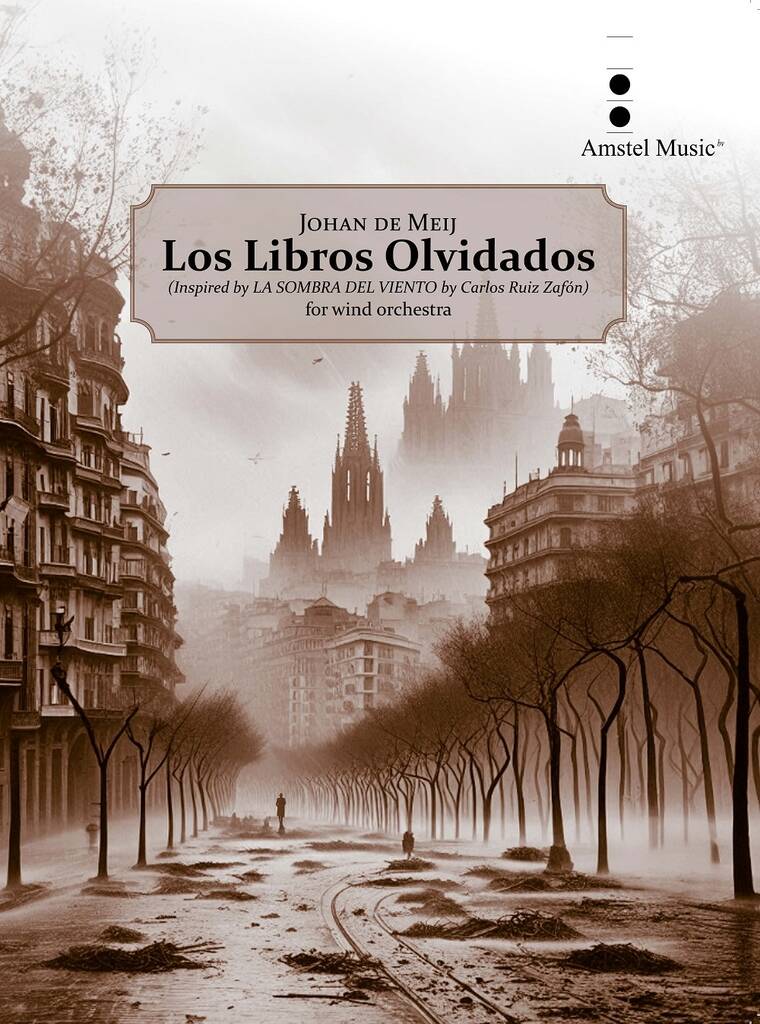
Los Libros Olvidados - Johan de Meij
1. Barcelona 19452. Los Libros Olvidados - El Cementerio3. Las Ramblas - Els Quatre Gats4. Coubert - El Hombre sin Rostro5. Bea (Beatriz)6. El Inspector Fumero7. La Ciudad de las SombrasThis is a story wrapped within a story that unfolds in Barcelona 1945, following World War II. The protagonist, Daniel Sempere, is the teenage son of an antiquarian book dealer, who one day takes him to the Cemetery of Forgotten Books, a mysterious place with labyrinthine corridors where rare and banned books are stacked in massive dusty piles. His father tells Daniel to select a book, but it will be his responsibility to protect it. Daniel picks La Sombra del Viento (The Shadow of the Wind), a novel by a forgotten author Julin Carax. Daniel immediately starts reading the book, and the story unwinds itself into a compelling and complicated plot. As he reads, Daniel finds himself and his own life merging into the story's plot. It transpires that there is a mysterious man named Lan Coubert ('the man without a face') who is determined to destroy all copies of Carax's books. Daniel is threatened by Coubert and is determined to find out what happened to Carax, who fled to Paris and subsequently disappeared. Daniel finds that his own life has much in common with the author's. The book mixes magic realism, page-turning mystery, and Daniel's own real life. Daniel's once ordinary teenage existence is now filled with larger-than-life colorful and at times, terrifying characters. Among them are Fermn Romero de Torres, a beggar who Daniel and his father befriend and employ in the family bookstore; the evil police inspector Javier Fumero, who could be compared to Scarpia in Puccini's opera Tosca or Javert in Les Misrables. The corrupt Fumero uses the war as an excuse to practice his sadism and is widely feared in Barcelona. He is represented in the music by a fascist military march. The city of Barcelona becomes a character in the book and in the music. The Ramblas, the boulevard running through Barcelona's Gothic Quarter and the famous caf Els Quatre Gats (the four cats) come alive in the score through a Cobla, the traditional wind ensemble playing a sardana, typical Catalan folk music. Two parallel love stories turn up the heat: Julin Carax's passionate, forbidden love for Penlope, and Daniel's equally passionate and forbidden love for Beatriz (Bea). Bea's sultry love theme is based on the first three letters of her name, with the ascending intervals B-E-A. Johan de Meij New York, October 17th, 2023
Estimated dispatch 7-14 working days
-
 £159.99
Window to the Sun - Thomas Doss
The Tyrol-South Tyrol-Trentino Euroregion was founded in 1998 with the aim of promoting cross-border cooperation between the parts of Tyrol that since 1918 have been divided up over Austria and Italy. This work for concert band marks the 25th anniversary of the Euroregion. In this varied composition, Thomas Doss has used three local folk songs as a symbol of the individual regions: La Montanara (Trentino), Wohl ist die Welt so gro und weit (South Tyrol) and Das Schnste auf der Welt (Tyrol).
Estimated dispatch 7-14 working days
-
 £150.70
Knut Liten og Sylvelin
Ballad is a type of Norwegian folk song that originally means "dance song" from the Latin word ballare ("to dance").This arrangement is heavily inspired by the version of the Norwegian folk-rock band Gte, which has achieved great success with the song both on record and stage.This arrangement features shorter soloistic passages on several instruments and expanded use of percussion. Energetic music that is perfect for any entertainment concert!
Estimated dispatch 7-14 working days
-
 £53.50
Loch Lomond (Score and Parts)
LOCH LOMOND is a traditional Scottish folk song of remarkable flexibility. This treatment is that of a ballad, so beautiful tone, good intonation, and polished phrasing are of key importance. It is an outstanding work for training the young concert band.
Estimated dispatch 7-14 working days
-
 £53.95
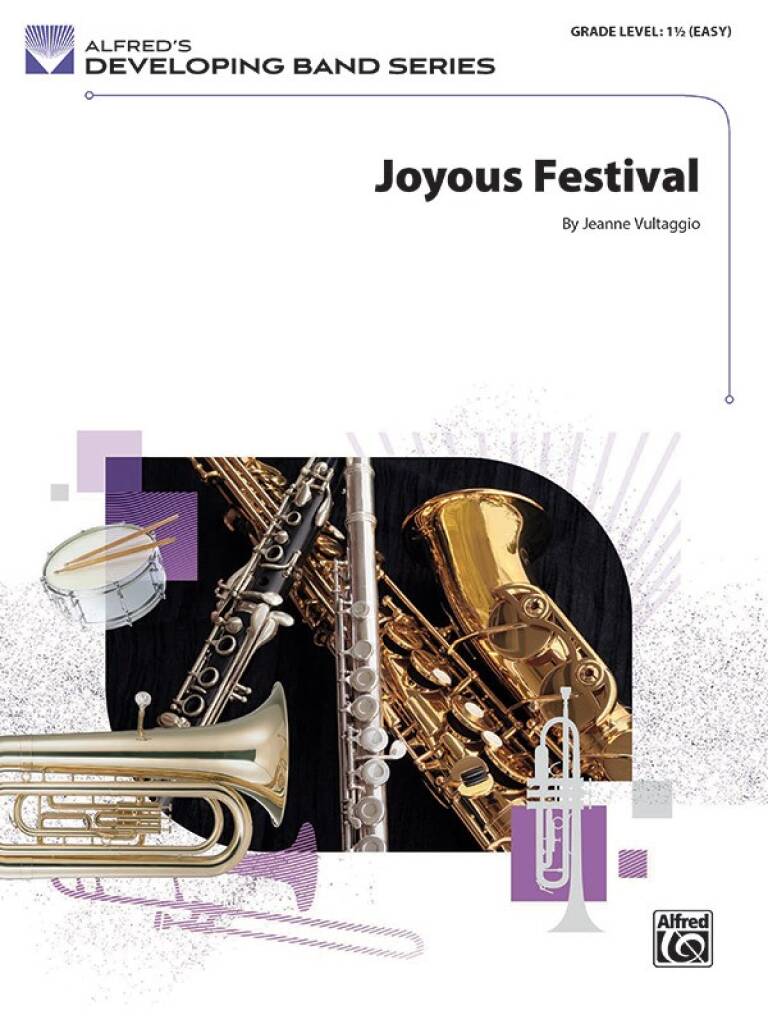
Joyous Festival - Jeanne Vultaggio
Celebrate the warmth and joy of family and community with Joyous Festival, by Jeanne Vultaggio, an original work for Hanukkah inspired by Klezmer style and depicting a lively celebration. Syncopated rhythms and repetition create a festive folk dance feel accessible to your developing musicians. A slower legato section, offering expressive opportunities, represents the sunset gathering to light the menorah's candles, with a gradually building ascending scale motif in the bells representing the lighting of one additional candle on each of the eight days of Hanukkah.
Estimated dispatch 7-14 working days
-
 £79.50
The Celts of County Clare - Robert Sheldon
The Celts of County Clare by Robert Sheldon is inspired by the music of Ireland. Specifically, the type of folk music heard in the County Clare region, located on the central southwest coast. While much of the music played in the pubs is rhythmic dance music, the area is also known for some lovely ballads.
Estimated dispatch 7-14 working days
 View Music