
Results
-
£65.99
A Christmas Dream - Romeyn
Pure and beautiful, "A Christmas Dream" is a creative, lyrical setting of "Angels We Have Heard On High" for beginning band. A fresh harmonic "twist" gives this a new age feel, adding a lot of interest and intrigue for both the performer and listener. Snippets of other carols are added in creative and subtle ways. It's also very appropriate for more experienced groups that are looking for a change of pace for the holiday concert, but may have limited rehearsal time. A beautifully sensitive holiday selection!
Estimated dispatch 7-14 working days
-
£68.99
Fairy Tail Suite - Tsutomu Tajima
This work was complete in January 2013 to commemoration the 50th anniversary of the Iwate Prefecture Band Association. Conditions at the request were as follows:1: Does not have to be particularly relating to Iwate. It should be something that would be widely familiar to the whole country. 2: Should suit the contest piece requirements. 3: Must be a song that can be used at a graduation ceremony for student procession and recessional.4: Must include vocal parts with a beautiful melody.5: Must be a march.6: Must be a song that would be loved by many.They are difficult requests. I hope to satisfy at least one of them.We selected Yanagida Kunio's book "Tono Monogatari" as the cornerstone of the work, chose four stories that fit the image, and stuck close to the source of the story. Then, "prelude music" was added, making it a suite consisting of five movements.I. "Prelude" What kind of story will it be? An exciting opening expresses such a feeling.II. "Zashikiwarashi" Spirit that brings good fortune and wealth. It appears at midnight and makes mischief, something silly, not serious. Zashikiwarashi moves quickly, dances, plays its games, hiding and reappearing often. These characteristics are considered cute and the music depicts such a mischievous Zashikiwasi.III. "Oshirasama" A girl and her horse love each other. Her father forbids this, and kills the horse. The beautiful daughter clings to the horse and cries. Eventually, the daughter and the horse rise to heaven, slowly and gradually, remembering former happy days. The music captures this ascension to heaven.IV. "Yamanba (Mountain witch)" Run away, run away, its chasing, still chasing. Run away, and still chasing. The girls hides. Yamanba searches. It keeps chasing, endlessly, following her everywhere. Chasing, chasing, and finally... Seriously and comically depicting the chase situation in fugue style.V. "Kappa" Staring into the distance. It looks gallant. What is it looking at? Staring beyond the mountain? Perhaps it is longing for hope and happiness. This is an homage, a march, and cheering song for Kappa who never gives up and embraces dreams and hope.It is my wish that many people become familiar with this song.(2013.3.31 Tsushima Tashima)
Estimated dispatch 7-14 working days
-
£137.99
Three Onegin Dances - Pyotr Ilyich Tchaikovsky
Tchaikovsky is best known for his purely instrumental compositions. However, we must not underestimate him as a composer of operas. Many of his operas such as Pique Dame and Eugene Onegin are still performed regularly throughout the world. Eugene Onegin (also called Jevgeny Onegin), composed in 1877-1878, was not called an opera by Tchaikovsky himself, but "lyric scenes". The work is entirely dominated by lyricism. However, there are two moments that contrast sharply with this lyricism: two ball scenes, for which Tchaikovsky wrote a waltz and a polonaise.After opening with a less well-known allegro dansant, this arrangement features the aforementioned waltz, which can beconsidered a beautiful Russian equivalent of the Faust Waltz by Charles Gounod. In the opera, this waltz is actually played by a military band. The arrangement concludes with the pompous polonaise (also mentioned above) which opens the last act: the ideal music to characterize high aristocracy in the salon of a palace in St. Petersburg.
Estimated dispatch 7-14 working days
-
 £118.99
Admiral Spirit - Timothy Travis
The 'Admiral Spirit' is the pride of the Navy. The ship is at sea, there is no wind, the sun is shining. The crew are busy piloting the ship into port in prime condition. The admiral himself will inspect the vessel. The first movement (Allegro Con Spirito) gives musical expression to the majestic ship and its toiling crew. In the second movement (Andante), the ship sails into port. It has been polished and technically everything is in order. The admiral will be proud when he inspects the ship. Third movement (Allegro Molto): the captain and his crew are nervous (modulations) while working at the 'finishing touch'. The Navy Band is ready to receive the admiral !. Hemay be proud of his flagship. De bemanning van het marineschip Admiral Spirit is druk bezig om het schip in optimale conditie de haven binnen te loodsen, de admiraal gaat namelijk het schip zelf inspecteren. In het eerste deel (Allegro con spirito) horen we een verklanking van het majestueuze schip en de zwoegende bemanning. Hoe beeldend zijn de emmertjes water welke overboord gaan (trombones). In het tweede deel (Andante) vaart het schip de haven binnen. Het schip is gepoetst en technisch is alles in orde. Derde deel (Allegro molto): De kapitein en zijn bemanning zijn nerveus (modulaties) en er wordt aan de finishing touch gewerkt. De Navy Band staat klaar om de admiraal te ontvangen! De admiraal kan trots zijn op het vlaggenschip. Een schitterend speelwerk voor de lagere afdelingen! Dit werk is opgenomen in het Klein repertorium, harmonie - 5e divisie
Estimated dispatch 7-14 working days
-
 £116.40
Quatre Jours a Paris - Kees Vlak
1) 'Jour de Fte. A quiet sunday atmosphere on the Avenue Foch, a residental area for the well-to-do in Paris. It begins with full-sounding chords, with a wealth of added tones. It seems as if many bells are tolling. Birds are tweeting high in the trees. After all this there is a very simple theme without any tension just like a leisure walk. The movement ends the same way it started.2) 'Jour de Java. The 'Java' is the dance of the Bohemians, the Paris gypsies. It is a very capricious dance, which is represented by at certain moments shrill harmonies and the unexpected changes in tonality of this movement.3) 'Jour de Pluie. A rainy day. Seated behind the windows of a sidewalk caf we observe the reflections on the wet streets. Under a fly-over an accordeon plays a sad melody. Old memories pass through our minds.4) 'Jour de Can-Can. Whenever one hears 'Can-Can' the name of Jacques Offenbach crosses our minds. It is the dance of the Folies Bergres, a festival which never seems to end. All the time new solo-dancers come jumping forward.
Estimated dispatch 7-14 working days
-
 £82.50
Christmas in the Valley of the Kings - Gary P. Gilroy
A spirited holiday opener or closer where the composer's love for percussion is proudly evident. Three traditional Christmas tunes are featured, including I Saw Three Ships; Bring a Torch, Jeannette, Isabella and We Three Kings of Orient Are. Each carol is introduced and then combined and overlapped for a rousing effect complete with a crisp percussion transition. An unexpected and lively 7/8 ending brings the work to a thrilling finish that is energetic and intense.
Estimated dispatch 7-14 working days
-
 £248.99
Three Movements - André Waignein
These three movements for piano and band depict three stages of a musical journey. We set off on a long journey through the world of musical virtuosity in the style of Liszt : grand, lustrous and lyrical. The second stage is a peaceful stroll, the start of a dream. The colours are like a tender caress and the piano sketches transparent arabesques. This splendid impressionistic journey ends in two bright pink drops which evapore just in time before the third and last movement explodes.The last movement is driven forward by a raging rhythm, as relentless as a war-dance. In a confrontation between the soloist and the orchestra all the inner strength of the composer comes to thesurface so that the musicians in the end are breathless... but all the same, no less satisfied.
Estimated dispatch 7-14 working days
-
 £58.50
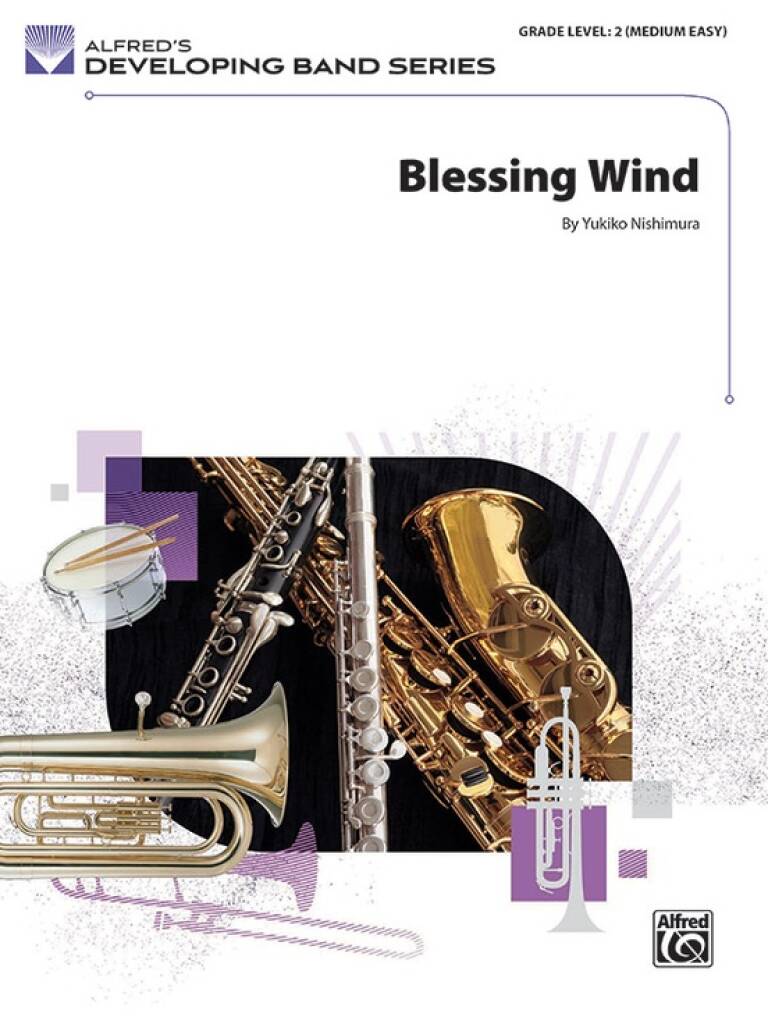
Blessing Wind - Yukiko Nishimura
This stunningly beautiful lyrical work provides a peaceful moment in our complex and complicated lives. With gorgeous melodic lines and perfect harmonic progressions, your students will fall in love with Blessing Wind. There are many teachable moments, and it is the perfect level for young band. Everyone struggles with burdens from time to time. We need hope in our complicated lives. This piece provides a peaceful moment, calming the storm that sometimes surrounds you while sharing in the beauty of music. May you grow to be the person you hope to be, following your true spirit. (2:50)
Estimated dispatch 7-14 working days
-
 £58.50
Pirate Kings from the East - S. Watson
In Pirate Kings from the East, composer Scott Watson re-imagines the legendary journey of the Three Kings, musically transporting the action from the desert to the high seas, swapping the traditional caravan of camels with a fearsome tall ship and pirate crew! Bold themes, triple-meter sea-shanty rhythms, and exciting percussion contribute to the high-spirited adventure. At the stirring conclusion of this buccaneer drama, one can almost hear the maritime Magi heartily proclaiming, "We Three Kings of Orient... ARRRGH!" (2:45)The PerformancePlus+ series is an innovative addition to the ever-expanding MakeMusic Cloud interactive library. These engaging selections are presented with educational resources designed to enrich the rehearsal process and create outstanding performances. Including:Assignment, recording, and assessment tools within MakeMusic CloudPiece-specific exercises focused on skills and techniquesPrintable sheet music (with a standard MakeMusic Cloud subscription)Educational tips and suggestions to support learningAvailable in print and digital formats.
Estimated dispatch 7-14 working days
-
 £99.99
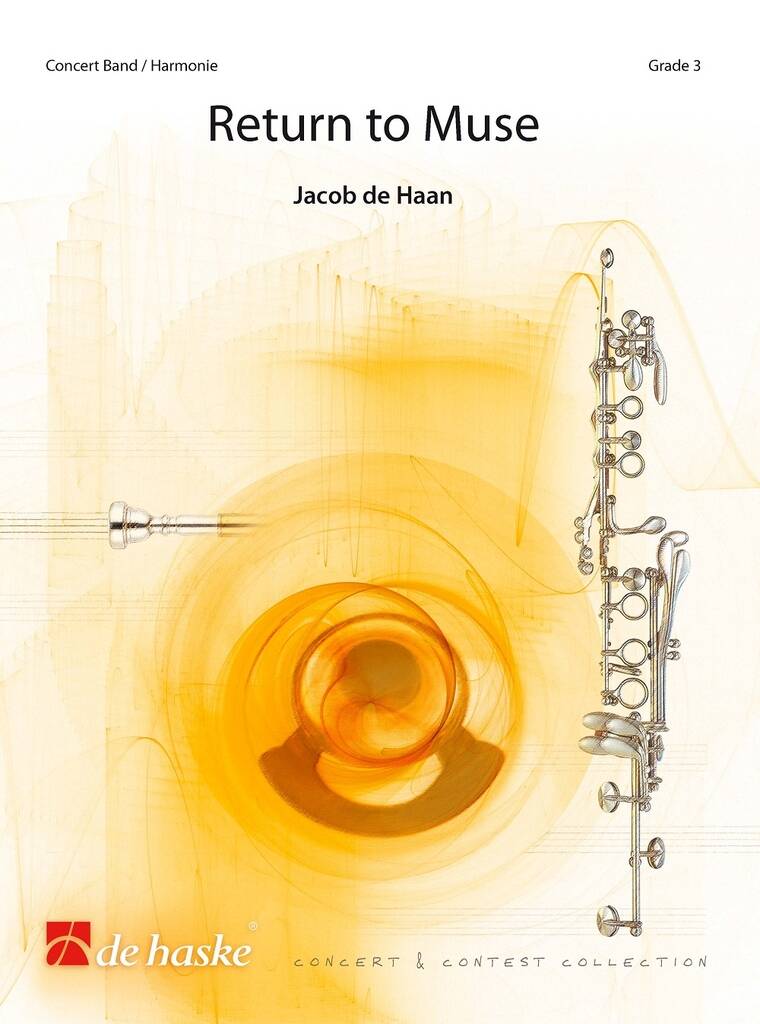
Return to Muse - Jacob de Haan
The divine muse of music could not be served through togetherness during the Covid pandemic. Giving even more reason to celebrate the fact that we can make music together now, back in the lap of the muse. In this work, various emotions are expressed: vulnerability, despair, but mostly hope, euphoria, and gratefulness as muse, music, and musicianship come together beautifully.
Estimated dispatch 7-14 working days
 View Music