
Results
-
 £102.99
Karachi Boulevard - Willy Fransen
Karachi Boulevard is a piece of music is inspired by the city of Karachi in Pakistan. This composition was made according to the theme-and-variations principle.The main theme of the work consists of a whole musical scale and this immediately gives the arrangement an Oriental flavour. This theme is cleverly disguised in endless, almost unrecognisable variations in a series of short interconnected fragments. Following a brief presentation of the thematic material, a rhythmic allegro part, in 7/8 time, is played by the piccolo. Next, some improvisation by the clarinet are played with vocal accompaniment by a number of "inhabitants" of Karachi. In the following part, anextremely moody and impressionist andante breaks through the hectic confusion when a flute solo brings a totally different variation of the theme. After this variation, a compelling folk dance in 3/4 time is played and the piece ends in a grand finale whereby the theme can be heard once again, albeit reduced to its simplest form and enhanced by rhythmic decorations from the woodwind.Despite the many variations, this exceptional piece is composed of different parts that form a logical sequence and make a very strong musical impression on the audience.
Estimated dispatch 7-14 working days
-
 £144.99
Festa Paesana - Jacob de Haan
Lunteren, a village on the Veluwe (a wooded region in the Netherlands), sets the scene annually for a village festival dominated by folklore. Festa Paesana (Italian for village festival) is set to music by several folkloric sketches. The theme in Festa Paesana is partly based on a Dutch anthem (Wien Neerlands bloed); when other lyrics are used it is also known as the Lunteren anthem.The work begins with a festive introduction, completed by chimes and drums, in which pieces of the Lunteren anthem are heard. The music then transitions to represent a horse auction. We hear horses run their first rounds in the auction ring while being whipped. The following theme is partly basedon the anthem. The tension of the traditional auction is amplified by an ever-increasing cadence, reaching its climax when the word ?Sold!? is shouted. The night ends with a majestic variation on the Lunteren anthem.The next morning, when the tower clock hits seven times, the village is awaked by the reveille of the heralds. In a fugatic version of the anthem, we can hear the village slowly come to life. This evolves with the chiming of all towers in the village; the celebration can begin. Carriages drawn by horses rumble through the village and thus, it is easy to hear when a horse hesitates or runs amuck. A traditional folk dance group then dances a whirling waltz while the audience shares their pleasure. Musicians march along the scene and take over the waltz theme in their march. Until deep in the night, the musicians are still heard playing in the streets. Meanwhile, we hear the anthem theme being played in a choral variation (in minor). The first time it is played quietly, as a preparation for Sunday. Then it is played in a celebrating way, enabling the devout village residents to remember the past pleasant celebration with satisfaction.
Estimated dispatch 7-14 working days
-
 £140.80
Star Trek Through the Generations - McCarthy/Jerry Goldsmith
This is a selection of music used for the Star Trek television serials and movie pictures in the past years. The introduction is based on the main theme which was the tune for the television serial for many years. Then comes the principal theme from the very first Star Trek movie picture and it remains as a kind of thread all through the selection. The next themes 'Ilia's Theme' and 'The Klingon Battle' are extracted from the same film. To complete this Star Trek story we conclude the selection with the main theme of the latest Star Trek film 'Generations'. Of course the title makes an allusion to this as well.
Estimated dispatch 7-14 working days
-
 £137.99
Oregon - Jacob de Haan
This fantasy tells the story of Oregon, one of America's north-western states. Traveling by train on the Northern Pacific Railroad, the listener is taken through the fascinating Oregon landscape. Indians, cowboys, golddiggers and hooded wagons will file past on this adventurous journey. The piece has some similarities with a soundtrack of a movie. Various melodies, which could be the main themes of a movie, pass the review.The piece begins in a slow movement, introducing the first theme in minor. Then we hear in the following fast movement the trombones imitate the train, whistling the steam-flute. We hear the characteristic minor theme again, but now in different variants(also in major). The rythmic structure of "western" stile and rock succeed each other. This is leading to the slow movement, where the signals of horns and trumpets introduce a wonderful vocal melody. After this characteristic melody, the fast movement appears shortly again, the trombones whistling the steam-flute again (now in major). We hear also some musical elements, that plays a part in the following Presto. Barchanges, jazzy chords, interesting rhytmic patterns (with bongo) and an original theme are the characteristics of this Presto. After this, the horns announce the last section of the piece. Interesting is the fact that we hear in this Allegro section a variant of the vocal melody in the slow movement. Also the Presto theme returns shortly, followed by the Allargando, which is a grand characteristic end of a soundtrack. The movie of our travelling fantasy has come to an end.
Estimated dispatch 7-14 working days
-
 £76.99
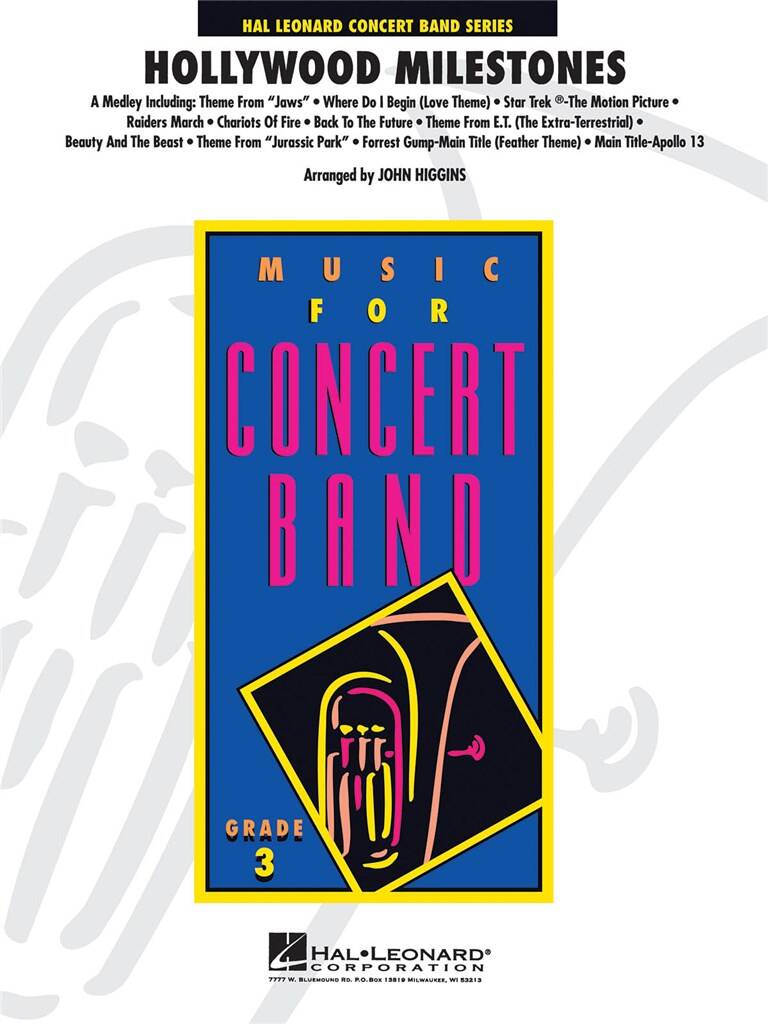
Hollywood Milestones
A blockbuster medley that includes some of the best musical icons from the last twenty-five years of film history. Includes: Theme from Jaws, Where Do I Begin (Love Story Theme), Star Trek - The Motion Picture, Raiders March,Chariots of Fire, Back to the Future, Theme from E.T., Beauty and the Beast, Theme from Jurassic Park, Forrest Gump - Main Title, and Main Title - Apollo 13.
Estimated dispatch 7-14 working days
-
 £179.99
Spartacus - Jan Van der Roost
Spartacus is a "Symphonic Tone Poem" with 3 joints. Each section has its own melodical materials, however: in the final movement the main theme from the second section returns in a 'grandioso'-tutti. The last bar but one recaptures the 'oriental' atmosphere of the very beginning. The first section (= from the beginning till J) builds up a climax by repeating and accumulating some melodical and rhythmical stuctures. The oriental character of the melodical fragments refers to the origin of the Roman slaves. The second section evokes the love between Spartacus and his loveby giving a peaceful atmosphere. The mean theme (presented the first time at letter L) has a broad andwide character and refers slightly to filmmusic. In this part of the composition, a special attention is given to the orchestration. The final section is more agressive and martial and refers to the revolt of the slaves against the Roman oppressors. In the middle of this movement, an accumulation of the 12 tones symbolizes the crucifixion of the slaves: the english horn resumes partly the cadenza of the flute (at letter J), as if he wants to show again the eternal love between Spartacus and his love a very last time ... The theme at the third bar of letter T is actually based on the 2nd theme of this section (which starts at the fifth bar of letter R), but has been worked out rhytmically.
Estimated dispatch 7-14 working days
-
 £68.99
The Castle on the Hill - Philip Sparke
The Castle on the Hill was commissioned by the Harmonie l'Abeille de Lucens, based in western Switzerland, and premiered by them in their 2025 Spring Concert on April 12th in the Grande Salle in Lucens. The band has a proud history dating back to 1883 and boasts a separate youth band as well as a music school. The march is in traditional form. After a brief introduction the main theme unfolds on the full band. This is followed by a bold theme in the bass, decorated with woodwind flourishes. A bridge passage leads to a second theme on clarinets and saxophones, repeated by the full band. A change of key heralds the trio section featuring a legato melody, again on clarinets and saxophones and taken up in a fresh key by the full band. This leads directly back to a recall of the opening material in a slightly abridged and decorated version, leading to an emphatic close.
Estimated dispatch 7-14 working days
-
 £94.00
Altheim - Gauthier Dupertuis
This concert march with a solemn and festive character was commissioned to Gauthier Dupertuis by the the Musikkapelle Altheim e.V (Germany) to celebrate its 100th anniversary. The thematic material of the first section of the march is based on a three-note motif, proclaimed by the brass in the first measure. The second part of this theme presents a recurring motif throughout the piece. This first section has a festive and resolutely giocoso character. The trio presents a new, more lyrical and solemn theme. After a short divertimento based on the material from the first section, the theme returns in a majestic way, leading to a climactic finale. Altheim: a concert march perfect for a festive occasion!
Estimated dispatch 7-14 working days
-
 £118.99
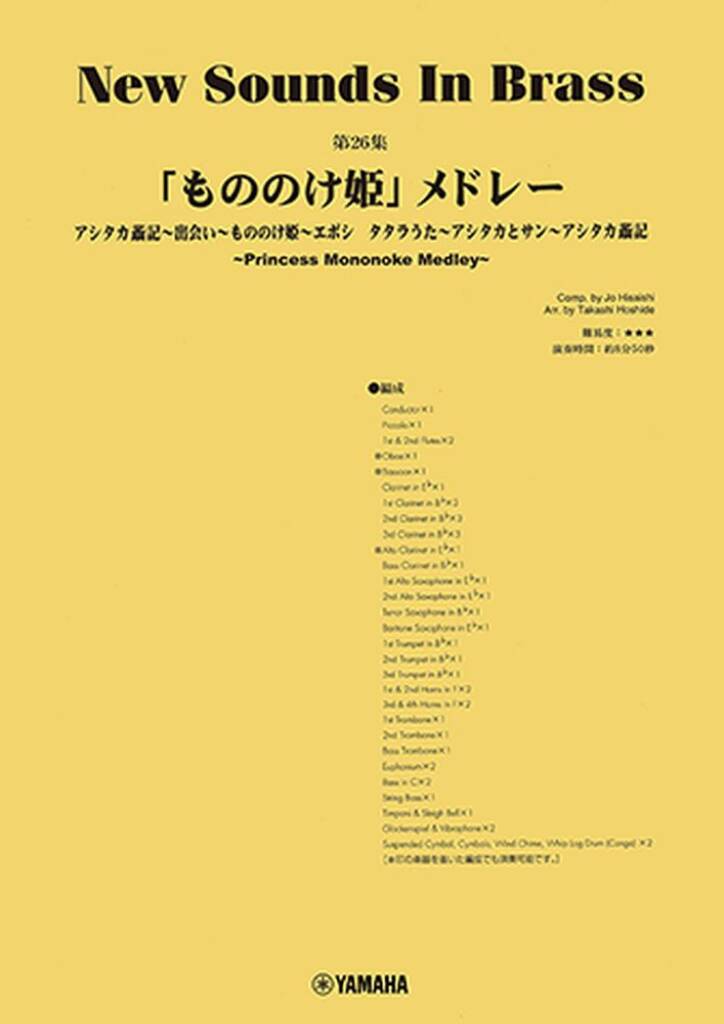
Princess Mononoke, Medley - Joe Hisaishi
Series: New Sounds in Brass (NSB); Duration: approx.8'50"; Composed by Joe Hisaishi; Arranged by Takashi Hoshide. Arranger Takashi Hoshide says, "I have selected beautiful melodies from the soundtrack of 'Princess Mononoke' (1997, directed by Hayao Miyazaki) and arranged them into a medley. What can be said about these songs as a whole is that they combine a grand continental scale with the delicacy that reflects Japanese emotions. Since there are no upbeat songs in this selection, I had to work hard on the arrangement, but this allowed for creating contrasts and transitions between each scene in the performance. 'Ashitaka Sekki (English title: The Legend of Ashitaka)' - 'Sekki' means a story that is not recorded but passed down orally. In this anime, this can be considered a sub-main theme. The song starts with a feeling that the story is about to begin and, once the theme kicks in, aim for a grand performance to convey its scale. 'Encounter' - This is the music that plays during the scene where the protagonist Ashitaka meets San. Interestingly, the motif of the main theme 'Princess Mononoke' is used in this melody. Here, let's pursue the shifts in the timbre of individual phrases, creating a beautiful and aesthetic soundscape. 'Princess Mononoke' - This is the main title of the anime. The melody line is carried by horns and trumpets."
Estimated dispatch 7-14 working days
-
 £74.99
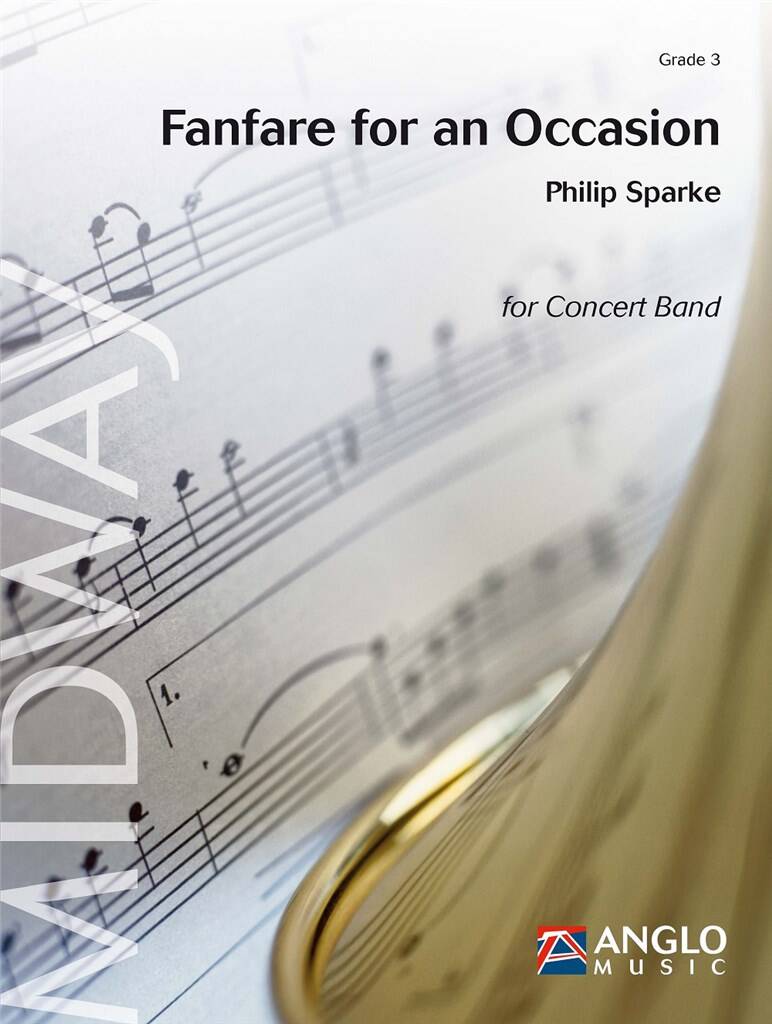
Fanfare for an Occasion - Philip Sparke
Fanfare for an Occasion was written to celebrate the 20th anniversary of the founding of Anglo Music Press, the publishing company dedicated to the works of British composer, Philip Sparke. It is a bright and festive work in which the main theme starts on the tenor instruments of the band before appearing as canonical imitation by all sections in turn. A short, repeated bridge passage leads to a second theme on the saxes that is taken up by the full band and leads back to a return of the main theme and a repeat of the second subject, which brings the fanfare to a brilliant close.
Estimated dispatch 7-14 working days
 View Music