
Results
-
 £149.99
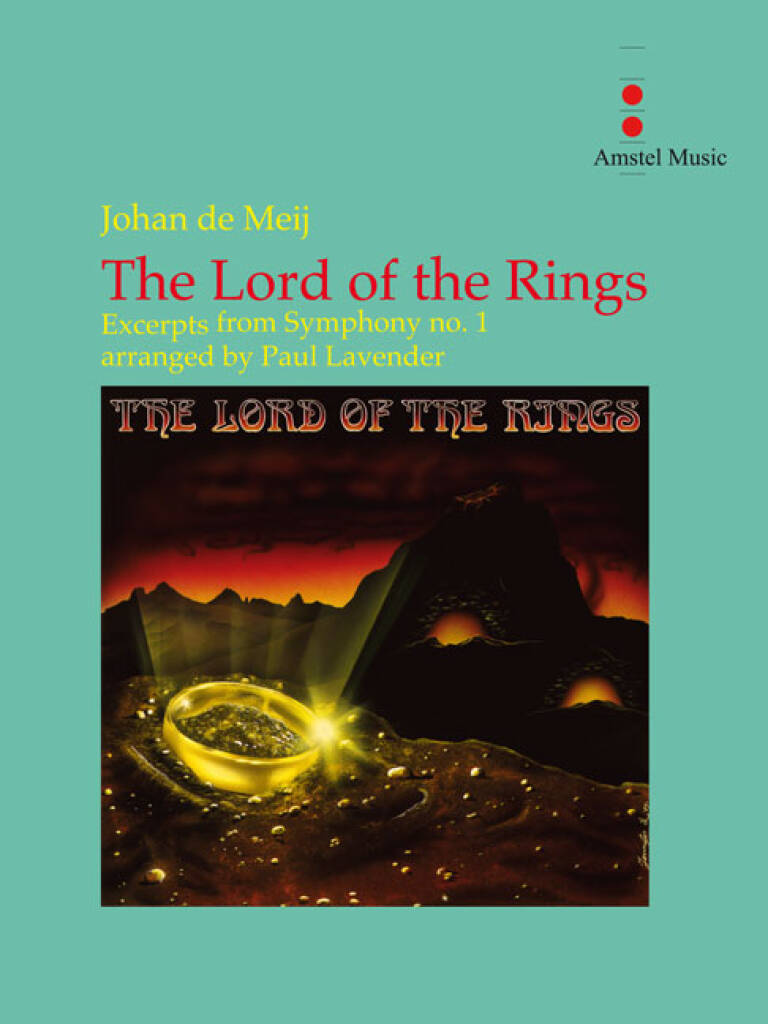
The Lord of the Rings (Excerpts) - Johan de Meij
Johan de Meij's first symphony The Lord of the Rings, based on the famous trilogy by Tolkien, has established itself as a 'classic' piece in the concert band piece repertoire.In this edition, Paul Lavender has masterfully condensed and arranged the symphony into a practical concert version, written at a level and with instrumentation to work within the reach of most bands. This version includes optional cuts allowing several performance lengths and options which enable you to tailor your performances as appropriate. Let your audience experience a fabulous adventure!
Estimated dispatch 7-14 working days
-
 £79.99
Free Running - Robert Buckley
Free Running is an exciting, high velocity tour-de-force that will keep both musicians and the audience on the edge of their seats. Inspiration for the work came from the pointillistic paintings of Seurat (who created images by using tiny spots of primary colors on his canvas) and from Parkour, a form of urban acrobatics in which participants, known as free runners, use the structures of the rural landscape to perform catlike leaps and sprints. The resulting creation is a non-stop piece of music made up of only staccato notes in a constant rhythm moving through different sections of the ensemble. Free Running was commissioned by the Troy University Symphony Band for the 2011Alabama Music Educators Association Convention. Ideal for concert or festival use, it is guaranteed to leave the audience breathless! Dur: 5:10Recorded by the Troy University Symphony Band - Ralph Ford, conductor
Estimated dispatch 7-14 working days
-
 £159.20
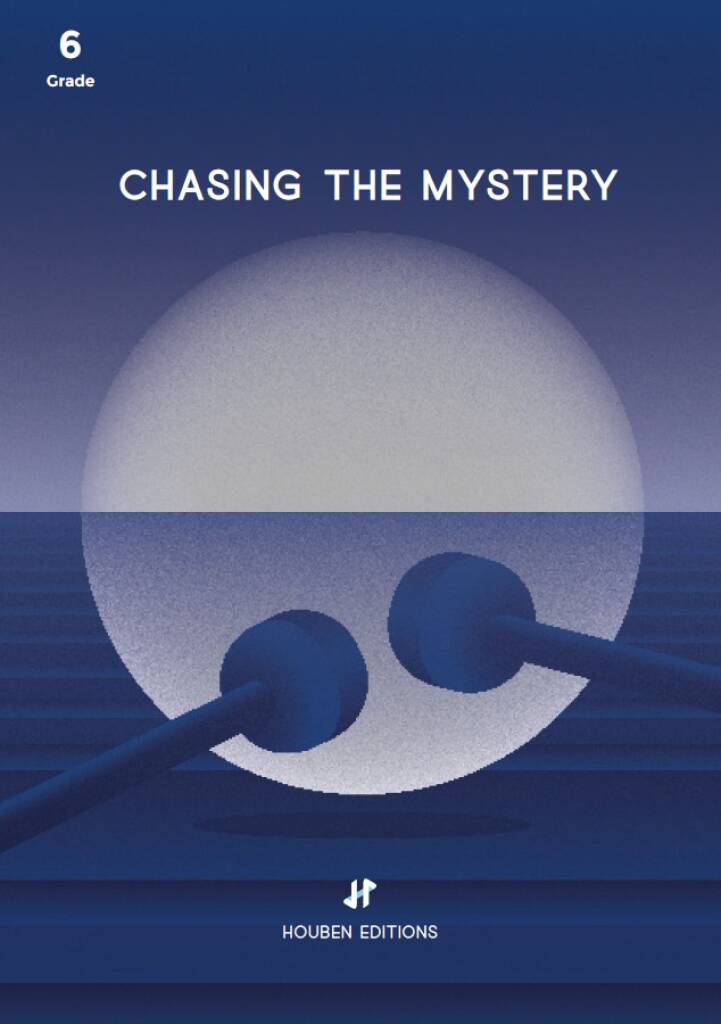
Chasing the Mystery - Kevin Houben
Commissioned by KU Leuven on the occasion of the 600th anniversary of KU Leuven.Chasing the MysteryKevin HoubenDedicated to the Wind Orchestra Universitair Harmonieorkest (UHO) of KU Leuven.Chasing the Mystery is the final movement of the triptych Beyond the Horizon of Thought.On the occasion of KU Leuven's 600th anniversary in 2025, the university commissioned Kevin Houben to compose a new work tailored to the Universitair Symfonisch Orkest, the Universitair Harmonieorkest and the Leuvens Universitair Koor. Maud Vanhauwaert, writer-in-residence during the 2023-2024 academic year, provided a poetic libretto.With Beyond the Horizon of Thought, Kevin Houben created not only a unique anniversary composition for more than 250 student musicians. The composition also conveys a universal message that perfectly reflects the spirit of the celebrating university: keep searching, keep developing yourself and keep hoping - even in turbulent times.From a compositional perspective, the work is built around themes and motifs with a clear symbolism. Kevin Houben explains: "I use a technique in which letters are converted into musical notes - a method also used by great masters such as Bach, Bartk and Shostakovich. This musical signature forms the basis of the melodic structure. In this way, 'KUL600' is represented by the notes D - G - E - F (re - sol - mi - fa)."The composition is conceived as a triptych: three movements that flow seamlessly into one another and are performed by different orchestral formations, yet together form a single whole. The work opens with the symphony orchestra, where the thematic 'KUL600' cells are introduced and explored. In this movement, Awakening the Wonder, several highlights establish a musical connection with the following movements.In the second movement, The Urge of Search, the choir sings a cappella to the poem Het is het by Maud Vanhauwaert, in which she reflects on the tireless quest for knowledge that has characterized the university for 600 years. Classical Gregorian techniques and traditional voice leading enter into dialogue with contemporary techniques, as the singers alternately whisper, call out and proclaim.Finally, the wind orchestra introduces the third movement, Chasing the Mystery. With a searching and anticipatory character, the orchestra presents the thematic cells in soloistic fashion, based on the main melody of the choral movement. References once again appear to the rhythmic 'KUL600' cells, which ultimately culminate in a grand apotheosis. A solitary soprano saxophone opens the finale with the 'KUL600' theme in its most intimate and meditative form. The expanded choir then joins the orchestra for an impressive final chord, musically preparing KU Leuven for the next 600 years.Beyond the Horizon of Thought premiered on Wednesday 23 and Thursday 24 April 2025 at LUCA Campus Lemmens, and was also performed on 9 May 2025 at Concertgebouw Brugge on the occasion of the 600th anniversary of KU Leuven. More than 250 musicians from the Universitair Symfonisch Orkest (USO) conducted by Edmond Saveniers, the Leuvens Universitair Koor (LUK) conducted by Kevin Hendrickx, and the Universitair Harmonieorkest (UHO) conducted by Erwin Scheltjens shared the stage.Cover illustration design: Grotezk Studio.
Estimated dispatch 7-14 working days
-
 £60.50
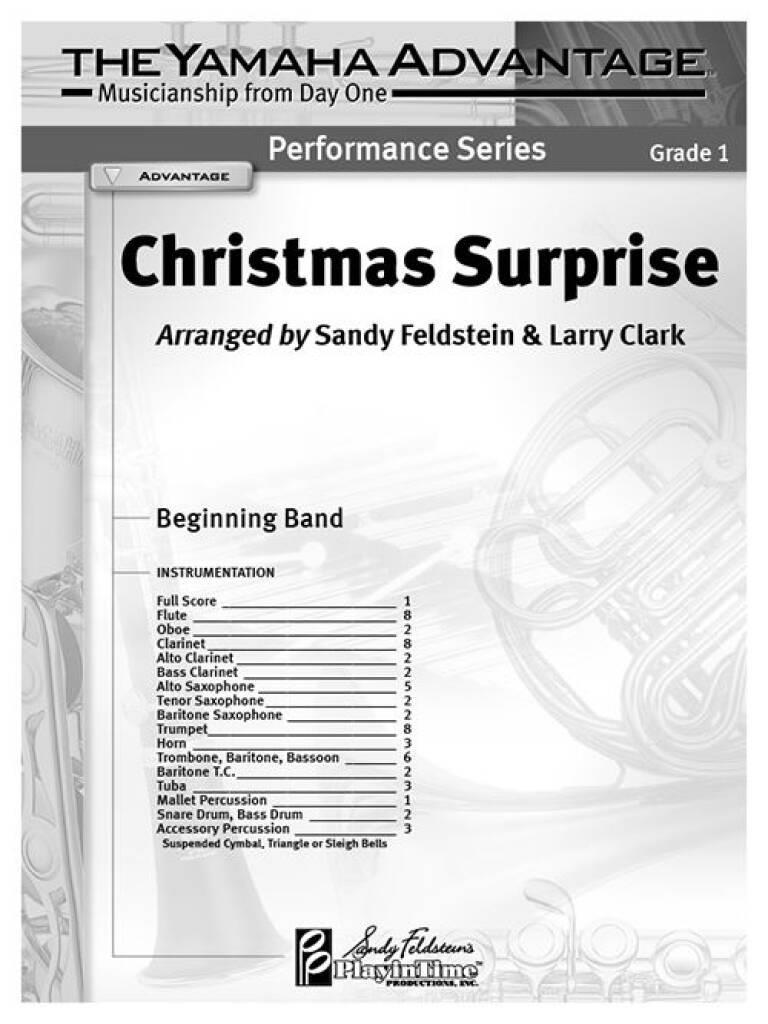
Christmas Surprise - Sandy Feldstein
A perfect composition for your Band's first Christmas concert. Using only the first 7 notes introduced in most beginning Band methods (concert Bb to G, plus the low A), this arrangement combines "Jingle Bells" and "Jolly Old Saint Nicholas" with Haydn's "Surprise Symphony." It also provides a unique opportunity for the Band to sing!
Estimated dispatch 7-14 working days
-
 £87.99
Tokyo Nocturne - Philip Sparke
Tokyo Nocturne was commissioned by the Tokyo Wind Symphony Orchestra to celebrate its 60th anniversary in 2023. They gave the world premiere under maestro Keita Matsui on November 5th that year. The work opens quietly on a solo clarinet with a modal phrase, which builds as more instruments enter until, over a static, muted brass chord, the textures thin to introduce a chorale-like passage for the woodwinds. This intensifies until the brass enter with a chorale of their own, again building to a celebratory full-band climax. The optimistic mood changes abruptly to one of uncertainty but only to reintroduce the brass chorale, this time on the woodwinds, in a quieter, calmer iteration. The music again builds to a climax, where the brass majestically repeat the opening clarinet melody, before the mood relaxes to bring the work to a peaceful close.
Estimated dispatch 7-14 working days
-
 £140.00
Elegy & Scherzo - Johan de Meij
Elegy & Scherzo was written at the request of cellist Yuki Ito, to commemorate the 150th birthyear in 2023 of Russian composer Sergei Rachmaninoff (1873 - 1943). Composer Johan de Meij used some hints and quotes from Rachmaninoff's 2nd Symphony (opus 27) and the Symphonic Dances (opus 45), to embrace the sound world of the Russian master. Elegy & Scherzo was premiered on October 27, 2023, in the Cankarjev Dom in Ljubljana, Slovenia by the Band of the Slovenian Armed Forces, with Yuki Ito as the cello soloist. Soon after the premiere, the work was adapted for solo euphonium and wind orchestra. It received its premiere during the ITEC, the International Tuba- and Euphonium Conference 2025 in Valencia, Spain, with Shoichiro Hokazono as the soloist, and the composer conducting.
Estimated dispatch 7-14 working days
-
 £189.99
Masked - Alex Shapiro
Masked by Alex Shapiro is composed in the exact shape of a Classical Minuet and Trio waltz, though the music--a whimsical if somewhat demented masked ball (or, balls, in this case)--bears little connection to that of Mozart or Haydn. Historically, third movement Minuets gave way to the joke-like Scherzo, and the Trio section tips its hat to some welcome levity. This is one of four movements in Suspended, a piece is composed in the tradition of an 18th century Classical symphony: four contrasting movements which serve specific functions and reveal a story. The work begins in absolute rage and chaos, then alternates between moments of grief and bleakness. Grim reality shifts to a macabre, circus-like insanity, and by the end, flickers of genuine hope contrast a pervasive sense of dread, and finally arrive at more optimistic possibilities. To perform the piece, you'll need an audio system capable of playing the prerecorded audio tracks from a laptop computer via a small digital audio interface connected to an audio mixer. Download information is provided in the printed piece.
Estimated dispatch 7-14 working days
-
 £64.99
Fanfare and Homage - Richard L. Saucedo
Written for the Kuching Wind Symphony in Malaysia, Fanfare and Homage is a tribute to the work of music educators around the globe. The dynamic opening fanfare section features bold brass statements, short percussion break and a lyric solo for trumpet. A tender and emotional middle section includes short solos for flute, oboe (opt. tenor sax), and clarinet, with expanded harmonies and a beautiful building section. The vibrant fanfare theme returns to cap off this well-crafted work for young players. (This publication includes an optional DroneMap rehearsal aid created by Michael Pote) Dur: ca. 3:50
Estimated dispatch 7-14 working days
-
 £122.50
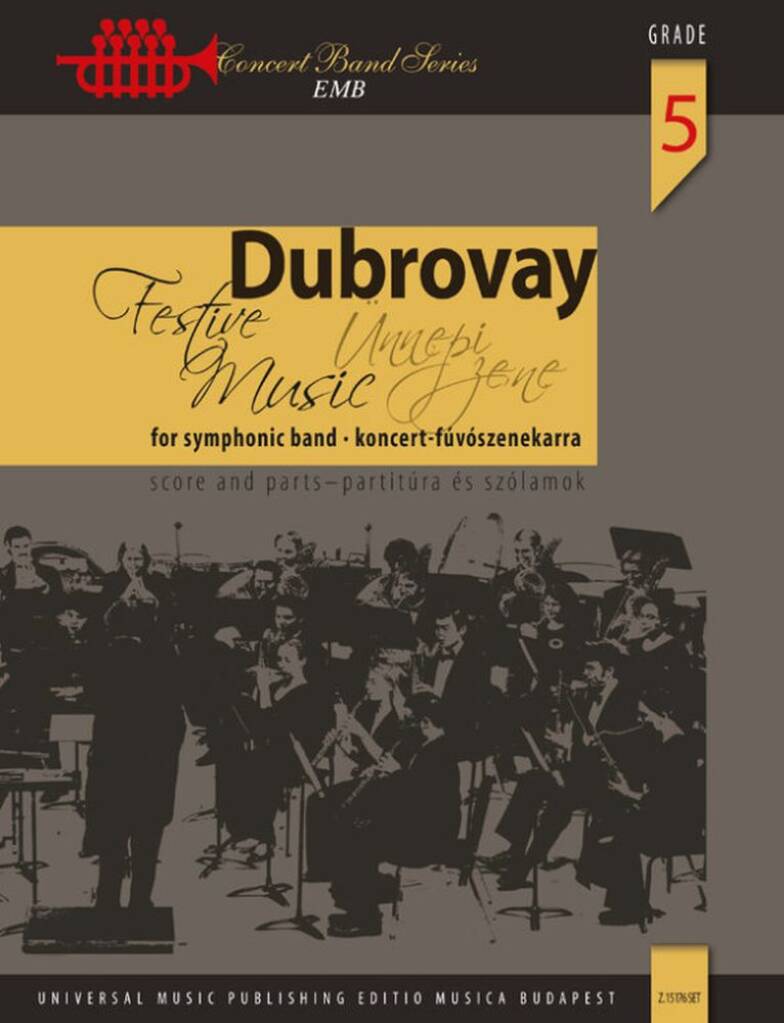
Festive Music
This work of festive atmosphere was written in 2000 for symphonic band, then the composer arranged it for symphony orchestra. In this piece, Lszl Dubrovay (*1943) parts with his special, hallmark concert band effects; rather, lively vibrations enriched with colliding seconds and distant overtones are brought to the foreground. The special sound is coloured by ornamental trills, appearing even in batches, and vibrating collisions in the high registers. The performance is rendered even more unique by the outer trumpets on both sides of the space. The trumpets and the flugelhorns can be divided into ten parts altogether, thus, the piece can be played by one ensemble or several bands together, as it is usual at the conclusion of large-scale festivals. This composition may be a great choice for festive concerts, since it is a solemn, innovative, and - by virtue of the free arrangement of the performing space - special work at the same time.
Estimated dispatch 7-14 working days
-
 £114.99
Euphonium Concerto - Edward Gregson
Skilfully arranged by acclaimed wind band expert Jack Stamp, this version of Edward Gregson's Euphonium Concerto for wind band was recorded by David Childs and the North Texas Wind Symphony and released in 2023.
Estimated dispatch 7-14 working days
 View Music