
Results
-
 £551.99
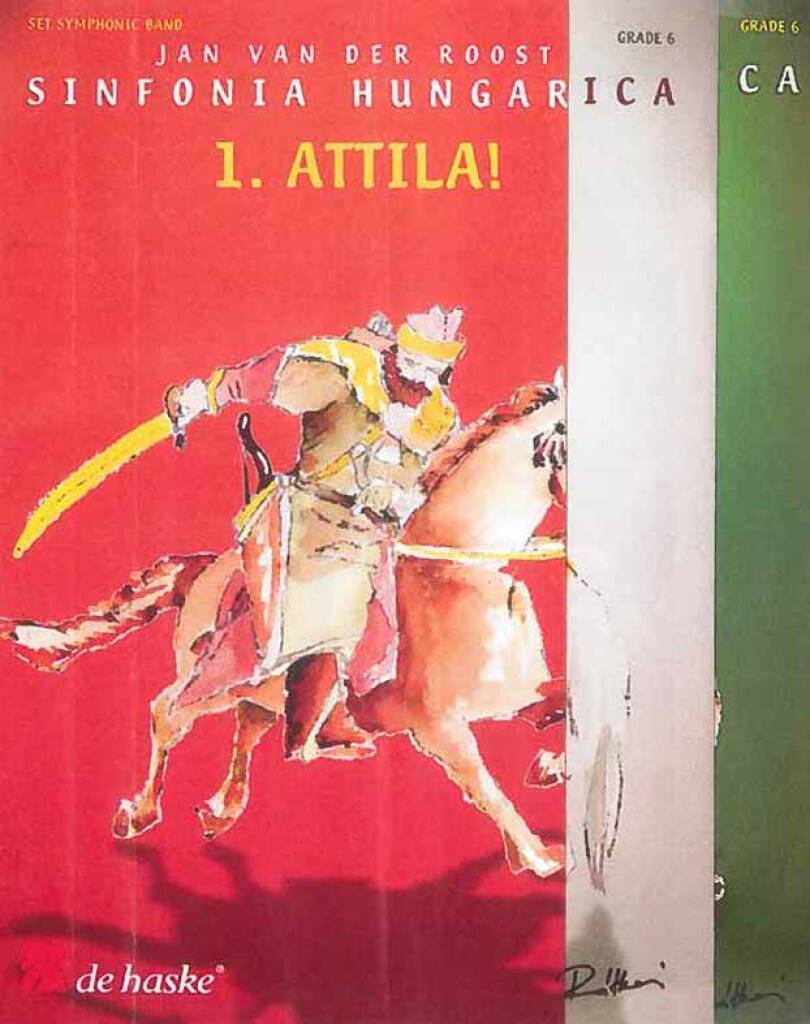
Sinfonia Hungarica (Complete edition) - Jan Van der Roost
This three-movement symphony musically depicts the history of Hungary. Key historical figures, wars and other important events from this country inspired all three movements. The first movement depicts Atilla, the King of the Huns, and is characterised by fear, threat and aggression. The second movement focuses on rpd, the founder of the Hungarian State and the final movement is named after Istvn, the King who introduced Christianity into Hungary. The beautiful theme of the national hymn appears throughout the symphony, however it is often partially hidden. It is used as a "thread," hardly recognizable at the beginning, becoming more and more obvious near the end and itconcludes the symphony as the "final apotheosis," making the band sound like a majestic living organ.
Estimated dispatch 7-14 working days
-
 £79.99
Juba Dance (from Sym. No. 1) - Florence Price
Florence Price (1887-1953) is noted as the first African-American female composer of symphonic works, and is only in recent years beginning to receive the recognition so richly deserved. Her Symphony No. 1 was completed in 1932 and first performed in 1933 by the Chicago Symphony Orchestra. Here is a sparkling transcription for band of the third movement (Juba Dance). (Grade 4) Dur: 3:50
Estimated dispatch 7-14 working days
-
 £109.99
Rubies (After Thelonious Monk's Ruby, My Dear) - John Harbison
Composer John Harbison writes: 'Rubies is a version of Thelonious Monk's 'Ruby, My Dear', which he composed while still in his teens. When I was invited by the Seattle Symphony to make a short piecereflecting my first musical passions, my thoughts were of Bach and Monk. Since I had recently made some Bach-like chorale preludes, I chose to make a version of Monk's tune, first in a chamber-musical, contrapuntal manner, then inthe grand orchestral style I had always heard lurking there.' Dur: 5:30 (Recorded live by the Rutgers Symphony Band - Peter Stanley Martin, guest conductor).
Estimated dispatch 7-14 working days
-
 £76.99
Ode to the Spirit of Man - James Curnow
A powerful work for the symphonic band, Ode to the Spirit of Man is based on thematic material taken from the fourth movement of Beethoven's Symphony No. 9 and developed into a fantasy of kaleidoscopic nature. The opening is ajoyful expression of the spirit of freedom and is based on the composer's own themes derived from Beethoven's music. Throughout the work, various themes from the symphony are interwoven, including Alla Marcia, Scherzo, Andantemaestoso and finally the uplifting Ode to Joy. Dur: 5:15
Estimated dispatch 7-14 working days
-
 £239.99
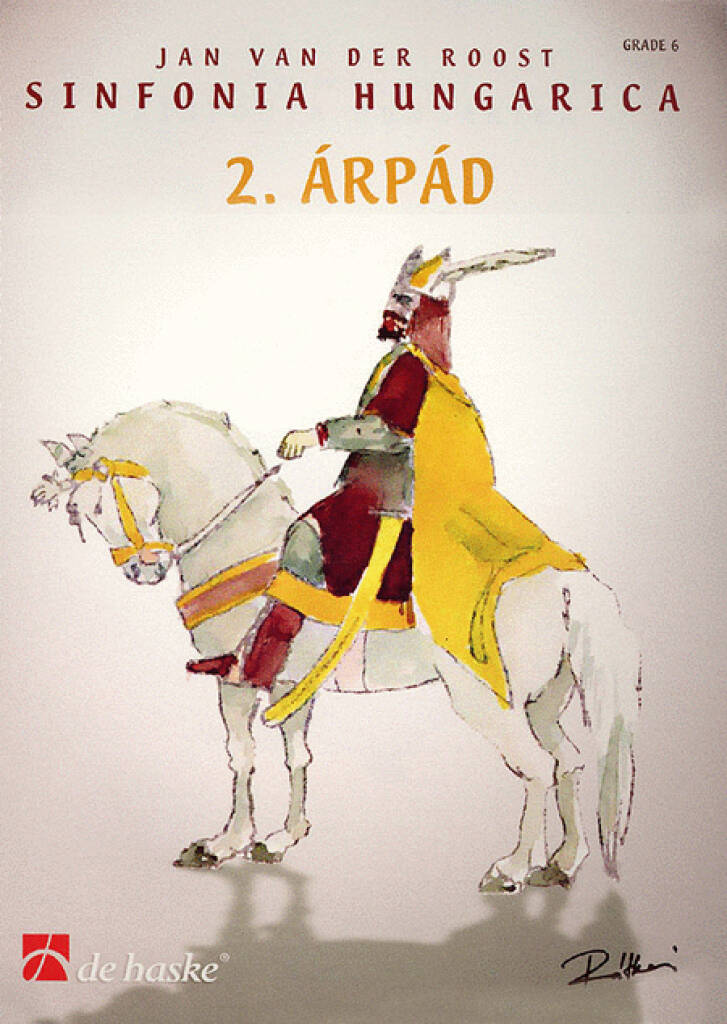
Arpd (part 2 from 'Sinfonia Hungarica') - Jan Van der Roost
Sinfonia Hungarica is a three-movement symphony that depicts the history of Hungary. All three movements were inspired by historical key figures, wars, and other important events from this country. This symphony is a celebration of Hungary's millennium in 2001.The second movement focuses on ARPAD, the actual founder of the Hungarian State. It starts with an atmospherical passage, evoking his grandmother, Emese, who dreamt about his future destination. One of Arpad's opponents, the Bulgarian Prince Zalan, was chased away after a fight. After this, Arpad officially named the territory "Magyarorszag."
Estimated dispatch 7-14 working days
-
 £239.99
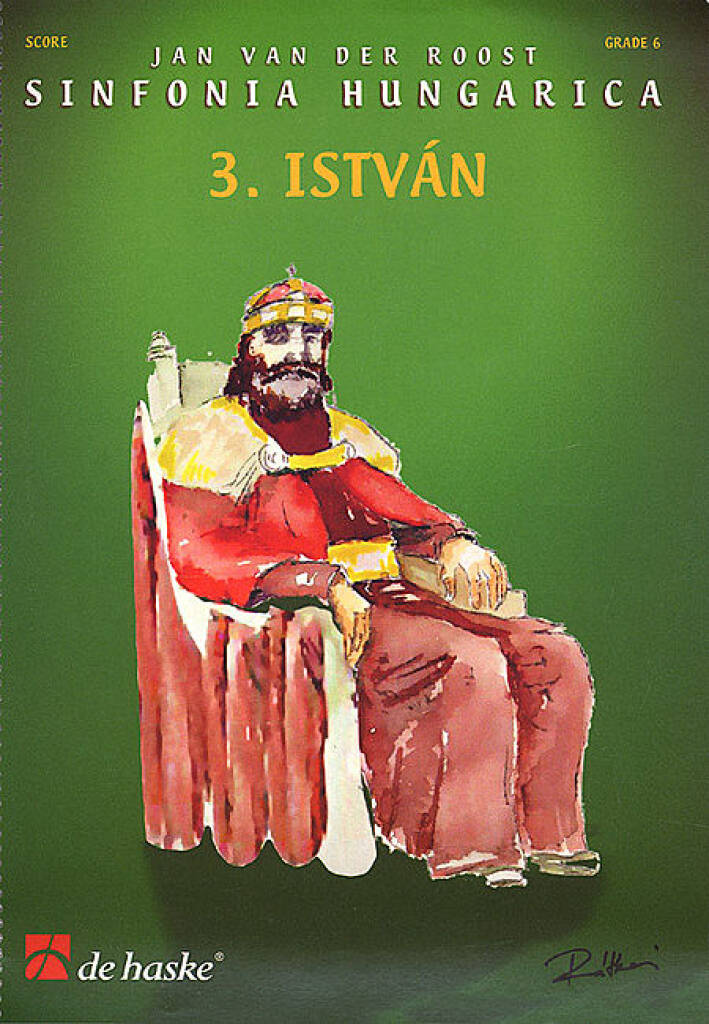
Istvn (part 3 from 'Sinfonia Hungarica') - Jan Van der Roost
Sinfonia Hungarica is a three-movement symphony that depicts the history of Hungary. All three movements were inspired by historical key figures, wars, and other important events from this country. This symphony is a celebration of Hungary's millennium in 2001.The final movement is named after ISTVAN, the King who introduced Christianity into Hungary and who was crowned by Pope Silvestro II on January 1, 1001. A rather solemn start leads to another war-like passage, ending with some loud crashes. This symbolizes the fact that the body of the pagan Koppany was cut into four pieces, and sent to the four castles of the country as an example. After a quiet, almost religiousintermezzo, the National Hymn of Hungary is introduced. This broad "grandioso" ending also has a symbolic meaning: after ten centuries, Hungary has many reasons to look back on the past with pride, and to look forward to the future with optimism and confidence.
Estimated dispatch 7-14 working days
-
£134.30
Wellingtons Sieg - Ludwig van Beethoven
After the 'Battle of Vitoria', Beethoven's friend Johann Nepomuk Maelzel talked him into writing a composition for his panharmonicon (a kind of 'mechanical orchestra') to commemorating this battle. The piece, 'Wellingtons Sieg' ('Wellington's Victory') was dedicated to the Prince Regent, later King George IV and first performed in Vienna on 8 December 1813 at a concert to benefit Austrian and Bavarian soldiers wounded at the 'Battle of Hanau', with Beethoven conducting. It was an immediate crowd-pleaser and met with much enthusiasm from early concertgoers and the piece proved to be a substantial money-maker for Beethoven. 'Wellingtons Sieg' is something of a musical novelty. Besides the orchestra, on stage there are two 'sides', British and French, both playing the same instruments: Trumpets, Snare Drums, 'Canon' and Ratchet. The work has two parts: the 'Battle' ('Schlacht') and the 'Victory Symphony' (Sieges Sinfonie). The first part is programme music describing two approaching opposing armies and contains extended passages depicting scenes of battle. It uses 'Rule Britannia' for the British side and 'Marlbrough s'en va-t-en guerre' for the French side. The 'Victory Symphony' exhibits some typical Beethoven composing techniques. It can be considered as a sonata form that, stripped of the development section, comes equipped with an extended coda. Dutch arranger Andreas van Zoelen transcribed 'Wellingtons Sieg' for Symphonic Band.
Estimated dispatch 7-14 working days
-
 £239.99
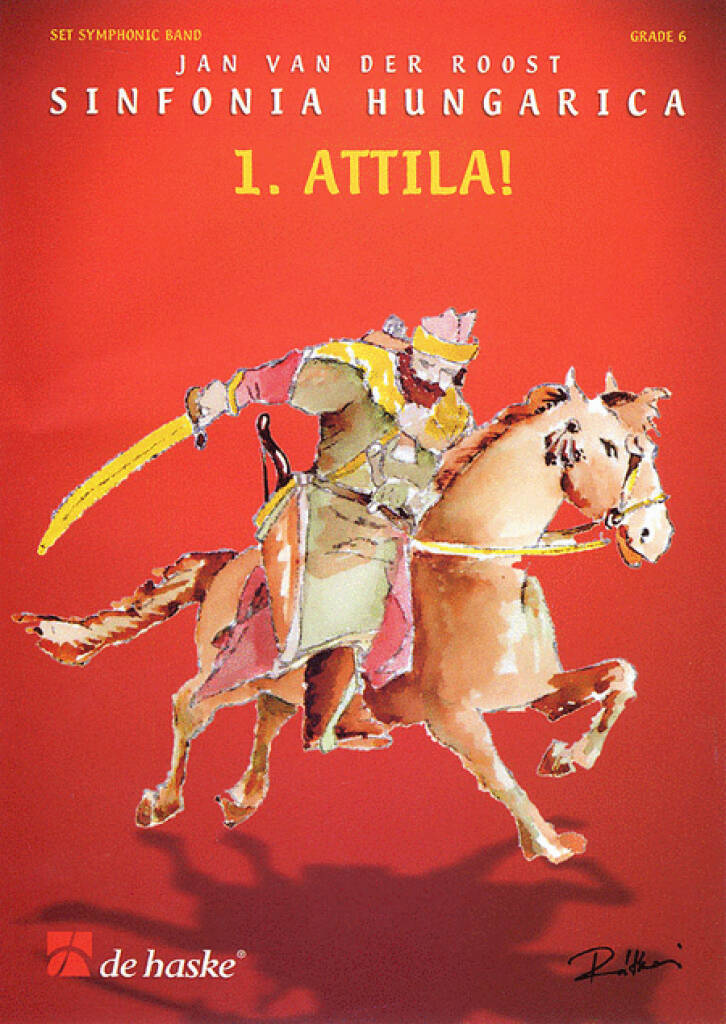
Attila! (part 1 from 'Sinfonia Hungarica') - Jan Van der Roost
Sinfonia Hungarica is a three-movement symphony that depicts the history of Hungary. All three movements were inspired by historical key figures, wars, and other important events from this country. This symphony is a celebration of Hungary's millennium in 2001.ATTILA, King of the Huns, often named "The scourge of God," is the central figure of the first movement, mainly characterized by fear, threat, aggression, and cruelty. Attila's brother, Buda, however, has a more heroic theme, while his beloved wife, Rika, has a lyrical melody. The exciting ending of this opening movement illustrates the dreaded speed of Attila's troops: they pursued their victims and killed them all!
Estimated dispatch 7-14 working days
-
 £186.20
Le Mont St.Michel - Serge Lancen
Serge Lancen (Paris 1922) undoubtedly belongs to the top of contemporary European wind music composers. His MANHATTAN SYMPHONY (1962), CAP KENNEDY (1970), SYMPHONIE DE L'EAU (1986) and MISSA SOLEMNIS (1989) are now part of the classical modern symphonic band repertoire. Lancen always writes in the French tradition and is often inspired by folkore, the beauty of the French landscapes and even the great architectural monuments of his country. In this fine suite of four symphonic sketches he was inspired by the splendid site of the 'MONT SAINT-MICHEL'. The work dates from 1976 and was premiered by the French National Police band, conducted by Pierre Bigot, at a concert in the Paris 'Palais des Congrs' on May the 4th 1977. It evokes the splendour of one of Western Europe's great monumental abbeys.The mount arises amidst a symphony of mist and sand; the visitor goes through the main gate and enters the medieval town. He walks up to the abbey church and discovers the magnificent panorama. He recovers some time in an unexpected patch of green and admires the mighty fortress. Finally he reaches the actual abbey and visits the inspiring church and the sober refectory. At sunset, the abbey complex casts fanciful shadows on the beach and soon, in the light of the spots, the spire with the Archangel Michael lits up, high above the sea and the sand, right on the border between Normandy and Brittany.
Estimated dispatch 7-14 working days
-
 £245.50
Symphonie de l'Eau - Serge Lancen
This symphony was composed in 1984 and is dedicated to the great French composer Ida Gotkovsky a good friend of the Lancen family. It was the test piece in the Seccion Primera of the famous Spanish wind band contest Certamen International de Bandes de Msica Ciudad de Valncia and was recorded by the Symphonic Band of the Maastricht Conservatory of Music conducted by Sef Pijpers. Serge Lancen himself related the genesis of this symphony as follows:When I was twelve years old I had started composing a piece which described the cycle of the water. The project was however abandoned and only some themes were left unused. In July 1983, I went by boat to the WASBE conference in Skien, Norway and was seduced by the North Sea. During the travel a musical theme was born and was the trigger for the realisation of my ancient project which I still fancied'. The 'Symphonie de l'Eau' is in fact a musical description of the cycle of the water which the composer defines as follows:'A slight mist rises and turns into a cloud. Water drops fall on the mountain. A brooklet rises and clears a way throughout the alpine pastures. Soon other small watercourses join the original brook that is now reinforced as to become a real roaring mountain river falling in a lake amidst a quiet and poetic surrounding. The water turns again into a river when leaving the lake and gradually becomes a big stream which majestically flows towards the sea. A slight mist is rising from the huge surface and so the cycle of the water starts all over again.
Estimated dispatch 7-14 working days
 View Music