
Results
-
 £13.06
Suzuki Violin School, Volume 4: Violin Book - Shinichi Suzuki
Teach violin with the popular . The Suzuki Method of Talent Education is based on Shinichi Suzuki's view that every child is born with ability, and that people are the product of their environment. According to Shinichi Suzuki, a world-renowned violinist and teacher, the greatest joy an adult can know comes from developing a child's potential so he/she can express all that is harmonious and best in human beings. Students are taught using the "mother-tongue" approach. Each series of books for a particular instrument in the Suzuki Method is considered a Suzuki music school, such as the Suzuki Violin School. Suzuki lessons are generally given in a private studio setting with additional group lessons. The student listens to the recordings and works with their Suzuki violin teacher to develop their potential as a musician and as a person. This Suzuki book is integral for Suzuki Violin Lessons. This revised edition of the Suzuki Violin School, Volume 4 features: * Revised editing of pieces, including bowings and fingerings * Additional exercises, some from Shinichi Suzuki, plus additional insight and suggestions for teachers * Text in English, French, German, and Spanish * Musical notation guide * Fingerboard position. Titles: Lullaby (Tonalization) (Schubert) * Lullaby (Tonalization) (Brahms) * Concerto No. 2 in G Major, Op. 13, 3rd Movement (Seitz) * Concerto No. 5 in D Major, Op. 22, 1st Movement (Seitz) * Concerto No. 5 in D Major, Op. 22, 3rd Movement (Seitz) * Concerto in A Minor, 1st Movement, Op. 3, No. 6 (Vivaldi/Nachez) * Concerto in A Minor, 3rd Movement, Op. 3, No. 6 (Vivaldi/Nachez) * Perpetual Motion, "Little Suite No. 6" (Bohm) * Concerto for Two Violins in D Minor, BWV 1043, 1st Movement, Violin II (Bach). For a complete list of the most recent printings by AMPV number, go to alfred.com/suzuki. This title is available in MakeMusic Cloud. The International editions include an updated title page that designates the book as the International Edition. A Federation Festivals 2020-2024 selection.
Estimated dispatch 3-5 working days
-
 £13.06
Suzuki Cello School, Volume 2: Cello Book
Teach cello with the popular . The Suzuki Method of Talent Education is based on Shinichi Suzuki's view that every child is born with ability, and that people are the product of their environment. According to Shinichi Suzuki, a world-renowned violinist and teacher, the greatest joy an adult can know comes from developing a child's potential so he/she can express all that is harmonious and best in human beings. Students are taught using the "mother-tongue" approach. Each series of books for a particular instrument in the Suzuki Method is considered a Suzuki music school, such as the Suzuki Cello School. Suzuki lessons are generally given in a private studio setting with additional group lessons. The student listens to the recordings and works with their Suzuki cello teacher to develop their potential as a musician and as a person. This Suzuki Book is integral for Suzuki cello lessons. Titles: Long, Long Ago (T. H. Bayly) * May Time, Komm Lieber Mai (Longing for Spring) from , K. 96 (W. A. Mozart) * Minuet No. 1, Minuett III from , BWV 822 (J. S. Bach) * Minuet No. 3, Minuet in C, BWV Anh. II (J. S. Bach) * Chorus from (G. F. Handel) * Hunters' Chorus from 3rd Act of the Opera (C. M. von Weber) * Musette in G, Gavotte II or the Musette from , BWV 808 (J. S. Bach) * March in G (J. S. Bach) * Theme from (N. Paganini) * Tonalization: The Moon over the Ruined Castle (R. Taki) * The Two Grenadiers, Die Beiden Grenadier, Op. 49, No. 1 for Voice and Piano (R. Schumann) * Gavotte (F. J. Gossec) * Bourre from , HHA IV/18, No. 8-EZ (G. F. Handel). This title is available in MakeMusic Cloud. For a complete list of the most recent printings by AMPV number, go to alfred.com/suzuki. The International editions include an updated title page that designates the book as the International Edition. A Federation Festivals 2020-2024 selection.
Estimated dispatch 3-5 working days
-
 £13.06
Suzuki Cello School, Volume 3: Cello Book
Teach Cello with the popular . The Suzuki Method of Talent Education is based on Shinichi Suzuki's view that every child is born with ability, and that people are the product of their environment. According to Shinichi Suzuki, a world-renowned violinist and teacher, the greatest joy an adult can know comes from developing a child's potential so he/she can express all that is harmonious and best in human beings. Students are taught using the "mother-tongue" approach. Each series of books for a particular instrument in the Suzuki Method is considered a Suzuki music school, such as the Suzuki Cello School. Suzuki lessons are generally given in a private studio setting with additional group lessons. The student listens to the recordings and works with their Suzuki cello teacher to develop their potential as a musician and as a person. This Suzuki Book is integral for Suzuki cello lessons. Titles: Berceuse, Wiegenlied or Lullaby, Op. 98, No. 2 (F. Schubert) * Tonalization: The Moon over the Ruined Castle (Taki) * Gavotte (Lully) * Minuet from No. 11, Op. 11, No. 5 in E Major (Boccherini) * Tonalization: The Moon over the Ruined Castle (Taki) * Scherzo (Webster) * Minuet in G, Wo0 10, No. 7 for Piano (Beethoven) * Gavotte in C Minor, Gavotte en Rondeau from , BWV 822 (Bach) * Minuet No. 3, BWV Anh. II 114/Anh. III 183/Anh. II, 115 (Bach) * Humoresque, Op. 101, No. 7 for Piano (Dvork) * La Cinquantaine (Gabriel-Marie) * Allegro Moderato from (Bach). For a complete list of the most recent printings by AMPV number, go to alfred.com/suzuki. This title is available in MakeMusic Cloud. The International editions include an updated title page that designates the book as the International Edition. A Federation Festivals 2020-2024 selection.
Estimated dispatch 3-5 working days
-
 £79.95
Variations on 'Was Lebet' (Concert Band - Score and Parts) - Wainwright, Andrew
Variations on 'Was Lebet' is based on the German chorale of the same name, the first line of which translates as 'O worship the Lord in the beauty of holiness!' The opening fanfare figure in the Trumpets should be supported by bold, organ-like sostenuto chords in the lower band. Ensure that the fanfare in the Trumpets and Trombones from bars 25 to 28 is given equal articulation and volume in the antiphonal parts. After this majestic introductory section, the first of five contrasting variations is presented, although the tune is never realised in full form until the final variation, with fragments gradually being revealed as the piece progresses.Variation I is somewhat classical in approach, with its energy coming from a regular contrast between cantabile references to the theme, set against lively staccato figures. Ensuring a lightness of touch will be important here; the music should be poised and never sound frantic. As a result, careful attention should be paid to the tempo marking, being no quicker than 136 beats per minute. Snippets of the chorale come and go, with the last phrase of the hymn completing the movement. This final statement, at bar 95, should be an immediate change in tempo and a separate statement to the music that comes before.Variation II is plaintive in mood, giving the listener the chance to reflect on the following words, which form part of the second verse: 'Comfort thy sorrows and answer thy prayerfulness, Guiding thy steps as may best for thee be.' There is opportunity for rubato in this movement, at the discretion of the conductor.Variation III is somewhat quirky and volatile in nature, and takes its inspiration from the 3rd and 4th verses which describe the fearful times in life that we must entrust to the Lord. Driven by the Percussion section in particular, there are references here to Variation I with its chorale-like figures and hurtling scalic figures, and there is a feeling of a lack of resolution. A somewhat abrupt ending suggests that our sense of completeness in Christ is yet to be resolved. It is important that clarity and tempo are maintained in the bass line between sections L and M. Aim for consistency of line in the bass parts, particularly with the trade-offs between players here.There is a French romantic feel to the waltz in Variation IV, with the opportunity for various soloists to display their musicianship. A sense of ironic humour pervades throughout. The Clarinet and Bassoon duet from section U should be playful and display a lightness of touch, with that sense of style continued throughout the movement.Variation V is fugal in nature, with each section of the band being handed the theme at various points. Again it is important that a steady tempo is set at Y in order to maintain control. The sense of momentum gradually increases to a grandiose presentation of the full theme, beginning at section CC, affirming our completeness in the Lord, with the words of the first and last verses reiterated: O worship the Lord in the beauty of holiness! Bow down before him, his glory proclaim; With gold of obedience and incense of lowliness, Kneel and adore him, the Lord is his name.Duration: 11.45
Estimated dispatch 7-14 working days
-
 £15.95
Variations on 'Was Lebet' (Concert Band - Score only) - Wainwright, Andrew
Variations on 'Was Lebet' is based on the German chorale of the same name, the first line of which translates as 'O worship the Lord in the beauty of holiness!' The opening fanfare figure in the Trumpets should be supported by bold, organ-like sostenuto chords in the lower band. Ensure that the fanfare in the Trumpets and Trombones from bars 25 to 28 is given equal articulation and volume in the antiphonal parts. After this majestic introductory section, the first of five contrasting variations is presented, although the tune is never realised in full form until the final variation, with fragments gradually being revealed as the piece progresses.Variation I is somewhat classical in approach, with its energy coming from a regular contrast between cantabile references to the theme, set against lively staccato figures. Ensuring a lightness of touch will be important here; the music should be poised and never sound frantic. As a result, careful attention should be paid to the tempo marking, being no quicker than 136 beats per minute. Snippets of the chorale come and go, with the last phrase of the hymn completing the movement. This final statement, at bar 95, should be an immediate change in tempo and a separate statement to the music that comes before.Variation II is plaintive in mood, giving the listener the chance to reflect on the following words, which form part of the second verse: 'Comfort thy sorrows and answer thy prayerfulness, Guiding thy steps as may best for thee be.' There is opportunity for rubato in this movement, at the discretion of the conductor.Variation III is somewhat quirky and volatile in nature, and takes its inspiration from the 3rd and 4th verses which describe the fearful times in life that we must entrust to the Lord. Driven by the Percussion section in particular, there are references here to Variation I with its chorale-like figures and hurtling scalic figures, and there is a feeling of a lack of resolution. A somewhat abrupt ending suggests that our sense of completeness in Christ is yet to be resolved. It is important that clarity and tempo are maintained in the bass line between sections L and M. Aim for consistency of line in the bass parts, particularly with the trade-offs between players here.There is a French romantic feel to the waltz in Variation IV, with the opportunity for various soloists to display their musicianship. A sense of ironic humour pervades throughout. The Clarinet and Bassoon duet from section U should be playful and display a lightness of touch, with that sense of style continued throughout the movement.Variation V is fugal in nature, with each section of the band being handed the theme at various points. Again it is important that a steady tempo is set at Y in order to maintain control. The sense of momentum gradually increases to a grandiose presentation of the full theme, beginning at section CC, affirming our completeness in the Lord, with the words of the first and last verses reiterated: O worship the Lord in the beauty of holiness! Bow down before him, his glory proclaim; With gold of obedience and incense of lowliness, Kneel and adore him, the Lord is his name.Duration: 11.45
Estimated dispatch 7-14 working days
-
 £87.95
St. Francis Variations (Concert Band - Score and Parts) - Wheeler, Alastair
Variations on St Francis is a set of four contrasting movements based on the sturdy 17th century hymn tune Lasst uns erfreuen, best known as St Francis after its composer with associated words "All creatures of our God and King". Although often notated in various metres, the tune's original unbarred freedom and Vaughan Williams' later 3/2 setting both inform this work's flexible approach to rhythm and stress.The piece is built from three ideas: the bold opening line of the tune, descending peals of Alleluia, and the answering response phrase.A grand March opens the work, with open-fifth fanfares and flowing Alleluia countermelodies. The Dance that follows shifts the response into a minor key, driven by syncopation and playful overlapping lines. A lyrical Cantabile / Intermezzo, led by cor anglais (or alto saxophone), offers contrast before a Rondo Scherzo reimagines the tune in a quirky modal style, featuring falling thirds and bright harmonic colour. A confident Coda brings the work to a close with chorale statements launched from the percussion section.Duration: 7.30
Estimated dispatch 7-14 working days
-
 £17.95
St. Francis Variations (Concert Band - Score only) - Wheeler, Alastair
Variations on St Francis is a set of four contrasting movements based on the sturdy 17th century hymn tune Lasst uns erfreuen, best known as St Francis after its composer with associated words "All creatures of our God and King". Although often notated in various metres, the tune's original unbarred freedom and Vaughan Williams' later 3/2 setting both inform this work's flexible approach to rhythm and stress.The piece is built from three ideas: the bold opening line of the tune, descending peals of Alleluia, and the answering response phrase.A grand March opens the work, with open-fifth fanfares and flowing Alleluia countermelodies. The Dance that follows shifts the response into a minor key, driven by syncopation and playful overlapping lines. A lyrical Cantabile / Intermezzo, led by cor anglais (or alto saxophone), offers contrast before a Rondo Scherzo reimagines the tune in a quirky modal style, featuring falling thirds and bright harmonic colour. A confident Coda brings the work to a close with chorale statements launched from the percussion section.Duration: 7.30
Estimated dispatch 7-14 working days
-
 £93.10
Impressions from a Journey (Concert Band - Score and Parts) - Stahli, Urs
I'm in the mountains... in Switzerland - in the Valais - on the Riederalp. I'm enjoying the view of the surrounding mountain peaks on this late summer afternoon.A alphorn plays a melody. The echo comes back once, twice, no, three times from the mountain slopes! It's getting dark. The melody of the evening blessing from Humperdinck's Hansel and Gretel comes to mind. It is night.A new day begins! I make my way to Riederfurka, to Villa Cassel. There I am greeted by the sound of the orchestra. I enjoyed the music and my lunch. In the afternoon, the musicians invited me to a dance. As waltzing is not really my thing, I walk on to the Riederhorn. There I enjoy the wonderful view! I am happy!- Urs SthliDuration: 8.00
Estimated dispatch 7-14 working days
-
 £87.60
Sea Time (Concert Band - Score and Parts) - Herbert, Steve
This quick march is a musical reflection of the composers time in The Royal Marines Band Service, highlighting his service at different shore establishments and aboard ships of The Royal Navy. This piece weaves in the following numerous musical references, including traditional bugle calls and regimental marches:Heart of Oak, The Royal Navy Regimental MarchDepot Royal Marines (Deal)The Band CallSarie MaraisCTCRM CallThe AlertPlymouth Group CallLife on the Ocean Wave
Estimated dispatch 7-14 working days
-
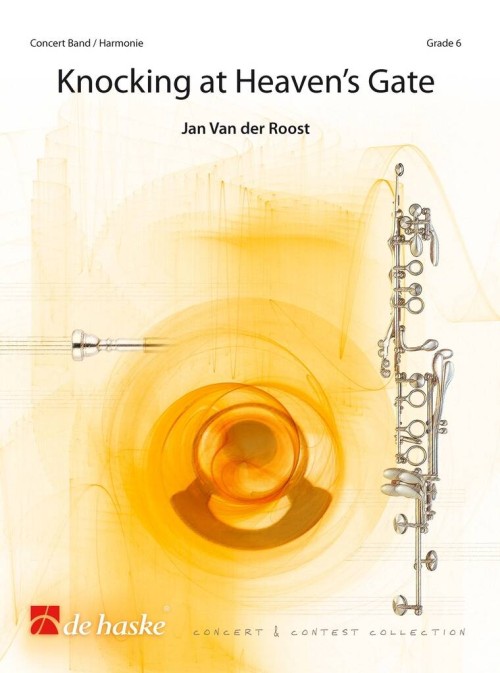 £183.99
Knocking at Heaven's Gate (Concert Band - Score and Parts) - Van der Roost, Jan
Knocking at Heaven's Gate briefly brings us into contact with heaven by way of music. It has beautiful solos and a star role for the trumpets and trombones, but it is also a joy to play for the entire band! Ethereal echoes, expressive melodies, powerful tuttis and radiant chords: there is a lot to be enjoyed by everyone, including the audience.Duration: 14.00
Estimated dispatch 7-14 working days
 View Music