
Results
-
 £118.99
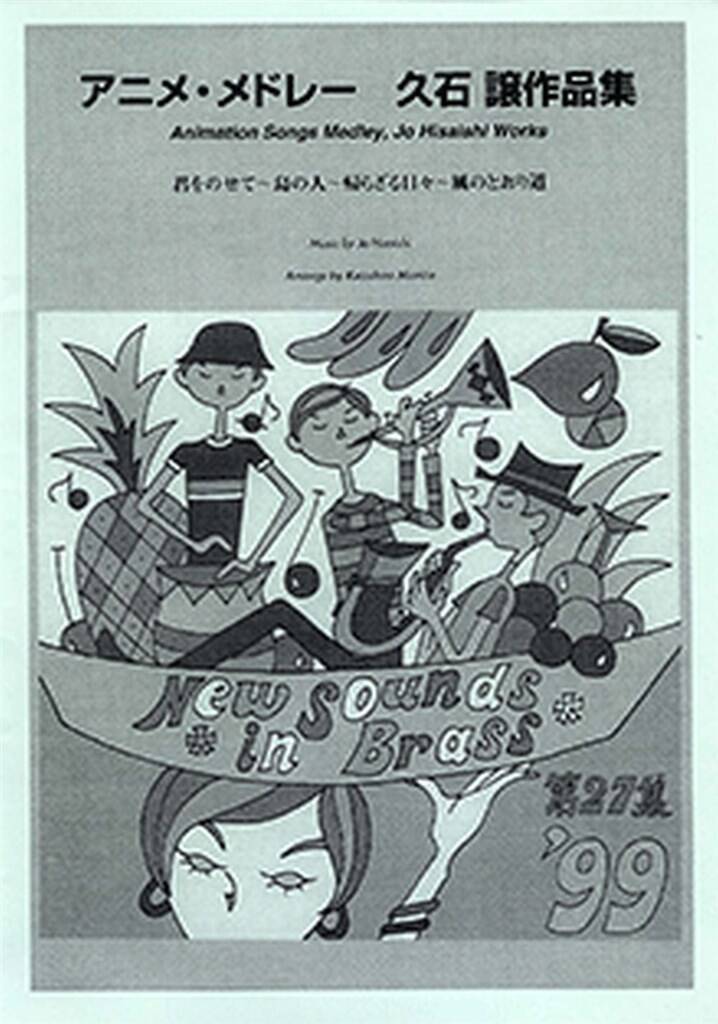
Animation Songs Medley by Joe Hisaishi - Joe Hisaishi
New Sounds in Concert Band Series(NSB) First medley of the songs by Joe Hisaishi in Studio Ghibli Animation Cinema Duration: approx.7'30" Arranged by Kazuhiro Morita
Estimated dispatch 7-14 working days
-
 £118.99
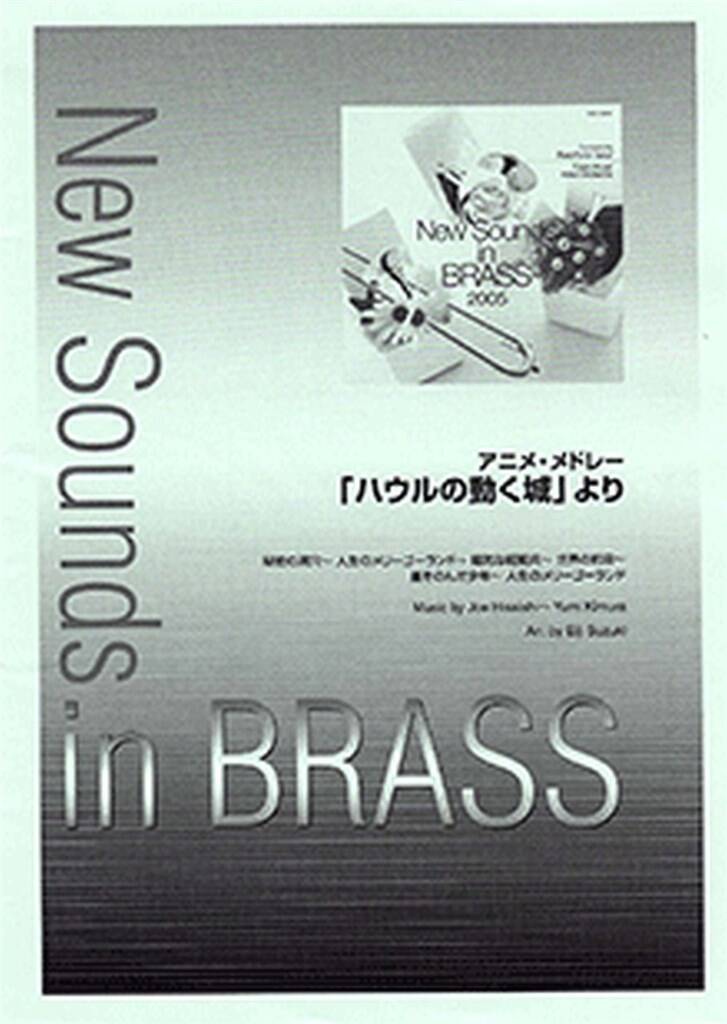
Howl's Moving Castle, Medley - Joe Hisaishi
New Sounds in Concert Band Series(NSB). Medley of 5 songs from Studio Ghibli Animation Cinema Duration: approx.7'50" Arranged by Eiji Suzuki
Estimated dispatch 7-14 working days
-
 £118.99
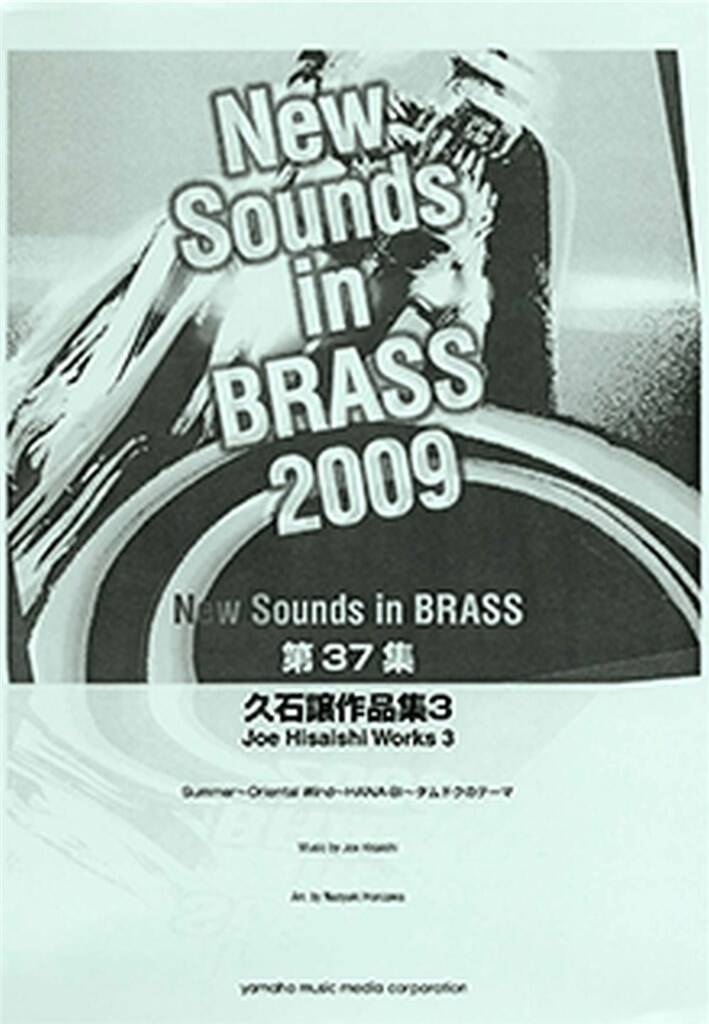
Animation Songs Medley by Joe Hisaishi 3 - Joe Hisaishi
New Sounds in Concert Band Series(NSB) Third medley of the songs by Joe Hisaishi in Studio Ghibli Animation Cinema Duration: approx.7'25" Arranged by Naoyuki Honzawa
Estimated dispatch 7-14 working days
-
 £57.50
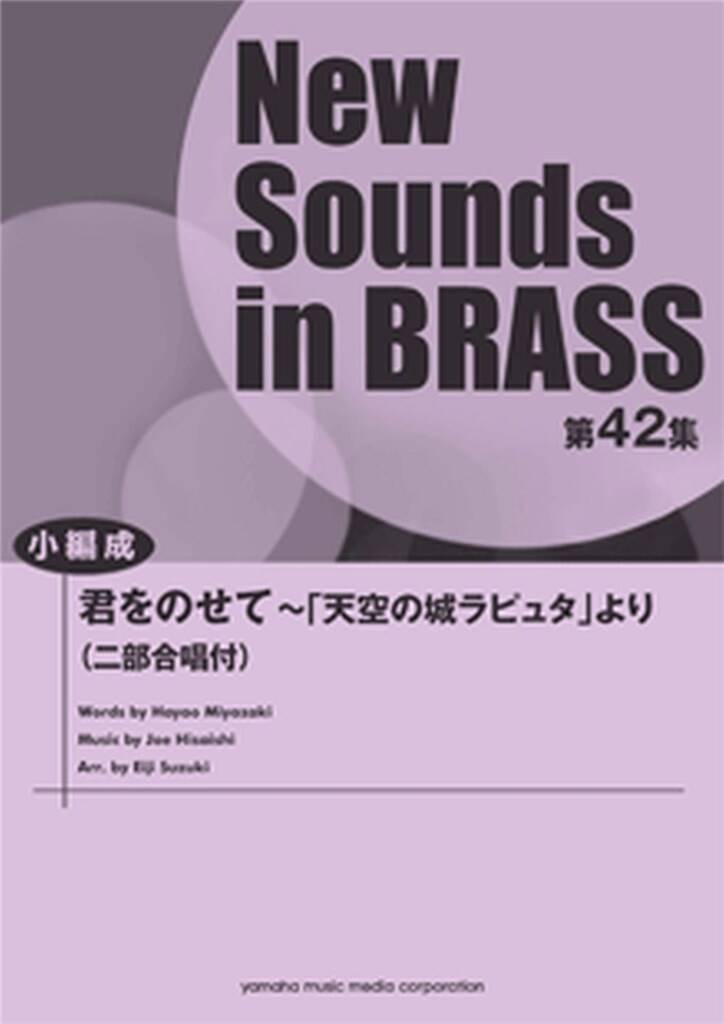
Carrying You from "Laputa: Castle in the Sky" - Joe Hisaishi
New Sounds in Concert Band Series(NSB) for small band with 2-part choir Duration: approx.4'10" Arranged by Eiji Suzuki"Carrying You" was composed as a theme song to Castle in the Sky, an animated film produced by Studio Ghibli and directed by Hayao Miyazaki, released in 1986. The composer for Castle in the Sky was originally not Joe Hisaishi, but the director Miyazaki strongly requested him. The director told Hisaishi his vision for the film, and based on the world he imagined, Hisaishi made a collection of music called the Image Album. The melody that later becomes the basis for "Carrying You" was born from this album. However, the director Miyazaki was not planning on including a theme song in this film. Isao Takahata, the producer, proposed including a song, for the audience to think over the film at the end. He wanted the audience to think, "While the protagonists sought for the treasure, they didn't obtain any treasure. What did they obtain instead?" They thought, if they are going to create a theme song, it should be something organically connected with the entire film. Takahata requested the director Miyazaki to write the lyrics for the theme song. And to Hisaishi, he gave instructions to create a melody for the theme song using an instrumental piece called "Pazu and Sheeta" from the image album mentioned above. Director Miyazaki handed a piece of memo with lyrics to Takahata. "Carrying You" we hear now is this lyrics with some changes, set to Hisaishi's music. The melody is used at the opening of the film as well as the scene where Laputa is destroyed, and the song is used for the ending. Performance Advice from Arranger Suzuki: This is an extremely simple arrangement that can be performed by lower grade bands and singers. Of course, it can be played without singers and chorus, but the contents of the lyrics are very tasty so if possible, we recommend that you perform using the voices. Depending on your resources, the voice parts can be done as all solo, all female chorus, and so on.
Estimated dispatch 7-14 working days
-
 £13.06
Suzuki Violin School, Volume 1: Violin Book - Shinichi Suzuki
Teach violin with the popular . The Suzuki Method of Talent Education is based on Shinichi Suzuki's view that every child is born with ability, and that people are the product of their environment. According to Shinichi Suzuki, a world-renowned violinist and teacher, the greatest joy an adult can know comes from developing a child's potential so he/she can express all that is harmonious and best in human beings. Students are taught using the "mother-tongue" approach. Each series of books for a particular instrument in the Suzuki Method is considered a Suzuki music school, such as the Suzuki Violin School. Suzuki lessons are generally given in a private studio setting with additional group lessons. The student listens to the recordings and works with their Suzuki violin teacher to develop their potential as a musician and as a person. This Suzuki book is integral for Suzuki violin lessons. This revised edition of the Suzuki Violin School, Volume 1 features: * Revised editing of pieces, including bowings and fingerings * 16 additional pages * Additional exercises, some from Shinichi Suzuki, plus additional insight and suggestions for teachers * Text in English, French, German, and Spanish * Musical notation guide * Fingerboard position. Titles: Principles of Study and Guidance * Twinkle, Twinkle, Little Star Variations (Suzuki) * Lightly Row (Folk Song) * Song of the Wind (Folk Song) * Go Tell Aunt Rhody (Folk Song) * O Come, Little Children (Folk Song) * May Song (Folk Song) * Long, Long Ago (Bayly) * Allegro (Suzuki) * Perpetual Motion (Suzuki) * Allegretto (Suzuki) * Andantino (Suzuki) * Etude (Suzuki) * Minuet 1, Minuett III from , BWV 822 (Bach) * Minuet 2, Minuet, BWV Anh. II 116 from (Bach) * Minuet 3, Minuet BWV Anh. II 114/Anh. III 183 (Bach) * The Happy Farmer from , Op. 68, No. 10 (Schumann) * Gavotte (Gossec). For a complete list of the most recent printings by AMPV number, go to alfred.com/suzuki. This title is available in MakeMusic Cloud. The International editions include an updated title page that designates the book as the International Edition.
Estimated dispatch 3-5 working days
-
 £13.06
Suzuki Violin School, Volume 2: Violin Book - Shinichi Suzuki
Teach violin with the popular . The Suzuki Method of Talent Education is based on Shinichi Suzuki's view that every child is born with ability, and that people are the product of their environment. According to Shinichi Suzuki, a world-renowned violinist and teacher, the greatest joy an adult can know comes from developing a child's potential so he/she can express all that is harmonious and best in human beings. Students are taught using the "mother-tongue" approach. Each series of books for a particular instrument in the Suzuki Method is considered a Suzuki music school, such as the Suzuki Violin School. Suzuki lessons are generally given in a private studio setting with additional group lessons. The student listens to the recordings and works with their Suzuki violin teacher to develop their potential as a musician and as a person. This Suzuki Book is integral for Suzuki violin lessons. This revised edition of the Suzuki Violin School, Volume 2 features: * Revised editing of pieces, including bowings and fingerings * 16 additional pages * Additional exercises, some from Shinichi Suzuki, plus additional insight and suggestions for teachers * Text in English, French, German, and Spanish * Musical notation guide * Fingerboard position. Titles: Study Points for Volume 2 * Chorus from (Handel) * Musette, Gavotte II or the Musette from , BWV 808 (Bach) * Hunters' Chorus from 3rd Act of the Opera (Weber) * Long, Long Ago (Bayly) * Waltz, Op. 39, No. 15 for Piano (Brahms) * Bourre from , HHA IV/18, No. 8 (Handel) * The Two Grenadiers, Die beiden Grenadier, Op. 49, No. 1 for Voice and Piano (Schumann) * Theme from (Paganini) * Gavotte from (Thomas) * Gavotte (Lully) * Minuet in G, Wo0 10, No. 2 (Beethoven) * Minuet from No. 11, Op. 11, No. 5 in E Major (Boccherini). For a complete list of the most recent printings by AMPV number, go to alfred.com/suzuki. This title is available in MakeMusic Cloud. The International editions include an updated title page that designates the book as the International Edition. A Federation Festivals 2020-2024 selection.
Estimated dispatch 3-5 working days
-
 £13.06
Suzuki Violin School, Volume 3: Violin Book - Shinichi Suzuki
Teach violin with the popular . The Suzuki Method of Talent Education is based on Shinichi Suzuki's view that every child is born with ability, and that people are the product of their environment. According to Shinichi Suzuki, a world-renowned violinist and teacher, the greatest joy an adult can know comes from developing a child's potential so he/she can express all that is harmonious and best in human beings. Students are taught using the "mother-tongue" approach. Each series of books for a particular instrument in the Suzuki Method is considered a Suzuki music school, such as the Suzuki Violin School. Suzuki lessons are generally given in a private studio setting with additional group lessons. The student listens to the recordings and works with their Suzuki violin teacher to develop their potential as a musician and as a person. This Suzuki book is integral for Suzuki violin lessons. This revised edition of the Suzuki Violin School, Volume 3 features: * Revised editing of pieces, including bowings and fingerings * Additional exercises, some from Shinichi Suzuki, plus additional insight and suggestions for teachers * Text in English, French, Spanish, and German * Musical notation guide * Fingerboard position. Titles: Study Points * Tonalization * Vibrato Exercises * Gavotte (Martini) * Minuet (Bach) * Gavotte in G Minor (Bach) * Humoresque (Dvork) * Gavotte (Becker) * Gavotte in D Major (Bach) * Bourre (Bach). For a complete list of the most recent printings by AMPV number, go to alfred.com/suzuki. This title is available in MakeMusic Cloud. The International editions include an updated title page that designates the book as the International Edition. A Federation Festivals 2020-2024 selection.
Estimated dispatch 3-5 working days
-
 £8.70
£8.70Alfred's Essentials of Music Theory: Book 1: Book - Andrew Surmani, Karen Farnum Surmani, and Morton Manus
is designed for students of any age, whether listeners or performers, who want to have a better understanding of the language of music. In this all-in-one theory course, you will learn the essentials of music through concise lessons, practice your music reading and writing skills in the exercises, improve your listening skills with the available ear-training CDs (sold separately), and test your knowledge with a review that completes each unit. Computer software is also available with randomized drilling of the material and scorekeeping. Book 1 (Lessons 1-25): Staff, Notes and Pitches * Treble & Bass Clefs * Grand Staff & Ledger Lines * Note Values * Measure, Bar Line and Double Bar * 2/4, 3/4 & 4/4 Time Signatures * Whole, Half & Quarter Notes/Rests * Dotted Half & Quarter Notes * Ties & Slurs * Repeat Sign, 1st & 2nd Endings * Eighth Notes & Rests * Dynamic Signs, Tempo Marks & Articulation * D.C., D.S., Coda & Fine * Flats, Sharps & Naturals * Whole & Half Step, Enharmonic Notes. The complete line of includes Student Books, a Teacher's Answer Key, Ear-Training CDs, Double Bingo games, Flash Cards, Reproducible Teacher's Activity Kits, and interactive software for students and teachers in private study, studio and network environments.
Estimated dispatch 3-5 working days
-
 £13.06
Suzuki Cello School, Volume 1: Cello Book
Teach Cello with the popular . The Suzuki Method of Talent Education is based on Shinichi Suzuki's view that every child is born with ability, and that people are the product of their environment. According to Shinichi Suzuki, a world-renowned violinist and teacher, the greatest joy an adult can know comes from developing a child's potential so he/she can express all that is harmonious and best in human beings. Students are taught using the "mother-tongue" approach. Each series of books for a particular instrument in the Suzuki Method is considered a Suzuki music school, such as the Suzuki Cello School. Suzuki lessons are generally given in a private studio setting with additional group lessons. The student listens to the recordings and works with their Suzuki cello teacher to develop their potential as a musician and as a person.This Suzuki Book is integral for Suzuki cello lessons. Titles: Twinkle, Twinkle, Little Star Variations (Suzuki) * French Folk Song (Folk Song) * Lightly Row (Folk Song) * Song of the Wind (Folk Song) * Go Tell Aunt Rhody (Folk Song) * O Come, Little Children (Folk Song) * May Song (Folk Song) * Allegro (Suzuki) * Perpetual Motion in D Major (Suzuki) * Perpetual Motion in G Major (Suzuki) * Long, Long Ago (Bayly) * Allegretto (Suzuki) * Andantino (Suzuki) * Rigadoon (Purcell) * Etude (Suzuki) * The Happy Farmer from , Op. 68, No. 10 (Schumann) * Minuet in C, No. 11 in G Major from , BWV 841 (Bach) * Minuet No. 2 from , BWV 116 (Bach). For a complete list of the most recent printings by AMPV number, go to alfred.com/suzuki. This title is available in MakeMusic Cloud. The International editions include an updated title page that designates the book as the International Edition. A Federation Festivals 2020-2024 selection.
Estimated dispatch 3-5 working days
-
 £15.67
Alfred's Essentials of Music Theory: Complete: Book - Andrew Surmani, Karen Farnum Surmani, and Morton Manus
is designed for students of any age, whether listeners or performers, who want to have a better understanding of the language of music. In this all-in-one theory course, you will learn the essentials of music through concise lessons, practice your music reading and writing skills in the exercises, improve your listening skills with the ear-training CDs (available separately or as a Book & CD combo), and test your knowledge with a review that completes each unit. The Student Complete Book includes Books 1-3 in a spiral-bound format. Book 1 (Lessons 1-25): Staff, Notes and Pitches * Treble & Bass Clefs * Grand Staff & Ledger Lines * Note Values * Measure, Bar Line and Double Bar * 2/4, 3/4 & 4/4 Time Signatures * Whole, Half & Quarter Notes/Rests * Dotted Half & Quarter Notes * Ties & Slurs * Repeat Sign, 1st & 2nd Endings * Eighth Notes & Rests * Dynamic Signs, Tempo Marks & Articulation * D.C., D.S., Coda & Fine * Flats, Sharps & Naturals * Whole & Half Step, Enharmonic Notes. Book 2 (Lessons 25-50): Tetrachords & Major Scales * Key Signatures * Chromatic Scale * Intervals, Circle of Fifths * Perfect, Major & Minor Intervals * Augmented & Diminished Intervals * Solfge & Transposition * Sixteenth Notes & Rests * Dotted Eighth Notes & Eighth Note Triplets * Common Time & Cut Time * 3/8 & 6/8 Time Signatures * Pick-up Notes & Syncopation * Primary & Major Triads * Scale Degree Names * Dominant 7th Chord. Book 3 (Lessons 51-75): 1st & 2nd Inversions of Triads * Inversions of V7 Chords * Figured Bass * Major Chord Progressions * Minor Scales, Minor Triads * Augmented & Diminished Triads * Primary Triads in Minor Keys * Minor Chord Progressions * Modes * Harmonizing a Melody in Major and Minor Keys * Broken Chords & Arpeggiated Accompaniments * Passing and Neighboring Tones * Composing a Melody in Major and Minor Keys * 12-Bar Blues Chord Progression & Blues Scale * Basic Forms of Music. The complete line of includes Student Books, a Teacher's Answer Key, Ear-Training CDs, Double Bingo games, Flash Cards, Reproducible Teacher's Activity Kits, and interactive software for students and teachers in private study, studio and network environments.
Estimated dispatch 3-5 working days