
Results
-
£76.99
Song For Nico - Ben Haemhouts
Song for Nico leads one to suspect that this song was written for someone very special... This beautiful romantic pearl is a quiet moment in every concert programme. It contains beautiful melodies in all instrument groups, always provided with cue-notes for any incomplete orchestras.
Estimated dispatch 7-14 working days
-
 £149.40
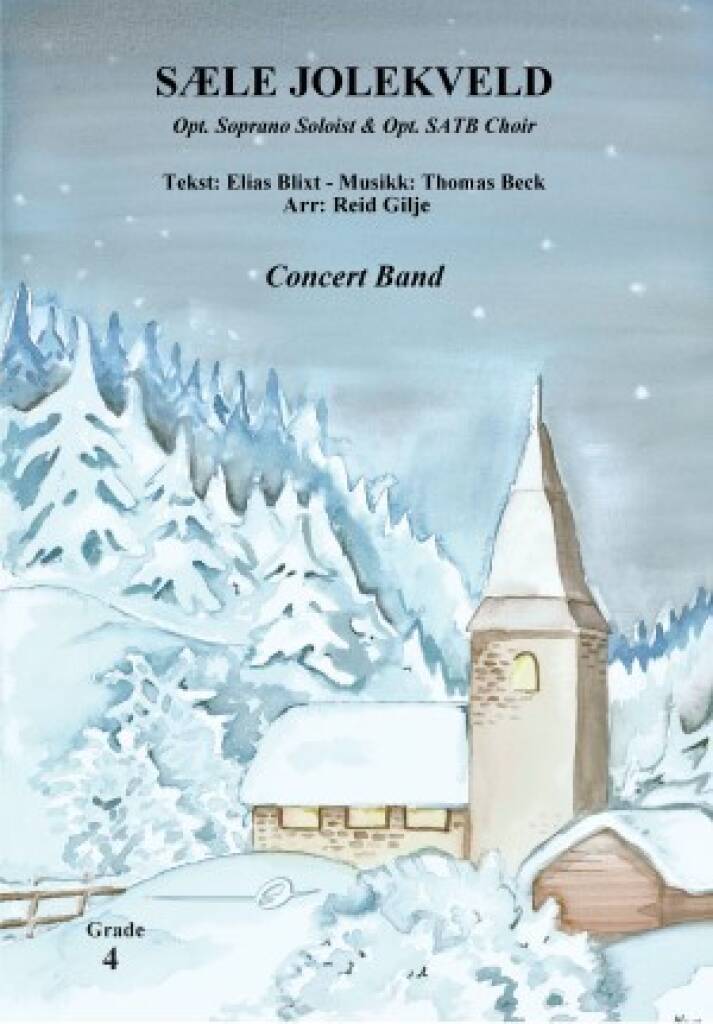
Sle Jolekveld - Elias Blixt
"Sle Jolekveld" was arranged for Kongelige Norske Marines Musikkorps (The Royal Norwegian Navy Band) for their CD-recording "Julestemning"(2009) featuring Solveig Kringlebotn as soprano soloist and the choir of Oslo Philharmonic Orchestra conducted by Ingar Bergby.The arrangement works very well for a collaborative concert for band and SATB choir and possible soprano soloist. However it will also work well also for concert band alone.
Estimated dispatch 7-14 working days
-
 £82.50
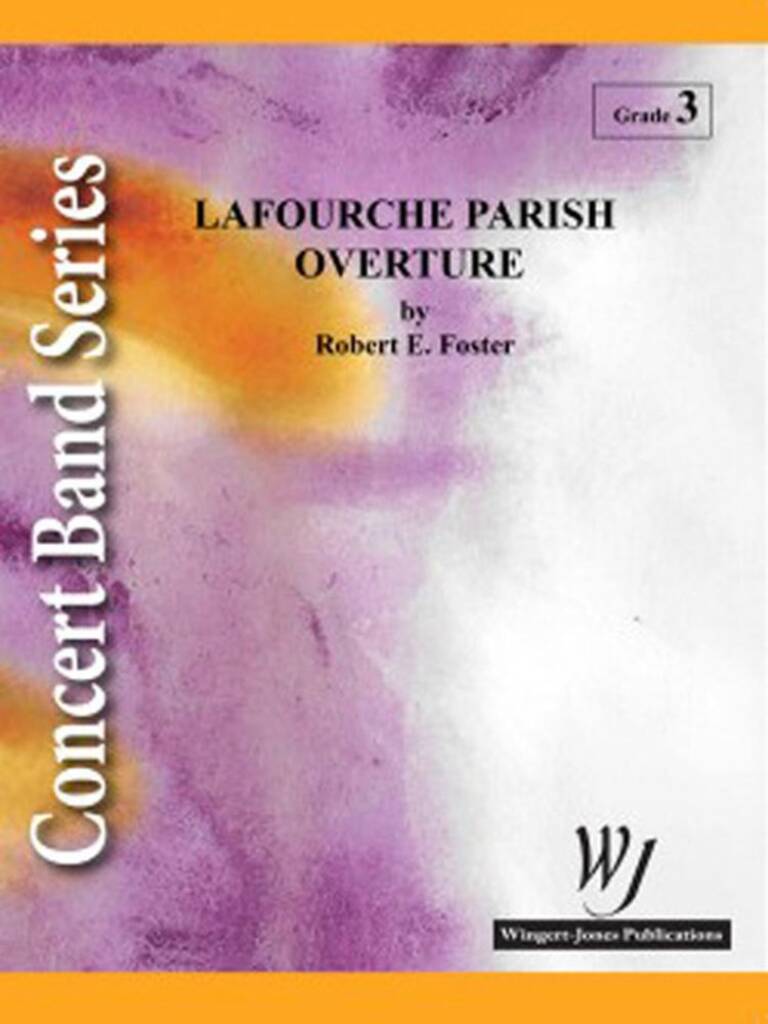
Lafourche Parish Overture - Robert E. Foster
Lafourche Parish (pronounced "LaFoosh") was commissioned by the East Thibodeaux Jr. High School Band. A stirring grade 3 work suitable for festival or contest performance, it is designed to provide young bands with an exciting, contemporary work that is very playable.
Estimated dispatch 7-14 working days
-
 £71.50
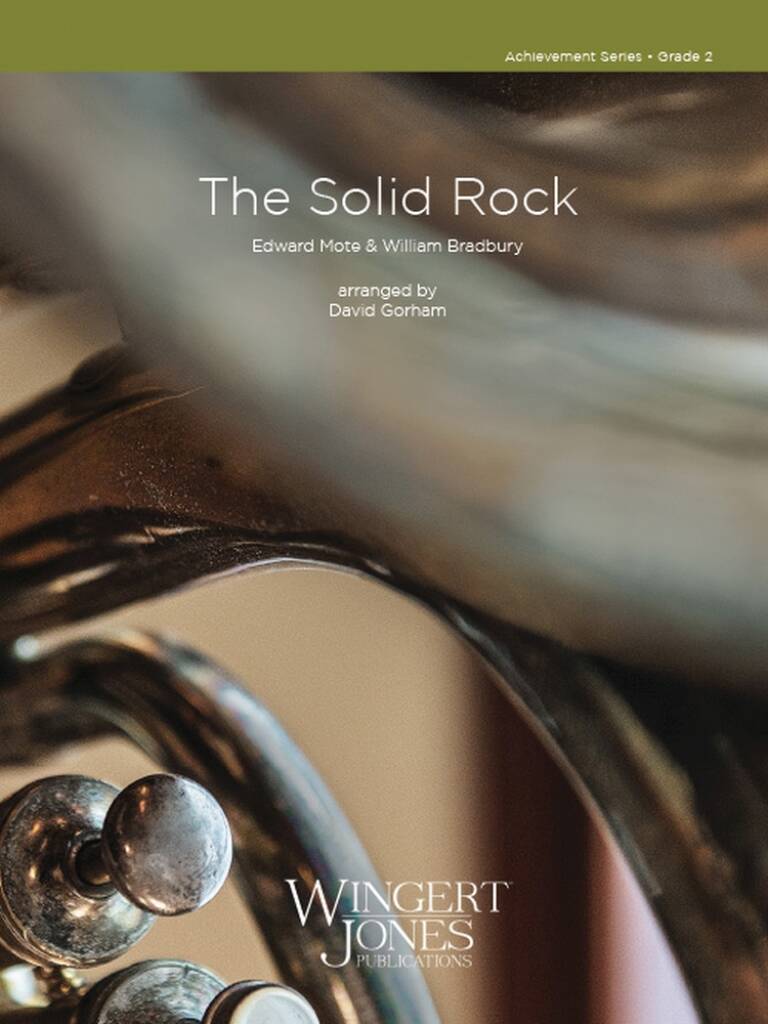
The Solid Rock - David Gorham
This inspirational hymn was set to music by William Bradbury. Over the years it has grown in popularity to become a favorite and has made an outstanding selection for concert bands. This very special arrangement for young band highlights the moving melody it's an impressive lyrical selection that will make any group sound mature and is sure to stand out on any concert program.
Estimated dispatch 7-14 working days
-
£202.99
Spirited Away - Joe Hisaishi
This is an arrangement of Ghibli's Anime film, "Spirited Away". It consists of six themes including No-Face, One Summer Day, The Bottomless Pit, Yubaba's Panic, Always with Me, and Reprise. I also added an alternate introduction using The Dragon Boy. The No-Face opener is somewhat avant-garde with technical difficulties so select the opening that is best suited to your ensemble. The arrangement concept was created by Mr. Tomoki Ubata of Ina Gakuen Sr. High School. His wonderfully crafted ideas always impress me. Especially, in the arrangement, mallet percussion and piano are effectively used to sound like a music box and the lyrical melody of Reprise is superimposed. This scene is the best part of the entire arrangement and is very emotional. All these fine melodies from the film transport both audience and performers to the fantastic world of anime. (Kazuhiro Morita)
Estimated dispatch 7-14 working days
-
 £75.53
Temperamental (Concert Band) Fendall Hill
This work by Fendall Hill was the set test for the 2021 National Brass Band Championships of New Zealand, B Grade. Here it has been adapted for Concert Band. The composer writes: 'J.S. Bach (1685-1750) is deemed by many to be the 'Ulimate Composer'. He added an incredible proportion to the DNA of western music, and his influence is heard in the music of today. Like many artists, he was not overly recognised as a composer during his lifetime, and it took an 1829 performance of the St Matthew Passion by Mendelssohn to ignite a recognition of his place in the music world, a place he has maintained ever since. This piece starts with a similar spark of rediscovery of the music of Bach. It contains arrangements of various works, interspersed with composition based on Bach's chord structures, sections in the style of Bach, and original sections inspired by the moods created along the way. The first section explores the Toccata, and great organ works. This leads into an exploration of his choral works, and a finale based on the Preludes. The word 'Tempered' has different meanings, and all seem to apply to the music of Bach, and these appeal to the musical, engineering and spiritual aspects of my personal life. His music reaches to the humanity and divinity, it has strength, structure and order that creates frameworks in which incredible complexity reigns; and the complexity leads to a wildness, a kind of craziness that represents a range of human moods, and can change without warning. The same piece of music affects people in very different ways. I don't know if it's Bach's music, or us, but it can seem out of control and under control at the same time - the combination is highly temperamental. To view a follow-the-score video of the work please visit: https://youtu.be/6CtYZmCoWIc Sheet music available from: UK: www.wind-band-music.co.uk USA: www.solidbrassmusic.com Difficulty Level: Advanced Instrumentation: Instrumentation: Piccolo Flute 1-2 Oboe Bassoon Clarinet in Bb 1-3 Bass Clarinet in Bb Alto Saxophone 1-2 Tenor Saxophone Baritone Saxophone Trumpet in Bb 1-3 Horn in F 1-4 Trombone 1-2 Bass Trombone Euphonium Tuba Double Bass Timpani Percussion 1-3
In stock: Estimated dispatch 1-3 days
-
 £164.95
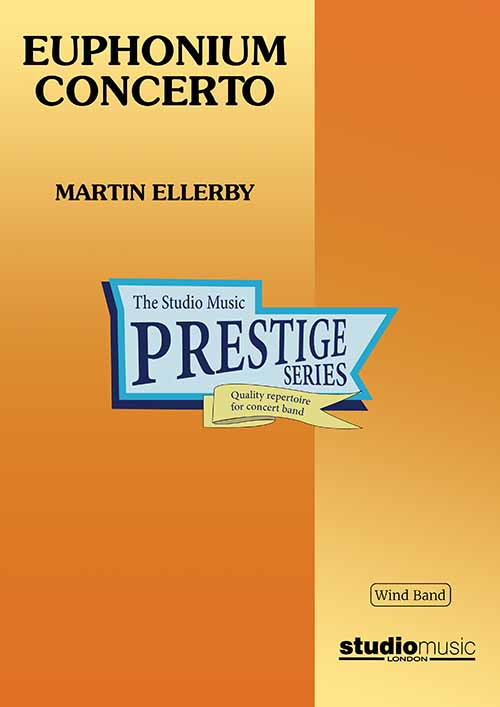
Euphonium Concerto (Concert Band - Score and Parts) - Ellerby, Martin
This Euphonium Concerto was written between late 1994 and early 1995 in response to a commission from Steven Mead to whom the work is dedicated. It is cast in four movements and lasts a little over 22 mins:I. Fantasy: After the briefest of introductions, the solo euphonium enters with the key melodic phrase of the movement in a fast 'Tempo I'. This idea is developed up to the point where a slower 'Tempo II' breaks the argument - here the mood is reflective but it is only to be a brief interruption as 'Tempo I' returns very quickly. The opening material is then subjected to further transformation with 'Tempo II' making occasional returns en route, the distances between the contrasting tempi becoming ever closer, and the movement closes in a rather soft though definite manner.II. Capriccio: This relatively short presto movement forms a bridge between the first movement and the work's slow movement. The majority of the band parts are bright and muted with the percussion players enhancing the texture with contributions from xylophone, glockenspiel and vibraphone. Again the initial solo euphonium phrase provides the basis for almost all the movement's material. This is extremely virtuosic for the soloist and band alike and makes great play of the rhythmic possibilities of combining simple and compound music either in close proximity or together.III. Rhapsody (for Luis): A Lento movement, sitting between two different but essentially rapid ones, this provides the work's emotional core exploiting the soloist's cantabile qualities in an almost seamless fashion. Again, as will all the work's movements, the initial idea paves the way for subsequent development, eventually culminating in a passionate climax; thereafter it winds down with an affectionate backward glance towards the close of the the slow movement of the Euphonium Concerto of Joseph Horovitz, whose mark had been made indelibly on the euphonium repertoire. This movement is dedicated to Luis Maldonado who set the full score of the brass version before his untimely death.IV. Diversions: The work's variation finale is cast in 3/4 throughout though the barline is often a guideline and was seen by the composer as a challenge of metrical restraint! There is an obvious jazz feel to this movement (both rhythmically and harmonically) with a swaggering ritornello theme first announced by the solo euphonium. Thereafter follows a series of interludes and 'adjusted' returns of the main theme. A lyrical idea is allowed to enter but the underlying momentum is ever present. The band also contributes to the interludes and eventually the tempo increases towards a 'wild' and absolute conclusion.Duration: 22.30Recorded on QPRM143D Dreamscapes, Royal Northern College of Music Wind Orchestra
Estimated dispatch 7-14 working days
-
£32.95
Euphonium Concerto (Concert Band - Score only) - Ellerby, Martin
This Euphonium Concerto was written between late 1994 and early 1995 in response to a commission from Steven Mead to whom the work is dedicated. It is cast in four movements and lasts a little over 22 mins:I. Fantasy: After the briefest of introductions, the solo euphonium enters with the key melodic phrase of the movement in a fast 'Tempo I'. This idea is developed up to the point where a slower 'Tempo II' breaks the argument - here the mood is reflective but it is only to be a brief interruption as 'Tempo I' returns very quickly. The opening material is then subjected to further transformation with 'Tempo II' making occasional returns en route, the distances between the contrasting tempi becoming ever closer, and the movement closes in a rather soft though definite manner.II. Capriccio: This relatively short presto movement forms a bridge between the first movement and the work's slow movement. The majority of the band parts are bright and muted with the percussion players enhancing the texture with contributions from xylophone, glockenspiel and vibraphone. Again the initial solo euphonium phrase provides the basis for almost all the movement's material. This is extremely virtuosic for the soloist and band alike and makes great play of the rhythmic possibilities of combining simple and compound music either in close proximity or together.III. Rhapsody (for Luis): A Lento movement, sitting between two different but essentially rapid ones, this provides the work's emotional core exploiting the soloist's cantabile qualities in an almost seamless fashion. Again, as will all the work's movements, the initial idea paves the way for subsequent development, eventually culminating in a passionate climax; thereafter it winds down with an affectionate backward glance towards the close of the the slow movement of the Euphonium Concerto of Joseph Horovitz, whose mark had been made indelibly on the euphonium repertoire. This movement is dedicated to Luis Maldonado who set the full score of the brass version before his untimely death.IV. Diversions: The work's variation finale is cast in 3/4 throughout though the barline is often a guideline and was seen by the composer as a challenge of metrical restraint! There is an obvious jazz feel to this movement (both rhythmically and harmonically) with a swaggering ritornello theme first announced by the solo euphonium. Thereafter follows a series of interludes and 'adjusted' returns of the main theme. A lyrical idea is allowed to enter but the underlying momentum is ever present. The band also contributes to the interludes and eventually the tempo increases towards a 'wild' and absolute conclusion.Duration: 22.30Recorded on QPRM143D Dreamscapes, Royal Northern College of Music Wind Orchestra
Estimated dispatch 7-14 working days
-
 £29.95
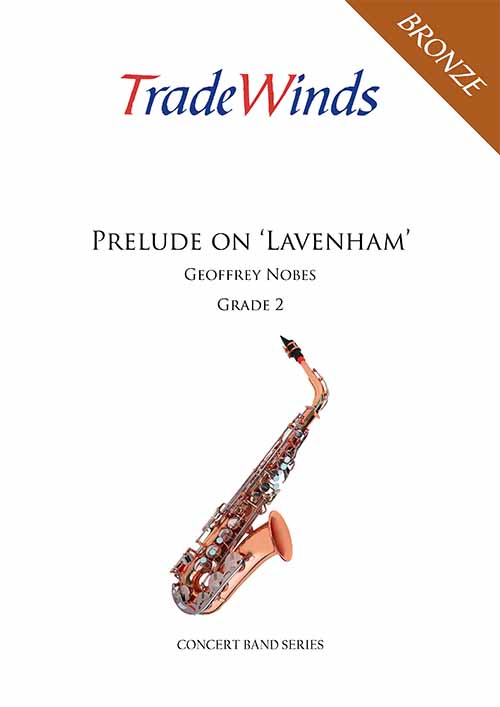
Prelude on 'Lavenham' (Concert Band - Score and Parts) - Nobes, Geoffrey
Prelude on 'Lavenham' was written for the 130th anniversary, in 2014, of Lavenham Corps in Suffolk and was first performed at their anniversary concert in the village's beautiful Parish Church by Kettering Citadel Band. It's an arrangement of a tune the composer wrote to the words, 'Lord, there are times', a lovely hymn by the Reverend Nick Fawcett. The arrangement is dedicated to the memory of Bandmaster Derek Wilding of Lavenham Corps.The music is serene and free-flowing and was written with the rich and warm acoustics of the lovely medieval church very much in mind. It should be played cantabile throughout, with close attention to contrasts in dynamics.
Estimated dispatch 7-14 working days
-
£5.95
Prelude on 'Lavenham' (Concert Band - Score only) - Nobes, Geoffrey
Prelude on 'Lavenham' was written for the 130th anniversary, in 2014, of Lavenham Corps in Suffolk and was first performed at their anniversary concert in the village's beautiful Parish Church by Kettering Citadel Band. It's an arrangement of a tune the composer wrote to the words, 'Lord, there are times', a lovely hymn by the Reverend Nick Fawcett. The arrangement is dedicated to the memory of Bandmaster Derek Wilding of Lavenham Corps.The music is serene and free-flowing and was written with the rich and warm acoustics of the lovely medieval church very much in mind. It should be played cantabile throughout, with close attention to contrasts in dynamics.
Estimated dispatch 7-14 working days
 View Music