
Results
-
 £72.99
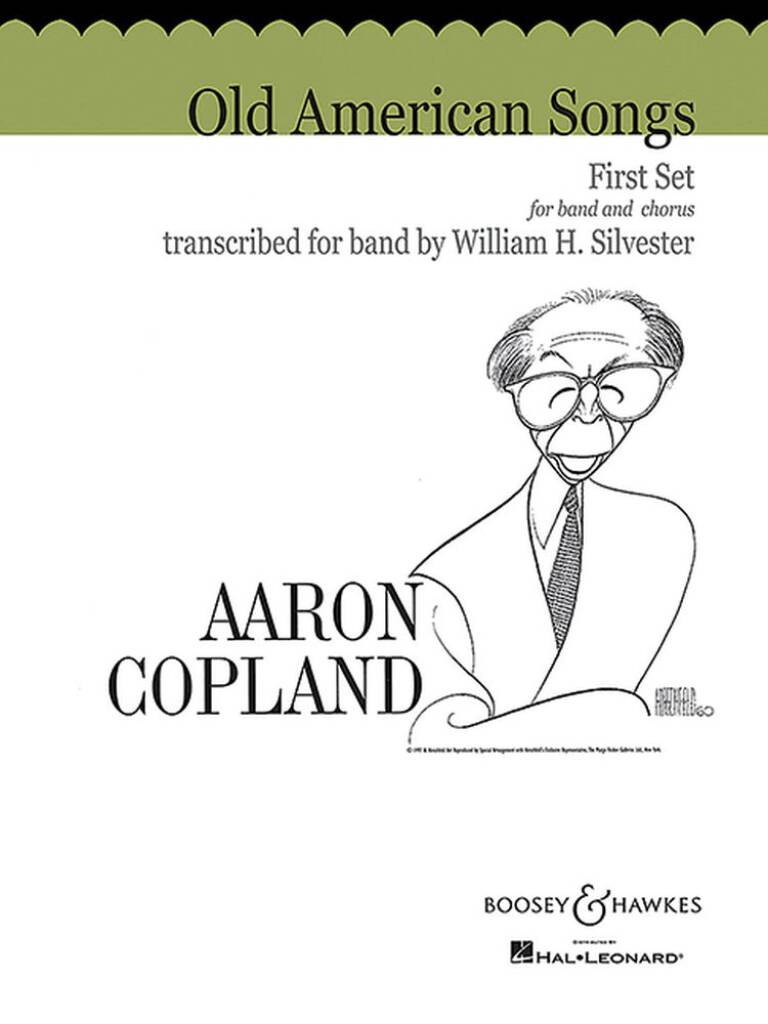
Old American Songs Vol. 1 - Aaron Copland
Contents: The Boatmen's Dance The Dodger Long Time Ago Simple Gifts I Bought Me a Cat. Choral arrangements available to be used with this band accompaniment.
Estimated dispatch 7-14 working days
-
£85.50
-
 £63.50
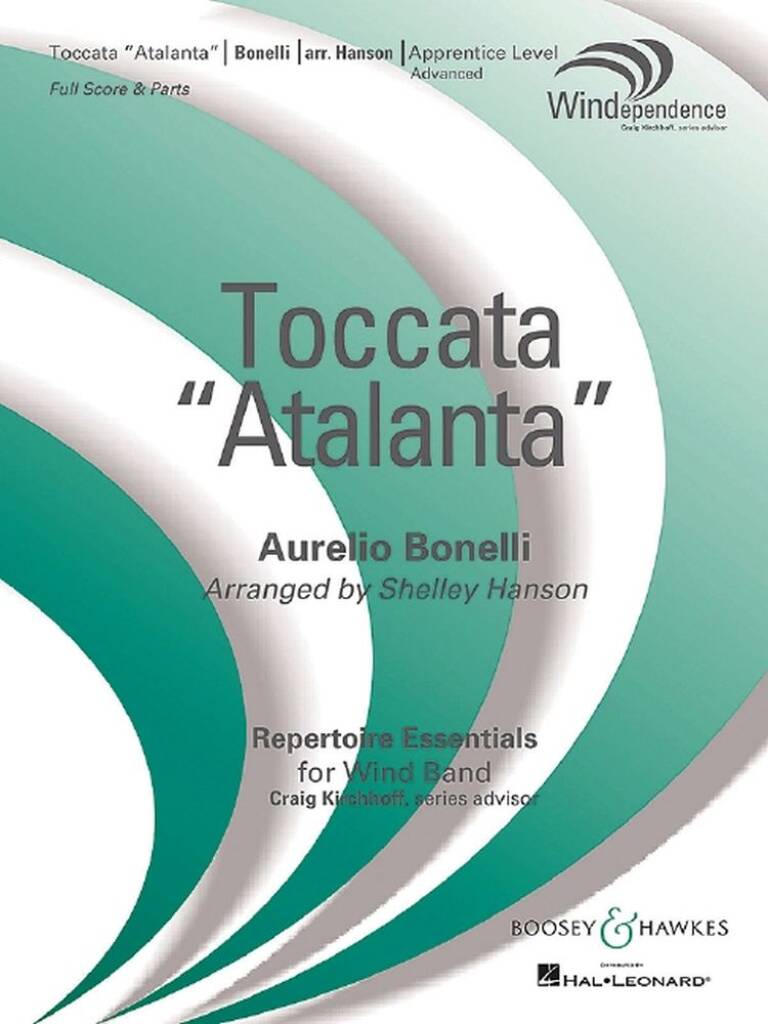
Toccata - Aurelio Bonelli
"Woodwind and percussion players usually are unfamiliar with the antiphonal brass choir tradition. I made this modern, more easily readable version of Bonelli's classic 1600 Toccata for flexible wind ensemble with optional percussion, so that as few as 8 players up to full symphonic band could play in this style. I've used it as a dramatic concert opener, with the second, smaller group positioned behind the audience." Shelley Hanson
Estimated dispatch 7-14 working days
-
£107.70
Triqui-Traqui - Paul Desenne
Commissioned by Gustavo Dudamel for his 2017 New Year's concert with the Vienna Philharmonic, my Caribbean reinterpretation of Strauss' famous Tritsch-Tratsch Polka was deemed tooosefor the occasion, yet the maestro recorded it that year, not in Vienna but in Caracas, with the fabulous performers of his orchestra, the Orquesta Sinfnica Simn Bolvar, and published it on the web as his musical New Year's greetings card. The gesture was meaningful, and bold. I'm convinced that Johann Strauss, a man immersed in the fashions of his city and his time, would have loved the idea; a musical collage which carries in its banter a very strong aesthetic statement. The lightest and most frivolous things seem to always carry the deepest messages, let us not forget. ... ... Today, this version of my transformed Tritsch- Tratsch Polka forSymphonic Band created by Steve Boehm, will certainly tickle the Viennese in each and every one of us, and we will be very happy!"
Estimated dispatch 7-14 working days
-
£299.70
Concertino for Organ - Thomas Trachsel
This work was created by an order from the wind orchestra Feldmusik Sarnen and its conductor Rolf Schumacher on the occasion of his anniversary concert in the Hofkirche in Lucerne. The organist at the premiere was the organist of the court church Wolfgang Sieber. I tried to illuminate the Hofkirche and its organ in all three movements. In the Toccata the full force of the organ becomes clear, while in the second movement one is reminded more of praying monks in the cloister. In the final, all important topics are processed again. The organ part is very difficult to master, the accompaniment in the wind orchestra should be feasible for a wind orchestra grade 4 (approx. 1st class). (Edition Symphonic Works)
Estimated dispatch 7-14 working days
-
£68.99
Celtic Fantasy - Keiichi Kurokawa
"Celtic" is a widely used term. Its history and culture expands to modern day Spain, Portugal, and North America.However, in this piece, I have based my music on the typical "Celtic" areas of Ireland and Scotland.The Bagpipe drone at the beginning reappears several times.After the introduction, the music transitions to an Irish Reel, The Wind That Shakes The Barley. Reel is a fast tempo dance, often in 4/4 or 2/2 time.Next is the Scottish folksong Auld Lang Syne, known as "Hotaru no Hikari" in Japan.The third movement is called Scotland the Brave. It is often performed by military bagpipe ensembles. Once air is blown into the bag, there is a constant reservoir of sound for Great Highland Bagpipes.A Part (advanced) is a grade 2.5-3 in American grading system. B Part (beginner) is 1-1.5.B Part is accessible for elementary school and junior high school beginning band students in Japan. However, the drone-sounding sections require a certain technique to hold the sound steady.It is my sincere desire that beginning musicians understand the importance of fundamentals through performing good music.Keiichi Kurokawa
Estimated dispatch 7-14 working days
-
 £53.50
Evergreen Overture - Hayato Hirose
Composed in 2017 by recommendation from Brain Music (Bravo Music)."Evergreen" means "perennially fresh" or "never fading". It depicts what I believe we all felt when we first truly enjoyed playing our instruments.This "Dual Grade" piece allows players of different experience levels to perform the same ensemble. A Part is for more advanced players and B Part is for beginning-level players.There are also optional parts to make it accessible for any size of band. The least you can have is nine voices. (Cl,Cl,A.Sax,Trp,Hr,Trb,Euph,Tub,Perc).Perc. 1 and 2 can be combined and performed on the drum set.Recommended assigned parts for percussion are as follows:1 percussionist: Perc.1/2 (Drums)2 percussionists: Timp. and Perc.1/2 (Drums)3 percussionists: Timp., Perc.1/2 (Drums), and Perc.3Over 4 percussionists: one per part
Estimated dispatch 7-14 working days
-
£244.99
Zenith of Maya - Satoshi Yagisawa
By 200 B.C. the Mayan civilization was expansive, from the Yucatan Peninsula well into Central America. Their highly advanced technology still amazes us today, including their discovery of an accurate calendar derived from detailed astronomical observations and the use of the "0" in sophisticated mathematics.I. Royal ceremony and sacrifice of renewalThe first movement describes Mayan civilization at its zenith. An initial theme heralds admiration for a great king. A graceful choral then captures the magnificent setting of the Mayan world. After a folk melody for the populace, the agitated scene of a sacrificial ceremony is portrayed. The regal theme appears again in the coda, concluding in brilliance. This great civilization vanished in 10 A.D., leaving only remnants of a remarkably prosperous world. Thousands of ruins large and small remain locked in a dense world of jungle, with huge crumbled cities having lain forgotten for eight centuries.II. Glorious ruins still ariseII characterizes this civilization from glory, to destruction, to the present with its buried ruins. To begin, stone cities wait silently cloaked in jungle, steadfastly eluding discovery. As time passes slowly, the music reflects back to the glory of the Maya. Though wishing to turn back the hands of time for this incredible civilization, its fate and the gravity of its loss are carried forward in the profound silence of eternal loss. Finally, in the present, we marvel at the thousands of elegant remains, with a choral of praise for those with remarkable wisdom and strength, in a spectacular conclusion.(Satoshi Yagisawa)
Estimated dispatch 7-14 working days
-
 £202.99
Gloriosa - Symphonic Poem for Band Movement 1 - Yasuhide Ito
A new acquisition by Bravo Music, this fresh printing of the 1990 masterwork by Yasuhide Ito features a newly engraved score, improved parts, good availability and value. This stirring and powerful homage to early Christianity in Japan profoundly and eloquently states the case of cross-cultural conflict and resolution.I. OratioThe Gregorian chant "Gloriosa" begins with the words, "O gloriosa Domina excelsa super sidera que te creavit provide lactasti sacro ubere." The first movement Oratio opens with bells sounding the hymn's initial phrases. The movement as a whole evokes the fervent prayers and suffering of the Crypto-Christians.II. CantusIII. Dies FestusCommissioned in 1989 and premiered in 1990 by the Sasebo Band of the Maritime Self-Defense Force of Kyushu, southern Japan.Gloriosa is inspired by the songs of the Kakure-Kirishitan (Crypto-Christians) of Kyushu who continued to practice their faith surreptitiously after the ban of Christianity, which had been introduced to that southern region in the mid-16th century by Roman Catholic missionary Francisco Xavier. The worship brought with it a variety of western music.Though Christianity was proscribed in 1612 by authority of the Tokugawa Shogunate in Edo (today Tokyo), Kakure-Kirishitan continued advocating sermons and disguised songs. Melodies and lyrics such as Gregorian chant were obliged to be "Japanized". For example, the Latin word "Gloriosa" was changed to "Gururiyoza." This adaptation of liturgy for survival inspired Ito to write this piece in order to reveal and solve this unique cultural mystery.The composer explains:"Nagasaki district in Kyushu region continued to accept foreign culture even during the seclusion period, as Japan's only window to the outer world. After the proscription of Christianity, the faith was preserved and handed down in secret in the Nagasaki and Shimabara areas of Kyushu region. My interest was piqued by the way in which the Latin words of Gregorian chants were gradually `Japanized' during the 200 years of hidden practice of the Christian faith. That music forms the basis of Gloriosa."Gloriosa, fusing Gregorian chant and Japanese folk music, displays the most sophisticated counterpoint yet found in any Japanese composition for wind orchestra.
Estimated dispatch 7-14 working days
-
£209.99
Gloriosa - Symphonic Poem for Band Mvt 2 & 3 - Yasuhide Ito
A new acquisition by Bravo Music, this fresh printing of the 1990 masterwork by Yasuhide Ito features a newly engraved score, improved parts, good availability and value. This stirring and powerful homage to early Christianity in Japan profoundly and eloquently states the case of cross-cultural conflict and resolution.I. OratioThe Gregorian chant "Gloriosa" begins with the words, "O gloriosa Domina excelsa super sidera que te creavit provide lactasti sacro ubere." The first movement Oratio opens with bells sounding the hymn's initial phrases. The movement as a whole evokes the fervent prayers and suffering of the Crypto-Christians.II. CantusIII. Dies FestusCommissioned in 1989 and premiered in 1990 by the Sasebo Band of the Maritime Self-Defense Force of Kyushu, southern Japan.Gloriosa is inspired by the songs of the Kakure-Kirishitan (Crypto-Christians) of Kyushu who continued to practice their faith surreptitiously after the ban of Christianity, which had been introduced to that southern region in the mid-16th century by Roman Catholic missionary Francisco Xavier. The worship brought with it a variety of western music.Though Christianity was proscribed in 1612 by authority of the Tokugawa Shogunate in Edo (today Tokyo), Kakure-Kirishitan continued advocating sermons and disguised songs. Melodies and lyrics such as Gregorian chant were obliged to be "Japanized". For example, the Latin word "Gloriosa" was changed to "Gururiyoza." This adaptation of liturgy for survival inspired Ito to write this piece in order to reveal and solve this unique cultural mystery.The composer explains:"Nagasaki district in Kyushu region continued to accept foreign culture even during the seclusion period, as Japan's only window to the outer world. After the proscription of Christianity, the faith was preserved and handed down in secret in the Nagasaki and Shimabara areas of Kyushu region. My interest was piqued by the way in which the Latin words of Gregorian chants were gradually `Japanized' during the 200 years of hidden practice of the Christian faith. That music forms the basis of Gloriosa."Gloriosa, fusing Gregorian chant and Japanese folk music, displays the most sophisticated counterpoint yet found in any Japanese composition for wind orchestra.
Estimated dispatch 7-14 working days
 View Music