
Results
-
 £75.00
The Wand of Youth, Suite No.2, March (Concert Band - Score and Parts) - Elgar, Edward - Noble, Paul
The Wand of Youth suites were written in 1869 when Elgar was only twelve years old, music written for a play and acted by the Elgar children for a private family theatrical production. He noted the tunes down in a sketchbook and in 1907, forty years later, he rearranged with only minor changes and orchestrated them as the two suites titled The Wand of Youth, Suite Nos. 1 and 2. Although the Wand of Youth Suites date from Elgar's mature years, he insisted on calling it Opus 1, because he wrote these pieces originally for piano many years earlier. The March is the first movement of The Wand of Youth, Suite No. 2. The arranger has presented this movement as an example of an excellent concert opener or warm-up march for a festival or contest performance because of its delicacy, yet determination.
Estimated dispatch 7-14 working days
-
 £50.00
The Wand of Youth, Suite No.1 - VII. Fairies and Giants (Concert Band - Score and Parts) - Elgar, Edward - Noble, Paul
The Wand of Youth suites, subtitled Music to a Child's Play, were written in 1869 when Elgar was only twelve years old, music written for a play and acted by the Elgar children for a private family theatrical production. He noted the tunes down in a sketchbook and in 1907, forty years later, he rearranged with only minor changes and orchestrated them as the two suites titled The Wand of Youth, Suite Nos. 1 and 2. Although The Wand of Youth suites date from Elgar's mature years, he insisted on calling it Opus 1, because he wrote these pieces originally for piano many years earlier.
Estimated dispatch 7-14 working days
-
 £40.00
The Wand of Youth, Suite No.1 - VI. Slumber Scene (Concert Band - Score and Parts) - Elgar, Edward - Noble, Paul
The Wand of Youth suites, subtitled Music to a Child's Play, were written in 1869 when Elgar was only twelve years old, music written for a play and acted by the Elgar children for a private family theatrical production. He noted the tunes down in a sketchbook and in 1907, forty years later, he rearranged with only minor changes and orchestrated them as the two suites titled The Wand of Youth, Suite Nos. 1 and 2. Although The Wand of Youth suites date from Elgar's mature years, he insisted on calling it Opus 1, because he wrote these pieces originally for piano many years earlier.
Estimated dispatch 7-14 working days
-
 £40.00
The Wand of Youth, Suite No.1 - V. Fairy Pipers (Concert Band - Score and Parts) - Elgar, Edward - Noble, Paul
The Wand of Youth suites, subtitled Music to a Child's Play, were written in 1869 when Elgar was only twelve years old, music written for a play and acted by the Elgar children for a private family theatrical production. He noted the tunes down in a sketchbook and in 1907, forty years later, he rearranged with only minor changes and orchestrated them as the two suites titled The Wand of Youth, Suite Nos. 1 and 2. Although The Wand of Youth suites date from Elgar's mature years, he insisted on calling it Opus 1, because he wrote these pieces originally for piano many years earlier.
Estimated dispatch 7-14 working days
-
 £50.00
The Wand of Youth, Suite No.1 - IV. Sun Dance (Concert Band - Score and Parts) - Elgar, Edward - Noble, Paul
The Wand of Youth suites, subtitled Music to a Child's Play, were written in 1869 when Elgar was only twelve years old, music written for a play and acted by the Elgar children for a private family theatrical production. He noted the tunes down in a sketchbook and in 1907, forty years later, he rearranged with only minor changes and orchestrated them as the two suites titled The Wand of Youth, Suite Nos. 1 and 2. Although The Wand of Youth suites date from Elgar's mature years, he insisted on calling it Opus 1, because he wrote these pieces originally for piano many years earlier.
Estimated dispatch 7-14 working days
-
 £40.00
The Wand of Youth, Suite No.1 - III. Minuet (Old Style) (Concert Band - Score and Parts) - Elgar, Edward - Noble, Paul
The Wand of Youth suites, subtitled Music to a Child's Play, were written in 1869 when Elgar was only twelve years old, music written for a play and acted by the Elgar children for a private family theatrical production. He noted the tunes down in a sketchbook and in 1907, forty years later, he rearranged with only minor changes and orchestrated them as the two suites titled The Wand of Youth, Suite Nos. 1 and 2. Although The Wand of Youth suites date from Elgar's mature years, he insisted on calling it Opus 1, because he wrote these pieces originally for piano many years earlier.
Estimated dispatch 7-14 working days
-
 £40.00
The Wand of Youth, Suite No.1 - II. Serenade (Concert Band - Score and Parts) - Elgar, Edward - Noble, Paul
The Wand of Youth suites, subtitled Music to a Child's Play, were written in 1869 when Elgar was only twelve years old, music written for a play and acted by the Elgar children for a private family theatrical production. He noted the tunes down in a sketchbook and in 1907, forty years later, he rearranged with only minor changes and orchestrated them as the two suites titled The Wand of Youth, Suite Nos. 1 and 2. Although The Wand of Youth suites date from Elgar's mature years, he insisted on calling it Opus 1, because he wrote these pieces originally for piano many years earlier.
Estimated dispatch 7-14 working days
-
 £50.00
The Wand of Youth, Suite No.1 - I. Overture (Concert Band - Score and Parts) - Elgar, Edward - Noble, Paul
The Wand of Youth suites, subtitled Music to a Child's Play, were written in 1869 when Elgar was only twelve years old, music written for a play and acted by the Elgar children for a private family theatrical production. He noted the tunes down in a sketchbook and in 1907, forty years later, he rearranged with only minor changes and orchestrated them as the two suites titled The Wand of Youth, Suite Nos. 1 and 2. Although The Wand of Youth suites date from Elgar's mature years, he insisted on calling it Opus 1, because he wrote these pieces originally for piano many years earlier.
Estimated dispatch 7-14 working days
-
 £225.00
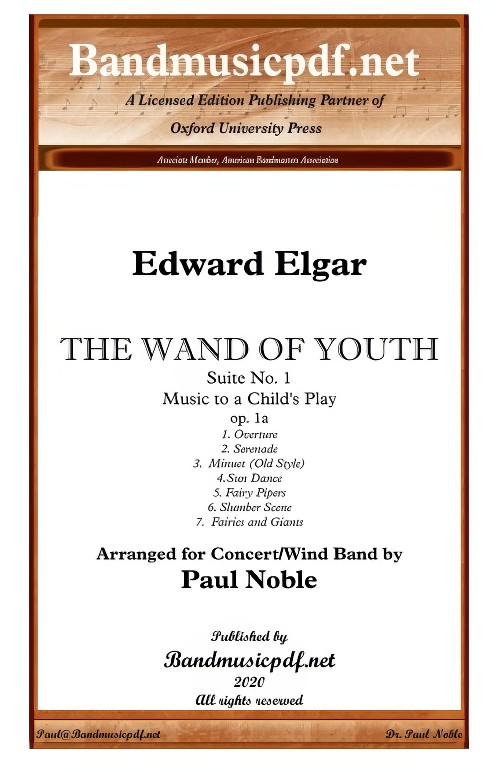
The Wand of Youth, Suite No.1 (Complete) (Concert Band - Score and Parts) - Elgar, Edward - Noble, Paul
The Wand of Youth suites, subtitled Music to a Child's Play, were written in 1869 when Elgar was only twelve years old, music written for a play and acted by the Elgar children for a private family theatrical production. He noted the tunes down in a sketchbook and in 1907, forty years later, he rearranged with only minor changes and orchestrated them as the two suites titled The Wand of Youth, Suite Nos. 1 and 2. Although The Wand of Youth suites date from Elgar's mature years, he insisted on calling it Opus 1, because he wrote these pieces originally for piano many years earlier. Suite No.1 includes seven movements: 1. Overture; 2. Serenade; 3. Minuet (Old Style); 4. Sun Dance; 5. Fairy Pipers; 6. Slumber Scene; and 7. Fairies and Giants.
Estimated dispatch 7-14 working days
-
 £37.95
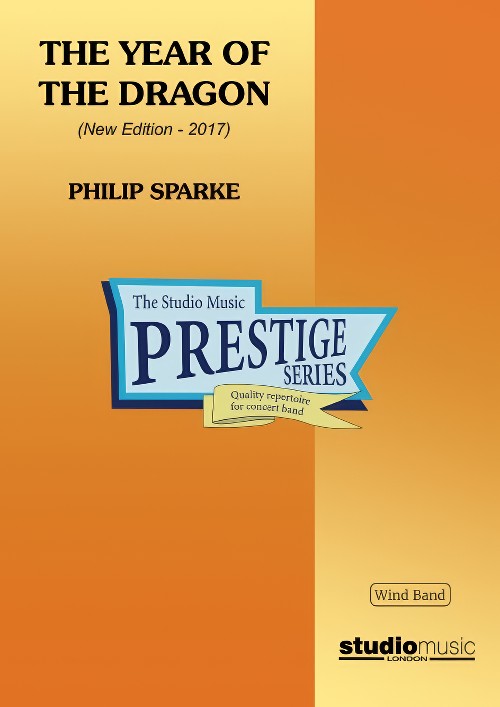
The Year of the Dragon (Prestige Concert Band - Score only) - Sparke, Philip
The 2017 version of The Year of the Dragon was commissioned by the Siena Wind Orchestra and given its world premiere on June 17th 2017 in Bunkyo Civic Hall, Tokyo, conducted by the composer.The original wind band arrangement of The Year of the Dragon was made in 1985, a year after the composer wrote the brass band version. At that time he was still learning the intricacies of writing for wind band (and still is!) and in the 32 years which have elapsed since then, his approach to scoring for the medium has developed and, hopefully, improved.Here are the main differences between the two versions:In the 1980's, the wind band movement was much less international than it is now. British wind bands were still to some extent based on the military band tradition of the time, which tended to use rather smaller instrumentation than the then-dominant American university model. The new version embraces a much more international instrumentation, including low woodwinds and string bass, as well as an expanded percussion section.In the original version there was a touch of naivety in the way the composer wrote for the woodwinds; much of their articulation was transferred too literally from the brass version, resulting in some unidiomatic writing, which he has tried to improve in the new version.In addition to the above, Philip's own compositional style has matured and developed in the intervening 32 years. There are some passages in the original which he simply would not write today - not because they are 'wrong', but because his way of writing has changed. The new version is perhaps how he would have written it today, rather than simply dressing the original version in new clothes.The work is in three movements:Toccata opens with an arresting side drum figure and snatches of themes from various sections of the band, which try to develop until a broad and powerful theme from the middle of the band asserts itself. A central dance-like section soon gives way to the return of this theme, which subsides until faint echoes of the opening material fade to a close.Interlude takes the form of a sad and languid solo for alto saxophone. A chorale for the whole band introduces a brief spell of optimism but the saxophone solo returns to close the movement quietly.Finale is a real tour-de-force for the band with a stream of rapid semi-quavers running throughout the movement. The main theme is heroic and march-like but this is interspersed with lighter, more playful episodes. A distant fanfare to the sound of bells is introduced and this eventually returns to bring the work to a stirring close.
Estimated dispatch 7-14 working days
 View Music