
Results
-
 £53.95
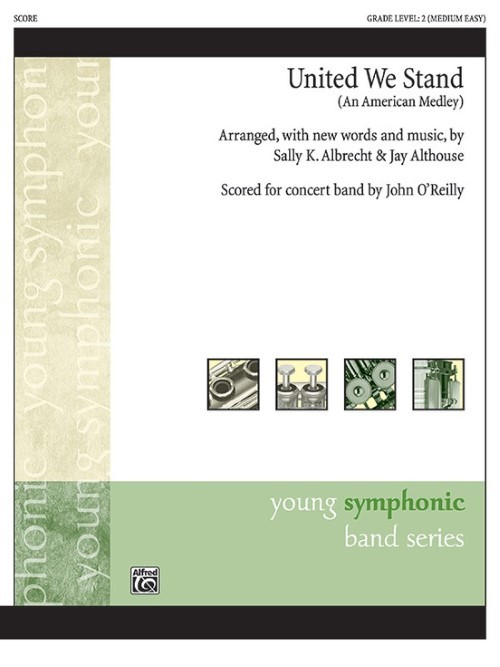
United We Stand (An American Medley) (Concert Band - Score and Parts) - O'Reilly, John
This stirring tribute to America is the perfect finale for your upcoming concert. After a stunning opening fanfare, excerpts of "Simple Gifts," "America, the Beautiful," "America," and the chorus of "Battle Hymn" are presented, leading up to a big final statement of the fanfare. The audience may also sing along on two sections of the choral. All three voicings are compatible, making this the perfect choice for a festival or joint finale. Add the full Concert Band arrangement and/or the StringPax and get your entire school involved.
Estimated dispatch 7-14 working days
-
 £2.25
£2.25United We Stand (An American Medley) (SAB Choral Octavo) - Albrecht & Althouse
This stirring tribute to America is the perfect finale for your upcoming concert. After a stunning opening fanfare, excerpts of "Simple Gifts," "America, the Beautiful," "America," and the chorus of "Battle Hymn" are presented, leading up to a big final statement of the fanfare. The audience may also sing along on two sections of the choral. All three voicings are compatible, making this the perfect choice for a festival or joint finale. Add the full Concert Band arrangement and/or the StringPax and get your entire school involved.
Estimated dispatch 7-14 working days
-
 £2.25
£2.25United We Stand (An American Medley) (SATB Choral Octavo) - Albrecht & Althouse
This stirring tribute to America is the perfect finale for your upcoming concert. After a stunning opening fanfare, excerpts of "Simple Gifts," "America, the Beautiful," "America," and the chorus of "Battle Hymn" are presented, leading up to a big final statement of the fanfare. The audience may also sing along on two sections of the choral. All three voicings are compatible, making this the perfect choice for a festival or joint finale. Add the full Concert Band arrangement and/or the StringPax and get your entire school involved.
Estimated dispatch 7-14 working days
-
 £58.50
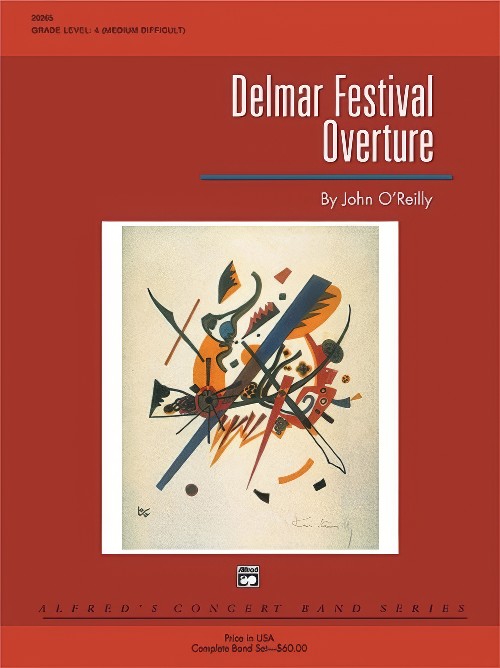
Delmar Festival Overture (Concert Band - Score and Parts) - O'Reilly, John
Delmar Festival Overture is a powerful concert overture utilizing many of the contemporary compositional techniques that distinguish John O'Reilly's work. From the opening brass fanfare to the exciting conclusion, syncopated rhythms and numerous, interesting shifts of meter abound. Biting polychords establish the predominant harmonic structure for the opening "Allegro," but the majestic theme that follows in the horns and saxes takes on a decidedly British band style. The lyrical middle section begins with a fully scored chorale, which serves as the subject for a lovely melodic development featuring woodwinds and French horn. A brilliant brass fanfare ushers in a return to the opening section, which is now reorganized and further developed to bring this exciting overture to its dramatic conclusion. A great concert opener that will show off the talents of your musicians! Duration: 4.45
Estimated dispatch 7-14 working days
-
 £94.99
Conzensus (Concert Band - Score and Parts) - Van der Roost, Jan
This stately concert opener was originally written by Jan Van der Roost for a special event in which six respected wind orchestras (two Belgian and four Dutch) of different composition (two symphonic bands, two fanfare bands and two brass bands) were featured during six concerts. Each evening brought forth a performance by a symphonic band, a fanfare, and brass band, so that the audience could experience all three types of ensembles. This was indeed an original concept. The name, ConZEnSus, comes from a combination of the words, 'Concert Cyclus' (concert series) and 'zes' (Dutch for 'six'). This leads to a new word, which refers to 'consensus'. The general tenor of the cycle is thus immediately indicated. The richness of colour of the various ensembles is revealed through an open and friendly atmosphere. During all six concerts (over a span of three years), ConZEnSus functioned as a permanent opening number for each orchestra. Thus the same musical story was portrayed in three different packages.Duration: 2:30
Estimated dispatch 7-14 working days
-
 £139.99
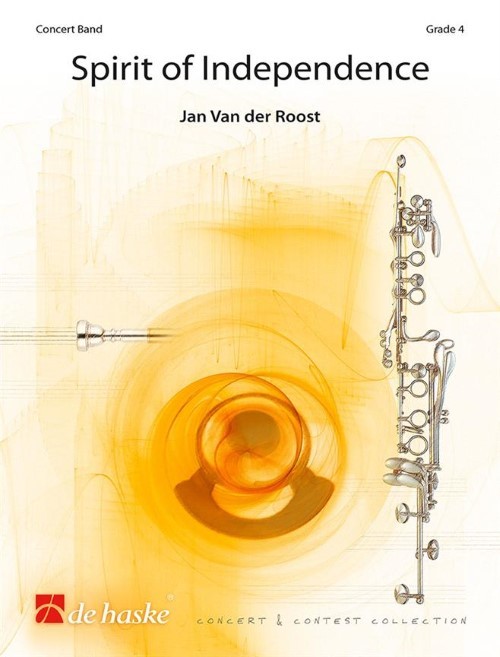
Spirit of Independence (Concert Band - Score and Parts) - Van der Roost, Jan
Spirit of Independence' was commissioned by the Koninklijke Fanfare 'Onafhankelijkheid' ('Independence') from Wiekevorst (Belgium) on the occasion of its 25th anniversary. The piece depicts an enthusiastic amateur music club, practicing and making music together in an attentive and companionable atmosphere. The conductor has the good habit of trying to improve the sound of the fanfare by means of practicing chorales and hymns. Jan Van der Roost has used these facts in the dynamic concert piece 'Spirit of Independence': a chorale-like middle section is surrounded by music bubbling full of energy.Duration: 9:15
Estimated dispatch 7-14 working days
-
 £74.95
Celebration Prelude (Concert Band - Score and Parts) - Johnson, Stuart
Celebration Prelude opens with a 30 bar fanfare for brass and percussion and makes this Prelude ideal for a ceremonial or formal occasion, but the piece is equally suitable as a concert-opener. The fanfare theme is then developed in the woodwinds and taken up by the whole wind band, appearing in different guises and with different counter-melodies. Finally, the opening is restated in a much shorter form by the whole band playing fortissimo.
Estimated dispatch 7-14 working days
-
£14.95
Celebration Prelude (Concert Band - Score Only) - Johnson, Stuart
Celebration Prelude opens with a 30 bar fanfare for brass and percussion and makes this Prelude ideal for a ceremonial or formal occasion, but the piece is equally suitable as a concert-opener. The fanfare theme is then developed in the woodwinds and taken up by the whole wind band, appearing in different guises and with different counter-melodies. Finally, the opening is restated in a much shorter form by the whole band playing fortissimo.
Estimated dispatch 7-14 working days
-
 £74.95
Prelude for an Occasion (Concert Band - Score and Parts) - Gregson, Edward
This curtain raiser sets a lively mood by bursting into a fanfare, followed by a short bouncing figure and a lively clarinet solo. Rhythmic bi-play, trombone glissandi and a light-hearted obbligato, all add to the merriment. The opening fanfare returns in extended form, and a final flourish brings the Prelude to a triumphant ending.
Estimated dispatch 7-14 working days
-
£14.95
Prelude for an Occasion (Concert Band - Score only) - Gregson, Edward
This curtain raiser sets a lively mood by bursting into a fanfare, followed by a short bouncing figure and a lively clarinet solo. Rhythmic bi-play, trombone glissandi and a light-hearted obbligato, all add to the merriment. The opening fanfare returns in extended form, and a final flourish brings the Prelude to a triumphant ending.
Estimated dispatch 7-14 working days
 View Music