
Results
-
£75.95
Shoutin' Liza Trombone - Henry Fillmore
Revisit one of the freshest and raciest of Henry Fillmore's trombone features. Full of lively tunes and Fillmore's trademark trombone smears, Shoutin' Liza Trombone has always been a crowd-pleaser and this cleaned up and re-engraved full score edition by Robert E. Foster is a welcome addition to the Authentic Fillmore Edition. Duration: 3'10 Key: F Ranges: Cornet - E, Horn - D, Trombone - F
Estimated dispatch 7-14 working days
-
 £82.50
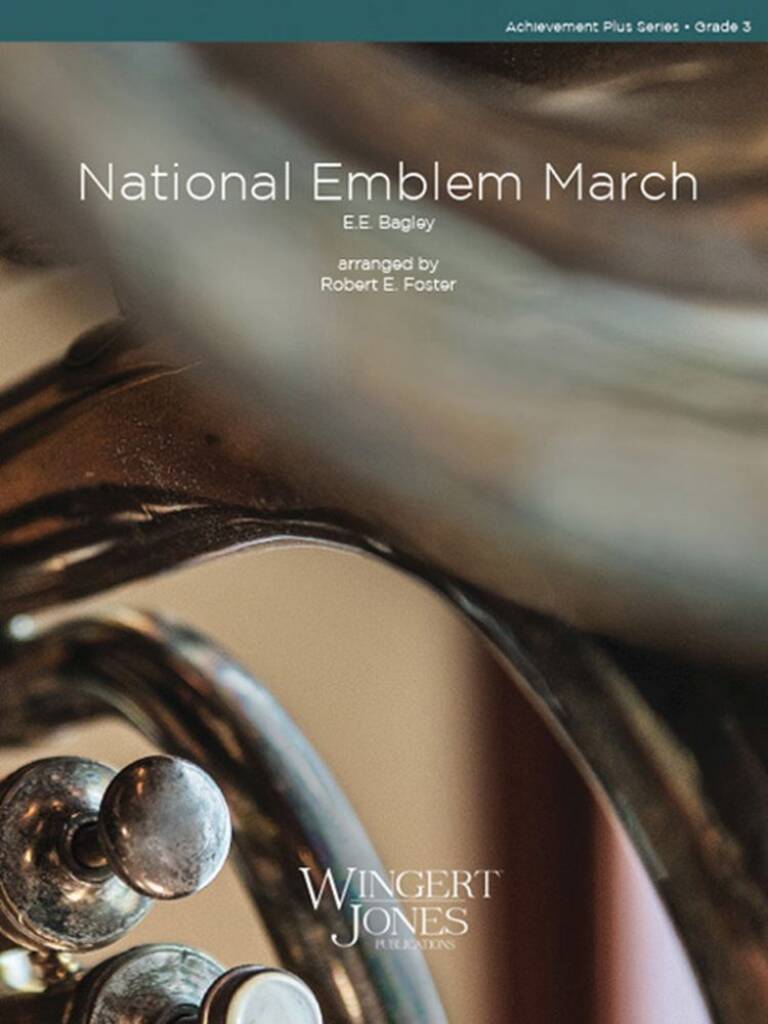
National Emblem March - E.E. Bagley
This classic march was written on a train in 1902 and has been an extremely popular concert favorite ever since. John Philip Sousa once referred to it as one of the three most effective street marches ever written, and Frederick Fennell called the piece "as perfect as a march can be." It still remains one of the best-known marches today, and this exceptional setting for young bands will allow developing groups to perform it effectively with great success.
Estimated dispatch 7-14 working days
-
£159.20
Chasing the Mystery - Kevin Houben
Commissioned by KU Leuven on the occasion of the 600th anniversary of KU Leuven.Chasing the MysteryKevin HoubenDedicated to the Wind Orchestra Universitair Harmonieorkest (UHO) of KU Leuven.Chasing the Mystery is the final movement of the triptych Beyond the Horizon of Thought.On the occasion of KU Leuven's 600th anniversary in 2025, the university commissioned Kevin Houben to compose a new work tailored to the Universitair Symfonisch Orkest, the Universitair Harmonieorkest and the Leuvens Universitair Koor. Maud Vanhauwaert, writer-in-residence during the 2023-2024 academic year, provided a poetic libretto.With Beyond the Horizon of Thought, Kevin Houben created not only a unique anniversary composition for more than 250 student musicians. The composition also conveys a universal message that perfectly reflects the spirit of the celebrating university: keep searching, keep developing yourself and keep hoping - even in turbulent times.From a compositional perspective, the work is built around themes and motifs with a clear symbolism. Kevin Houben explains: "I use a technique in which letters are converted into musical notes - a method also used by great masters such as Bach, Bartk and Shostakovich. This musical signature forms the basis of the melodic structure. In this way, 'KUL600' is represented by the notes D - G - E - F (re - sol - mi - fa)."The composition is conceived as a triptych: three movements that flow seamlessly into one another and are performed by different orchestral formations, yet together form a single whole. The work opens with the symphony orchestra, where the thematic 'KUL600' cells are introduced and explored. In this movement, Awakening the Wonder, several highlights establish a musical connection with the following movements.In the second movement, The Urge of Search, the choir sings a cappella to the poem Het is het by Maud Vanhauwaert, in which she reflects on the tireless quest for knowledge that has characterized the university for 600 years. Classical Gregorian techniques and traditional voice leading enter into dialogue with contemporary techniques, as the singers alternately whisper, call out and proclaim.Finally, the wind orchestra introduces the third movement, Chasing the Mystery. With a searching and anticipatory character, the orchestra presents the thematic cells in soloistic fashion, based on the main melody of the choral movement. References once again appear to the rhythmic 'KUL600' cells, which ultimately culminate in a grand apotheosis. A solitary soprano saxophone opens the finale with the 'KUL600' theme in its most intimate and meditative form. The expanded choir then joins the orchestra for an impressive final chord, musically preparing KU Leuven for the next 600 years.Beyond the Horizon of Thought premiered on Wednesday 23 and Thursday 24 April 2025 at LUCA Campus Lemmens, and was also performed on 9 May 2025 at Concertgebouw Brugge on the occasion of the 600th anniversary of KU Leuven. More than 250 musicians from the Universitair Symfonisch Orkest (USO) conducted by Edmond Saveniers, the Leuvens Universitair Koor (LUK) conducted by Kevin Hendrickx, and the Universitair Harmonieorkest (UHO) conducted by Erwin Scheltjens shared the stage.Cover illustration design: Grotezk Studio.
Estimated dispatch 7-14 working days
-
 £233.99
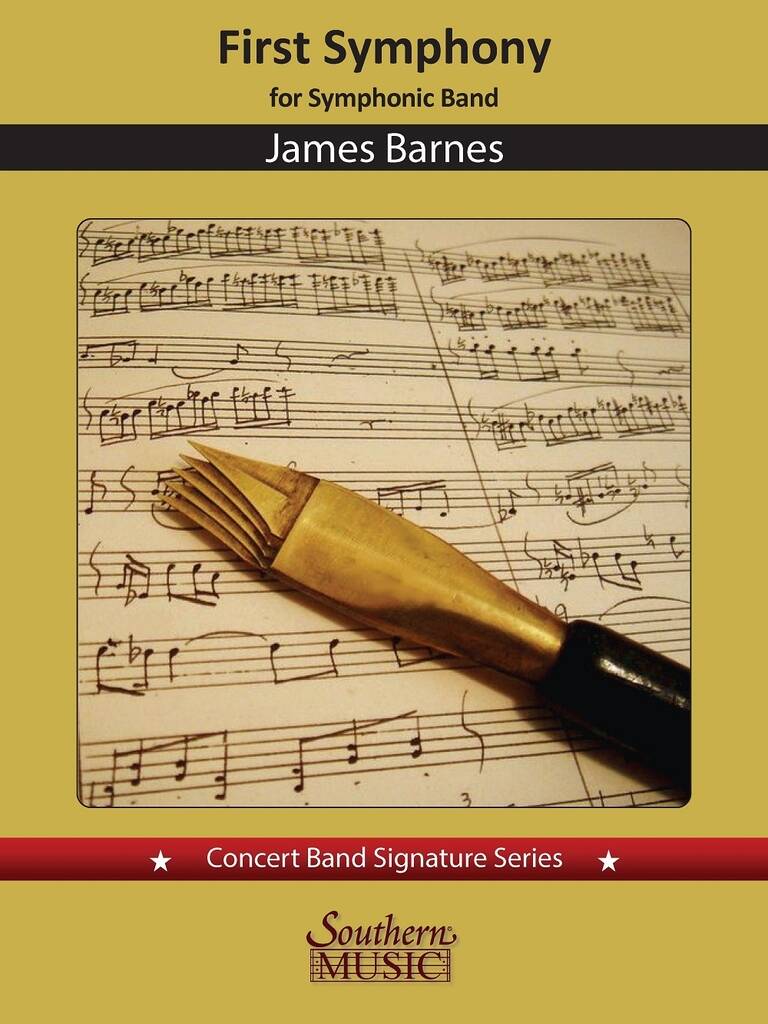
First Symphony, Op. 35 - James Barnes
Composed during the summer and fall of 1974, Barnes' FIRST SYMPHONY, Op. 35 was his master's thesis at The University of Kansas. It was premiered in the spring semester of 1976 by their Symphonic Band, Robert E. Foster conducting. The following year, the symphony was awarded the American Bandmasters Ostwald Composition prize, which led to a second performance (of only the first two movements) by the Northwestern Wind Ensemble at the American Bandmasters convention with Col. Jack Cline (U.S Marine Band) conducting. Following this performance, Barnes submitted the work to several publishers, all of which declined on the basis it was too long and difficult to be marketable. For this reason, Barnes set the work aside and there it remained until 2022, when an offer came from the Osaka Shion Wind Orchestra to record all nine of Barnes'_x001A_symphonies to help celebrate their 100th anniversary. Barnes seized the opportunity, engraving all four movements, with revisions and corrections, an effort that took seven days a week for two months to complete. As a result, after almost fifty years, all nine of the Barnes symphonies are finally available for performance.
Estimated dispatch 7-14 working days
-
 £66.95
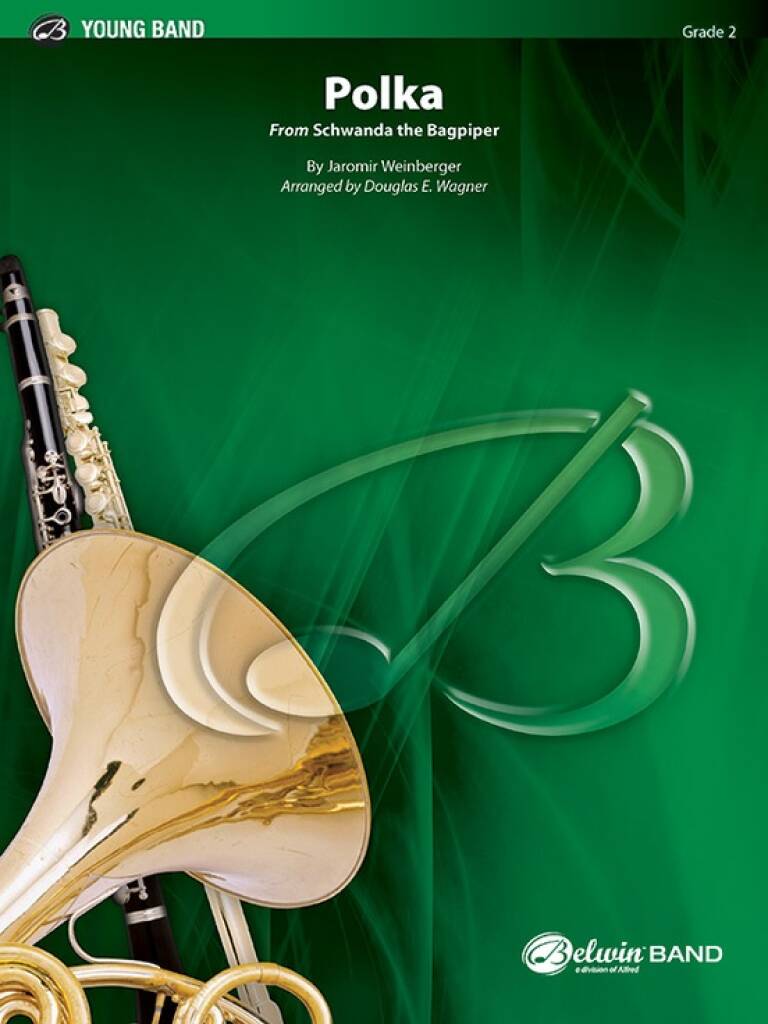
Polka: From Schwanda the Bagpiper - Douglas E. Wagner
A true classic of the concert band repertoire, the upper-end transcription of this excerpt from Czech composer Jaromr Weinberger's folk opera Schwanda the Bagpiper has appeared on countless concert programs and contest lists for the past nine decades. At long last, this cheerful work is available in a solid scoring for younger players, expanding its appeal to many more ensembles and audiences. Arranged from the original orchestral score, all parameters of this level have been observed for ease of preparation. (2:00)
Estimated dispatch 7-14 working days
-
 £139.00
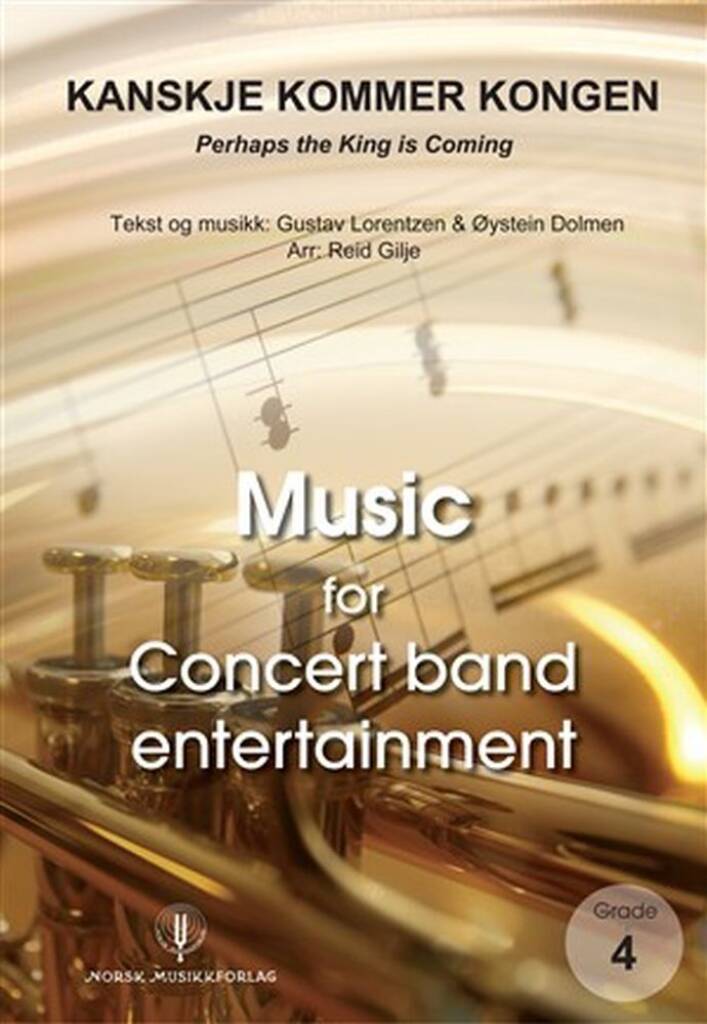
Kanskje kommer Kongen - Øystein Dolmen
"Kanskje kommer Kongen" ("Perhaps the King is Coming") is yet another example of Knutsen and Ludvigsen's creativity and imagination.The arrangement begins with a short fanfare in the introduction. From letter B, the melody is carried by horn and trombone with a majestic character.Ensure good precision in the accompaniment. From letter C, the style is Latin-inspired, resembling Samba. Alternative percussion solutions are possible here.From letter D, there is a pizzicato effect in 8th-notes, with sonorous melodic lines. The style becomes majestic and elevated again from letter E,then returns to the Latin style from letter F until the end.Reid Gilje
Estimated dispatch 7-14 working days
-
 £129.99
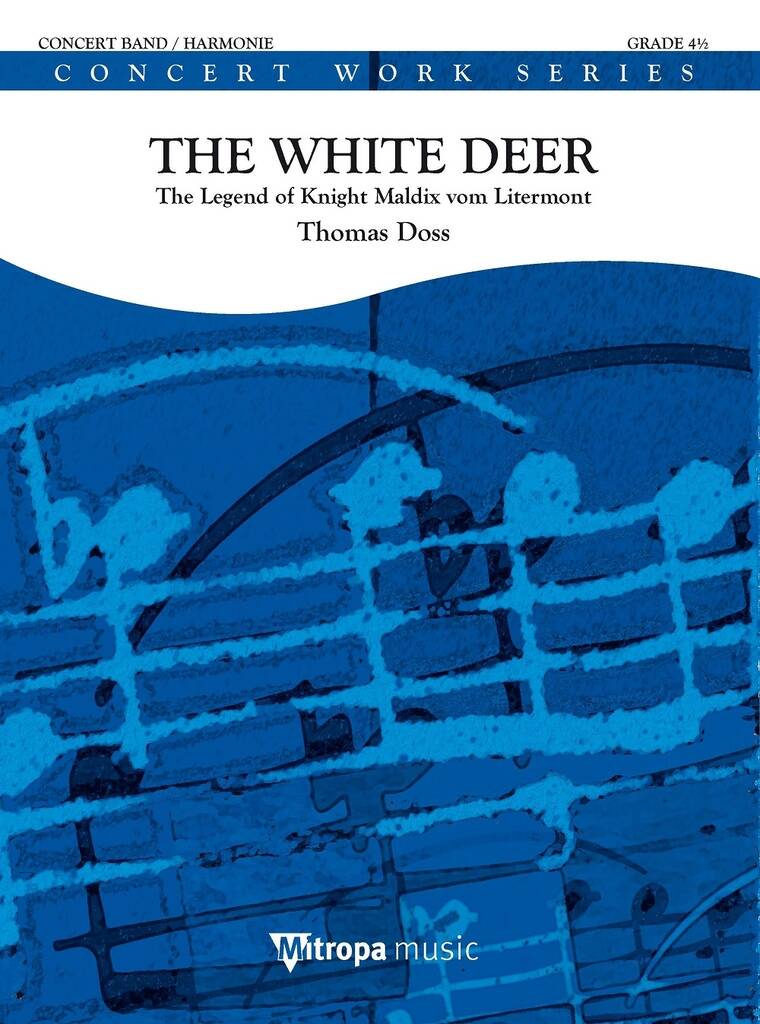
The White Deer - Thomas Doss
This composition for concert band was commissioned by Orchesterverein Wadgassen e. V. (Saarland/Germany) and its conductor Holger Jakobs. Thomas Doss has depicted the legend of the knight Maldix vom Litermont, a fierce hunter and an excessive drinker who, despite the warnings of his mother, was killed during a driven hunt in the woods, in a magnificent way. With the portrayal of various characters, the work offers a lot of variation.
Estimated dispatch 7-14 working days
-
 £124.99
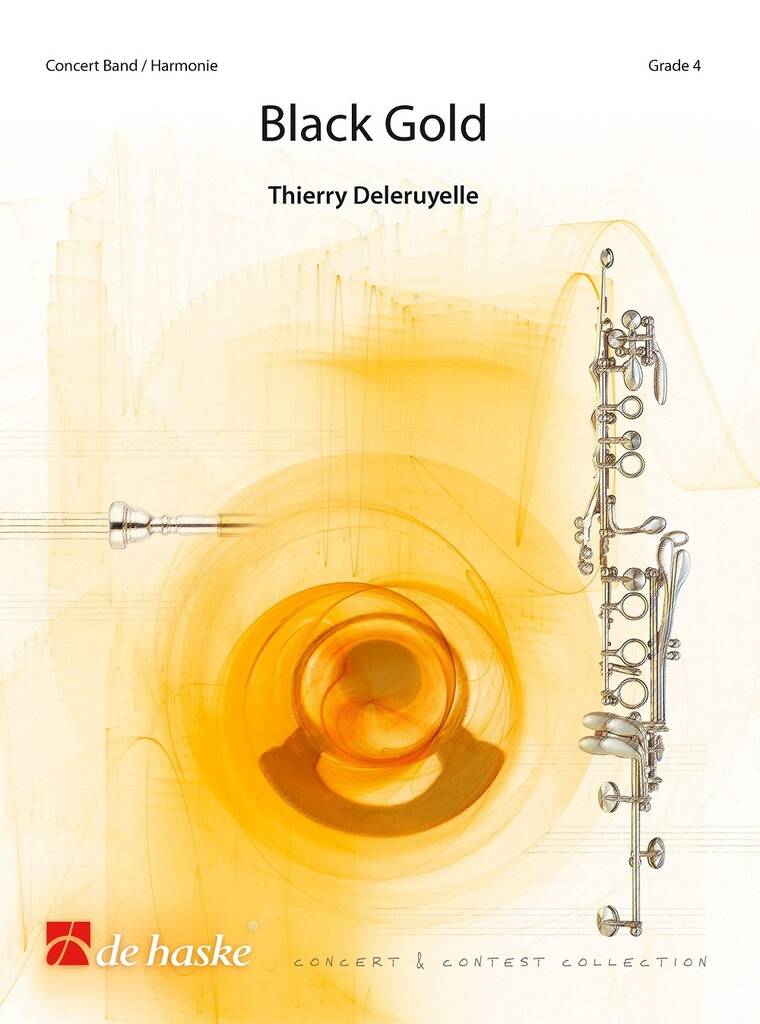
Black Gold - Thierry Deleruyelle
Black Gold was commissioned by Musikverein 1891 "Harmonie" Saarwellingen e.V. (Germany) to mark its 130th anniversary. This composition pictures the history of the mining industry in the town of Saarwellingen and its surrounding region, where the life of the miners as well as their families revolved around coal, or black gold, for centuries on end. The piece is based on motifs from the famous song "Glck auf, Glck auf, der Steiger kommt..." ("Good luck, good luck, the mining foreman comes"), a veritable anthem for miners the world over.
Estimated dispatch 7-14 working days
-
 £102.99
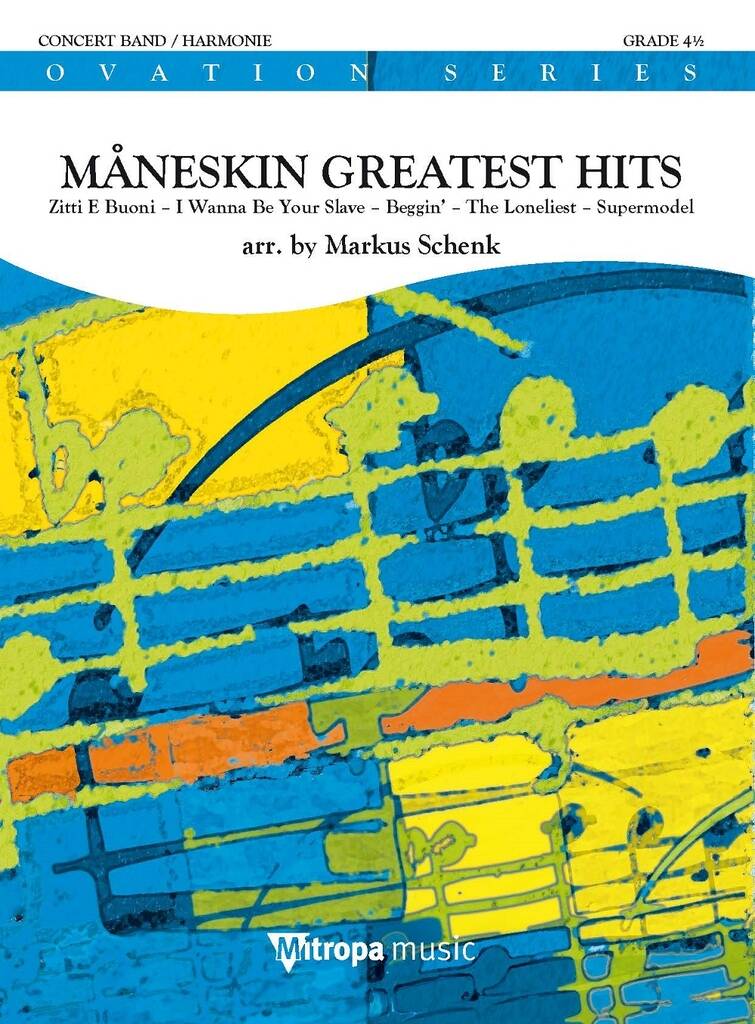
M...NESKIN Greatest Hits
Mneskin is an Italian rock band that first set foot on the international stage in 2021, when it won the 65th Eurovision Song Contest with Zitti e buoni. 2021 was an excellent year for the group in more ways than one, since they were also declared best rock band at the MTV European Music Awards. More successes followed: their cover of the Four Seasons song Beggin' became a worldwide hit and even reached the American Billboard Hot 100, as well as the global Spotify hit list. The band's name was definitively established with songs like I Wanna Be Your Slave, The Loneliest and Supermodel. Markus Schenk has brought together all of these hits in a fantastic pop-rock medley for concert band. Sturdy music that is unsuitable for softies, but it will certainly go down well with the audience!
Estimated dispatch 7-14 working days
-
 £159.99
Resurrection - Kevin Houben
"Man wird mit Keulen zu Boden geschlagen und dann auf Engelsfittichen zu den hchsten Hhen gehoben." (Mahler over zijn 2de symfonie "Wederopstanding", Juli 1894)*"You are clubbed to the ground and then lifted to the highest heights on angels' wings"Commissioned by and dedicated to Concertband Maasmechelen (BE), conducted by Mark Prils.Kevin Houben was inspired for this work by Gustav Mahler's 2nd symphony, better known as the Resurrection symphony.The work can be regarded as a Ma(h)lerei of various compositional and spherical elements that refer to the Austrian composer but that appear in this composition in an embedded, contemporary way.As Mahler often drew his inspiration from nature, the opening of this piece brings nature right to the audience. The work starts with a solo for alto flute accompanied by a pedal note in four octaves with harmonic responses echoing the solo.From the start, Kevin Houben provides Mahler's material with a contemporary touch. He replaces the nature sounds that Mahler uses (perfect fourth) with tritone intervals. The off stage trumpet signals have been preserved but are provided with a new accompaniment. Gradually, throughout the work, the orchestra undergoes its own independent development. Mahler's musical signature remains recognizable, but Kevin Houben allows it - e.g. through the use of various timbres - to flourish in a more modern musical idiom, which characterizes numerous contemporary compositions for wind band (cfr. Where Angels Fly).The work comes to a grandiose end with a passage of the famous chorale from Mahler's 2nd symphony. The rich orchestration of this chorale gives the listener the illusion of the presence of a choir and organ without actually using them.In Resurrection, each instrument group comes into its own: in solo fragments, in transparent thematic passages or in splendid tuttis. Therefore, the work forms an interesting challenge for a wind band on several levels, both technically and melodically - the latter due to the long suspenseful melodic phrases that the musical structure requires.The piece is accessible to a wide audience and can be regarded as an enrichment for any concert programme. Resurrection takes the audience through various atmospheres and experiences: from stunning to chilling, from calming to delighting...Die Musik muss immer ein Sehnen enthalten, ein Sehnen ber die Dinge dieser Welt hinaus." (Gustav Mahler, 1860-1911)"Music must always involve a longing, a yearning beyond the things of this world."
Estimated dispatch 7-14 working days
 View Music