
Results
-
 £2.25
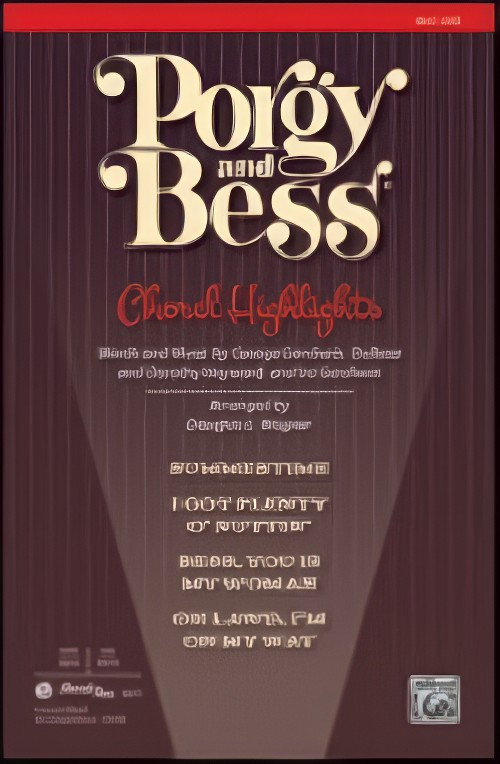
PORGY AND BESS, Highlights from (SATB Choir) - Gershwin, George - Wagner, Douglas E.
This classic Gershwin musical score has been given a fine, dramatic choral treatment in this stunning medley, celebrating the show's return to Broadway late in 2011. Optional Concert Band accompaniment is available. Approximately 5:00. Includes: Summertime; I Got Plenty O' Nuttin'; Bess, You Is My Woman; Oh Lawd, I'm on My Way.
Estimated dispatch 7-14 working days
-
 £77.00
TUNES FROM THE TRENCHES (Concert Band with optional choir) - Lawson, Peter
Concert Band set, with optional choral parts available separately. The recruiting song"Your King and Country Want You" starts us off, followed by "Goodbye, Dolly Gray" as the soldiers leave for war. "Belgium put the Kibosh on the Kaiser" is followed by some proper trench songs, with various lyrics being improvised by the soldiers: "Three German Officers crossed the Rhine"; "They were only playing Leap-Frog". "The Bells of Hell go Ting-a-ling-a-ling" leads to strains of "Stille Nacht" recalling the Christmas truce. "When this Lousy War is Over" and "There's no place like Home" are balanced by "Land of Hope and Glory" before the Americans arrive with "The Caissons go Rolling Along" and "Over There". "It's a Long Way to Tipperary" brings us towards a rousing finish save for an optional "Last Post-lude" to end reflectively. Duration: 13:30
Estimated dispatch 7-14 working days
-
 £332.99
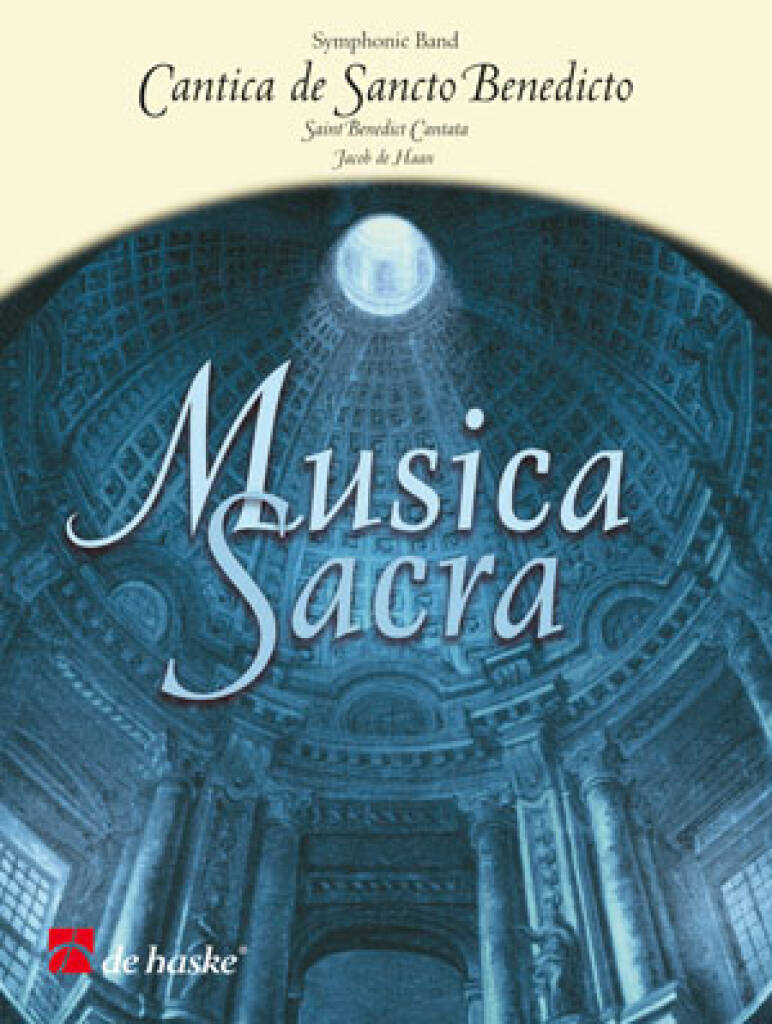
Cantica de Sancto Benedicto - Jacob de Haan
Cantica de Sancto Benedicto is a three-movement work for mixed choir, soprano solo, concert band and organ ad libitum - on Latin lyrics that relate to the life of Saint Benedict. It was commissioned by the city of Norcia in Italy, whereBenedict was born. The holy Benedict (480-547) is considered the founder of monastic life within the Roman Catholic Church. His enormous influence is especially owing to his monastic rule, the Regula Benedicti.Jacob de Haan has named the movements ofCantica de Sancto Benedicto after the Holy Trinity: the Father (Gloria Patri), the Son (Gloria Filio) and the Holy Spirit (Gloria Spiritui Sancto). The lyrics of thehymn Gemma Caelestis, (which, like the othertexts, were originally used in Gregorian chant) are voiced by the choir. To this purpose, Jacob de Haan composed new, choral-like, homophone music. The sequence Laeta Quies is rendered by the soprano; the verses (divided over the threemovements) are alternated with those of Gemma Caelestis. The work closes with an impressive grand finale, in which texts are used from the proprium of the mass in honor of the saint's day of the holy Benedict (11 July). Notes to the conductor:For this cantata, there are various possibilities for the performance. The first involves a performance in which the choir and soprano parts are only accompanied by organ. Such a performance has several advantages: since the band never soundstogether with the choir and the soprano, no balance problems occur, and even a performance with a large concert band and a small cantata choir is conceivable. A special layout is also possible - with which you can set up a three-dimensionalperformance in a church. For example, the choir can sing in the chancel, accompanied by the choir organ; the soprano can stand on the gallery, accompanied by the main organ; and the band can be seated in another part of the church. The choir couldalso sing from a gallery. With layouts like this, working with two conductors is advisable. Choral parts available separately.
Estimated dispatch 7-14 working days
-
 £61.00
Transeamus usque ad Bethlehem - Franz Schneider
The original piece was written by Franz Schneider (1737- 1812), organist and musical director at the Benedictine abbey of Melk on the Danube, for choir, string quartet, two trumpets and timpani. This arrangement can be performed with choir and band, without choir or by a mixed ensemble or band. Instead of using the complete choir, one can also only use the first choir part solo with accompaniment of the quartet parts. Therefore, the four part mixed choir score has alternatively been arranged for multipart wind ensemble (from a quartet).The original string parts have been arranged for symphonic band. Thanks to the cue notes, the passages intended for large band can also be performed by smaller ensembles in a most satisfactory way. The various instrumentation possibilities are clearly indicated in the instrumentation lists of the wind quartet and orchestra. The complete percussion part is totally 'ad libitum'.
Estimated dispatch 7-14 working days
-
 £202.99
Missa Tornacum - André Waignein
Flicien Doyen, the President of the Tornacum Royal Choir Circle of Tournai (Belgium) and a close friend of the composer commissioned this Mass. Missa Tornacum was originally composed for mixed choir and organ, gave a memorable performance of thepiece in the Chartres Cathedral in France.Although it does not include the Credo, the work is composed according to the traditional structure of a Mass in five parts : Kyrie, Gloria, Sanctus, Agnus Dei, and Ite missa est. En the first two parts, adialogue is created between the choir and the band. It is followed by the Sanctus cycle ("Sanctus" - "Hosanna" - "Benedictus"), which is remarkable for the contrasts between the tone colorscharacterizing each of its three parts. The fourth part,Agnus Dei, takes on a tone of serene intimacy. A free counterpoint draws this section to a close by fading into an almost imperceptible quietness. Ite missa est begins with a series of imitations, which develop into a majestic and cheerful passagemarking the end of the Mass. Choir parts are available separately.
Estimated dispatch 7-14 working days
-
 £60.99
The Best of Rooms - Randall Thompson
This arrangement of Randall Thompson's unaccompanied choral piece, The Best of Rooms, was transcribed by Barbara Lambrecht. As a student, Barbara fell in love with Thompson's music after hearing the Texas All State Choir sing his Testament of Freedom. Years later, as a school band director, she joined her church choir and "discovered" The Best of Rooms. Charmed not only by the music but also the text, she arranged this gem for wind band so that a new generation of musicians, in this case instrumentalists, could experience the genius of Randall Thompson. Two wind band versions are available: Version A opens with clarinet choir and oboe solo, while Version B opens with horn quartet. Whether for choir (Catalog No. 2672) or band, the music is lush, warm, lyrical, and mystical. Duration: 4:00
Estimated dispatch 7-14 working days
-
 £174.10
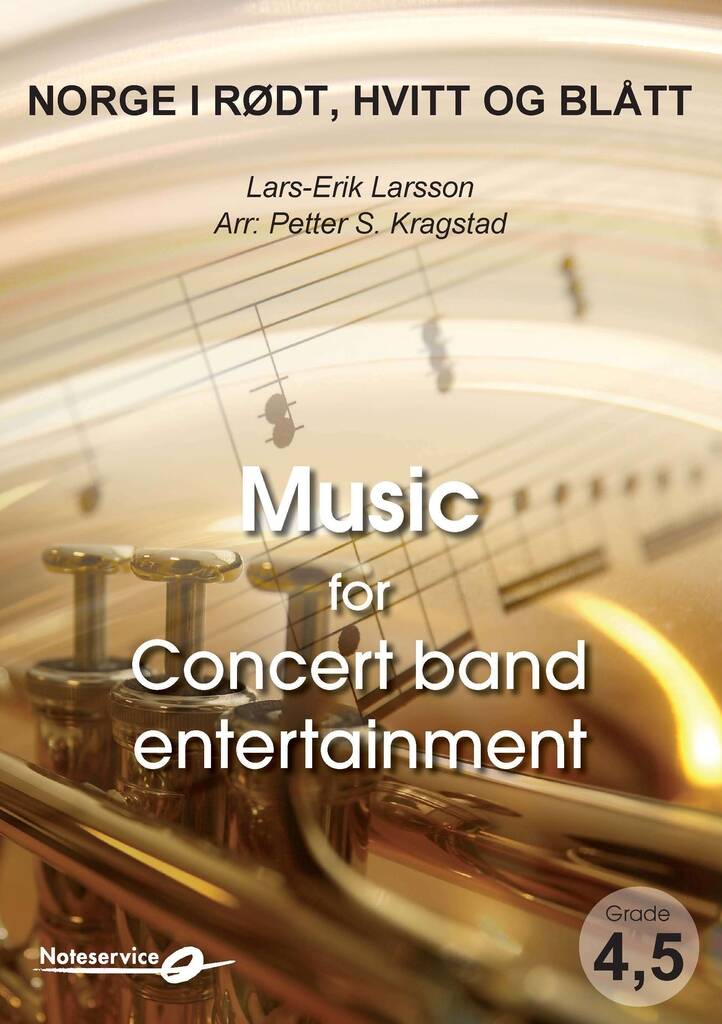
Norge i rdt, hvitt og bltt - Lars-Erik Larsson
Norge i rdt, hvitt og bltt ("Norway in Red, White and Blue") was commissioned by the Oslo Fagott Choir (yes, that is indeed a gay men's choir) for a concert with The Staff Band of the Armed Forces in 2015. I was given artistic licence to write a more modern and somewhat 'eclectic' arrangement for this originally Swedish melody written by Lars-Erik Larsson, which became something of a national liberation anthem when Nazi occupation ended in May 1945 - then with new lyrics by Finn B, Bias Bernhoft and Arild Feldborg.After the premiere in Oslo, and a music video with Oslo Fagott Choir and The Staff Band, broadcasted by Norwegian Broadcasting Corporation (NRK) on Constitution Day during coronavirus lockdown in 2020, I was approached by many to write an instrumental version of the arrangement for concert band. This version is now available through Norsk Noteservice.- Petter S. Kragstad -
Estimated dispatch 7-14 working days
-
 £159.20
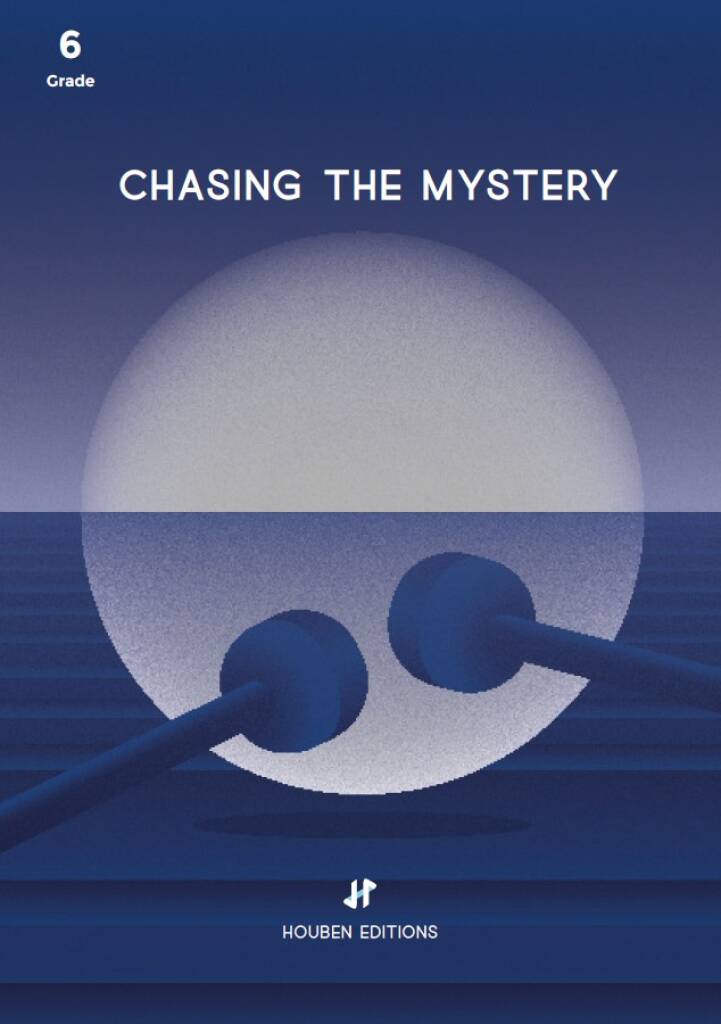
Chasing the Mystery - Kevin Houben
Commissioned by KU Leuven on the occasion of the 600th anniversary of KU Leuven.Chasing the MysteryKevin HoubenDedicated to the Wind Orchestra Universitair Harmonieorkest (UHO) of KU Leuven.Chasing the Mystery is the final movement of the triptych Beyond the Horizon of Thought.On the occasion of KU Leuven's 600th anniversary in 2025, the university commissioned Kevin Houben to compose a new work tailored to the Universitair Symfonisch Orkest, the Universitair Harmonieorkest and the Leuvens Universitair Koor. Maud Vanhauwaert, writer-in-residence during the 2023-2024 academic year, provided a poetic libretto.With Beyond the Horizon of Thought, Kevin Houben created not only a unique anniversary composition for more than 250 student musicians. The composition also conveys a universal message that perfectly reflects the spirit of the celebrating university: keep searching, keep developing yourself and keep hoping - even in turbulent times.From a compositional perspective, the work is built around themes and motifs with a clear symbolism. Kevin Houben explains: "I use a technique in which letters are converted into musical notes - a method also used by great masters such as Bach, Bartk and Shostakovich. This musical signature forms the basis of the melodic structure. In this way, 'KUL600' is represented by the notes D - G - E - F (re - sol - mi - fa)."The composition is conceived as a triptych: three movements that flow seamlessly into one another and are performed by different orchestral formations, yet together form a single whole. The work opens with the symphony orchestra, where the thematic 'KUL600' cells are introduced and explored. In this movement, Awakening the Wonder, several highlights establish a musical connection with the following movements.In the second movement, The Urge of Search, the choir sings a cappella to the poem Het is het by Maud Vanhauwaert, in which she reflects on the tireless quest for knowledge that has characterized the university for 600 years. Classical Gregorian techniques and traditional voice leading enter into dialogue with contemporary techniques, as the singers alternately whisper, call out and proclaim.Finally, the wind orchestra introduces the third movement, Chasing the Mystery. With a searching and anticipatory character, the orchestra presents the thematic cells in soloistic fashion, based on the main melody of the choral movement. References once again appear to the rhythmic 'KUL600' cells, which ultimately culminate in a grand apotheosis. A solitary soprano saxophone opens the finale with the 'KUL600' theme in its most intimate and meditative form. The expanded choir then joins the orchestra for an impressive final chord, musically preparing KU Leuven for the next 600 years.Beyond the Horizon of Thought premiered on Wednesday 23 and Thursday 24 April 2025 at LUCA Campus Lemmens, and was also performed on 9 May 2025 at Concertgebouw Brugge on the occasion of the 600th anniversary of KU Leuven. More than 250 musicians from the Universitair Symfonisch Orkest (USO) conducted by Edmond Saveniers, the Leuvens Universitair Koor (LUK) conducted by Kevin Hendrickx, and the Universitair Harmonieorkest (UHO) conducted by Erwin Scheltjens shared the stage.Cover illustration design: Grotezk Studio.
Estimated dispatch 7-14 working days
-
 £95.99
5 Tantum Ergo - Anton Bruckner
Anton Bruckner (b. 4.9.1824, Ansfelden, d. 11.10.1896, Vienna) didn't have it easy. Throughout his life, the Austrian composer was plagued by self-doubt. Anton Bruckner came from a simple, rural background. After the death of his father, he was accepted as a choirboy at the monastery of Sankt Florian in 1837. After several years as a school assistant and his own organ and piano studies, he first worked as organist in St. Florian, then from 1855 as cathedral organist in Linz. Introduced to music theory and instrumentation by Simon Sechter and Otto Kitzler, he discovered Richard Wagner as an artistic role model, whom he admired throughout his life and also visited several times in Bayreuth.In 1868 Anton Bruckner became professor of basso continuo, counterpoint and organ at the Vienna Conservatory; ten years later court organist; and in 1891 finally honorary doctor of the University of Vienna. He was considered an important organ virtuoso of his era, but had to wait a long time for recognition as a composer. It was not until Symphony No.7 in E major, composed between 1881 and 1883, with the famous Adagio written under the effects of Wagner's death, that he achieved the recognition he had hoped for, even if he was reluctant to accept it given his inclination towards scepticism and self-criticism.Anton Bruckner was a loner who did not want to follow a particular school or doctrine. He composed numerous sacred vocal works, such as his three masses, the Missa Solemnis in B flat minor (1854), the Te Deum (1881-84) and numerous motets. As a symphonic composer, he wrote a total of nine symphonies and many symphonic studies from 1863 onwards, tending to revise completed versions several times over. Bruckner's orchestral works were long considered unplayable, but in fact were merely exceptionally bold for the tonal language of their time, uniting traditions from Beethoven through Wagner to folk music, on the threshold between late Romanticism and Modernism.Hymns for four-part mixed choir a cappella (1846, St. Florian)No. 1 in E flat major (WAB 41/3): Quite SlowNo. 2 in C major (WAB 41/4): AndanteNo. 3 in B flat major (WAB 41/1): SlowNo. 4 in A flat major (WAB 41/2): SlowHymn for five-part (2 S, A, T, B) mixed choir and organNo. 5 in D major: SolemnlyThey are simple works, completely subordinate to their liturgical use, which nevertheless already show numerous characteristics of personal expression. These small pieces were able to stand up to the harsh scrutiny of the mature master: in 1888, Bruckner subjected them to a revision in which he made only minor corrections.
Estimated dispatch 7-14 working days
-
 £144.99
A Century of Music - Etienne Crausaz
This work was commissioned by the Concordia wind band and the cho male choir, based in Mige (Valais, Switzerland), to mark their respective centenaries. The piece is a sanguine sounding work entirely based upon variations in several keys of a main hymn. This creates a festive and 'sprituoso' atmosphere throughout this impressive, highly colourful and energetic work. This work was commissioned by the Concordia wind band and the cho male choir, based in Mige (Valais, Switzerland), to mark their respective centenaries. The piece is a sanguine sounding work entirely based upon variations in several keys of a main hymn. This creates a festive and 'sprituoso'atmosphere throughout this impressive, highly colourful and energetic work.
Estimated dispatch 7-14 working days
 View Music