
Results
-
 £72.99
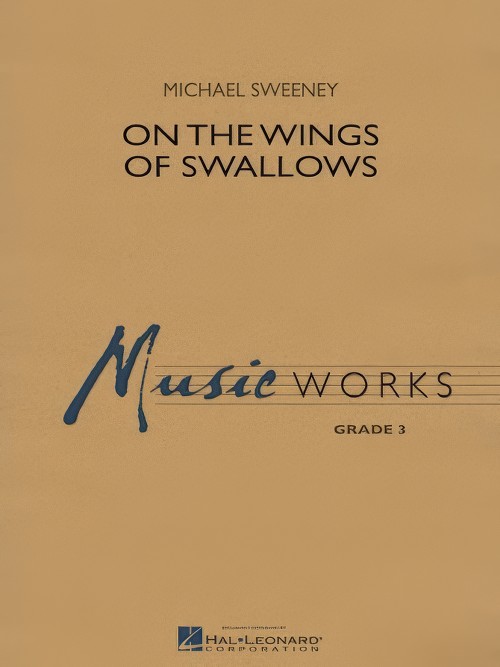
On the Wings of Swallows (Concert Band - Score and Parts) - Sweeney, Michael
True hope is swift, and flies with swallow's wings - from Shakespeare's Richard III. This dramatic work from Michael Sweeney is a multi-styled piece written in a through-composed fashion. Developing through pensive opening sonorities, a driving main theme, and a slow section featuring a haunting alto sax solo, the piece ultimately builds to a climatic brass statement. A rewarding and moving composition.Duration: 6.00
Estimated dispatch 7-14 working days
-
 £45.54
Dreams of Victory (Concert Band - Score and Parts)
This dignified concert fanfare is a great way to feature your developing brass section! Bold melodies and stately percussion writing help make this piece an excellent concert opener for even more advanced groups. Your students will aspire to greater musical heights!
Estimated dispatch 7-14 working days
-
£65.50
Trombonanza - Joseph Compello
Written in the style of the many trombone features from the prolific pen of Henry Fillmore, this is a winning selection for featuring the low brass of the young ensemble. It includes ample use of the trombone glissando (colloquially referred to as a smear). The march-like character and simple tunefulness of the work are sure to make it a hit with the band and an audience favorite as well.
Estimated dispatch 7-14 working days
-
 £73.60
Kings Of Brass - Darrol Barry
Estimated dispatch 7-14 working days
-
£74.99
Kings Of Brass - Darrol Barry
Estimated dispatch 10-14 working days
-
 £13.95
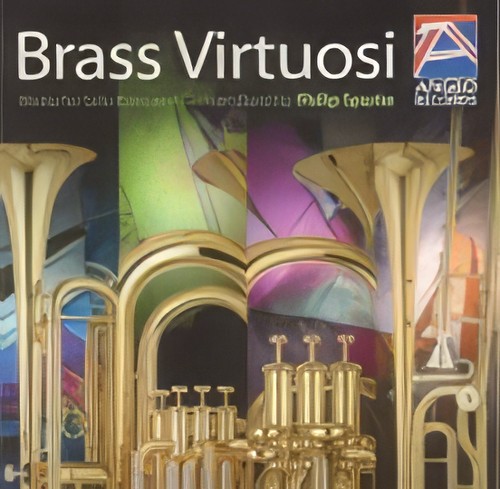
BRASS VIRTUOSI (The Music of Philip Sparke)(Wind Band CD) - Sparke, Philip
Featuring: Woody English (trumpet); Stef Pillaert (euphonium); Markus Theinert (tuba); David Childs (euphonium); Olaf Ott (trombone). Includes: Manhattan; Euphonium Concerto No.2; Tuba Concerto; Harlequin; Trombone Concerto.
Estimated dispatch 7-14 working days
-
 £248.99
Missa Brevis - Jacob de Haan
Missa Brevis, written for choir and wind band, was commissioned by the Conseil Dpartemental pour la Musique et la Culture de Haute-Alsace (Dir.: Philippe Pfisterer) in Guebwiller (France), in celebration of the millennium of Pope Leon IX'sbirth in guisheim (France). The composer conducted the first performance on June 23, 2002. It was performed live for the French television channel France 2. The mass movements Kyrie, Gloria, Credo, Sanctus, Benedictus, and Agnus Deiare very suitable for the Catholic as well as the Protestant liturgy. For this mass, various ways for performing in diverse variable strengths are possible. An instrumental performance is possible if the brass represents the choir parts. In thisoption, it is desirable for the brass to be positioned separately from the rest of the band (on a gallery, for example), so that the idea of two choirs is approached. In a performance with a large choir, the brass can work very well as a support. Inthat case, the dynamics of the brass should be adapted somewhat, since these are actually intended for an instrumental performance. You can also leave out the brass entirely for the benefit of the choir. For the accompaniment of smaller choirs, youcan opt for a small ensemble from the band. This can also be a quartet, put together as desired. For the performance of this mass, the obvious choice is one of the above options. However, as an alternative, a performance with a combination of theseoptions (vocally/instrumentally) is also possible not just from an artistic point of view (variation), but also from a practical starting point for example in the case that the choir has rehearsed only two movements. With a full strength, theconductor can vary the instrumentation to his or her liking. Then the brass can also play a role in the accompaniment (instead of supporting the choir). The following combinations are possible:1. clarinet choir (from Eb Clarinet to BassClarinet)2. clarinet choir + saxophones3. brass (flugelhorns, horns, euphoniums, bass section)4. brass (2 trumpets / 2 trombones)5. double reeds (optional + flute, optional + string bass)6. tutti7. all winds8. allbrassIn a performance by brass band and choir, it is usually advisable to leave out option 1 (choir + brass + band). The choir sings self-reliantly, accompanied by a full brass band. In an instrumental performance, you can consider a combinedquartet (two cornets and two trombones) + brass band.Choral parts available separately.
Estimated dispatch 7-14 working days
-
 £138.00
The Saints And the Royal - Eric Swiggers
The Saints and the Royal was composed on behalf of Royal brass band St. Willibrord Heeswijk on the occasion of its 200th anniversary in 2023.When the marching band was founded in 1823, it was given the name "Harmonie Sint Cecilia," referring to Saint Cecilia, the patron saint of music. Around 1904, the name was changed to 'Kerkelijke fanfare Willibrord', strongly emphasizing the connection with the church in Heeswijk, of which Saint Willibrord is the patron saint. In 1973, at its 150th anniversary, the band received the predicate 'royal'. From that time on one speaks of the Royal brass band Saint Willibrord.The composition musically depicts both Saints Saint Cecilia and Saint Willibrord and the jubilee royal brass band. Although one of the oldest musical societies in the Netherlands, this fanfare is alive and kicking and will celebrate its 200th anniversary in 2023. The composition therefore opens festively and energetically. The alto saxophone plays a recitative, the Gregorian "Cantantibus organis Caecilia virgo in corde suo soli domino decantabat" from the vespers of the feast day of Saint Caecilia, the patron saint of music. This is taken over by the full wood and soft brass group. After a brief, playful interlude, this chant is played by the full orchestra, like an organ, larded with circumambulations.St. Willibord was born in England but made the crossing to the Netherlands in 690 to preach the gospel as a missionary. This was far from harmless and he faced frequent uprisings. After his death he was buried in Echternach in Luxembourg. In this place he is commemorated to this day with the annual "Spring Procession" or "Dance Procession". This procession of Echternach went as follows until 1947: 3 steps forward, 2 steps backward. Hence we hear this procession back in a 5/8 measure: 3 + 2.After this procession, the Gregorian vesper of Sint Caecilia sounds one more time, leading the composition to a reprise of the opening: The jubilee Royal Fanfare Sint Willibord Heeswijk.
Estimated dispatch 7-14 working days
-
 £141.99
Concerto for Wind Ensemble - Karel Husa
Commissioned by the Michigan State University Alumni Band, this three movement work by Karel Husa was the winner of the first Louis Sudler International Wind Band Composition Competition in 1983. A note from thecomposer: 'Divided into three movements, this work is a display of virtuoso passages given to solo instruments as well as to the groups of the ensemble. In the Fanfare of the first movement, the Brass section concertises in groupsof four Brass quintets (2 Trumpets, Horn, Trombone and Tuba or Baritone), spread from left to right in back. The Saxophones (SATB) are placed in front of the Brass quintets, and the Woodwinds occupy the front of the stage, withPercussion on the left and right side. These groups, like the Brass quintets, play in the concertante style, particularly in the first and last movements. 'At the same time, each movement contains individual solo passages(for example, Timpani and Flute in Movement I - Drum Ceremony and English Horn and other low Woodwinds in Movement II - Elegy). The composition of this piece was prompted by the excellence of Wind and Percussion players today, andby the incredible growth of Wind ensembles, orchestras, and bands in the last 25 years. It is intended for their enjoyment.'
Estimated dispatch 7-14 working days
-
 £87.99
Tokyo Nocturne - Philip Sparke
Tokyo Nocturne was commissioned by the Tokyo Wind Symphony Orchestra to celebrate its 60th anniversary in 2023. They gave the world premiere under maestro Keita Matsui on November 5th that year. The work opens quietly on a solo clarinet with a modal phrase, which builds as more instruments enter until, over a static, muted brass chord, the textures thin to introduce a chorale-like passage for the woodwinds. This intensifies until the brass enter with a chorale of their own, again building to a celebratory full-band climax. The optimistic mood changes abruptly to one of uncertainty but only to reintroduce the brass chorale, this time on the woodwinds, in a quieter, calmer iteration. The music again builds to a climax, where the brass majestically repeat the opening clarinet melody, before the mood relaxes to bring the work to a peaceful close.
Estimated dispatch 7-14 working days
 View Music