
Results
-
 £8.95
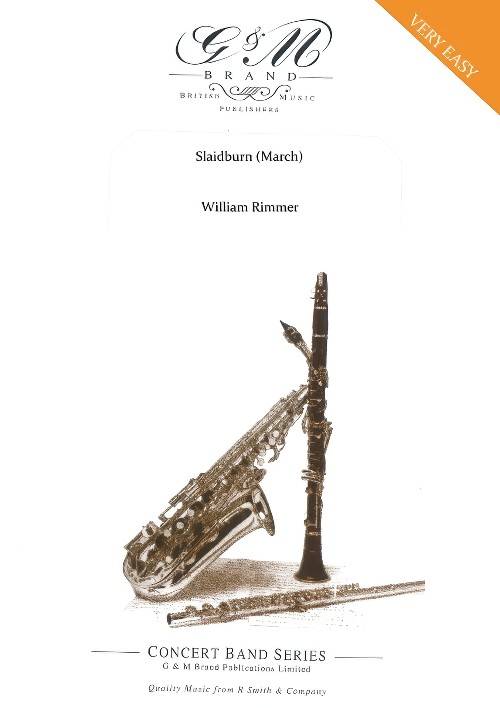
£8.95Slaidburn (March) (Concert Band - Score Only) - Rimmer, William - Brand, Michael
For many, Lancastrian William Rimmer is Britain's 'March King.' His marches are wonderful, every one with its own unique personality and form. Like Sousa, he also created and played a vast catalogue of band music ranging from waltzes and solos to great selections from the masters, but it is for his marches that he is remembered today. Slaidburn is a village in the county of Lancashire, England, but was originally part of the West Riding of Yorkshire. Rimmer composer this easy but effective and much-loved march for the village band.
Estimated dispatch 7-14 working days
-
 £73.50
Prelude and Fugue in B Flat Major (Concert Band - Score and Parts) - Bach, Johann Sebastian - Moehlmann, Roland L.
This arrangement of Bach's Prelude and Fugue in B-flat Major was originally scored in 1955. The fluid prelude establishes the melody and then it is amended musically with fascinating intricacy. Clarity of the composer's intent is certain it this time-honoured arrangement. Classic repertoire for your concert band. Freshly re-engraved, this is must in every serious band music library!Duration: 6:15
Estimated dispatch 7-14 working days
-
 £30.00
BEGINNING BAND BOOK No.1 (Score inc. online audio) - Edmondson & McGinty
An affordable collection of concert repertoire for beginning bands; great sight reading material for more advanced bands! Features include: Grade 1 concert band music; Playable with only 1 flute, 2 clarinets, 1 alto saxophone, 2 cornets/trumpets and percussion, up to full instrumentation; Full, complete sound, even without bass clef instruments. The bass clef part in octaves is optional; Both clarinet parts stay below the break; Optional F Horn and Tenor Saxophone parts are written in their best ranges; Bell part for teaching melodic percussion. Contents: Anasazi; Bartok: Folk Song and Dance; The Buglers; Chant and Praise; Chorale and Recessional; Clarinet, Caprice; Echoes; Let's Take a Break; Manchester March; Old MacDonald's Band; Somerset Overture; Those Fabulous Flutes; Two Canadian Folk Songs; Westwind Overture; Yorktown March.
Estimated dispatch 7-14 working days
-
 £30.00
BEGINNING BAND BOOK No.2 (Score inc. CD) - Edmondson & McGinty
An affordable collection of concert repertoire for beginning bands; great sight reading material for more advanced bands! Features include: Grade 1 concert band music; Playable with only 1 flute, 2 clarinets, 1 alto saxophone, 2 cornets/trumpets and percussion, up to full instrumentation; Full, complete sound, even without bass clef instruments. The bass clef part in octaves is optional; Both clarinet parts stay below the break; Optional F Horn and Tenor Saxophone parts are written in their best ranges; Bell part for teaching melodic percussion. Contents: Air and Allegro; Bandissimo; Cumberland Gap; Diamond Ridge (Concert March); English Folk Trilogy; Fantasy on a French Folk Song; Hickory Dickory Rock; Kitty Hawk March; Montezuma's Castle; Percussion Parade; Prelude and Dance; Old Band; Those Sophisticated Saxes; Those Terrific Trumpets; Windsor Overture.
Estimated dispatch 7-14 working days
-
 £30.00
BEGINNING BAND BOOK No.5 (Score inc. CD) - Edmondson & McGinty
An affordable collection of concert repertoire for beginning bands; great sight reading material for more advanced bands! Features include: Grade 1 concert band music; Playable with only 1 flute, 2 clarinets, 1 alto saxophone, 2 cornets/trumpets and percussion, up to full instrumentation; Full, complete sound, even without bass clef instruments. The bass clef part in octaves is optional; Both clarinet parts stay below the break; Optional F Horn and Tenor Saxophone parts are written in their best ranges; Bell part for teaching melodic percussion. Contents: Canterbury Overture; Chant and Gloria; Clouds; The Debonair Dragon; Flute Loops; Folk Song Folks; Little Rhondo for Band; Mariachi Serenade; Mount Rushmore March; Omega March; Oxford Overture; A Regal Procession; Serenade and Dance; Serpents; Those Dynamic Drummers.
Estimated dispatch 7-14 working days
-
 £199.95
DIONYSIAQUES (Advanced Concert Band) - Schmitt, Florent - Hauswirth, Felix
Edited by Felix Hauswirth, this masterwork for wind band has long been a staple of the repertoire, considered the pre-eminent composition of original French wind band music. Re-scored by Felix for modern wind instrumentation, the score and parts have been visually cleaned up and corrected for ease of use and study.
Estimated dispatch 7-14 working days
-
 £60.99
Gute Freunde (Concert Band - Score and Parts)
Gute Freunde is one of the most recent compositions from well-known concert band leader and composer, Michael Klostermann. Klostermann and his musicians remain synonymous with top-notch traditional concert band music across Europe, and this beautiful waltz is no exception!
Estimated dispatch 7-14 working days
-
£60.99
Nun geht es los (Concert Band - Score and Parts)
Nun geht es los, meaning "off we go," is a spirited polka taken from the most recent CD of concert band music released by well known band leader, Michael Klostermann and his musicians. Amongst a marvellous selection of polkas, waltzes and marches, Nun geht es los (Let's get started) stands out as an exceptional piece. Ideal to play as a concert opener!
Estimated dispatch 7-14 working days
-
 £94.99
The Temple Musician (Concert Band - Score and Parts) - De Haan, Jan
The title of this work is based on the name of the commissioning band: Music Society Asaf (Dutch for Asaph). In the Hebrew Bible, the poet, singer and seer Asaph is in charge of the choir in the house of King David. Various psalms, including Psalm 81, which is used in this work, are attributed to him. The melody of this psalm is flanked by a march-like initial part, and the traditional klezmer melody Uri Tzion features as a spectacular finale.Duration: 7.00
Estimated dispatch 7-14 working days
-
 £72.00
The Squealer (Marchio Circusioso) (Concert Band - Score and Parts) - Huff, Will - Glover, Andrew
This march classic from the golden age of band music will be a guaranteed hit with audiences and performers alike! "The Squealer" lives up to its name, and is a rare example of a rough-and-tumble circus march that's within the technical reaches of most bands! An excellent teaching tool for 6/8 time, "The Squealer" will be a perfect choice for any concert, contest, or festival performance. Hit it! Duration: 2.45
Estimated dispatch 7-14 working days
 View Music