
Results
-
£37.95The Year of the Dragon (Prestige Concert Band - Score only) - Sparke, Philip
The 2017 version of The Year of the Dragon was commissioned by the Siena Wind Orchestra and given its world premiere on June 17th 2017 in Bunkyo Civic Hall, Tokyo, conducted by the composer.The original wind band arrangement of The Year of the Dragon was made in 1985, a year after the composer wrote the brass band version. At that time he was still learning the intricacies of writing for wind band (and still is!) and in the 32 years which have elapsed since then, his approach to scoring for the medium has developed and, hopefully, improved.Here are the main differences between the two versions:In the 1980's, the wind band movement was much less international than it is now. British wind bands were still to some extent based on the military band tradition of the time, which tended to use rather smaller instrumentation than the then-dominant American university model. The new version embraces a much more international instrumentation, including low woodwinds and string bass, as well as an expanded percussion section.In the original version there was a touch of naivety in the way the composer wrote for the woodwinds; much of their articulation was transferred too literally from the brass version, resulting in some unidiomatic writing, which he has tried to improve in the new version.In addition to the above, Philip's own compositional style has matured and developed in the intervening 32 years. There are some passages in the original which he simply would not write today - not because they are 'wrong', but because his way of writing has changed. The new version is perhaps how he would have written it today, rather than simply dressing the original version in new clothes.The work is in three movements:Toccata opens with an arresting side drum figure and snatches of themes from various sections of the band, which try to develop until a broad and powerful theme from the middle of the band asserts itself. A central dance-like section soon gives way to the return of this theme, which subsides until faint echoes of the opening material fade to a close.Interlude takes the form of a sad and languid solo for alto saxophone. A chorale for the whole band introduces a brief spell of optimism but the saxophone solo returns to close the movement quietly.Finale is a real tour-de-force for the band with a stream of rapid semi-quavers running throughout the movement. The main theme is heroic and march-like but this is interspersed with lighter, more playful episodes. A distant fanfare to the sound of bells is introduced and this eventually returns to bring the work to a stirring close.
Estimated dispatch 7-14 working days
-
£199.95The Year of the Dragon (Prestige Concert Band - Score and Parts) - Sparke, Philip
The 2017 version of The Year of the Dragon was commissioned by the Siena Wind Orchestra and given its world premiere on June 17th 2017 in Bunkyo Civic Hall, Tokyo, conducted by the composer.The original wind band arrangement of The Year of the Dragon was made in 1985, a year after the composer wrote the brass band version. At that time he was still learning the intricacies of writing for wind band (and still is!) and in the 32 years which have elapsed since then, his approach to scoring for the medium has developed and, hopefully, improved.Here are the main differences between the two versions:In the 1980's, the wind band movement was much less international than it is now. British wind bands were still to some extent based on the military band tradition of the time, which tended to use rather smaller instrumentation than the then-dominant American university model. The new version embraces a much more international instrumentation, including low woodwinds and string bass, as well as an expanded percussion section.In the original version there was a touch of naivety in the way the composer wrote for the woodwinds; much of their articulation was transferred too literally from the brass version, resulting in some unidiomatic writing, which he has tried to improve in the new version.In addition to the above, Philip's own compositional style has matured and developed in the intervening 32 years. There are some passages in the original which he simply would not write today - not because they are 'wrong', but because his way of writing has changed. The new version is perhaps how he would have written it today, rather than simply dressing the original version in new clothes.The work is in three movements:Toccata opens with an arresting side drum figure and snatches of themes from various sections of the band, which try to develop until a broad and powerful theme from the middle of the band asserts itself. A central dance-like section soon gives way to the return of this theme, which subsides until faint echoes of the opening material fade to a close.Interlude takes the form of a sad and languid solo for alto saxophone. A chorale for the whole band introduces a brief spell of optimism but the saxophone solo returns to close the movement quietly.Finale is a real tour-de-force for the band with a stream of rapid semi-quavers running throughout the movement. The main theme is heroic and march-like but this is interspersed with lighter, more playful episodes. A distant fanfare to the sound of bells is introduced and this eventually returns to bring the work to a stirring close.
Estimated dispatch 7-14 working days
-
£69.95Aylesbury Dances (Concert Band - Score and Parts) - Wiffin, Rob
The suite Aylesbury Dances was commissioned by the Aylesbury Concert Band to mark the occasion of their 25th Anniversary in 2019. Its three movements depict different aspects of Aylesbury: I. Pavane: The Town - Having read something of the town's history and its architecture I decided I wanted to write something ceremonial with the feel of music from Tudor times. Aylesbury was given its charter and borough status in 1554 by Mary Tudor so I took that as my starting point but then added some harmony that moves forward in time. This fits with the town's motto: Semper Prorsum (Always forward) and also with the Band's evolution from Aylesbury Town Band to Aylesbury Community Concert Band to Aylesbury Concert Band. The music can be defined as a pavane, or a cortege. The sense of procession is slightly disturbed by a 'Blue Leanie' moment. The Blue Leanie is an iconic Aylesbury building, an oblique rhombic prism which stands at an angle of 17% inclination. I took a quaver out of the time signature (I know the maths don't work!) to reflect this and added some bluer harmony at that point. This opening movement gives a sense of the grandeur and heritage of Aylesbury town and a chance for my friends from the brass section to warm up! II. Siciliana: Waterside - To balance the outer two movements, the middle movement of the suite has a slow lilting 6/8 rhythm. It is in the style of a Siciliana, a dance form originating in the baroque era. It is a graceful, tender and melancholic dance, cast here in a minor key and featuring the dark voice of the cor anglais. The Siciliana was often linked with pastoral scenes and Aylesbury itself sits amid some beautiful countryside. It may, therefore, seem a bit of a stretch to call this movement 'Waterside', especially as Aylesbury is so far from the sea, but the town has a theatre of that name and that was the genesis for this particular music. There is a statue of Ronnie Barker in the grounds of the Waterside theatre as he started his career in repertory theatre in Aylesbury, so I included a fleeting reference to the theme music of the comedy programme 'Open all Hours'. III. Frolic: Ducks in a Row - It was impossible to write a piece connected with Aylesbury without considering the famous Aylesbury ducks. Duck rearing was a major industry in the town in the 19th century. The white Aylesbury Duck is a symbol of the town, appearing on its coat of arms and in the logo of the Aylesbury Concert Band! This movement is all about trying to get the little darlings in a row so they can sing their 'Duck Chorus' together but they keep on scattering, flying off or swimming away as quickly as they can manage. It's a bit like watching ducks disperse when my dog jumps into the stream after them. Eventually we get more of them in a row - even though they protest. Hidden amongst the ducks is a reference to Erica Miller, saxophonist and chairman of the band, and there's even a veiled reference to a shark in the hope of getting them out of the water. Ducks in a Row is a fun romp bringing this suite of Aylesbury Dances to a suitably celebratory conclusion.- Rob Wiffin.Duration: 9.15
Estimated dispatch 7-14 working days
-
£13.95The Sword and the Crown (Concert Band CD)
Great British Music for Wind Band - Volume 2The Central Band of the Royal Air Force conducted by Wing Commander Barrie Hingley1A Pittsburgh OverturePhilip SparkeThe Central Band of the Royal Air Force5.592The Sword and the CrownEdward GregsonThe Central Band of the Royal Air Force13.543Ballad for BandGordon JacobThe Central Band of the Royal Air Force7.224-7A Derbyshire SuiteMichael ShortThe Central Band of the Royal Air Force16.27 On Stanton Moor 5.05 The Cat and the Fiddle 3.04 Lord Musgrave's Dining Room 4.41 Well Dressing 3.328CelebrationPhilip SparkeThe Central Band of the Royal Air Force10.54
Estimated dispatch 7-14 working days
-
£248.99Missa Brevis Wind Band Set (Score & Parts)
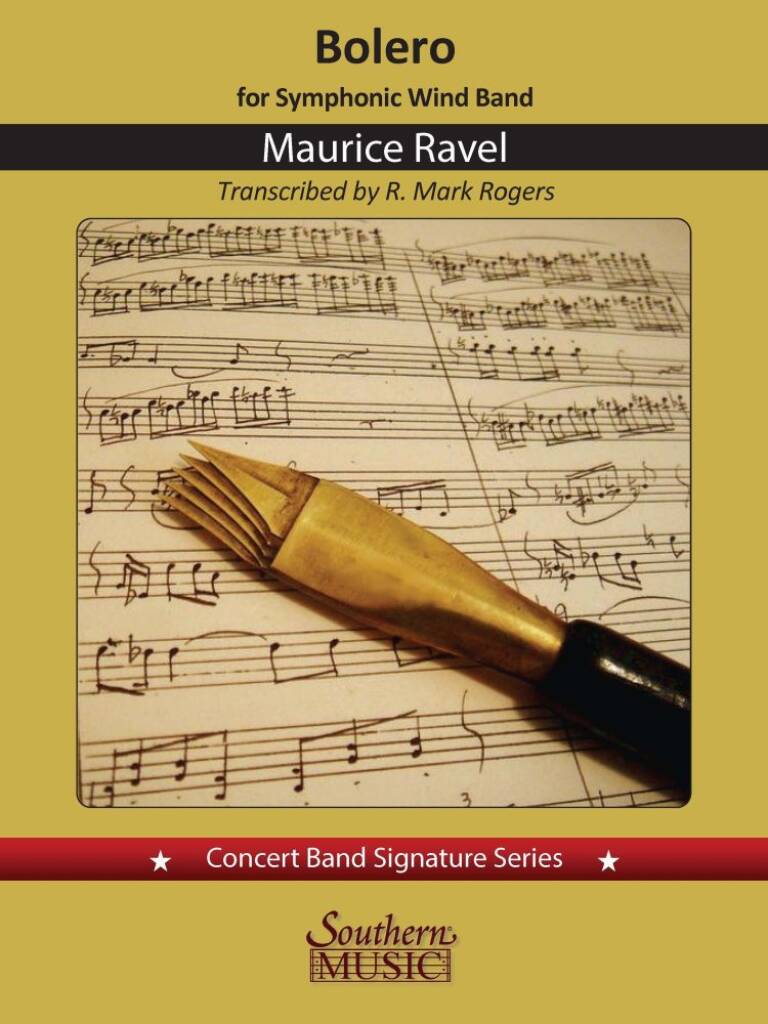
Missa Brevis, written for choir and wind band, was commissioned by the Conseil D?partemental pour la Musique et la Culture de Haute-Alsace (Dir.: Philippe Pfisterer) in Guebwiller (France), in celebration of the millennium of Pope Leon IX's birth in ?guisheim (France). The composer conducted the first performance on June 23, 2002. It was performed live for the French television channel France 2. The mass movements Kyrie, Gloria, Credo, Sanctus, Benedictus, and Agnus Dei are very suitable for the Catholic as well as the Protestant liturgy. For this mass, various ways for performing in diverse variable strengths are possible. An instrumental performance is possible if the brass represents the choir parts. In this option, it is desirable for the brass to be positioned separately from the rest of the band (on a gallery, for example), so that the idea of two choirs is approached. In a performance with a large choir, the brass can work very well as a support. In that case, the dynamics of the brass should be adapted somewhat, since these are actually intended for an instrumental performance. You can also leave out the brass entirely for the benefit of the choir. For the accompaniment of smaller choirs, you can opt for a small ensemble from the band. This can also be a quartet, put together as desired. For the performance of this mass, the obvious choice is one of the above options. However, as an alternative, a performance with a combination of these options (vocally/instrumentally) is also possible - not just from an artistic point of view (variation), but also from a practical starting point - for example in the case that the choir has rehearsed only two movements. With a full strength, the conductor can vary the instrumentation to his or her liking. Then the brass can also play a role in the accompaniment (instead of supporting the choir). The following combinations are possible: 1. clarinet choir (from Eb Clarinet to Bass Clarinet) 2. clarinet choir + saxophones 3. brass (flugelhorns, horns, euphoniums, bass section) 4. brass (2 trumpets / 2 trombones) 5. double reeds (optional + flute, optional + string bass) 6. tutti 7. all winds 8. all brass In a performance by brass band and choir, it is usually advisable to leave out option 1 (choir + brass + band). The choir sings self-reliantly, accompanied by a full brass band. In an instrumental performance, you can consider a combined quartet (two cornets and two trombones) + brass band. Choral parts available separately. 0:20:00
Estimated dispatch 7-14 working days
-
£82.38All Tuned Up - 120 Famous Tunes for All Occasions (Brass Band Set - A5) PDFs
This unique new resource from BrookWright Music will be an essential part of every band's library! All Tuned Up is designed to cater for ensembles for occasions throughout the year. Tunes are drawn from genres including Classical, Hymns, Folk and Patriotic amongst many others to form a comprehensive book that will cover a wide variety of events such as Weddings, Funerals, Graduation Ceremonies, Parties, Proms, Remembrance, Street Playing and Thanksgiving. Playable by as few as five players but also designed to work for full brass band or wind band, it features flexible parts in a wide variety of transpositions. These excellent arrangements have been expertly created by Andrew Wainwright, David E. Jones, Dean H. Jones and Steven Ponsford. The general harmonic format of All Tuned Up is in five parts, although additional notes have been included to thicken the harmony where more players are available. Therefore, the book will work equally well with larger groups, including full brass bands and wind bands. To view a promotional video please visit www.youtube.com/watch?v=nmodRrXQRRs At the end of the Part 1 Bb book are four a capela tunes for Remembrance/Memorial occasions. This PDF download is for International sizes: Full Score - A4 Size - 297mm x 210mm Band Parts - A5 Size - 210mm x 148mm Physical copies of the books available from: UK - Individual Books Full Set Brass Band Set USA - www.solidbrassmusic.com/product/all-tuned-up-ensemble-books The Brass Band set includes: Full Score Part 1 Eb (optional) - Soprano Cornet Eb Part 1 Bb - Cornet Bb, Flugel Part 2 Bb - Cornet Bb, Flugel Part 2 Eb - Tenor Horn Part 3 Bb - Baritone, Trombone, Euphonium Part 3 Eb - Tenor Horn Part 4 Bb - Euphonium, Baritone Part 5 C (Bass Clef) - Bass Trombone Part 5 Eb - Bass Eb Part 5 Bb - Bass Bb Percussion (optional) - Various
In stock: Estimated dispatch 1-3 days
-
£82.38All Tuned Up - 120 Famous Tunes for All Occasions (Brass Band Set-US Sizes) PDFs
This unique new resource from BrookWright Music will be an essential part of every band's library! All Tuned Up is designed to cater for ensembles for occasions throughout the year. Tunes are drawn from genres including Classical, Hymns, Folk and Patriotic amongst many others to form a comprehensive book that will cover a wide variety of events such as Weddings, Funerals, Graduation Ceremonies, Parties, Proms, Remembrance, Street Playing and Thanksgiving. Playable by as few as five players but also designed to work for full brass band or wind band, it features flexible parts in a wide variety of transpositions. These excellent arrangements have been expertly created by Andrew Wainwright, David E. Jones, Dean H. Jones and Steven Ponsford. The general harmonic format of All Tuned Up is in five parts, although additional notes have been included to thicken the harmony where more players are available. Therefore, the book will work equally well with larger groups, including full brass bands and wind bands. To view a promotional video please visit www.youtube.com/watch?v=nmodRrXQRRs At the end of the Part 1 Bb book are four a capela tunes for Remembrance/Memorial occasions. This PDF download is for US sizes: Full Score - Letter Size - 11" x 8.5" Band Parts - 7" x 5" Physical copies of the books available from: UK - Individual Books Full Set Brass Band Set USA - www.solidbrassmusic.com/product/all-tuned-up-ensemble-books The Brass Band set includes: Full Score Part 1 Eb (optional) - Soprano Cornet Eb Part 1 Bb - Cornet Bb, Flugel Part 2 Bb - Cornet Bb, Flugel Part 2 Eb - Tenor Horn Part 3 Bb - Baritone, Trombone, Euphonium Part 3 Eb - Tenor Horn Part 4 Bb - Euphonium, Baritone Part 5 C (Bass Clef) - Bass Trombone Part 5 Eb - Bass Eb Part 5 Bb - Bass Bb Percussion (optional) - Various
In stock: Estimated dispatch 1-3 days
-
£49.95Cav Party (Concert Band - Score and Parts) - Wiffin, Rob
Cav Party was commissioned by The Band of the Household Cavalry in 2020. The idea was to showcase the various musical elements of the band in a party piece that gets more boisterous as it goes on. It utilises three Eighteenth century melodies associated with the band, starting off with a folkish setting of Handel's March from Scipio for harp, violin, flute and cor anglais (all fully cued on regular wind band instruments) and then into Keel Row where the accordion is featured before the whole band enters, and finally to Money Musk. Both Keel Row and Money Musk are played as Trot Marches by the band.The regimental slow march Scipio comes from Handel's opera of 1725 The Mercy of Scipio, which was based on the life of the Roman General Scipio Africanus.Keel Row is a traditional folk song evoking the life and work of the keelmen of Newcastle upon Tyne. It was first published in 1770, although it could be considerably older. The opening lines of the song describe Sandgate, the part of the quayside overlooking the River Tyne to the east of the city centre where the keelmen lived.Money Musk, also known as Monymusk or Monnymusk was originally a pipe tune composed by Scottish fiddler Daniel (sometimes Donald) Dow (1732 - 1783) in 1776. It takes its name from a baronial estate in Aberdeenshire, Scotland called Monymusk House. The tune first appeared in Dow's Thirty Seven New Reels, c. 1780 under the title Sir Archibald Grant of Monemusk's Reel.Duration: 3.45
Estimated dispatch 7-14 working days
-
£141.99Pulcinella (Euphonium Solo with Concert Band - Score and Parts) - Sparke, Philip
Pulcinella was commissioned by the Taiwanese euphonium player Tzu-Hsiang Lin. Lin is a renowned soloist and teacher and a Besson Euphonium Artist. He teaches euphonium at Taipei National University of the Arts, National Taiwan University of Arts, Shih Chien University and National Kaohsiung Normal University. Lin gave the premiere of Pulcinella in both its concert band and brass band versions in January 2021. Pulcinella continues Sparke's series of euphonium solos named after characters of the Italian commedia dell'arte and opens with a long and expressive minor melody for the soloist over a brooding accompaniment. This is taken up briefly by the full band and is extended by the soloist after a change of key. A cadenza, accompanied by fragments of the main melody leads to a complete change of mood, tempo and tonality, introducing a Vivo section starting with a perky syncopated tune for the soloist. The band then uses elements of this new tune to introduce a change of key, where the soloist introduces a more lyrical second subject over a pulsing accompaniment. The band then takes this up and changes key to reintroduce the original Vivo melody, which leads to a short and acrobatic coda to bring the work to a spectacular close. Duration: 6.45
Estimated dispatch 7-14 working days
-
£175.0060 Warm-Up Chorales (Concert Band - Score and Parts) - Cesarini, Franco
During his experience as a band conductor and teacher of wind orchestra conducting at university, Franco Cesarini has dealt with the topic of warm-ups very frequently. Throughout these long years of conducting he has had the opportunity to try many existing methods, evaluating their advantages and disadvantages. After a long time, he has decided to compile a collection of chorales for warm-ups, which are organised according to the criteria that he considers most effective. While working on his60 Warm-up Chorales for Concert Band, Franco Cesarini has always borne in mind that amateur musicians play for pleasure. He feels that it is extremely important that they have satisfaction at every moment of the rehearsal and not to start the rehearsal with needless "punishing" exercises. Nobody is really motivated to start playing with scales, long notes, or tricky rhythmical exercises. There is often a distinguished absentee in band rehearsals, namely music itself! Although this publication does not foresee a specific tempo for the chorales, they should often be performed rather slowly but without dragging. Dynamics are not indicated, so that the conductor has the opportunity to draw the attention of the musicians to his gestures and to make them react according to his indications. Timpani and bell parts have been added with the aim of not leaving the percussionists completely inactive during the warm-up phase, but can also be omitted. The chorales are written in four parts (SATB) and are also playable in smaller groups. The four voices can be played in different combinations of woodwinds or brass quartets or in mixed combinations. The collection includes ten chorales for the following keys: D flat major, A flat major, E flat major, B flat major, F major and C major. With his 60 Warm-up Chorales Franco Cesarini would like to convey the message to play the chorales in a musical way, thus raising the musicians' awareness of phrasing, the right interpretation of cadences, rubato and agogic. Above all, never do anything without putting the musical aspect in the foreground. 60 Warm-up Chorales for Concert Band: A perfect collection to warm-up and improve tuning of a concert band!
Estimated dispatch 7-14 working days
