
Results
-
£50.50
Menuetto from Symphony No. 40 in G Minor, K 500 - Wolfgang Amadeus Mozart
With the 250th anniversary of Mozart's birth quickly approaching, you will want to take a look at this arrangement by Robert Longfield. This classical minuet comes from the third movement of Mozart's Symphony No. 40, considered by many to be one of his greatest masterpieces. With this transcription, you can finally bring this work to life with your concert band!
Estimated dispatch 7-14 working days
-
 £274.99
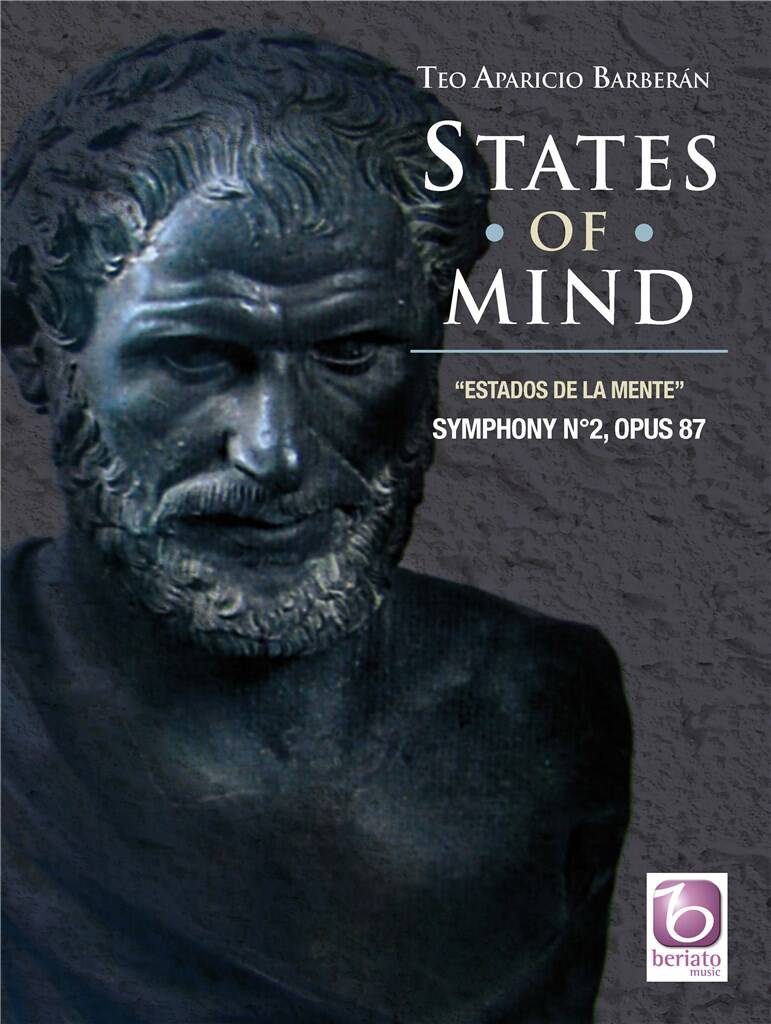
Symphony No. 2: States Of Mind, Opus 87 - Teo Aparicio-Barberán
I- Logos (reason)II- Pathos (emotion)III- Ethos (credibility)The ancient Greeks believed that music shaped the character of man. In Egyptian temples, music was an essential part of the magical rites to alter the course of nature or to treat illness.And today we know that sound can actually alter matter. The secret of music lies in harmony and mathematics, as many great musicians and experts have always known.One of the most important qualities of music is that it enables the listener to focushis attention inwards instead of on what is around him. It is indisputable that music can inspire emotion. Music leads us into a universe of emotions that are difficult to put into words. In short, music reaches into corners of our soul and thoughtsthat words cannot reach and makes it possible to more clearly describe these different States of mind.The composer of this symphony also believes that each "musical argument" must be constructed so that it will induce the desired reaction in thelistener.Music: more than wordsIn recent times, most orchestral symphonies have been based on a story, a text or something similar so that their composition must be structured accordingly.The intention of this work by Teo Aparicio-Barbern is quitedifferent. The composer describes the three elements of the argument as the only formal structure of the work. Since certain philosophers in world history were able to subdivide grammatical argument, why shouldnt that also be possible for the musicalargument?Since ancient times the power of the spoken word has captivated mankind. How can an argument move people and mobilise the masses? Where does the power of words come from today? The answer lays not so much in what people say but in how theysay it.Rhetoric is one of the oldest humanist disciplines in Western civilisation. Aristotle, in the 4th century BC, called it the art of persuasion. Indeed, the terms rhetoric and persuasion are mutually interchangeable.More than 2000 years agoAristotle structured his rhetoric according to the following three elements: the logos, the pathos and the ethos.Logos (words, reason) is the reasoning that gives freedom to the structure of the text by expressing what one wishes to say usingspecialist terms. With logos we create arguments to receive public approval and to defend our ideas.Pathos, the second element, refers to the effective use of public psychology. Pathos can be considered as the capacity to induce the desired emotionalresponse in the public, by creating an emotional connection with the public so that they accept our message.The third element, ethos (credibility), refers to the character of the speaker and is perhaps the most important of the three elements.Aristotle based his concept of ethos upon his belief that truth and justice will always have the upper hand over anger. He believed that what was true and good was easier to prove and was more persuasive.This second orchestral symphony from thecomposer from Enguera follows these three parameters of the argument according to Aristotle. Each movement tries to summon a different state of mind in the listener so that the message itself can be better understood and appreciated. Apart from thesethree general concepts the music is only structured, as Claude Debussy would say, in a "formative way".The first movement, logos, is based on a scherzo melody that undergoes various changes in rhythm and harmony. The arguments are presented by meansof conventional techniques of composition. The second movement, pathos, is characterised by suggestions of sound. It is subdivided into two large parts. The first part is based on a five seven sequence with five sounds that are repeated in differentenvironments, structures and dynamics. The second part, which is largely tonal, brings out more directly the emotional overtones that each argument must have. The third movement, ethos, is a faithful rendition of the composers personality. In thislast part, clear rhythmic sequences stand out, there are large dynamic contrasts and lots of tone variation. In addition, and this is quite in keeping with the composers earlier work, the harmony in States of Mind is handled in a manner that is bothoriginal and efficient, as a result of which Aparicio-Barberns message is well understood by the listener.This second symphony by Teo Aparicio-Barbern is devoted to "my dear Henrie Adams, a guiding light in this eternally dark musical world. Thankyou for everything."
Estimated dispatch 7-14 working days
-
 £332.99
Symphony No. 9, Op. 160 - James Barnes
Premiered on September 21, 2018 in Lawrence, Kansas by the University of Kansas Wind Ensemble (Dr. Paul Popiel, conducting), James Barnes' Ninth Symphony was composed between January and late June of that same year. This large work was commissioned by a consortium of twenty-one college bands, community bands, professional bands and individuals to help mark the 70th birthday of the composer (b. 1949). It is an expansive forty-minute work in four movements, of which the composer writes, This is my last symphony... this work represents a compendium of all that I have learned during the fifty years of composing and scoring for this wonderful new medium: the modern wind band. The first movement, subtitled Elegy, is based around G minor. It is the longest movement of the symphony. Tragic and despondent in character, it is cast in sonata-allegro form. The second movement is entitled Scherzo. Barnes claims that I have always wanted to write a waltz, and that is how this movement is cast, in a modified rondo form in D minor. In contrast to the mood of the first movement, the scherzo is a delightful posy of expansive melody, splashy color, humor and rhythm. The third movement, which is in a modified tertiary form, is entitled Night Music. In contrast to the scherzo, this movement begins with a mysterious incantation, first displayed by solo Alto flute. The music becomes even darker and more mysterious, while overall the movement effectively expresses an otherworldly mood, ending with a solo soprano offstage which suddenly emerges, eerily singing a modified version of the opening incantation. Cast in sonata-allegro form, the fourth movement is most definitely a rousing Finale, beginning with a brilliant fanfare and undergoing several mood transformations before emerging into the final coda, ending the symphony with an energetic splash of color.
Estimated dispatch 7-14 working days
-
 £593.99
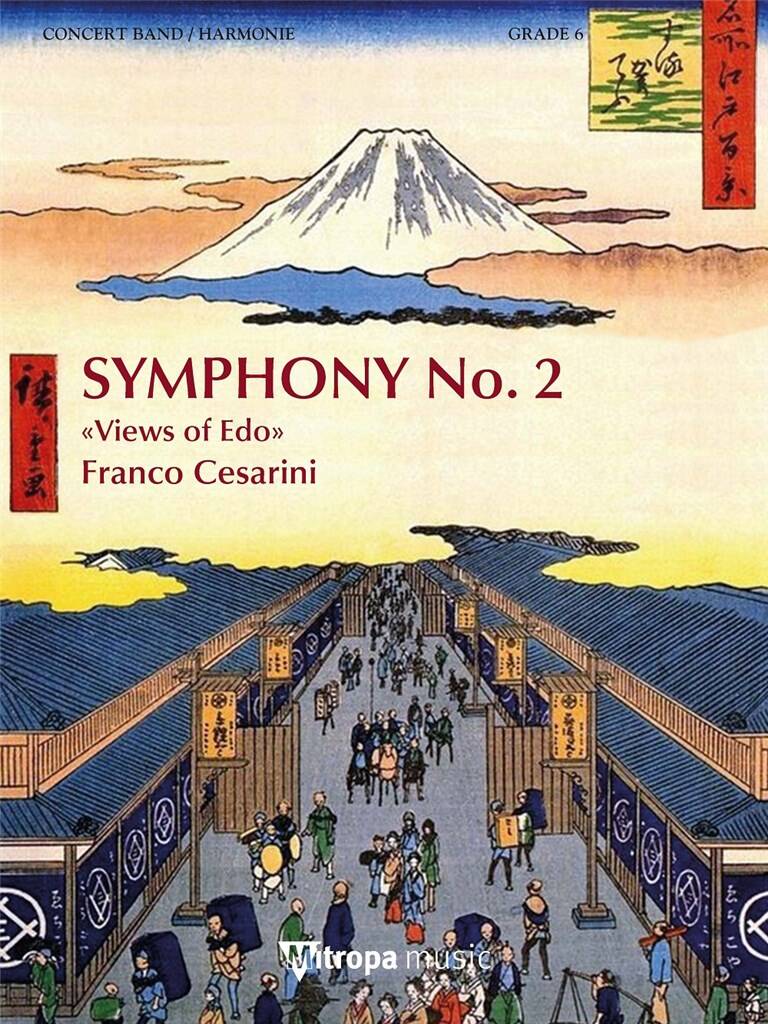
Symphony No. 2 - Views of Edo - Franco Cesarini
Edo is the ancient name for the city of Tokyo. Inspired by a series of woodcuts by the artist Utagawa Hiroshige (1797-1858) entitled 'One Hundred Famous Views of Edo', Cesarini's symphony is based upon a few traditional Japanese melodies. The composition is divided into five movements in arch form: a structure in which the individual sections are arranged symmetrically around a centre. Each movement takes its title from a print from the 'One Hundred Views'.
Estimated dispatch 7-14 working days
-
 £228.70
Symfoni nr. 1 'Fatum' - Symphony No. 1 "Fate" - Johan Halvorsen
Johan August Halvorsen (1864-1935) was born in Drammen and played violin and several brass instruments. He played in both orchestra and wind bands and in 1881 he became a student at Brigademusikken in Oslo. After a brilliant violinist career he proved himself talented as a conductor and composer. From 1899 he became conductor and composer at the National Theatre, where he wrote many of his most famous works. It was in this period in 1924 he wrote Fatum. Fatum means destiny and like Beethoven he opens the symphony with a motif he uses in all four movements. This work shows that Halvorsen was a great composer and a traditionalist.
Estimated dispatch 7-14 working days
-
 £109.99
A Tribute to Bach - Axel Norman
Johann Sebastian Bach could not have wished for a better accolade. A Tribute to Bach is a daring arrangement of Bach's Partita no.2 for pianoforte and a homage to the grandmaster of Baroque in a modern orchestration. Arranger Axel Norman has achieved this by adding percussion tastefully to the original. The woodwind section of the band, however, plays the leading parts.
Estimated dispatch 7-14 working days
-
 £116.40
Little Suite No. 1 - Malcolm Arnold
Sir Malcolm Arnold (1921) put an end to his career as leading trumpeter with several famous London symphony orchestras to become a full-time composer. He became world famous with his soundtrack music for 'The Bridge over the River Kwai', but he composed a lot of orchestral, vocal, ballet and chamber music. He wrote several works for wind band and for brass band, such as three 'Little Suites for Brassband'. The 'Little Suite Number 1' Opus 53 for orchestra (followed by the Second Opus 78) consists of a 'Prelude' (Maestoso), a 'Dance' (Allegretto) and a well-known 'March' (Allegro con brio). The march is still on the concert repertoire of many British military bands.
Estimated dispatch 7-14 working days
-
 £101.00
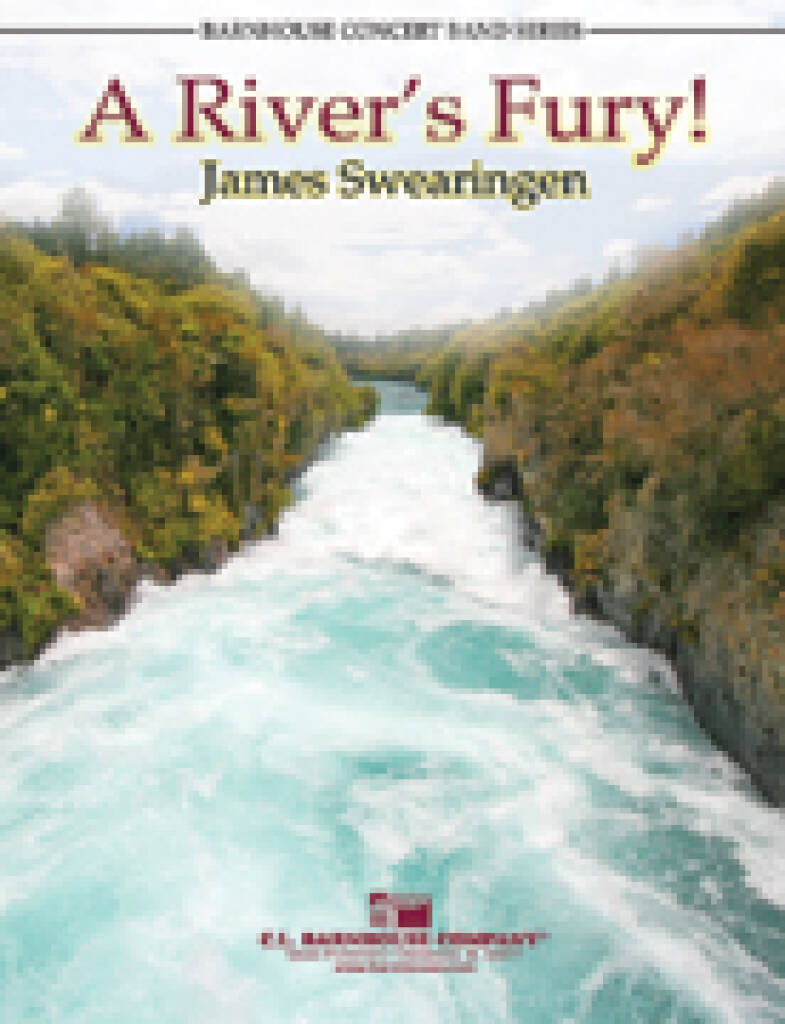
A River's Fury! - James Swearingen
North Carolina is a beautiful state, and there is no better place to enjoy whitewater rafting, than a trip on the Nantahala River. Noted composer, James Swearingen, takes you on a riveting journey that can only be described as both intense and exhilarating. Dramatic percussion writing coupled with exciting wind parts is an integral part of why this piece will challenge your students to make the music come alive and seem like a real life experience. Be prepared for the audience to be immediately on their feet following the breathtaking finish. Truly exciting!
Estimated dispatch 7-14 working days
-
£52.50
No Stop Rock - Carmine Pastore
A Grade 1 rock anthem! It's a perfect way to keep your beginners motivated while you drill them on that new concept called "eighth notes." Lots of repetition of simple eighth note figures will help your young band players enter the fascinating world of the divided beat with ease.This solid minor key rock-type piece will also help to keep your audience attentive by letting them hear a bit of a style they are so accustomed to. The overwhelming rhythmic nature of the piece also makes it a possible choice for use with an elementary level massed band. When faced with more than 100 beginners at a time, one likes to do music that has a beat they can hang on to! Whether it's for asmall one-school band or a giant massed group, this one is sure to work for you.
Estimated dispatch 7-14 working days
-
£94.99
Symphony No. 40 in G Minor - Wolfgang Amadeus Mozart
Mozart belongs to everyone! The experience of actually playing Mozart's music makes him real and more than just a name we associate with old music. Stephen Bulla's arrangement of the first movement of what may arguably be Mozart's greatest symphony has a great deal of authenticity. Much more than many "just the tune" type transcription/ arrangements, Mr. Bulla's work ambitiously explores a good portion of Mozart's miraculous musical development, so that your musicians can begin to understand the true genius of the Classical icon. Those who know Mozart will appreciate the integrity of the transcription. Those who don't know Mozart have a wonderful treat in store!A classic!
Estimated dispatch 7-14 working days
 View Music