
Results
-
 £94.99
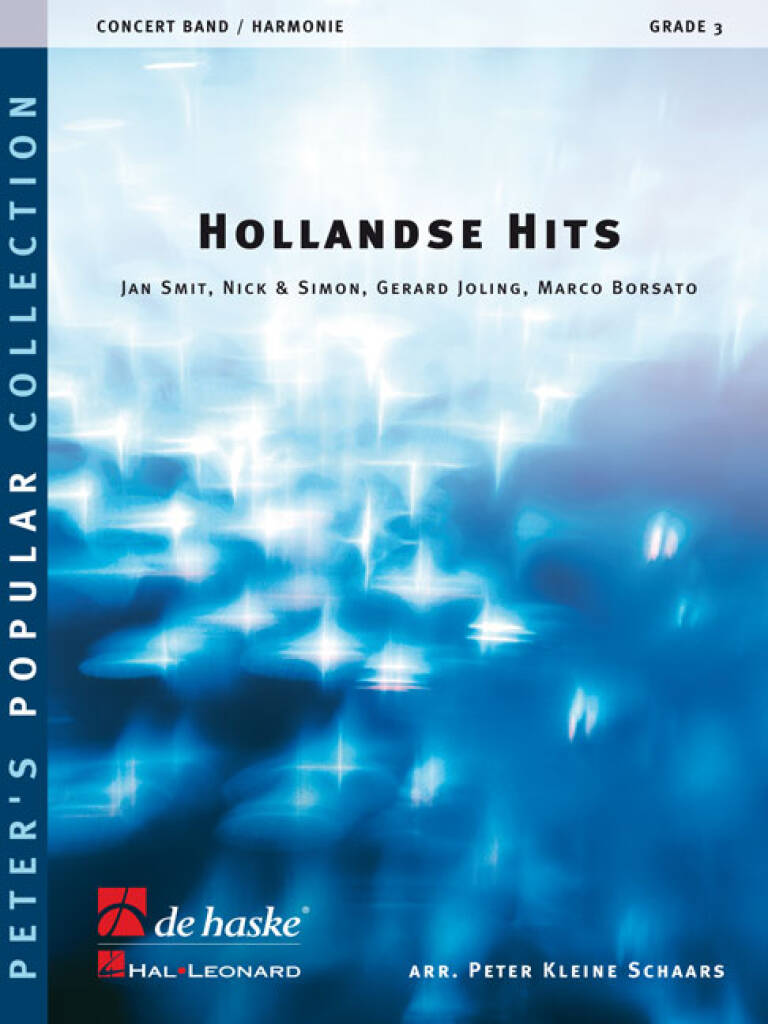
Hollandse Hits
This medley is a colourful and creative foray into the pop music from our friends across the water in Holland. Peter Kleine Schaars combines four songs by four artists that have been popular both in Holland and beyond.
Estimated dispatch 7-14 working days
-
 £89.99
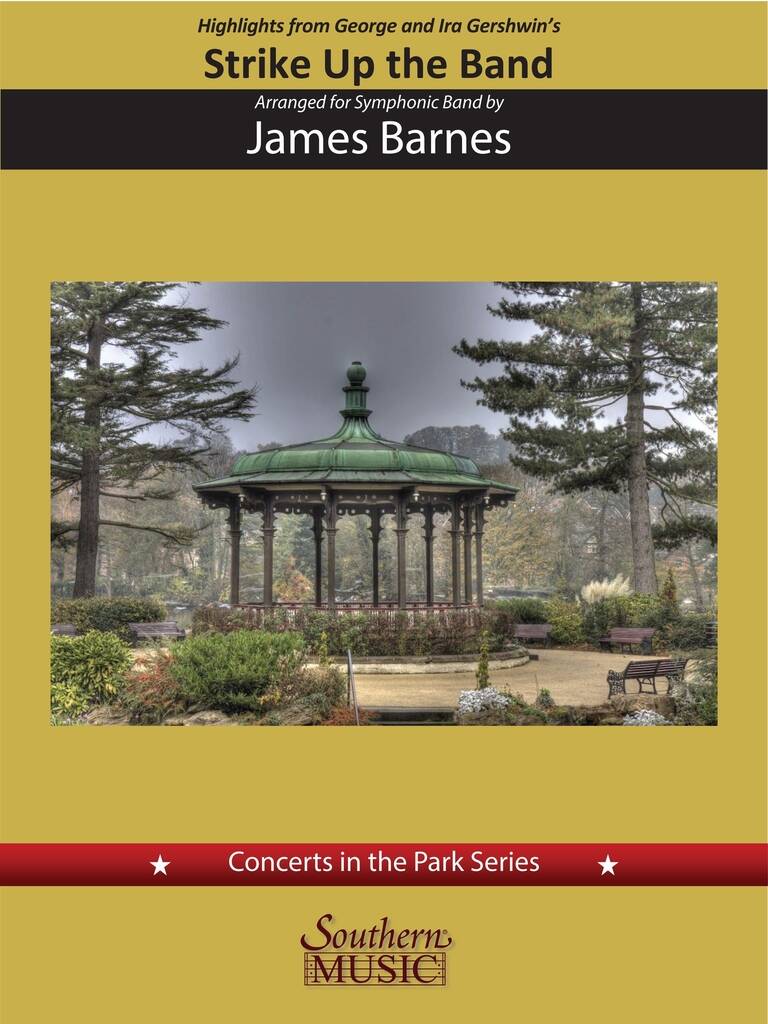
Highlights from George and Ira Gershwin's - George Gershwin
Strike Up the Band is a 1927 Broadway musical by George and Ira Gershwin, based on a book by George S. Kaufman. Surprisingly, the show proved to be an early failure for the talented Gershwin brothers, closing while the out-of-town tryouts were still underway. Despite this setback, it was revised in 1930 with a somewhat similar plot by Morrie Ryskind, and the show enjoyed a respectable run of 191 performances. This arrangement by James Barnes includes four of the best tunes from Strike Up the Band: Mademoiselle in New Rochelle (composed for the 1930 revival), Soon (also composed in 1930), The Man I Love, and Strike Up the Band. Curiously, The Man I Love, which is now considered to be one of the most popular George and Ira Gershwin standards, was NOT included in the 1930 run of the show.
Estimated dispatch 7-14 working days
-
 £76.99
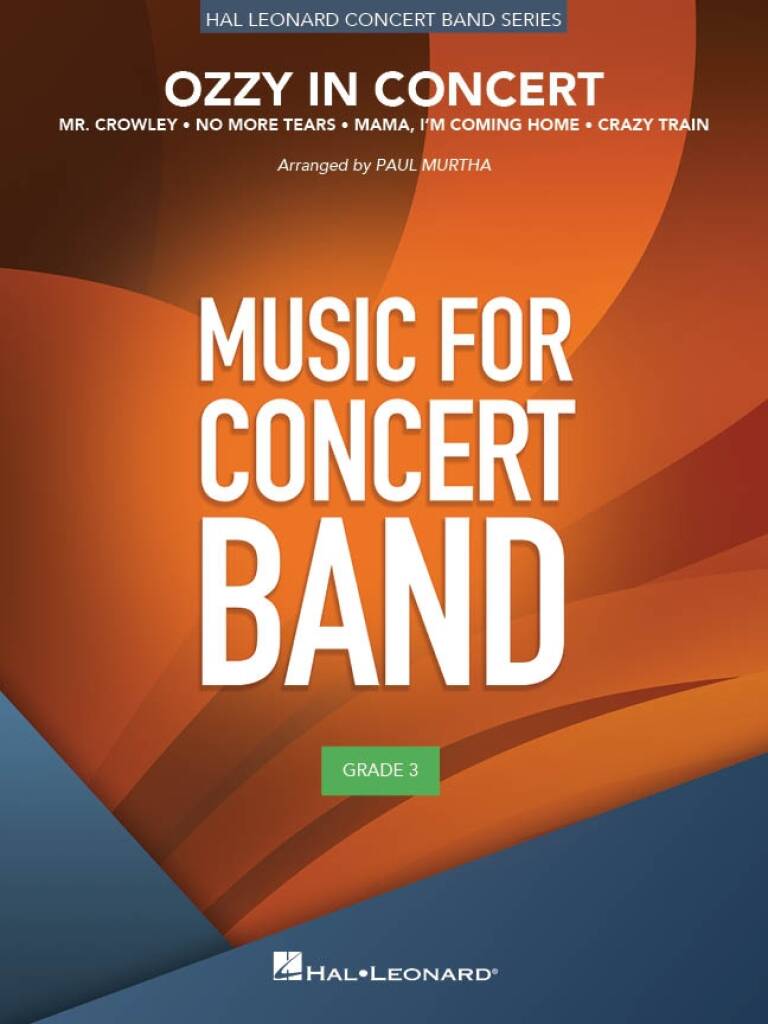
Ozzy in Concert - Ozzy Osbourne
The music (and the persona) of Ozzy Osbourne has become immortal and is on every playlist from today's youth to the people who were there. This incredibly arranged medley contains four of the biggest hits from his solo career, Mr. Crowley, No More Tears, Mama, I'm Coming Home and Crazy Train. The perfect tribute to The Prince of Darkness!
Estimated dispatch 7-14 working days
-
 £233.99
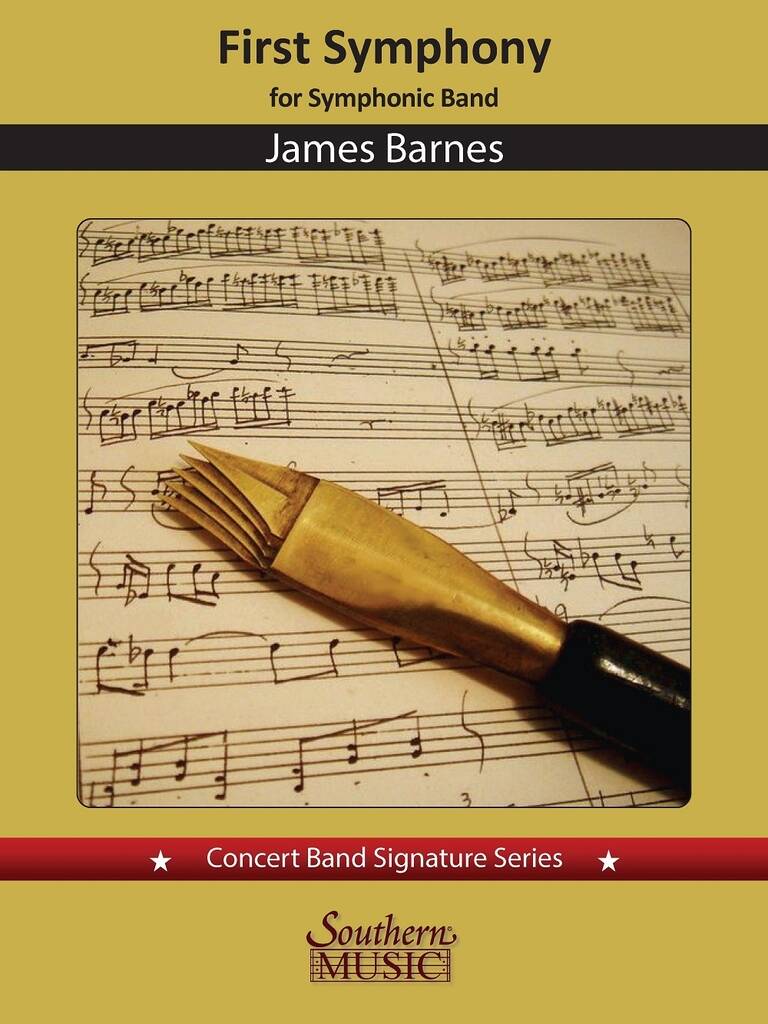
First Symphony, Op. 35 - James Barnes
Composed during the summer and fall of 1974, Barnes' FIRST SYMPHONY, Op. 35 was his master's thesis at The University of Kansas. It was premiered in the spring semester of 1976 by their Symphonic Band, Robert E. Foster conducting. The following year, the symphony was awarded the American Bandmasters Ostwald Composition prize, which led to a second performance (of only the first two movements) by the Northwestern Wind Ensemble at the American Bandmasters convention with Col. Jack Cline (U.S Marine Band) conducting. Following this performance, Barnes submitted the work to several publishers, all of which declined on the basis it was too long and difficult to be marketable. For this reason, Barnes set the work aside and there it remained until 2022, when an offer came from the Osaka Shion Wind Orchestra to record all nine of Barnes'_x001A_symphonies to help celebrate their 100th anniversary. Barnes seized the opportunity, engraving all four movements, with revisions and corrections, an effort that took seven days a week for two months to complete. As a result, after almost fifty years, all nine of the Barnes symphonies are finally available for performance.
Estimated dispatch 7-14 working days
-
 £127.30
Takk - Edvard Grieg
"Gratitude" is one of Grieg's beautiful lyrical pieces, Op. 62 No. 2.Eva Knardahl made a beautiful recording that I well remember was used as background for a picture cavalcade by the Norwegian Broadcasting Corporation during the passing of His Majesty King Olav V of Norway in 1991.In this arrangement for band, I have tried to vary the instrumentation, both for the sake of more colours and to emphasize the drama.This piece should be played rubato with elastic phrasing. The form can be described as AABACoda. The most dramatic section is the B part from measure 25, which peaks just before measure 38. The last four measures (from measure 53) can be done a bit 'meno' in tempo.Reid Gilje
Estimated dispatch 7-14 working days
-
 £68.80
Dubula
Dubula is a traditional South African folk song of the Xhosa people. It contains the driving rhythms, parallel harmonic movement and exuberance characteristic of much African folk music.This version challenges the percussion section in particular. Four different parts including mallet percussion makes it a showcase for the percussionists!
Estimated dispatch 7-14 working days
-
 £126.00
Romjulsdrm - Thoralf Borg
The poem Romjulsdrm ("Christmas Dream") was first published in Arbeiderbladet on January 3rd 1959, and became known when Thoralf Borg set a melody to it in 1968. Up until this, Alf Prysen had used a melody quite similar to the song Lijan uti dalen, when he sang the song in the TV program Ei vise vil jeg synge in 1964. At the same time that Borg's melody was written, the last four lines of text were also added to the poem, and the song took on the form we know today.The form and structure of this arrangement originates from a version for big band and vocals commissioned by stre Toten Storband, written in 2018 for one of their traditional midnight concerts on the day before Christmas. In an attempt to give the arrangement a nice calm and the text a lot of room, as is often the case in songs like this, it ended up in a relatively narrative style where the variation in tempo and the shifts between swing and straight eighth notes are particularly central.The song is about family, friendship and the quiet days of the Christmas holidays, which hopefully is something most people can recognise. The arrangement for the aforementioned midnight concert was ordered because my sister was to be the soloist for the concert, and since my father also played lead trombone - as he has done in this big band for as long as I can remember - it was natural to add a small trombone solo as well. It's always special to write and arrange music for people I know and appreciate, but it's extra special when it's also for two of my great role models.- David Stre Hveem -
Estimated dispatch 7-14 working days
-
 £82.95
Appalachian Journey - Brant Karrick
The Appalachians represented one of America's first frontiers, and frontier music became one of the first truly American forms of musical expression. Based on traditional fiddle tunes, Appalachian Journey combines four folk songs, providing players and the audience with a real toe-tapping treat! The melodies included are: "After the Battle of Aughrim" and "Lord Mayo I," both Irish in origin, and "Bonaparte Crossing the Rocky Mountains" along with "Whiskey Before Breakfast," adapted from the old-time fiddling tradition.
Estimated dispatch 7-14 working days
-
 £73.50
Proxima B - Steven J. Pyter
Where in the galaxy, other than Earth, could human life survive? Proxima B may be the answer to this cosmic question. The planet orbits the red dwarf star Proxima Centauri, the closest star to our Sun. First discovered in 2016, NASA says, "The exoplanet is at a distance from its star that allows temperatures mild enough for liquid water to pool on its surface." Journey over four light years to the twin star system of Alpha Centauri in Proxima B, by Steven J. Pyter. Hear and feel the excitement and danger of traveling beyond our solar system in this sci-fi-inspired, cinematic-style concert work that is sure to capture the imagination of performers and audiences! This piece was the 2022 winner of the National Band Association Young Band Composition Contest.
Estimated dispatch 7-14 working days
-
 £159.99
Resurrection - Kevin Houben
"Man wird mit Keulen zu Boden geschlagen und dann auf Engelsfittichen zu den hchsten Hhen gehoben." (Mahler over zijn 2de symfonie "Wederopstanding", Juli 1894)*"You are clubbed to the ground and then lifted to the highest heights on angels' wings"Commissioned by and dedicated to Concertband Maasmechelen (BE), conducted by Mark Prils.Kevin Houben was inspired for this work by Gustav Mahler's 2nd symphony, better known as the Resurrection symphony.The work can be regarded as a Ma(h)lerei of various compositional and spherical elements that refer to the Austrian composer but that appear in this composition in an embedded, contemporary way.As Mahler often drew his inspiration from nature, the opening of this piece brings nature right to the audience. The work starts with a solo for alto flute accompanied by a pedal note in four octaves with harmonic responses echoing the solo.From the start, Kevin Houben provides Mahler's material with a contemporary touch. He replaces the nature sounds that Mahler uses (perfect fourth) with tritone intervals. The off stage trumpet signals have been preserved but are provided with a new accompaniment. Gradually, throughout the work, the orchestra undergoes its own independent development. Mahler's musical signature remains recognizable, but Kevin Houben allows it - e.g. through the use of various timbres - to flourish in a more modern musical idiom, which characterizes numerous contemporary compositions for wind band (cfr. Where Angels Fly).The work comes to a grandiose end with a passage of the famous chorale from Mahler's 2nd symphony. The rich orchestration of this chorale gives the listener the illusion of the presence of a choir and organ without actually using them.In Resurrection, each instrument group comes into its own: in solo fragments, in transparent thematic passages or in splendid tuttis. Therefore, the work forms an interesting challenge for a wind band on several levels, both technically and melodically - the latter due to the long suspenseful melodic phrases that the musical structure requires.The piece is accessible to a wide audience and can be regarded as an enrichment for any concert programme. Resurrection takes the audience through various atmospheres and experiences: from stunning to chilling, from calming to delighting...Die Musik muss immer ein Sehnen enthalten, ein Sehnen ber die Dinge dieser Welt hinaus." (Gustav Mahler, 1860-1911)"Music must always involve a longing, a yearning beyond the things of this world."
Estimated dispatch 7-14 working days
 View Music