
Results
-
£134.99
Capriccio - Erik Mast
With Capriccio you can put your tuba soloist in the spotlight. Frank Vantroyen has made an excellent new recording of this song on his CD "Hey, it's Frank!".A real challenge for every ambitious tuba player.
Estimated dispatch 7-14 working days
-
 £140.50
Echoes from Within - Quincy C. Hilliard
This dramatic contest or festival piece will require your ensemble to perform emotionally in a variety of expressive styles. Using multiple meters, cadenzas, changing tempos and expressive musical shaping techniques, the music varies from romantic to light and dance-like. Challenge your entire ensemble, individual players, and audiences with this thought-provoking reflection on the strength and courage every person needs.
Estimated dispatch 7-14 working days
-
£79.95
A Psalm of Praise - Score and Parts - James Curnow
Program NotesOriginally conceived as a brass band tone poem, A Psalm of Praise gained huge popularity when it was first published in 1980. When it first appeared in print, the work was widely performed by Salvation Army bands around the world. It is full of interest and presents plenty of what for many bands will be realistically achievable levels of musical and technical challenge.As with much Salvation Army music, it was inspired by words from scripture, specifically from Psalm 100. Musically, it is based on the well-known hymn tune Praise My Soul the King of Heaven, with motifs and fragments of the tune appearing throughout the work in various guises alongside the original thematic material.James Curnow's skillfully economic use of melodic and rhythmic ideas is demonstrated to perfection in this work, which will be rewarding to rehearse in detail and perform and will provide a useful addition to concert repertoire.
Estimated dispatch 7-14 working days
-
£15.95
A Psalm of Praise - Score only - James Curnow
Program NotesOriginally conceived as a brass band tone poem, A Psalm of Praise gained huge popularity when it was first published in 1980. When it first appeared in print, the work was widely performed by Salvation Army bands around the world. It is full of interest and presents plenty of what for many bands will be realistically achievable levels of musical and technical challenge.As with much Salvation Army music, it was inspired by words from scripture, specifically from Psalm 100. Musically, it is based on the well-known hymn tune Praise My Soul the King of Heaven, with motifs and fragments of the tune appearing throughout the work in various guises alongside the original thematic material.James Curnow's skillfully economic use of melodic and rhythmic ideas is demonstrated to perfection in this work, which will be rewarding to rehearse in detail and perform and will provide a useful addition to concert repertoire.
Estimated dispatch 7-14 working days
-
 £7.90
£7.90Sing at First Sight, Level 1: Choral Textbook - Andy Beck, Karen Farnum Surmani, and Brian Lewis
A sequential sight-singing curriculum for all choirs. Each of the six units (containing four lessons each) clearly introduces new music reading concepts, reinforces those concepts with several rhythm and pitch exercises, motivates students with helpful hints and challenge exercises, and concludes with fun-filled review games and "Evaluating Your Performance" questions. The helpful "Getting Ready" pages (which precede each unit) are filled with music fundamentals, and for choirs who have never read music before, an optional "Before We Begin" chapter opens the book. And it's all neatly laid out in a 96-page octavo sized publication; a perfect fit for your students, and their folders. From whole notes to sixteenth-note patterns, seconds to sevenths, key signatures, dynamics, articulations, and tempo markings; it's all here, and it's all logically ordered to ensure student success! Spend just a few minutes a day with this book and your choir, too, will learn to "Sing at First Sight!" This title is available in MakeMusic Cloud.
Estimated dispatch 3-5 working days
-
 £149.00
Legend of a Giant (Also Saxophone Solo with Concert Band - Score and Parts) - Houben, Kevin
Legend of a Giant is a composition for solo alto saxophone and Wind Band composed by the Belgian composer Kevin Houben. The composer dedicated this challenging saxophone concerto to the Spanish saxophone virtuoso Mariano Garcia. The work had its premiere in May 2021 in the Lemmensinstitute with the Wind Band of the LUCA School of Arts in Leuven (Belgium) conducted by Ivan Meylemans. Mariano Garcia is a full time professor saxophone at the LUCA School ofArts, the Conservatorio Superior de Musica de Aragon in Zaragoza (Spain) and the Wiener Akademie Musik (Austria). As in any classical concerto the saxophone soloist 'competes' with the ensemble: first alternately, in dialogue with each other, afterwards fraternally together. Moreover the ensemble is regarded as an equal partner, therefore also for the musicians of the group, this cinematic score presents a tough challenge. Legend of a giant immerses the listener in the world of the saxophone and challenges the soloist in the field of lyricism and timbre, but also on a technical level. In this way various aspects and modern playing styles such as bisbigliandos, double staccato, frullatos, glissandos, harmonics of overtones, pass in review. In a word: a tough 'challenge' for any saxophone virtuoso! A simplified version of the saxophone solo part also exists.
Estimated dispatch 7-14 working days
-
 £79.99
A Festive Overture (Concert Band - Score and Parts) - Reed, Alfred
A Festive Overture was commissioned by the Tri-State Festival, held annually under the auspices of the Music Division of Dickinson State College in Dickinson, North Dakota, for performance at the 1963 Festival. The first performance took place on November 2nd, 1963, at the concluding grand concert of the festival, with the Dickinson State College Symphonic Band under the composer's direction. The score is in traditional overture form, a brilliant opening allegro followed by a reflective, lyrical interlude, and concluding with a return to the first themes and mood. The entire work is built on three motifs, which are heard in the first section, with the middle section developed from one of these, which first appears as the bass line to the main theme. In the course of the work, the full resources of the modern, integrated concert band are called upon, to present these motifs in constantly varied forms and combinations, and in scintillating tone colors. The wording of the commission presented a basic challenge: that of writing a major work on the highest musical level and yet capable of performance by a good high school band. We believe that this challenge has been met, and are proud to offer this work as a contribution to the modern school and concert band repertoire.
Estimated dispatch 7-14 working days
-
 £72.99
Wind Power (Concert Band - Score and Parts) - Buckley, Robert
In this impressive piece, the title "Wind Power" can refer either to the various machines that are driven by the wind, or the soaring sound of a wind band. In a cinematic style, this work opens powerfully with a series of tone clusters followed by a constantly moving series of notes depicting the ebb and flow of the wind. Then we are soaring high above the ground in a glider with only the sound of the wind keeping us aloft. With dramatic shifts in dynamics along with pulsing rhythms, this piece is a fun challenge for all members of the ensemble.Duration: 5.00
Estimated dispatch 7-14 working days
-
 £50.50
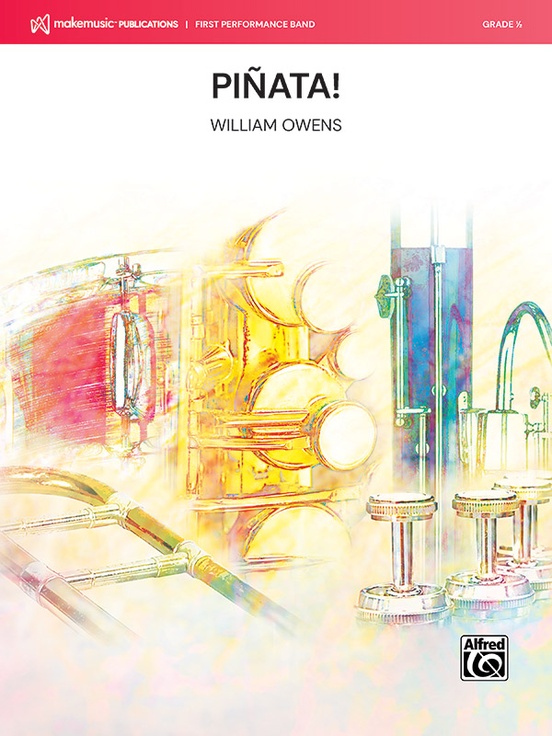
Pinata! (Concert Band - Score and Parts) - Owens, William
This spirited, Latin-flavoured piece captures all the excitement of a lively party with a colourfully decorated Pi?ata as its centrepiece. Despite using limited ranges and rhythms, William Owens has written melodies and rhythms that are incredibly engaging, capturing the spirit of children as they seek to capture the prizes within! Challenge your motivated percussionists with the advanced part, or take advantage of the more accessible one. Either way, it sounds great!Duration: 1.30
Estimated dispatch 7-14 working days
-
 £63.50
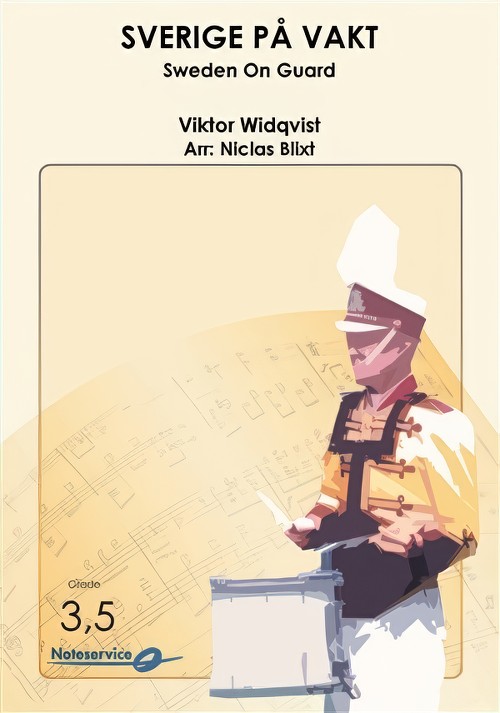
Sverige pa Vakt (Sweden on Guard) (Concert Band - Score and Parts) - Widqvist, Viktor - Blixt, Niclas
Sweden On Guard is part of Widkvist's earliest march production. It was composed around 1914 when he served in the engineering troops.It is worth noting that the march from the beginning was probably intended for a small sized brass band and was later rearranged for a full military band by the composer. When I searched in the Swedish War Archives many years ago, looking for more or less forgotten marches, this work, among others, appeared. I immediately became attached to the young Widkvist's catchy melodies and clear harmonic tonal language that express faith in the future and optimism.Sweden On Guard has never been published in print before, and the work of modernizing the setting without resorting to the elegance and resilience of the original has been a challenge.- Niclas BlixtDuration: 2.30
Estimated dispatch 7-14 working days
 View Music