
Results
-
 £53.50
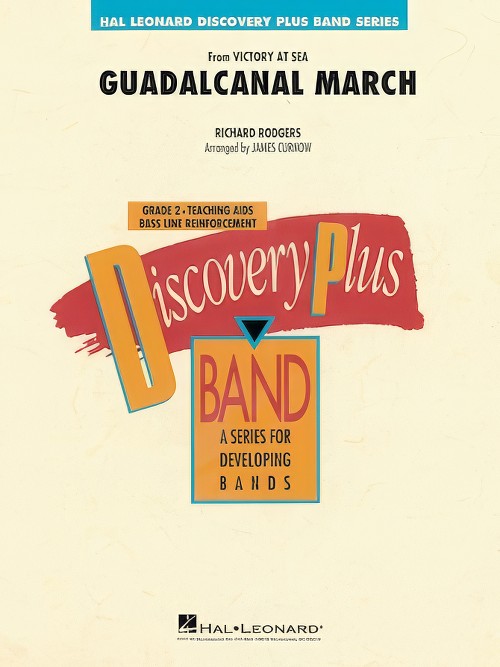
Guadalcanal March (Concert Band - Score and Parts) - Rodgers, Richard - Curnow, James
Here's a playable treatment of the march from Richard Rodgers' Emmy-winning score to 'Victory At Sea.' Its rousing and inspiring themes are audience favourites.
Estimated dispatch 7-14 working days
-
 £45.00
A Brahms Festival (Concert Band - Score and Parts) - Brahms, Johannes - Taylor, Jeff
This outstanding arrangement introduces your young musicians to some classic music! Features themes from "Academic Festival Overture" and the "First Symphony." A useful and important addition to your band library!Duration: 2.45
Estimated dispatch 7-14 working days
-
 £57.50
PRIDE AND PREJUDICE (Piano Solo/Young Band) - Marianelli, Dario - Moss, John
Featuring tuneful themes from the movie score, here is a marvelous piano feature with band that will be easy to put together. A nice opportunity for a budding solo pianist and an excellent change of pace for any concert.
Estimated dispatch 7-14 working days
-
 £47.52
Raptors: Birds of Prey (Concert Band - Score and Parts)
Drawing inspiration from the beauty and ferocity of raptor birds (eagles, hawks, vultures and owls), Larry Neeck has crafted an exciting and musically rewarding work for young band. Expressive melodies soar over an aggressive ensemble foundation, with plenty of percussion to propel the themes. Featuring an impressive ending that starts softly, and builds to an powerful climax, "Raptors: Birds of Prey" will provide an exciting and dramatic moment for your next concert.
Estimated dispatch 7-14 working days
-
 £35.64
Trails of Glory - A Western Overture (Concert Band - Score and Parts)
All the excitement and appeal of three great Sousa marches is captured in this attractive medley for intermediate level bands. Includes famous themes from Manhattan Beach and El Capitan along with just a hint of Semper Fidelis and other Sousa favorites in an arrangement that is sure to be a big favorite for years to come. Excellent arrangemnt by David Shaffer that is definitely worth checking out, Sousa would be proud!
Estimated dispatch 7-14 working days
-
 £214.80
Skies - Oliver Waespi
Program notes by Oliver Waespi on his composition Skies:Skies is the plural of Sky. We may wonder are there several skies? Is the sky we all long for not the same for everybody? While travelling on foot and "in the open air" I have observed the firmament often in quite different shapes, so that I can say I have indeed experienced the sky in different ways. Years ago I already wanted to portray "my sky" in music; I finally have been able to realise this long-cherished dream.This composition deals with the sky, more precisely with my sensual and emotional experience of the sky in all its aspects. Two point of views are combined in this composition: one showing the sky as it presents itself to me, the other showing the sky as I observe it. The music was bom simultaneously by intemal and extemal inspiration: it describes nature but also the emotional and spiritual experience of nature. To me, the experience of nature is not abstract, but it is connected with concrete ages, places or people from my neighbourhood. This is why I have combined several parts of this composition with certain landscapes.The sky presents itself in different landscapes in the most varied ways: for the sensual experience, there is no sky as such. The indications of places spread all over the score, are primarily clues for myself; they represent certain atmospheres, which I have experienced especially in England and Scotland. They can however also be useful to the musicians and the audience, providing they know those landscapes and the celestial atmospheres linked to them.The music is independent from the atmospheres described in the subtitles, as those are rather connected to a tragic nature, and so the music is not based on any program. Musically spoken, the composition has a symphonic structure, which means that the complete musical material is derived from three contrasting main themes. In the first part, the description of a noctumal sky ("Night") two themes are developed in an organic way; the first, rather "dusky", is to be found with the horns, the second, "in bright daylight", with the oboe and flute, the third, "more quiet" , with the brass instruments. In the next part, we have clouds and rain over the Isle of Skye (one of the Hebrides islands in Scotland) and here several elements of the first theme are still more developed. Then we get an increasingly dark mood, which is released, in heavy chords. Then suddenly, the sun breaks through and the music gets a majestic character. We have a new shape of the initial theme, first with the French horns and then with the trombones. The music gets a quicker tempo and flows into a quick movement describing the winds and waves at sea ("Wind and Waves"). Three themes are gathering and some variations are developed. The music gets more and more energetic and, after a climax, calms down again. Then we have a kind of "summer pastoral" which suggests summer at the South coast of Cornwall ("South Coast of Penwith Peninsuia in Summer"). This is certainly not the hotte st summer in Europe, but still it is beautiful in this country that is blessed with so much rain. In the "pastoral" , the sea is already sketched in broad outlines in the French horn solo. The magnificence of an aftemoon at the seaside is developed at the end of the composition ("Noon at Treen Cliff', a rock protruding in the sea next to Porthcumo at the South Coast of Cornwall); here the music gets stronger and stronger and after a majestic climax it vanishes completely.
Estimated dispatch 7-14 working days
-
 £159.60
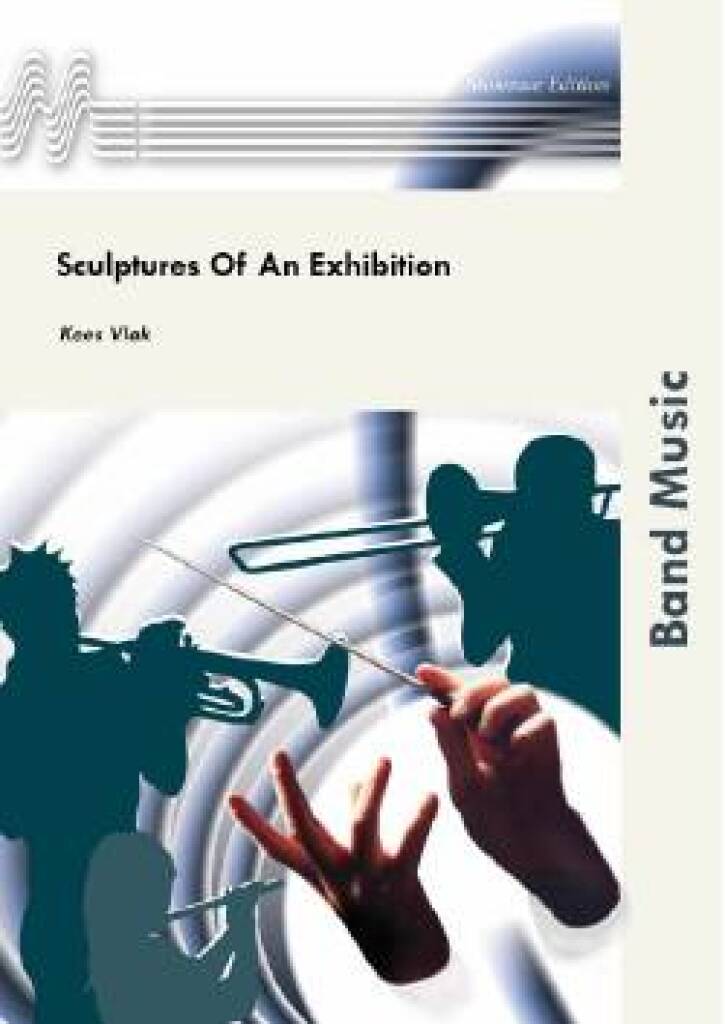
Sculptures Of An Exhibition - Kees Vlak
This composition was commissioned by the village of Midden-Beemster to commemorate the 375th anniversary of the polder of the same name. It was premiered in august 1987 by the Beemster Fanfare Band. On this occasion some twenty sculptors were invited to create a work of art. Those sculptures were set up at the most picturesque areas of the polder. On a 40 km long bicycle route one can admire the curious statues wile enjoying the beautiful scenery as well. The compostition is based on two themes: a main theme and the promenade theme.1.Introduction: After the grandiose presentation of the main theme, on the dominant, we leave the village to the sound of some pretty music.2.Promenade and Watchman: After some time, we discover a dark statue hidden in the bushes; it is shaped like a square standing on one of its corners. It is called "Watchman". We hear the promenade theme as a solo and all next themes will be variations.3.A Building of Willow-trees: Far away on a dike, we discover the huge skeleton of a kind of house. It is a construction of skilfully interwoven willow-branches. The musical themes are also interwoven. The sculpture is called "Construction of wood used by the farmers".4."Die Flsse, ah die Flsse"and Promenade: We continue our trip and see now a horn of plenty, made of brown ceramics and set up on the green slope of an old fortress. The sun shines on the sheep being at pasture under the willow-trees. No doubt, this scene will have something to do with abundance.5.Cardplayers in front of the Nightingale: A statue in cast iron, representing two carplayers, has been erected in front of the windmill called "The Nightingale". This sculpture suggests a rather animate atmosphere. The opponents with the trumpets and the trombones suggest the cardgame. The trumpets are constantly changing from players. At a certain moment the trumpet gets hold of the decisive trick and starts a victorious blow. The trombone, however, repeats this shout of joy with quite some perverse delight and in a completely wrong pitch. The game continues and after a climax all cards are finally thrown on the table.6.Autumn and Promenade: The trip now brings us a white sculpture in ceramics, decorated with some autumn leaves. Is this a seated man or a chair? Anyway, it looks very nostalgic. This is the time for a moment of reflection with the oboe or the saxophone. It is called "Autumn".7. The Powerlifter: Somewhat hidden in a ditch, we discover a small statue in cast iron, representing a powerlifter who is going to give way under the weight. The music uses the main theme with powerlifting euphoniums, saxophones and clarinets.8.The Bull: Here we have another cast iron sculpture, but this time it is a really powerful figure. This "Bull" statue uses the same theme as that of the powerlifter, but it gets a stronger foundation from the bass insturments.9.Mirror and Promenade: While strolling alongside the channel we suddenly see four mirrors. They not only reflect themselves, but also mirror in the water of the channel. These reflections are suggested by the use of tuned percussion. The promenade theme is also used in mirror image.10.Reflictions or...?: On top of the dike we have a nice view on a farmyard with its orchard. A very big net, coverd with sparkling tin plates, has been stretched between the trees. This sculpture is called "Reflections of ...?. Of what? Yes, of course, reflections of the times when the polder was a lake and the sun was reflecting in the wild waves.11.Willpower: Finally we discover a big statue in cast iron. It is not clear whether it is a man or a woman. Anyway the enormous bundles of muscles in the legs and the thighs are striking. This sculpture is called "Willpower". The idea of determination is musically suggested by a very long preamble to the promenade theme in one great stringendo, leading to the conclusion of the trip.12.The beautiful country: Here we have the most beautiful picture. The magnificent Beemster Polder in bloom. We see a nice windmill with decorated wings. We hear the main theme, now on the tonic.
Estimated dispatch 7-14 working days
-
£184.99
Rubicon - Bert Appermont
The Rubicon is a river in Northern Italy which Julius Caesar crossed with his army in 49 BC in defiance of the leaders of Rome, who feared his power. A civil war against rival Pompey ensued, which culminated in Caesar seizing power as the absoluteruler of Rome. The phrase "crossing the Rubicon" therefore refers to any person committing himself irrevocably to a risky, decisive and irrevocable of course of action.The work consists of three parts that deal with this important moment in history.Part 1 (Meditation) symbolises Caesars request to the Gods to assist him in his difficult choice. In a slow introduction we hear the melancholy and beseeching sounds of the duduk (alternatively, this part can be played by a soprano saxophone)and of the soprano solo singer over the bourdon accompaniment. The soprano solo singer then sings "dona tibi pacem" (give him rest) in a melodious and probing theme.In Part 2 (Battle of Pharsalus) trumpets and trombones resound alternately ina stately Roman fanfare, producing a stereophonic effect. This develops into a martial theme in which Caesars impressive army goes to battle against the army of rival Pompey. While the theme of Caesars army fades away, Pompeys theme emerges as anaive dance in six-eight time. His army is definitely in the majority and it believes it can easily defeat the enemy. Suddenly trumpets and trombones clash on two sides of the orchestra: Caesars army advances and attacks. A fierce battle ensues inwhich the two themes are played alternately as well as simultaneously. Thanks to his shrewd battle tactics, Caesar manages to win this legendary battle after all: his theme resounds ever louder in trumpets and horns until everything dies out andchanges into a kind of reconciliation between the soldiers of the two armies. The melancholy "dona tibi pacem" from part 1 now serves as a reconciliation theme.Caesar is now the sole ruler of the New Roman Empire, which would be destined to leave itsmark on our Western civilisation to this day. The third part is a sparkling succession of dance music (Dance) with many Greek and Roman elements in which Caesars victory is praised and celebrated. It is common knowledge that the culture(arts, gods, etc.) of the Romans drew heavily on Greek culture. I have therefore used an authentic Greek theme (the Seikolos song) several times in this part (bar 17 in the euphonium, bar 60 in the base section, bar 68 in the sopranosaxophone) to suggest the music of that era and to evoke the right atmosphere. After a gradual increase in tempo in the entire orchestra, the opening melody gloriously resounds once more, surrounded by virtuoso dance music. The work ends withbombastic brass fanfares in which Caesars theme triumphs once more.NOTE FOR THE CONDUCTOR:The Armenian duduk and the monochord that are used in the introduction give a special tone to the music, but could be substituted (soprano saxophone instead ofthe duduk) or left out (monochord). The soprano solo is also doubled within the orchestra and could therefore also be left out if necessary, although it does provide the work with an extra dimension. The male voices in the introduction and the finalecould possibly be replaced with a synthesizer with choral setting.As a visual and acoustic element in part 2, the trumpets, the e-flat cornet, the small drum and trombones can be stood up and placed at two sides of the orchestra (bar 80).Seen fromthe point of view of the conductor, put the trumpets, the e-flat cornet and the small drum in the left section and the trombones in the right section of the orchestra. This also helps to create a visual contrast between the two themes of the secondpart. The players can be seated again at bar 97 or bar 121. The soprano soloist can be placed in or in front of the orchestra, depending on what gives the best result. For the conclusion of the work the soprano solo can be sung from afar (from thewings) to create additional atmosphere.This work was composed especially for the "St Joseph" brass band from Pey/Echt (Belgium) with conductor Mark Prils.
Estimated dispatch 7-14 working days
-
 £76.99
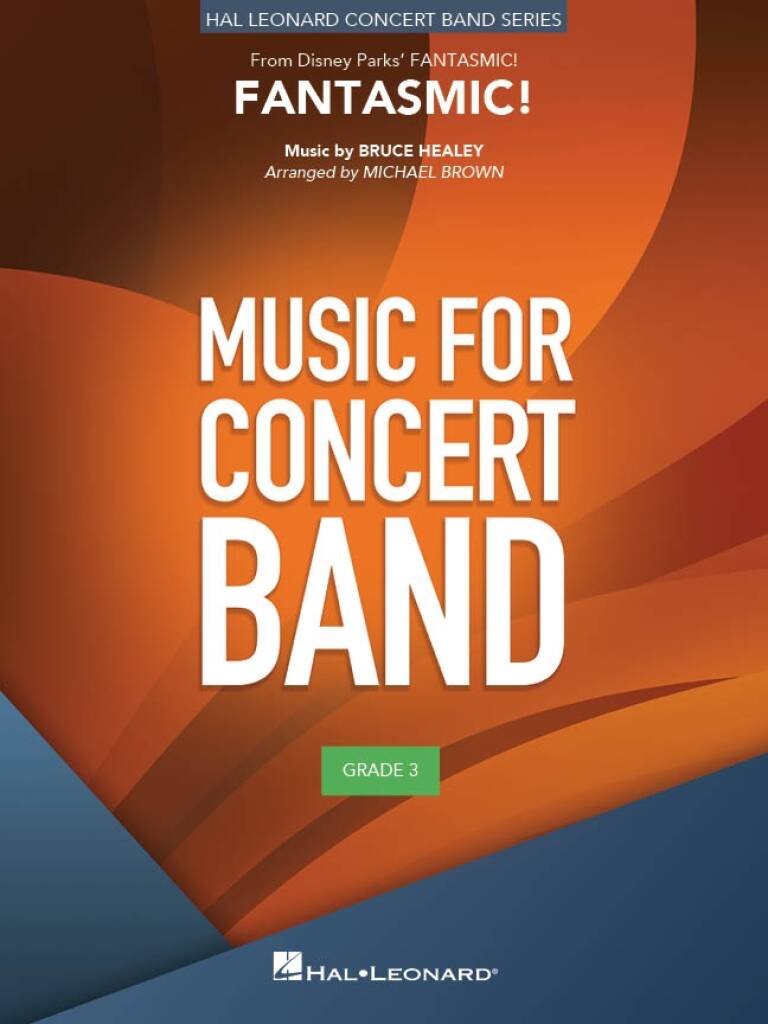
Fantasmic! - Bruce Healey
Bring the incredible music from the spectacular nightime show performed at Disneyland and Disney's Hollywood Studios to your concert stage. This arrangement features the orginal themes by Bruce Healey from the intro and finale of the show. The powerful themes, colorful harmonies and cinematic orchestrations will leave the students and audience breathless and euphoric.
Estimated dispatch 7-14 working days
-
 £76.99
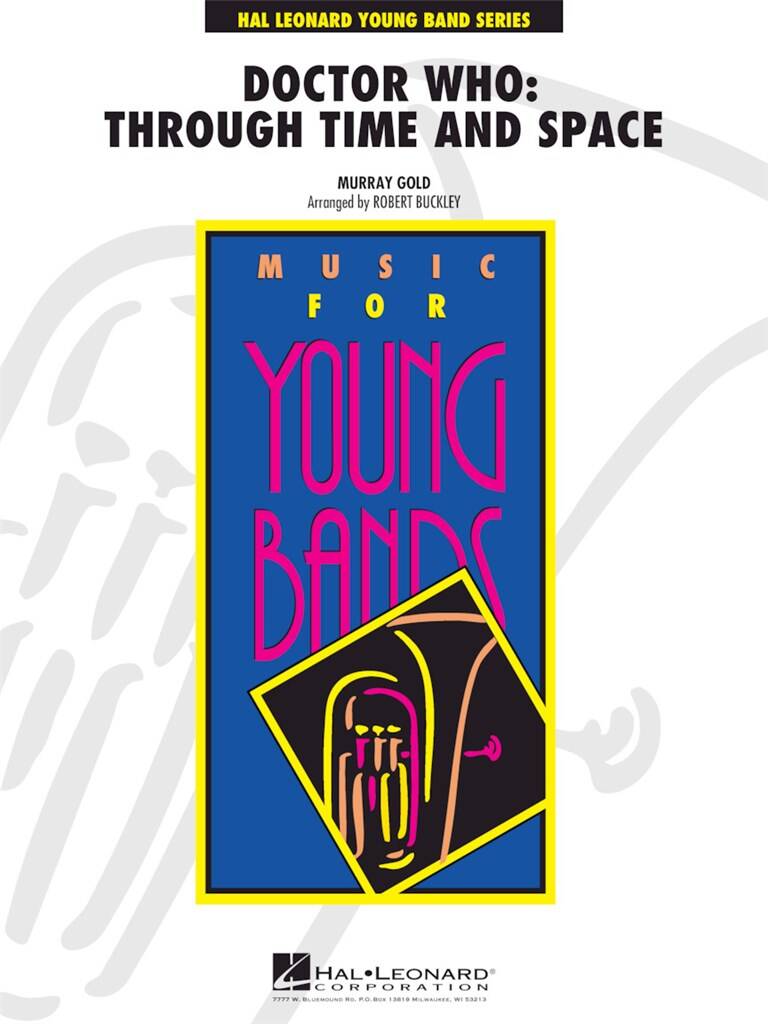
Doctor Who: Through Time and Space - Murray Gold
Composer Murray Gold has contributed a new dimension of dramatic and evocative musical themes to the long-running and iconic BBC television series Doctor Who.Spanning a period from 2005 to the present, this masterful setting for Concert Band includes familiar themes for the Doctor, along with the alien monsters Cybermen and Daleks, and also memorable companion themes for Rose and Martha. (The signature Theramin part heard on the main theme is optional, but an app for this sound is easily obtained online.)
Estimated dispatch 7-14 working days
 View Music