
Results
-
 £56.50
Beethoven's Fifth Christmas (Concert Band - Score and Parts) - Williams, Mark
You've never heard Beethoven's fifth symphony like this! Themes from three movements of this famous symphony are combined with familiar carols in the fun style you've come to expect from Mark Williams. Make Beethoven's Fifth Christmas a wacky addition to your next holiday program. Duration: 2.30
Estimated dispatch 7-14 working days
-
 £104.99
Arioso Cantabile (Concert Band - Score and Parts) - Van der Roost, Jan
This composition exudes serenity and tranquillity, but also intensity and expressiveness - giving it similar qualities to earlier works by Van der Roost, like Canterbury Chorale and Adagio for Winds. Long melodic lines characterize the main themes that arise in different registers and develop through varying keys. The band rather sounds like an organ: the varying timbres and broad musical phrases fully justify the comparison with this majestic instrument. There is no bombast, and the work contains no exaggerated technical or rhythmic tours de force. On the contrary, from a lush richness it moves towards a softening final passage that culminates in a slowly fading final chord: following the many warm harmonies and grand melodies, this work concludes in a contemplative mood.Duration: 7.45
Estimated dispatch 7-14 working days
-
 £66.95
Olsenbanden (Flexible Ensemble - Score and Parts) - Fabricius-Bjerre, Bent - Kjaernes, Bjorn Morten
This work fits very well in the Showblow series, but as is often the case in film music, the themes are quite short. In order to create a variation on the theme, musical ideas have been taken from the composer's own performances. The same applies to the introduction and conclusion. If you want, it can also be marched in the streets, which is guaranteed to bring smiles to the lips of the audience.Flexible instrumentation (Flex 5 ShowBlow) makes it playable for small as well as larger ensembles.Duration: 2.00
Estimated dispatch 7-14 working days
-
 £64.95
Batman Generations (Concert Band - Score and Parts) - Williams, Justin
Batman has been, and remains, one of the most beloved superheroes in American culture. His legacy and presence have stood the test of time. Truly, Batman is a hero for the ages. Batman Generations is an exciting trip down memory lane featuring several memorable themes from Batman's history including the iconic Batman Theme, Arkham City Main Theme, and A Dark Knight.Duration: 3.00
Estimated dispatch 7-14 working days
-
 £52.95
Secret Agent Sugar Plum (Concert Band - Score and Parts) - Tchaikovsky, Peter Ilyich - Watson, Scott
Did the cookies that were left out on Christmas Eve mysteriously vanish? Secret Agent Sugar Plum of the Holiday Sweets Division of WinterPol is the only operative for these holiday capers. Set to a driving rock beat, this clever arrangement fuses themes from Tchaikovsky's Dance of the Sugar Plum Fairy with classic spy music idioms.Duration: 2:20
Estimated dispatch 7-14 working days
-
 £118.99
Alleluia (Concert Band - Score and Parts) - Hazo, Samuel R.
Alleluia is a convergence of hauntingly emotive themes that culminate in breath-taking builds. The Kalamazoo Gazette described it as the pinnacle of the concert in which it was premiered, adding that Hazo's master composition takes the listener from "...bells and chimes to full Hosannas. The result was transfiguring! It first fades like a sunset, then explodes in white light, bringing the audience to their feet." Written for mature ensembles, this work will have a powerful impact on the performers as well as all who hear it.Duration: 8.00
Estimated dispatch 7-14 working days
-
 £169.99
Atropos (Concert Band - Score and Parts) - Houben, Kevin
Atropos is one of the three goddesses of fate. She cuts the thread of life of a person whenever their time has come. The composition is film-like and presents challenges in sound, balance and rhythm. The work opens in a quiet mood in which the themes are presented before finally all the elements are combined and we are led to a sparkling apotheosis that is demanding in its melodic phrasing and requires stamina from the musicians.Duration: 12:30
Estimated dispatch 7-14 working days
-
 £72.99
Alice in Wonderland (Concert Band - Score and Parts) - Elfman, Danny - Brown, Michael
Thanks to director Tim Burton and actor Johnny Depp, the recent movie Alice in Wonderland shows a new side to this classic tale. Equally distinctive is Danny Elfman's dark and delightful musical score. Michael Brown's well-paced medley features the recurring melody "Alice's Theme" along with other important themes from the film. Sure to please!Duration: 4.30
Estimated dispatch 7-14 working days
-
 £48.95
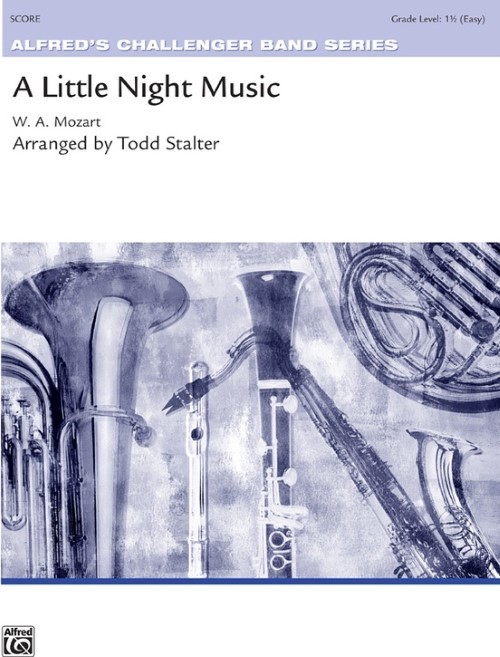
A Little Night Music (Concert Band - Score and Parts) - Mozart, Wolfgang Amadeus - Stalter, Todd
Mozart's Serenade No.13 for strings in G Major, K.525 is commonly referred to as "Eine Kleine Nachtmusik," which stands for "a little serenade," but is more familiar to music lovers as "a little night music." This arrangement uses themes from the first movement, and is cast in a comfortable key and range for young band musicians. Careful attention to the sudden, extreme dynamic changes will make the performance of this piece really come to life.Duration: 2.15
Estimated dispatch 7-14 working days
-
 £60.99
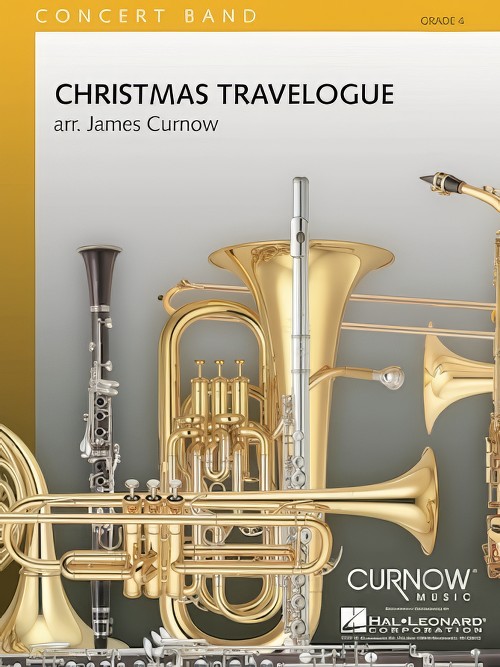
Christmas Travelogue (Concert Band - Score and Parts) - Curnow, James
What a great energetic way to open your Christmas concert and bring focus to the joyful sounds of the season! Themes from Spain, Czechoslovakia, Poland, England and France lead us on a delightful Christmas tour, and James Curnow's outstanding orchestration technique ensures that all the musicians have rewarding parts to play. You'll enjoy the melodic twists and turns as the consistent unifying tempo charges implacably toward the exciting finale.Includes:God Rest Ye Merry, GentlemenFum, Fum, FumInfant Holy, Infant LowlyJesu, Jesu Baby DearNoel NouveletPat-a-Pan (Willie, Take Your Little Drum)Duration: 2:45
Estimated dispatch 7-14 working days
 View Music