
Results
-
£72.95
Three Processionals - Michael Ball
Estimated dispatch 7-14 working days
-
£65.99
To Have, To Hold, To Love - Ball
This publication is a reprint of a manuscript. Please view the music sample included on this page to ensure your satisfaction with the legibility of the manuscript parts.The included score is a reproduction of the piano/vocal score from the standard published edition. No full conductor's score is published for this work.The arranger's musical judgment has governed the instrumentation employed. Please note the instrumentation page on the attached music sample.If you have any questions prior to placing your order, please contact us at [email protected]
Estimated dispatch 7-14 working days
-
£54.99
When Irish Eyes Are Smiling - Ball
This publication is a reprint of a manuscript arrangement. Please view the music sample included on this page to ensure your satisfaction with the legibility of the manuscript parts.The arranger's musical judgment has governed the instrumentation employed. Please note the instrumentation page on the attached music sample.If you have any questions prior to placing your order, please contact us at [email protected].
Estimated dispatch 7-14 working days
-
£137.99
Three Onegin Dances - Pyotr Ilyich Tchaikovsky
Tchaikovsky is best known for his purely instrumental compositions. However, we must not underestimate him as a composer of operas. Many of his operas such as Pique Dame and Eugene Onegin are still performed regularly throughout the world. Eugene Onegin (also called Jevgeny Onegin), composed in 1877-1878, was not called an opera by Tchaikovsky himself, but "lyric scenes". The work is entirely dominated by lyricism. However, there are two moments that contrast sharply with this lyricism: two ball scenes, for which Tchaikovsky wrote a waltz and a polonaise.After opening with a less well-known allegro dansant, this arrangement features the aforementioned waltz, which can beconsidered a beautiful Russian equivalent of the Faust Waltz by Charles Gounod. In the opera, this waltz is actually played by a military band. The arrangement concludes with the pompous polonaise (also mentioned above) which opens the last act: the ideal music to characterize high aristocracy in the salon of a palace in St. Petersburg.
Estimated dispatch 7-14 working days
-
£102.99
Surround Sound - Søren Hyldgaard
This unusual new work really lives up to its title with sound hitting the audience from all sides. The composer intended that this work not only be heard but experienced. The audience will feel how the drums and trumpet figures fly around the auditorium as if a ball being kicked between players. This innovative piece is sure to be a hit with all who hear and play it.
Estimated dispatch 7-14 working days
-
 £69.99
Two German Dances - Ludwig van Beethoven
In 1792, at the age of 22, Beethoven left his native Bonn to seek his fortune in the imperial capital, Vienna, where had lessons with Haydn, Salieri and Albrechtsberger and gained fame as a virtuoso pianist.The annual Artists' Pension Society Ball was a renowned high-society occasion in the city and new dance music was written every year by the popular composers of the time, including Haydn, Kozeluch, Dittersdorf and Eybler. In 1795 Beethoven provided a set of 12 minuets and 12 German dances, a form from the villages of Bavaria and Austria which was to lead to the development and popularity of the waltz in Vienna later in the century. Originally written for orchestra, these dances are also popular in their piano arrangements. The two dances used in this arrangement are taken from this 1795 set.
Estimated dispatch 7-14 working days
-
 £41.99
Sandpaper Symphony - David Shaffer
Your percussionists will have a ball with the solo sandpaper blocks and special effects including pop gun, ratchet, whistle and triangle. A can't-miss crowd pleaser that's very accessible for young players.
Estimated dispatch 7-14 working days
-
£104.99
Nocturne - Pyotr Ilyich Tchaikovsky
Tchaikovsky is best known for his purely instrumental compositions. However, we must not underestimate him as a composer of operas. Many of his operas such as Pique Dame and Eugene Onegin are still performed regularly throughout the world. Eugene Onegin (also called Jevgeny Onegin), composed in 1877-1878, was not called an opera by Tchaikovsky himself, but "lyric scenes". The work is entirely dominated by lyricism. However, there are two moments that contrast sharply with this lyricism: two ball scenes, for which Tchaikovsky wrote a waltz and a polonaise.After opening with a less well-known allegro dansant, this arrangement features the aforementioned waltz, which can beconsidered a beautiful Russian equivalent of the Faust Waltz by Charles Gounod. In the opera, this waltz is actually played by a military band. The arrangement concludes with the pompous polonaise (also mentioned above) which opens the last act: the ideal music to characterize high aristocracy in the salon of a palace in St. Petersburg.
Estimated dispatch 7-14 working days
-
 £47.50
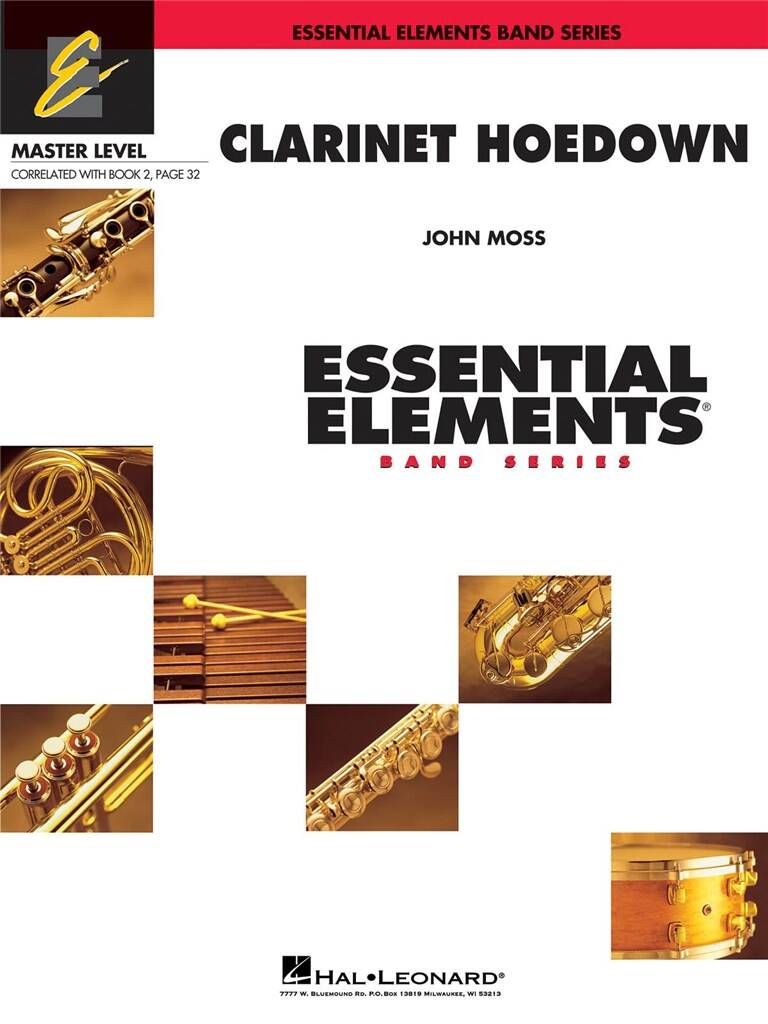
Clarinet Hoedown - John Moss
Master Level (correlates with Book 2, p. 32) Not only will your clarinets have a ball with this section feature, but there is something here for every section of the band. In a style reminiscent of Copland, John Moss uses livelythemes, clever harmonies and effective percussion writing in creating this appealing composition. (2:55)
Estimated dispatch 7-14 working days
-
 £72.99
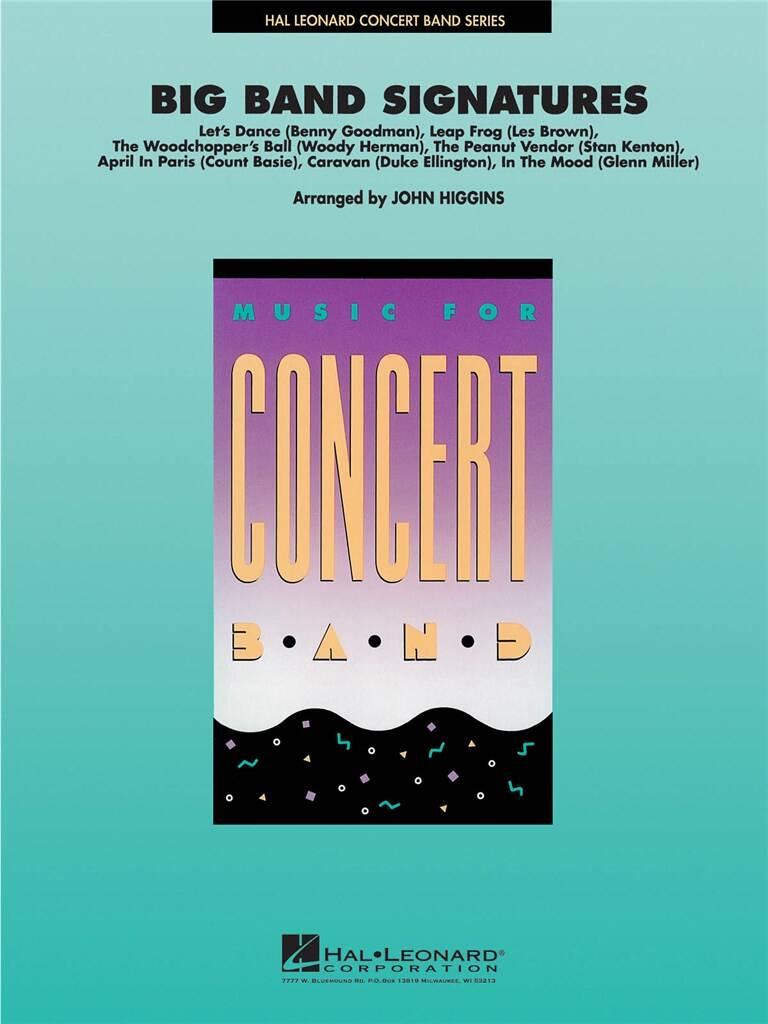
Big Band Signatures
Here's a delightful collection of some of the most memorable icons of the fabulous Big Band era. John Higgins' arrangement weaves through great musical memories, each closely identified with a legendary artist and the unique sound of his band. Includes: Peanut Vendor (Stan Kenton), Caravan (Duke Ellington), Woodchopper's Ball (Woody Herman), and Leap Frog (Les Brown).
Estimated dispatch 7-14 working days
 View Music