
Results
-
 £104.99
Jubilant Prelude Wind Band Set (Score & Parts)
Jubilant Prelude' is an orchestration of the 'Preludium over Psalm 150' originally composed for organ by Toon Hagen. Since 1998 Toon Hagen has been organ-player of the 'Grote or Sint Micha?lskerk' in Zwolle (the Netherlands). He has written several 'contemporary' compositions for organ.'Jubilant Prelude' has a capricious character by the use of irregular measures and its many measure changes. The structure of the Prelude is that of a fugue and is based on motives from the psalm.After the first climax, which is both dynamic and harmonic, the theme in the Andante Jubiloso is clearly audible and it is alternated with erratic motifs. Tension increases until at last the psalm itself is heard in all its glory. The melody of the psalm sounds as a cantus firmus in tenor register, with motifs in ornamentation for saxophones, bugles and trumpets. The finale, like the prelude is capricious and vehement.The instrumentation for concert band was made by Wim Rouw. It is particularly colourful and has a surprising role for the percussion section. 04:30
Estimated dispatch 7-14 working days
-
£420.99
Tre Sentimenti Wind Band Set (Score & Parts)
At last the bass clarinet can shine in this major new solo work for bass clarinet and concert band. This composition begins with a rather mysterious opening passage with atmospheric sounds and effects. The soloist plays - preferably backstage - a number of fragments and melodic patterns, without actually "starting" the piece. After this somewhat hesitant introduction, a lively, cheerful allegro entitled Con Giocondita (with joy) bursts out. It is swarming with irregular meters, changing tempos, and polyrhythm, through which the listeners (and sometimes also the musicians) constantly get the feeling that they are being tossed around. The second movement brings rest and peace making careful use of sound colours. The upbeat finale, titled Con Allegria (with cheerfulness), is the most significant movement for the soloist. This is a challenging piece of music that demands great virtuosity, but with the correct performer it will be a real highpoint in any concert..
Estimated dispatch 7-14 working days
-
 £85.00
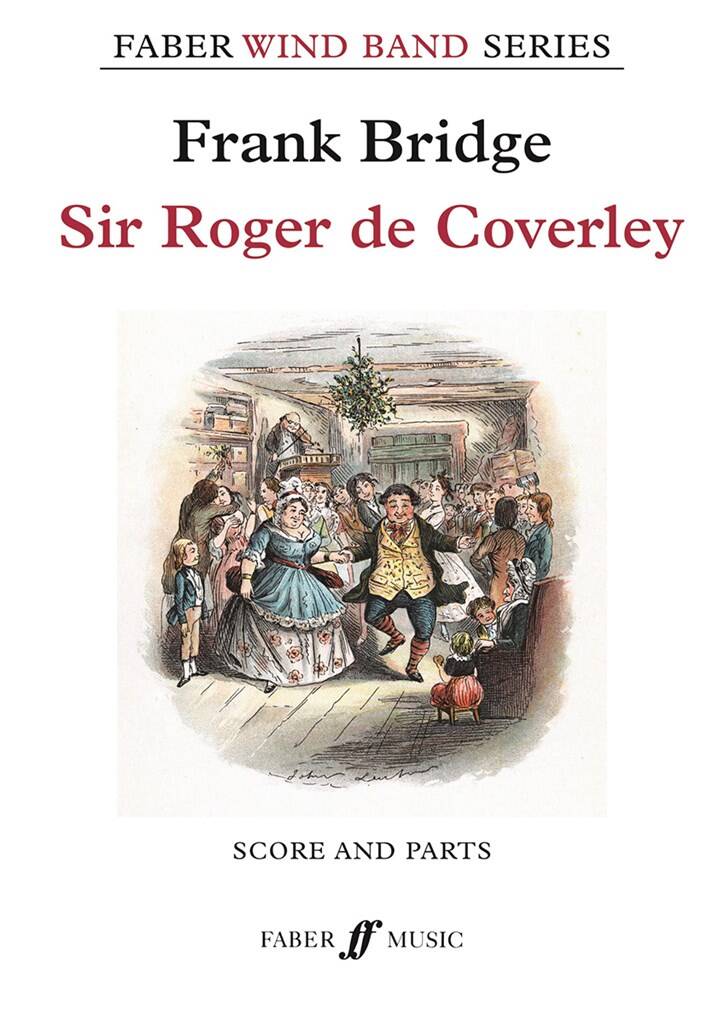
Sir Roger de Coverley - Frank Bridge
Frank Bridge (1879 - 1941) was one of the leading English composers of his time. In October 1922 he adapted his popular string quartet Sir Roger de Coverley for full symphony orchestra and Sir Henry Wood agreed, at the last minute, to include it in the last night of the Queen's Hall Promenade Concerts at the end of that month.This elaborate and colourful orchestral version has never been widely performed, but has now been brilliantly transcribed by Alastair Wheeler to provide a miniature dance poem for grade 5 level concert band.Bridge's lively treatment of one of England's most famous traditional dance melodies willmake a fitting end to any concert, with the strains of Auld Lang Syne introduced by Bridge as a nod towards Sir Roger de Coverley's traditional function as the final dance of a Christmas Ball, as it was in Old Mr. Fezziwig's party in Dickens' A Christmas Carol.
Estimated dispatch 7-14 working days
-
£66.30
Fanfares in Remembrance - Peadar Townsend
Fanfares in Remembrance was commissioned by Nick Jarvis, Principal conductor of the Band of the Royal British Legion, Christchurch, Dorset, UK to be premiered during the Last Post Ceremony at the Menin Gate, Ypres, Belgium on May 27th, 2017. The work is a short reflection two World War One bugle calls, 'The General Salute' and 'Retreat' or 'Sunset' as it is also known. The significance and symbolism of bugle calls from this era are well known and they are still used in Barracks across the world. I have used sections of these famous British bugle calls on two trumpets either side of the band playing in two different musical keys. The band then plays an intermittent low drone like chord, again in a different musical key to the two trumpets. In my mind this opening depicts two buglers at dawn at either end of a misty field directly after a brutal slaughter. The two buglers are almost calling out for their missing comrades only to realise they are gone...... The work moves into a haunting oboe melody signifying loss. The oboe is joined by the full band in a tune of strength, solidarity, yet profound sadness. The work concludes with a recap of the opening idea; however, the two buglers are now united in musical key sounding 'The General Salute'. The music ends as the wind blows gently. The memories live on forever......
Estimated dispatch 7-14 working days
-
 £159.60
Suite Acadienne - Bernhard Bogisch
1. La belle Franoise.This song tells the story of the beautiful Franoise, who is visited by her lover on the eve of his departure. She helps him prepare for his voyage and they talk for the last time at the foot of a rock, which has been their trysting place. The next day, when he has left the harbour, he hears the sound of a bell. It is the bell that tolls for Franoise, who is being carried to her grave.2. Le Prince Eugne.At least two versions of this song are in existence, both of which are represented here. It tells of the prince Eugne, who, on his way to Paris, encounters twenty of his worst enemies. He manages to kill fourteen of them before his sword breaks. He then asks his page to get him another sword, but the lad is too afraid for his own life. This being the case the prince tells him to tell his wife to take care of his son, who 'will have his revenge by lighting a candle in Paris'.3. Pinson et Cendrouille.This song deals with the marriage of two not further specified animals, who have nothing with which to prepare a wedding feast, and need help from the other animals. But when the rat comes in carrying a fiddle, he is chased away.4. Le Dpart de l'Amant.At least two versions of this song are known, both of which are represented here. It is one of many songs dealing with departure, and is of Canadian origin. The lover is warned of the charms of the pretty 'canadiennes' which among Acadiens refers to French Canadians from Qubec. 'Be true to me save your heart. When I return from my voyage I will make you happy'.5. Le Remde son Talon.This, like many children's/folk songs is a bit of a nonsense song. Marguerite has trouble with the heel of her shoe, and asks her mother for help. Mom suggests various things, such as an onion (too round), a tomato (too flat) etc. In the end it turns out that a bachelor is her best bet.
Estimated dispatch 7-14 working days
-
 £98.20
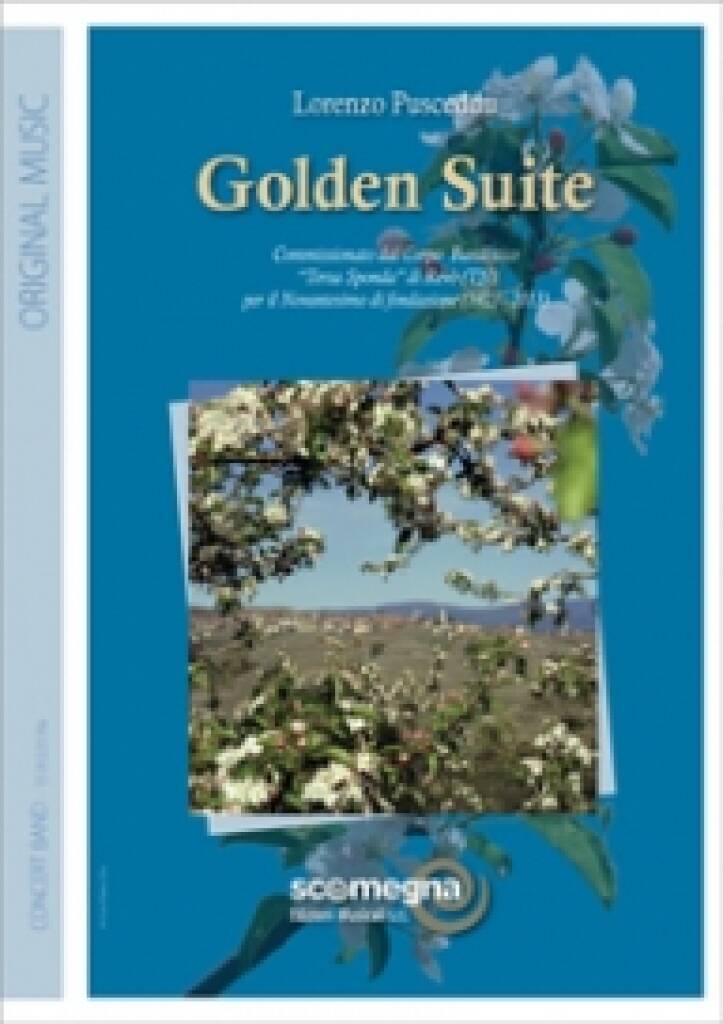
Golden suite - Lorenzo Pusceddu
In the Non Valley, during spring when the water of Lake Santa Giustina starts lowering, the old main traffic system and the steep terrain with the Groppello vineyards resurface. The majestic and uncompromising Mount Ozolo dominates this landscape and acts like a guard of the fertile valley. The people who had to walk along the Regiai road to leave their village in search of fortune keep those memories very alive. Their trip started by descending the valley along the Regiai road, walking through the luxuriant vineyards that were supported by dry stone walls, downright mosaics of stones built to help the growth of the vineyard. Those who left and casted a glance at their village for one last time could catch sight of the Ozolo, the mountain of the primordial man, of hunting and friendship. They also had to cross a bold stone bridge that still exists and is jealously safeguarded by the lake water, which has also sunken together with the bridge hectares of vineyards of Groppello, the vine of the traditional and vigorous wine produced in the Non Valley. Its name is said to come from the typical structure of the grapes, which are compact and resemble a thick tangle ("groppo" in local dialect), almost a defense against the shifting temperatures of the fall that gives the grapes a bright color and a honey-like sweetness. The production at the end of the nineteenth century was of circa fifty thousand hectoliters of wine, but today it has reduced to only five hundred hectoliters produced by about thirty courageous farmers who want to preserve an authentic patrimony of taste and flavor. These wine makers have the will to safeguard a vineyard that is at risk of extinction and work the land as they used to do many years ago: with hoe, shovel, and a lot of sweat! The Groppello vineyard extended to the bottom of Mount Ozolo, but on the higher slopes the more rigid temperatures allowed only for the growth of pines, spruces, larches, broad-leaved trees, and pastures. In the course of the years, this typical vegetation of the mountain has provided the population with the raw material to build houses, to keep warm during the winter, and to feed the animals. Mount Ozolo has also been since ancient times the "sacred" mountain of the valley, and today it has become a game preserve and a site of socialization for young people who know how to love and respect nature.
Estimated dispatch 7-14 working days
-
 £292.00
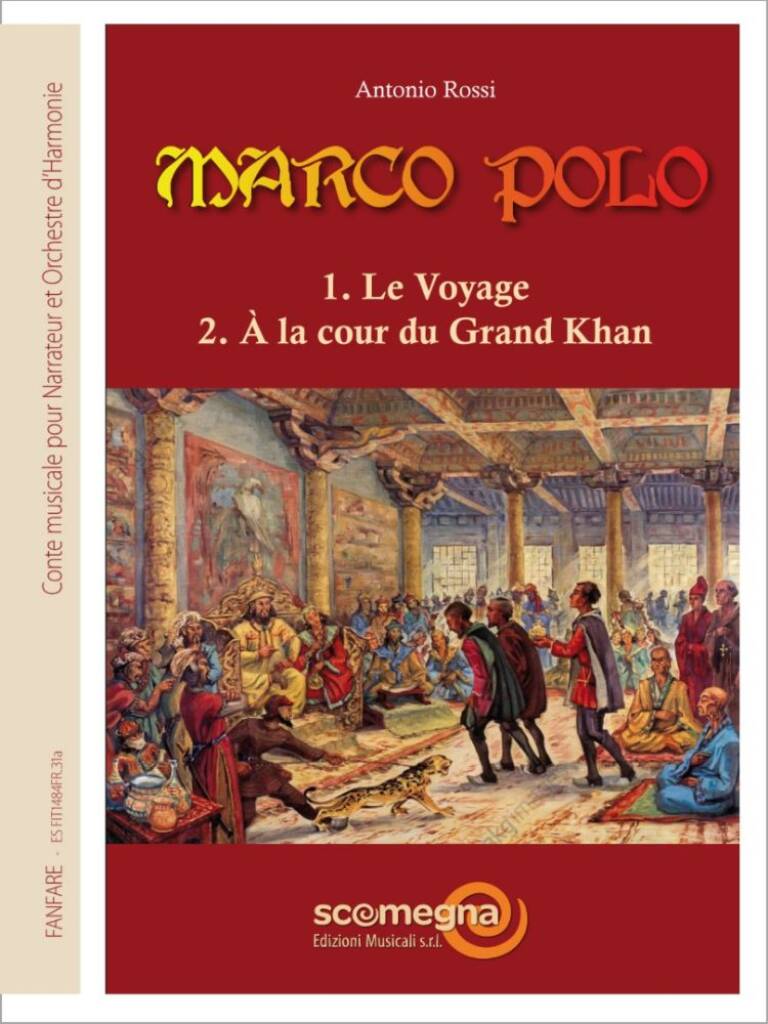
Marco Polo (French text) - Antonio Rossi
Marco Polo (Venice, 1254), son of Venetian merchants, left in 1271 with his father Niccol and his uncle Matteo, towards the distant China at the court of the Mongol emperor Kublai Khan. The long journey, which lasted three and a half years, led the Polos to cross Turkey, Central Asia, the Pamir, and the Gobi desert. The intelligence of the young Marco and his curiosity towards new customs and languages raises the interest of the emperor so much that he decides to keep him at his court by appointing him ambassador. This assignment takes him to newly conquered southern China and other parts of southern Asia. In 1292, the Great Kublai Khan agrees, albeit reluctantly, to let him go.Marco, after 17 years at his service, can finally return to Venice, but not before completing a last mission for the Grand Khan: accompanying his niece, Princess Kokachin, to Persia, where she would marry. A few years after his arrival in Venice, Marco finds himself involved in a naval battle against the Genoese people in which the Venetians are defeated. Consequently, Marco is captured and taken to prison in Genoa. There, he meets the storyteller Rustichello da Pisa to whom he tells the story of his adventurous journey. After his release, Marco returned to Venice and led a comfortable life until his death in 1324.
Estimated dispatch 7-14 working days
-
 £123.20
3 Letzte Motetten - Anton Bruckner
Anton Bruckner (b. 4.9.1824, Ansfelden, d. 11.10.1896, Vienna) didn't have it easy. Throughout his life, the Austrian composer was plagued by self-doubt. Anton Bruckner came from a simple, rural background. After the death of his father, he was accepted as a choirboy at the monastery of Sankt Florian in 1837. After several years as a school assistant and his own organ and piano studies, he first worked as organist in St. Florian, then from 1855 as cathedral organist in Linz. Introduced to music theory and instrumentation by Simon Sechter and Otto Kitzler, he discovered Richard Wagner as an artistic role model, whom he admired throughout his life and also visited several times in Bayreuth.In 1868 Anton Bruckner became professor of basso continuo, counterpoint and organ at the Vienna Conservatory; ten years later court organist; and in 1891 finally honorary doctor of the University of Vienna. He was considered an important organ virtuoso of his era, but had to wait a long time for recognition as a composer. It was not until Symphony No.7 in E major, composed between 1881 and 1883, with the famous Adagio written under the effects of Wagner's death, that he achieved the recognition he had hoped for, even if he was reluctant to accept it given his inclination towards scepticism and self-criticism.Anton Bruckner was a loner who did not want to follow a particular school or doctrine. He composed numerous sacred vocal works, such as his three masses, the Missa Solemnis in B flat minor (1854), the Te Deum (1881-84) and numerous motets. As a symphonic composer, he wrote a total of nine symphonies and many symphonic studies from 1863 onwards, tending to revise completed versions several times over. Bruckner's orchestral works were long considered unplayable, but in fact were merely exceptionally bold for the tonal language of their time, uniting traditions from Beethoven through Wagner to folk music, on the threshold between late Romanticism and Modernism.Anton Bruckner composed about 40 motets during his lifetime, the earliest a setting of Pange lingua around 1835, and the last, Vexilla regis, in 1892.Thomas Doss has compiled some of these motets in this volume for symphonic wind orchestra.These motets show many characteristics of personal expression, especially Bruckner's colourful harmony in the earlier works, which is in places aligned with Franz Schubert (changes between major and minor; and movements in thirds). Later works are characterised by many components which, in addition to the expanded stature of the movements, include above all a sense of the instrumentation as an outward phenomenon and the harmony as a compositional feature that works more internally. Some aspects of Bruckner's work are the result of his long period of study, which familiarised him not only with the tradition of his craft, but also gave him insights into the "modernity" of his time in such composers as Wagner, Liszt and Berlioz.From this developed his personal standpoint, which always pursues the connection between the old and the new.
Estimated dispatch 7-14 working days
-
 £256.00
14 Motetten - Anton Bruckner
Anton Bruckner (b. 4.9.1824, Ansfelden, d. 11.10.1896, Vienna) didn't have it easy. Throughout his life, the Austrian composer was plagued by self-doubt. Anton Bruckner came from a simple, rural background. After the death of his father, he was accepted as a choirboy at the monastery of Sankt Florian in 1837. After several years as a school assistant and his own organ and piano studies, he first worked as organist in St. Florian, then from 1855 as cathedral organist in Linz. Introduced to music theory and instrumentation by Simon Sechter and Otto Kitzler, he discovered Richard Wagner as an artistic role model, whom he admired throughout his life and also visited several times in Bayreuth.In 1868 Anton Bruckner became professor of basso continuo, counterpoint and organ at the Vienna Conservatory; ten years later court organist; and in 1891 finally honorary doctor of the University of Vienna. He was considered an important organ virtuoso of his era, but had to wait a long time for recognition as a composer. It was not until Symphony No.7 in E major, composed between 1881 and 1883, with the famous Adagio written under the effects of Wagner's death, that he achieved the recognition he had hoped for, even if he was reluctant to accept it given his inclination towards scepticism and self-criticism.Anton Bruckner was a loner who did not want to follow a particular school or doctrine. He composed numerous sacred vocal works, such as his three masses, the Missa Solemnis in B flat minor (1854), the Te Deum (1881-84) and numerous motets. As a symphonic composer, he wrote a total of nine symphonies and many symphonic studies from 1863 onwards, tending to revise completed versions several times over. Bruckner's orchestral works were long considered unplayable, but in fact were merely exceptionally bold for the tonal language of their time, uniting traditions from Beethoven through Wagner to folk music, on the threshold between late Romanticism and Modernism.Anton Bruckner composed about 40 motets during his lifetime, the earliest a setting of Pange lingua around 1835, and the last, Vexilla regis, in 1892.Thomas Doss has compiled some of these motets in this volume for symphonic wind orchestra.These motets show many characteristics of personal expression, especially Bruckner's colourful harmony in the earlier works, which is in places aligned with Franz Schubert (changes between major and minor; and movements in thirds). Later works are characterised by many components which, in addition to the expanded stature of the movements, include above all a sense of the instrumentation as an outward phenomenon and the harmony as a compositional feature that works more internally. Some aspects of Bruckner's work are the result of his long period of study, which familiarised him not only with the tradition of his craft, but also gave him insights into the "modernity" of his time in such composers as Wagner, Liszt and Berlioz.From this developed his personal standpoint, which always pursues the connection between the old and the new.
Estimated dispatch 7-14 working days
-
 £76.99
Risoluto - James Barnes
Risoluto is a music term of Italian derivation, first appearing in the mid 1700s. A great many musical terms such as this are in Italian, because many of the important composers from the Renaissance to the Baroque were from the geographic area known today as Italy and spoke some form of Italian. Consequently, performance markings in their published music, widely disseminated through the rest of Europe, were in the language that they best understood. Music marked in this manner is to be played firmly and decisively with firm resolve and little variance from the marked tempo. It can be seen that while there are several stylistic changes in this piece, the tempo varies not a bit, holding firm at Allegro vivo, quarter note at 120, from first measure to last.
Estimated dispatch 7-14 working days
 View Music